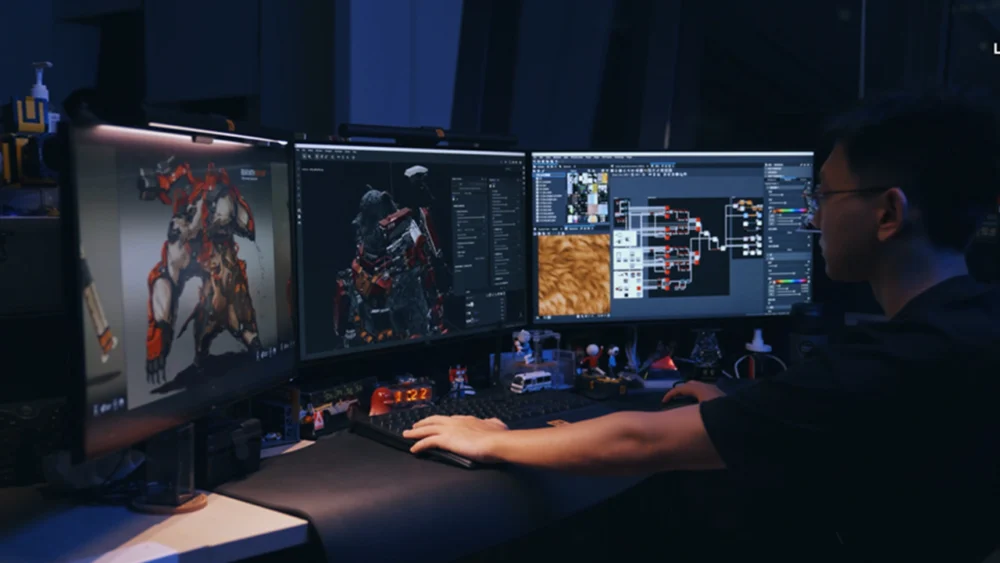
Lightspeed Studios, the globally recognized co-developer behind the monumental success of PUBG Mobile, has officially announced the establishment of a novel, proprietary IP development framework designed to streamline the creation of triple-A titles at an unprecedented scale. This strategic revelation, made during the prominent GDC Festival of Gaming, signals a significant evolution in the company’s approach to game production, aiming to redefine efficiency and creative output in the high-stakes world of blockbuster interactive entertainment. The framework, meticulously engineered, draws heavily on innovative methodologies and discoveries unearthed during the intensive development of Last Sentinel, an ambitious upcoming title spearheaded by Lightspeed LA, positioning it as a foundational project for this new paradigm.
The core philosophy underpinning this structured system is a deliberate prioritization of "strong visual identity and art direction over sheer graphical fidelity." This nuanced approach acknowledges the increasing sophistication of player expectations and the diminishing returns of a relentless pursuit of raw polygon counts and texture resolutions. Instead, Lightspeed Studios is advocating for an artistic vision that resonates instantly and powerfully with players, emphasizing distinct aesthetic appeal and cohesive artistic direction. The company articulated that this framework is "designed to enable the deliberate, repeatable and scalable creative development of multiple original AAA titles from the ground up by offering a compelling visual hook that resonates instantly with players." This ambition, they further explained, necessitates "approaching game development with the scale and discipline of a blockbuster production, where technology serves as a critical enabler in translating creative intent into immersive, high-impact experiences."
The Lightspeed Studios AAA Development Framework: A New Paradigm
At the heart of Lightspeed’s new framework lies a meticulously crafted two-tiered development process, distinguishing between foundational elements and concentrated creative effort. A staggering 90 percent of a title’s construction will be built upon a "templated foundation," meticulously informed by real-world references. This foundational layer will incorporate authentic locations, historical contexts, and life-like proportions, aiming to establish a robust and believable "game development base rooted in reality." This structured approach is anticipated to significantly accelerate initial development phases, reduce inconsistencies, and provide a solid, verifiable bedrock upon which imaginative narratives and gameplay can be constructed. By leveraging existing real-world data and established aesthetic principles, the framework seeks to mitigate early-stage creative block and technical hurdles, allowing for a more predictable and efficient progression. The underlying technologies facilitating this templated foundation likely involve advanced asset libraries, procedural generation tools, and sophisticated data integration systems that can rapidly convert real-world scans or historical archives into game-ready environments and objects.
The remaining 10 percent of the development cycle is where the majority of creative intensity will be concentrated. This crucial segment is where designers are empowered to "reinterpret reality, elevate narrative tension, and craft the distinctive storytelling and experiential hooks that define the game’s identity." This focused layer is designed to be the crucible for innovation, where unique gameplay mechanics, compelling character arcs, and unforgettable moments are forged. By offloading the heavy lifting of foundational world-building to a structured, reality-informed process, creative teams are liberated to dedicate their energy and ingenuity to the elements that truly differentiate a game and create lasting impact. This selective allocation of creative resources suggests a highly optimized workflow, ensuring that artistic talent is deployed where it can have the most profound effect on player experience, moving beyond the often-chaotic and iterative nature of traditional AAA development.
Lightspeed Studios: A Global Force in Game Development
Lightspeed Studios’ unveiling of this ambitious framework is not merely a technical announcement but a strategic declaration from a company that has rapidly ascended to become a global powerhouse in the interactive entertainment industry. As a key subsidiary of Tencent, one of the world’s largest video game companies, Lightspeed has a formidable track record, most notably as the co-developer of PUBG Mobile. This title alone has garnered billions in revenue and boasts a massive, engaged player base numbering in the hundreds of millions, underscoring Lightspeed’s capability to deliver and sustain immensely popular global titles. This success provides both the financial backing and the operational experience necessary to embark on such an ambitious AAA endeavor.
The studio’s global footprint is expansive and impressive, with teams operating across a diverse array of territories including China, the United States, Singapore, Canada, the United Kingdom, France, Japan, South Korea, New Zealand, and the United Arab Emirates. Managing development across such a vast, multi-cultural, and multi-timezone network presents inherent logistical and communication challenges, which a standardized development framework could significantly alleviate. This distributed model also allows Lightspeed to tap into a wide pool of international talent and creative perspectives, enriching its development capabilities.
Lightspeed’s commitment to expanding its capacity for high-quality game production has been evident through a series of significant investments and strategic hires in recent years. In a move to enhance its technical capabilities, the company recently announced the opening of a new state-of-the-art mocap and virtual production facility. These facilities are critical for modern AAA game development, enabling the creation of highly realistic character animations, cinematic sequences, and immersive environments with greater efficiency and fidelity. The integration of such advanced production technologies directly supports the framework’s emphasis on strong visual identity and the translation of creative intent into high-impact experiences. Further solidifying its push into original, high-caliber IP, Lightspeed Studios made headlines in 2024 with the recruitment of acclaimed industry veteran Hideaki Itsuno, known for his directorial work on iconic titles like Dragon’s Dogma and Devil May Cry series. Itsuno joined Lightspeed to lead a new studio in Japan, a clear signal of the company’s intent to cultivate world-class creative talent and develop critically acclaimed titles that resonate globally. With a portfolio already exceeding 50 titles, Lightspeed Studios possesses a wealth of experience across various genres and platforms, providing a solid foundation for the implementation of this new framework.

Unveiling at the GDC Festival of Gaming: A Strategic Platform
The choice to unveil this groundbreaking framework at the GDC Festival of Gaming is highly strategic. The GDC Festival of Gaming, an integral component of the broader Game Developers Conference (GDC), serves as a premier gathering for game development professionals worldwide. It is a vital platform for sharing knowledge, networking, and showcasing innovative technologies and methodologies. By presenting its framework at such a prestigious industry event, Lightspeed Studios aims to position itself as a thought leader in the realm of large-scale game production. The announcement is not just for players but primarily for peers, potential partners, and prospective talent.
Lightspeed Studios is not merely making a cursory announcement; they are committing to a series of dedicated sessions at the GDC Festival of Gaming to "unpack the framework." This suggests a willingness to engage in detailed discussions, provide insights into their development processes, and potentially foster a dialogue within the industry about the future of AAA game creation. Such transparency can help validate their approach, attract top-tier developers looking for innovative work environments, and potentially influence broader industry trends. The context of Game Developer and GDC Festival of Gaming being sibling companies under Informa Festivals also highlights a synergistic environment for such an industry-centric announcement, ensuring maximum reach and relevance within the professional developer community.
Strategic Implications and Industry Impact
The introduction of Lightspeed Studios’ new AAA development framework carries significant implications, both for the company itself and for the broader global games industry. For Lightspeed, this framework represents a decisive strategic pivot from predominantly co-development and mobile-centric projects towards a more ambitious, proprietary AAA IP strategy. This move positions them to directly compete with established Western and Japanese AAA studios, signaling a serious intent to carve out a substantial share of the premium game market. The framework, if successfully implemented, could enable Lightspeed to produce high-quality AAA games more efficiently, predictably, and potentially at a faster pace than traditional models, thereby addressing common industry challenges such as escalating development costs, prolonged production cycles, and issues related to developer burnout. The ability to attract and retain top talent, exemplified by the hiring of Hideaki Itsuno, will be crucial, and a structured, innovative development environment is a powerful draw.
For the wider industry, Lightspeed’s framework could serve as a compelling case study. The emphasis on "strong visual identity and art direction over sheer graphical fidelity" might resonate with many studios facing the increasingly unsustainable graphical arms race. As hardware capabilities continue to advance, the cost and time required to push the absolute limits of graphical realism often outweigh the perceived benefits, especially when artistic vision can achieve similar or even greater emotional impact. This approach could encourage a broader industry shift towards more art-driven and stylistically cohesive game design. The 90/10 rule also offers a novel perspective on balancing the need for efficient, standardized production with the imperative for creative innovation. In an industry grappling with the complexities and financial risks of AAA development, a methodology that promises repeatable success and focused creativity could become a valuable blueprint.
However, implementing such an extensive framework across Lightspeed’s diverse global teams will undoubtedly present challenges. Maintaining consistency, fostering a shared understanding of the methodology, and ensuring creative freedom within a structured system will require exceptional leadership and communication. The ultimate success of this framework will be measured by the market reception of its first major proprietary titles, with Last Sentinel poised as the initial litmus test. If Lightspeed can consistently deliver critically acclaimed and commercially successful AAA games using this new model, it could profoundly influence how large-scale game development is approached globally.
The Road Ahead: Last Sentinel and Beyond
Last Sentinel stands as the vanguard project for Lightspeed Studios’ ambitious new framework, carrying the weight of expectation for both the company and the industry. Its development journey and eventual release will provide the first tangible evidence of the framework’s efficacy in producing a compelling, high-impact AAA experience. The success of Last Sentinel will not only validate Lightspeed’s investment in this new methodology but also cement its position as a serious contender in the original AAA IP space, moving beyond its well-established mobile gaming dominance.
Looking ahead, this framework signifies Lightspeed Studios’ long-term commitment to not just participate in, but to potentially redefine, the process of creating immersive, high-quality interactive entertainment at scale. By meticulously structuring its development process, balancing foundational efficiency with concentrated creative intensity, and leveraging its global talent pool and advanced technological infrastructure, Lightspeed is poised to become an even more formidable player in the global gaming landscape. The industry will be watching closely as Lightspeed embarks on this transformative journey, eager to see how this innovative approach shapes the next generation of blockbuster games.
About the Author