NVIDIA has officially released a series of driver updates designed to resolve a persistent technical failure that has plagued Meta Quest users for nearly a year. The update, categorized under version 621.01 for Game Ready drivers and version 621.14 for Enterprise systems, addresses a specific defect in the video streaming pipeline that caused the Meta Quest Link—formerly known as Oculus Link—to freeze during high-performance PCVR sessions. This resolution marks the end of a ten-month period of instability for a significant portion of the virtual reality community, particularly those utilizing high-end NVIDIA hardware.
Background of the Meta Quest Link Technical Failure
The Meta Quest Link is a vital software bridge that allows the standalone Meta Quest 2, 3, and Pro headsets to function as dedicated PCVR displays. By connecting the headset to a computer via a high-speed USB-C cable or a localized Wi-Fi connection (Air Link), users can access the expansive libraries of SteamVR and the Meta Rift Store. However, starting in early 2024, a compatibility rift emerged between NVIDIA’s graphics drivers and Meta’s streaming architecture.
The symptoms of the glitch were uniform across affected systems: after several minutes of stable gameplay or development work, the video stream would abruptly freeze. While the audio often continued to play, the visual frame remained static, often accompanied by severe digital artifacts and "tearing" at the edges of the field of view. To restore functionality, users were forced to manually restart the Meta Quest background services on their PCs, only for the issue to recur shortly thereafter.
A Ten-Month Chronology of Troubleshooting
The journey to this fix was characterized by a complex collaborative effort between Meta’s engineering teams and NVIDIA’s driver developers. Early reports from the VR community suggested that the problem was localized to specific NVIDIA RTX-series cards, though the inconsistency of the bug made it difficult to isolate. While some users reported no issues, others with identical hardware found the Quest Link unusable.
By mid-year, Meta representatives confirmed that the root cause resided within NVIDIA’s driver-side handling of video encoding. Because the Quest Link relies on real-time H.264 or HEVC (H.265) encoding via NVIDIA’s NVENC (NVIDIA Encoder) technology, any regression in driver stability directly impacted the integrity of the VR stream.
During the months leading up to the fix, the VR community relied on several stopgap measures:

- Driver Rollbacks: Many users opted to stay on legacy drivers from late 2023, sacrificing the optimizations and security patches of newer releases to maintain VR stability.
- Third-Party Alternatives: Applications such as Virtual Desktop and Steam Link became the primary tools for affected users. Because these applications utilize different streaming protocols and encoding methodologies, they remained largely unaffected by the specific bug impacting the official Meta Link software.
- Public Test Channel (PTC) Updates: Meta released several beta versions of their desktop software to mitigate the freezing, though a permanent solution required NVIDIA’s direct intervention.
Technical Analysis of Driver Versions 621.01 and 621.14
The fix was first integrated into the Game Ready Driver version 621.01. According to the official release notes provided by NVIDIA, the update explicitly addresses a "General Bug" identified as bug ID 6292679, described as an issue where the "Meta Horizon Link stream may freeze when connected over USB."
For professional users and developers utilizing workstation-grade hardware, the fix was subsequently ported to the Enterprise Driver version 621.14. This distinction is critical, as enterprise drivers undergo a more rigorous validation process to ensure stability across creative and industrial applications. The deployment of this fix across both consumer and professional branches ensures that the entire ecosystem of Meta Quest users—from casual gamers to industrial simulation designers—can resume standard operations.
Recent internal testing by developers suggests that the fix is robust. Tests conducted across various VR environments, including high-fidelity simulations like AirCar and content platforms like DeoVR, have shown no signs of the previous freezing behavior over extended sessions.
Implications for the VR Development Ecosystem
The restoration of the Meta Quest Link is particularly significant for the Mixed Reality (MR) and Virtual Reality development community. While third-party streaming solutions like Virtual Desktop offer high-performance wireless gaming, they often lack the deep integration required for advanced development workflows in engines like Unity or Unreal Engine.
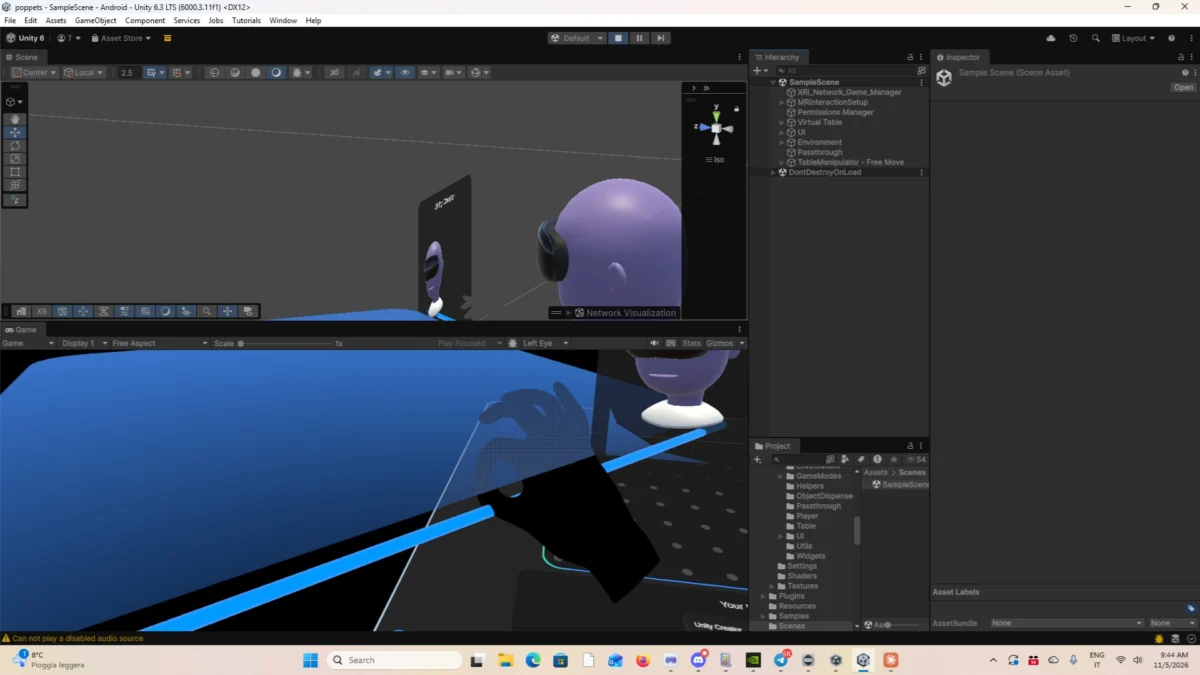
The official Quest Link software provides a unique "Link PTP" (Point-to-Point) capability that allows developers to stream sensor data—including passthrough video, eye-tracking, and hand-tracking data—directly from the headset to the PC development environment. This allows for "Live Preview" functionality, where a developer can press "Play" in their editor and instantly see how their application responds to physical hand movements and real-world environments without the time-consuming process of compiling and installing an Android APK onto the headset.
The ability to test mixed reality applications in real-time is a cornerstone of rapid prototyping. The ten-month outage of a stable Link connection forced many developers to adopt slower workflows, potentially delaying project timelines across the XR (Extended Reality) industry.
Broader Impact on PCVR Stability
The resolution of this issue highlights the delicate interdependency between hardware manufacturers and software platform holders in the emerging VR market. According to recent Steam Hardware Surveys, NVIDIA GPUs power over 75% of the headsets connected to SteamVR, making any driver-level conflict a high-priority concern for the industry.

While the fix has been welcomed, it also serves as a reminder of the complexities inherent in PCVR. Unlike standalone consoles or headsets, the PCVR experience is susceptible to conflicts between the operating system, graphics drivers, and third-party background services.
Industry analysts suggest that as VR continues to move toward the mainstream, the expectation for "plug-and-play" stability will only increase. The collaborative effort between NVIDIA and Meta to eventually resolve this bug, while delayed, demonstrates a commitment to maintaining the PCVR pipeline even as both companies shift significant resources toward AI and standalone mobile architectures.
Recommendations for Users
NVIDIA and Meta recommend that all Quest users currently experiencing visual freezes or "stuck frames" update their drivers immediately. Users can perform this update through the NVIDIA app, GeForce Experience, or by manually downloading the specific version (621.01 for gaming or 621.14 for enterprise) from NVIDIA’s official website.
Furthermore, users are advised to ensure that their Meta Quest desktop application is also updated to the latest version to ensure full compatibility with the new driver architecture. While the fix addresses the primary freezing issue, NVIDIA notes that users in highly complex software environments—such as those running multiple concurrent VR overlays or proprietary development tools—should continue to monitor for secondary conflicts that may arise from specific project-based software requirements.
With this update, the PCVR community regains a critical piece of infrastructure, allowing for a more seamless integration between high-performance computing and the versatile Meta Quest hardware suite. The return to stability is expected to bolster the use of Meta headsets in professional, educational, and high-end gaming sectors throughout the remainder of the year.
About the Author