Revolutionizing Developer Workflow: The Butler Integration
Historically, butler has been the backbone of efficient build management on itch.io. It functions as a sophisticated command-line interface (CLI) that allows developers to upload game builds to designated "channels" on their projects—such as windows-beta, linux-arm64, or macos-preview. What distinguishes butler from traditional file uploads via a browser is its intelligent use of delta compression and patching. Instead of uploading an entire game build with every update, butler meticulously compares the new build against the previous one on the same channel and only transmits the changed data. This "patching" mechanism drastically reduces upload times for developers and download sizes for players, conserving bandwidth and accelerating the update cycle for all parties involved.
While incredibly efficient, butler’s command-line nature presented a barrier for many developers. The necessity to navigate a terminal, understand specific commands, and manage file paths often deterred those unfamiliar with CLI environments, limiting the adoption of this beneficial technology. The recent update directly addresses this challenge by embedding butler’s core functionality within the intuitive confines of the itch.io desktop application, transforming a technical process into a streamlined, point-and-click operation.
A Deep Dive into the New User Experience
The core of this upgrade is the introduction of a dedicated "Upload" section within the itch.io app’s sidebar, leading to a new "Builds" page. This centralized hub offers an at-a-glance overview of all builds associated with any project the logged-in account has editing privileges for. Each entry on the Builds page provides critical information: the project name, the specific channel it targets, the build version, its current status (e.g., uploaded, processing), the file size, and the timestamp of its last push. This comprehensive logging provides developers with unprecedented visibility and control over their release history, a stark contrast to the often fragmented record-keeping necessitated by purely CLI-based workflows.
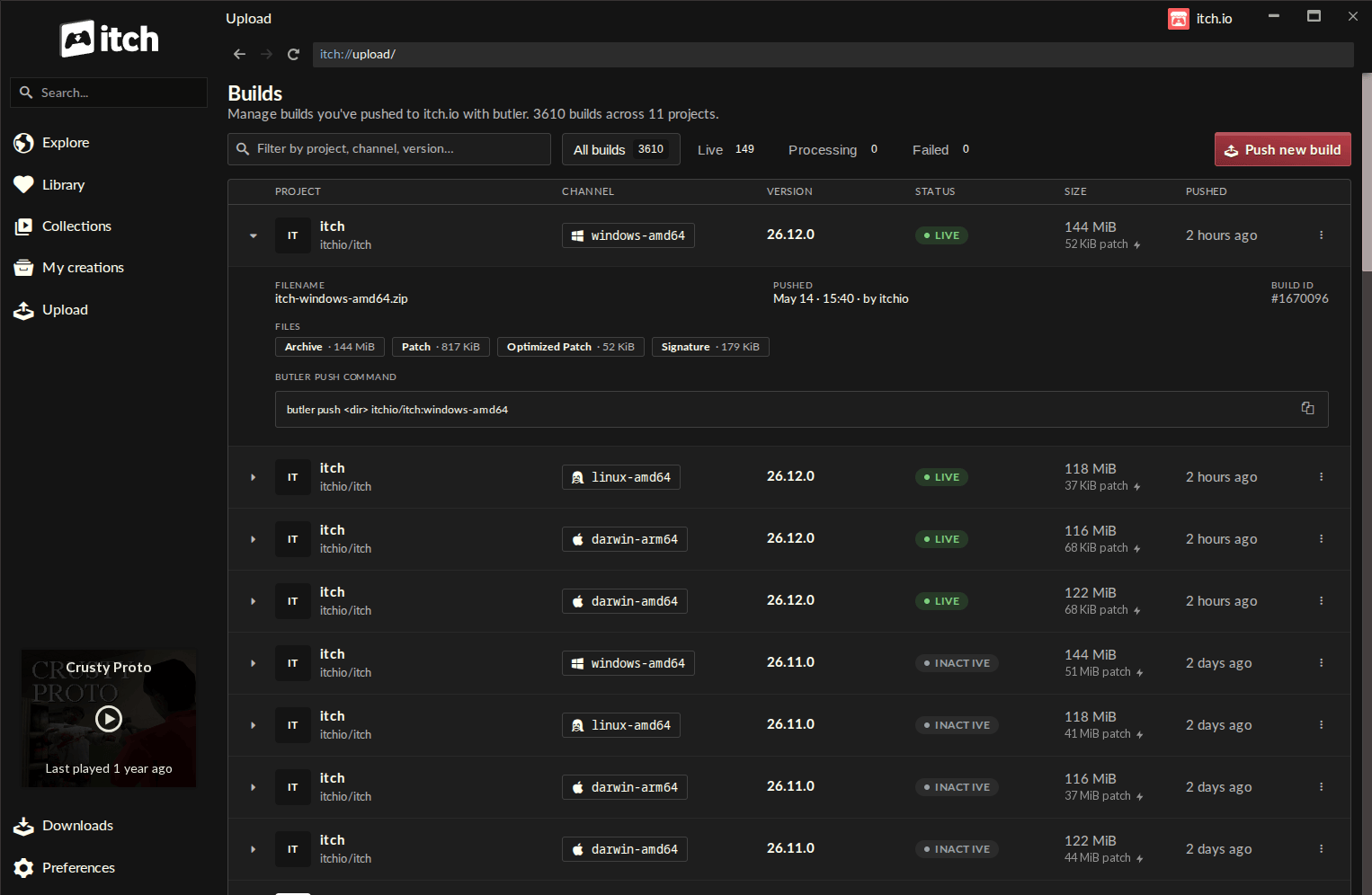
To initiate an upload, developers simply navigate to the Builds screen and click the "Push new build" button, which invokes a new, guided push dialog. This dialog simplifies the entire process:
- Project Selection: Developers can easily select the target project from a dropdown list.
- Channel Management: They can choose an existing channel or define a new one by typing its desired name. This flexibility supports various release strategies, from stable public releases to experimental alpha branches.
- Versioning: An optional field allows developers to specify a version number, providing clear chronological tracking of updates.
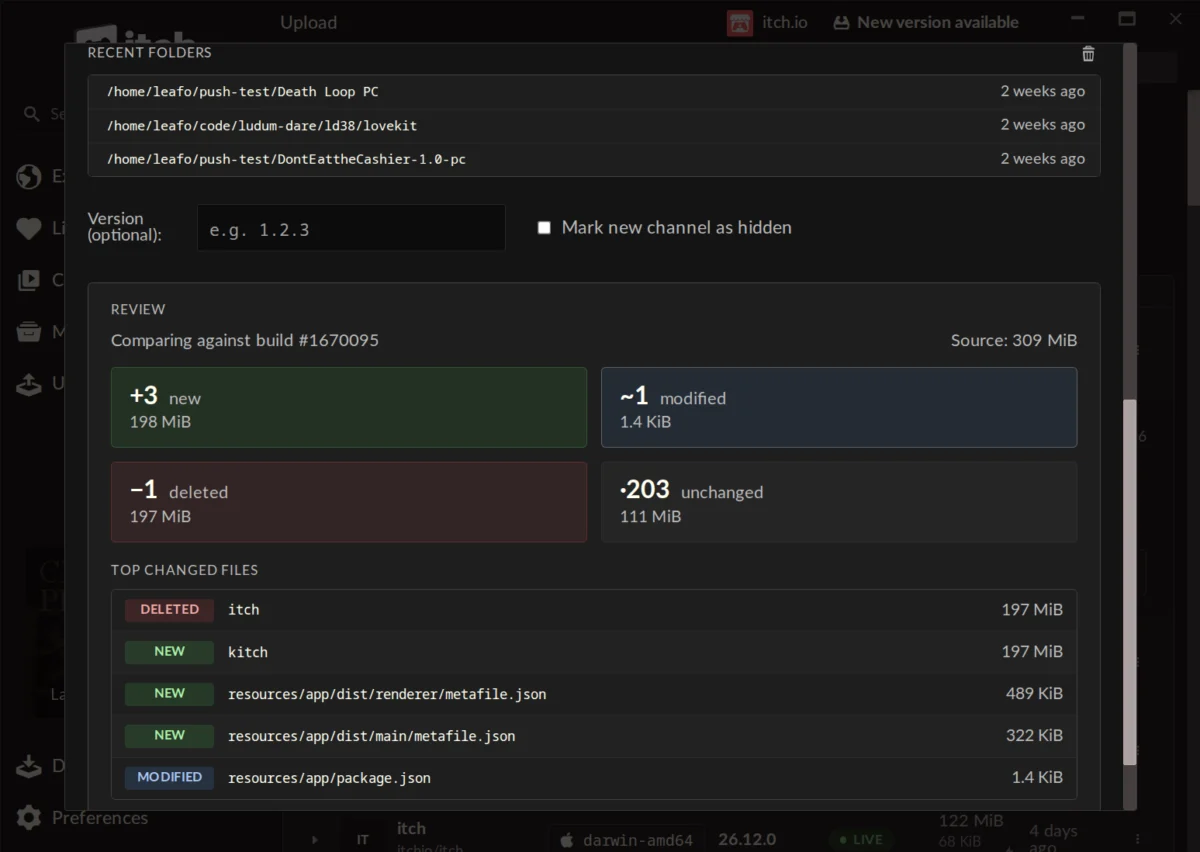
- File Input: The process is completed by dragging and dropping a folder containing the game build or a compressed
.zipfile directly into the dialog box. A "recent folders" list further enhances convenience by offering quick access to previously used directories, minimizing repetitive navigation.
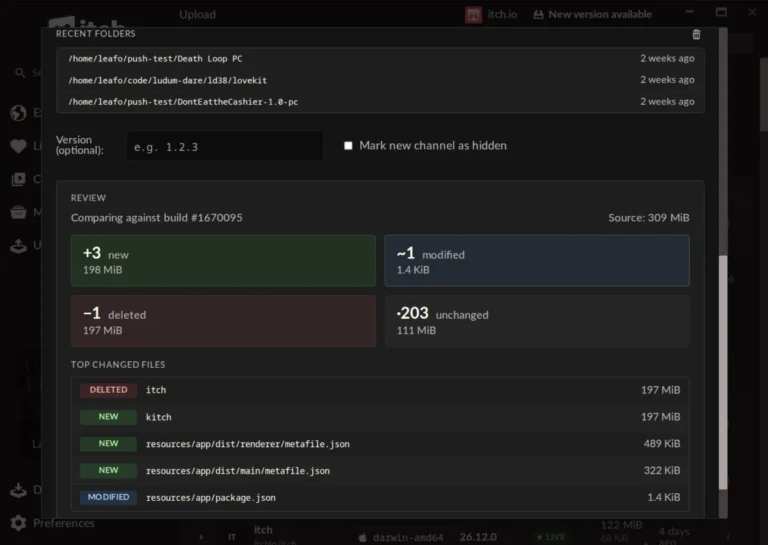
One of the most valuable additions to this GUI workflow is the pre-upload "preview" feature. Before committing to an upload, developers can generate a detailed report of changes between their current build and the last one on the chosen channel. This preview itemizes new, modified, deleted, and unchanged files, providing size breakdowns for each category. Crucially, it also lists the largest changed files, offering a diagnostic tool to quickly identify potential errors or unexpected file modifications. This proactive verification step significantly reduces the risk of pushing incorrect builds, enhancing quality assurance and developer confidence.
Technical Underpinnings and Strategic Advantages
The butler version integrated within the app is self-updating, eliminating the need for manual maintenance and ensuring developers always utilize the latest, most optimized version. Furthermore, it leverages the credentials of the logged-in itch.io account, simplifying authentication and enabling seamless management of multiple developer profiles—a significant boon for studios or individual developers managing several projects.
The efficiency of butler‘s patch-based updates is a cornerstone of its appeal. When a developer pushes an update, butler calculates the "delta"—the precise difference between the new and old versions. Only this delta is uploaded. Once on itch.io’s servers, this patch undergoes further compression and optimization, making it even smaller. For players, this translates into dramatically reduced download sizes. Instead of re-downloading a 5GB game for a minor update, a player might only download a 50MB patch. Industry estimates suggest that for frequently updated games, this can result in bandwidth savings of 90% or more for players and significantly lower data transfer costs for developers. This mechanism is particularly beneficial in regions with limited internet infrastructure or for users on metered connections.
Broader Impact and Implications for the Indie Ecosystem
This GUI integration of butler represents more than just a convenience feature; it’s a strategic move by itch.io to further empower its developer community and solidify its position as a leading platform for independent games.
- Enhanced Accessibility for New Developers: The terminal can be an intimidating hurdle for newcomers to game development. By abstracting the complexity of
butlerbehind a friendly GUI, itch.io lowers the entry barrier, encouraging more aspiring creators to publish and maintain their projects on the platform. This aligns with itch.io’s mission to be an inclusive and accessible space for all kinds of digital creations. - Increased Developer Efficiency: Even seasoned developers comfortable with CLIs will appreciate the time savings and reduced cognitive load offered by the GUI. The visual feedback, centralized build management, and pre-upload previews streamline the release process, allowing developers to focus more on creation and less on deployment logistics. This efficiency can be particularly impactful for small teams or solo developers who wear many hats.
- Improved Player Experience: Faster, smaller updates directly translate to a better experience for players. Games are updated more quickly, requiring less disk space and less waiting time. This positive user experience can foster greater player engagement and retention, making itch.io a more attractive platform for both developers and consumers.
- Strengthening Platform Competitiveness: In a competitive digital distribution landscape, offering robust, user-friendly developer tools is crucial. This
butlerintegration positions itch.io favorably against platforms that may offer similar patching capabilities but lack the same level of GUI accessibility for developers. It demonstrates itch.io’s commitment to continuous improvement and responsiveness to developer needs. - Fostering a Culture of Iteration: With easier updating, developers are more likely to push frequent small updates, bug fixes, and content additions. This iterative development cycle is beneficial for game quality and community engagement, as players see their feedback quickly incorporated and issues promptly resolved.
Community Reception and Future Outlook
The initial reception from the developer community has been overwhelmingly positive. Comments on the announcement highlighted the ease of use and improved organization provided by the new system. Developers lauded the intuitive nature of the app and the confidence instilled by the "Compare step" feature, which helps prevent errors. Many expressed enthusiasm for migrating their software or games to itch.io, citing the enhanced utility of the app as a decisive factor. While some long-time users noted that converting existing games not originally uploaded with butler to the new system isn’t currently supported due to metadata requirements, itch.io representatives have indicated that this is a feature they might consider for future development, reflecting a forward-looking approach to platform evolution.
This update, requiring at least v26.12.0 of the itch.io app, is being rolled out automatically to users. Developers can also manually check for updates via the Preferences screen if they wish to access the new functionality immediately. For those new to the platform, the itch.io app is readily available for download, and comprehensive documentation for butler‘s command-line capabilities remains accessible for advanced users or specific use cases.
The integration of butler into the itch.io app marks a pivotal moment in the platform’s commitment to developer accessibility and efficiency. By bridging the gap between powerful command-line tools and intuitive graphical interfaces, itch.io is not just streamlining a technical process; it is actively nurturing a more inclusive, productive, and vibrant ecosystem for independent game development. The expectation is that this enhancement will lead to an even greater diversity and frequency of innovative projects being shared and updated on the platform.
About the Author