The video game industry, a dynamic and often turbulent ecosystem, is witnessing a significant return to active game direction from one of its most influential indie figures: Rami Ismail. Known globally for his award-winning work as co-founder of the revered Dutch studio Vlambeer, Ismail is set to launch his latest project, Australia Did It: End-of-the-World Railway Defense Business, a turn-based strategy game that marks a notable departure from the fast-paced action titles that defined his earlier career. This return comes after a period of independent consultancy and advocacy, and against a backdrop of an industry described by Ismail himself as "more brutal" and "far more risk-averse than it has ever been." His re-entry into the trenches of game development not only heralds a new creative endeavor but also offers a compelling case study in adaptability and innovation amidst unprecedented industry challenges.
A Storied Career and a New Chapter for an Indie Icon
Rami Ismail’s journey through the game development landscape has been nothing short of iconic. As one half of Vlambeer, alongside Jan Willem Nijman, he co-created seminal indie titles that redefined genres and influenced a generation of developers. Games like Nuclear Throne, a chaotic roguelike twin-stick shooter, and Luftrausers, a stylish arcade dogfighter, were celebrated for their tight mechanics, distinctive visual flair, and an almost tactile sense of "juiciness" – a term often associated with Vlambeer’s design philosophy emphasizing impactful feedback. The studio, famously committed to remaining a two-person operation, became a beacon of independent creativity and success.
However, the Vlambeer chapter concluded with its dissolution in 2020, a decision that saw Ismail and Nijman amicably part ways. Ismail later sold his shares in the studio in 2024, fully transitioning from that foundational phase of his career. In the intervening years, rather than immediately launching into a new project, Ismail adopted a unique role within the industry. He became a self-described "globetrotting sword-for-hire," dedicating his expertise to assisting smaller studios, particularly those in developing or underrepresented regions. This period cemented his reputation not just as a brilliant developer but also as a passionate advocate for the global game development community, sharing knowledge, fostering talent, and championing diversity within the often-insular world of game creation. His work during this time included extensive speaking engagements, workshops, and mentorship, aiming to accelerate the growth and professionalization of emerging development hubs worldwide. Yet, despite the fulfillment of these endeavors, the intrinsic desire to direct his own game, to shape a new interactive experience from concept to launch, continued to grow.
Navigating a Transformed Landscape: Industry Challenges and Developer Resilience
Ismail’s return to active game direction is set against a significantly altered industry backdrop. The years following the initial pandemic-driven boom have seen a dramatic downturn, characterized by widespread layoffs, studio closures, and a palpable shift towards risk aversion among publishers and investors. Major companies, from Unity to Epic Games, Microsoft, Sony, and Embracer Group, have announced thousands of job cuts in 2023 and 2024, impacting developers across all experience levels and specializations. This period of contraction has prompted industry professionals to confront a sobering question: "Will they ever get to make another video game?"
Ismail’s candid assessment of the industry as "more brutal" and "far more risk averse" resonates deeply with the current sentiment. Economic uncertainties, increased development costs, heightened competition for player attention, and the dominance of a few large platforms have collectively squeezed the space for experimental or niche projects. Publishers, facing pressure from shareholders, are often hesitant to back ventures that don’t demonstrate clear market viability or a proven track record. This environment makes the prospect of launching a new, untested intellectual property, especially from an independent developer, a formidable challenge. Ismail’s experience in re-entering this landscape provides invaluable insights into how seasoned professionals are adapting, demonstrating that deep expertise and innovative approaches remain crucial assets in navigating this brave, uncertain new world. His journey illuminates not just the difficulties but also the potential pathways for developers determined to continue creating.
The Unconventional Genesis of Australia Did It
In an industry where securing funding and publisher interest often involves a grueling cycle of pitches at countless events, Australia Did It boasts an unusually fortunate origin story. Instead of Ismail having to tirelessly court potential backers, he was approached by Mystic Forge, a publisher keen on supporting his next game. This atypical initiation was driven by Mystic Forge’s specific objective: to "stress test their processes and making sure they’re all set up." For a publisher, collaborating with a developer of Ismail’s caliber on a new project offers a robust real-world scenario to refine their publishing pipeline, from marketing and distribution to community management and technical support, before potentially scaling up their operations.

This unique partnership allowed Ismail to assemble a bespoke team for Australia Did It. He collaborated with Rochester, NY-based studio Aesthetician Labs, a move that provided a solid organizational backbone for the project. The creative ensemble further included acclaimed artist "castpixel," known for their distinctive pixel art style; musician Max Caulkins, responsible for the game’s atmospheric soundscape; and visual effects wizard Jack Gutmann, who brought the game’s unique world to life. Additional development support was provided by Dreams Uncorporated, rounding out a diverse and highly skilled collaborative unit. This collective embarked on a focused journey culminating in the game’s imminent launch, a testament to the power of targeted, expert collaboration.
Pioneering the "Gig-Like" Development Model
Perhaps the most radical aspect of Australia Did It‘s development, and a direct response to the current industry climate, is its temporary, "gig-like" team structure. Upon launch, the development team is slated to dissolve, with members going their separate ways. This stands in stark contrast to the traditional studio model, even Ismail’s own Vlambeer, which famously operated with just two core members to maintain agility and creative control. Ismail asserts that this fluid approach is a pragmatic adaptation to an industry where "there’s just no variant of game development currently that offers stability."
The conventional studio model aims to provide continuous employment, foster institutional knowledge, and refine personalized best practices over time. However, building a permanent company inherently involves mitigating risk, a constraint Ismail felt would stifle the ambitious vision for Australia Did It. "I can’t build a careful version of Australia Did It," he explained. "This has to be a big swing… and the only reasonable way to build this seemed to be to bring together a team [that wasn’t obligated to always stay together]." This model allows for maximal creative freedom and the pursuit of a "risky," unconventional game without the long-term overheads and liabilities associated with maintaining a permanent staff.
This strategy also draws lessons from a painful past experience. A decade prior, Ismail and Vlambeer faced the frustrating saga of their game Ridiculous Fishing being cloned extensively shortly after its release. This incident highlighted the vulnerability of innovative indie titles to imitation. By making Australia Did It deliberately unusual and complex – a "big swing" – Ismail aims to create a "moat" that copycats would struggle to cross. The unique mechanics and intricate design of the game are intended to make replication economically unviable or technically challenging, safeguarding the intellectual property in a way that simpler, more accessible concepts cannot. This "gig-like" structure, while lacking traditional job security, aligns with a broader trend in modern developed economies where knowledge-based professions are increasingly shifting towards freelance or short-term contract work, offering agility over permanence. Ismail is not against future collaborations with the Australia Did It team or even returning to a more stable studio model, but for now, he views this flexible approach as the optimal path for creating the kind of groundbreaking, genre-defying games that initially put Vlambeer on the map.
Collaboration and Creative Autonomy: The Role of the Producer
The temporary nature of the development team for Australia Did It presented unique challenges, particularly concerning communication and shared practices. Unlike established studios where team members develop a collective rhythm and institutional knowledge over years, this ad-hoc group, despite having good individual working relationships, lacked a pre-existing collaborative framework. "The first months was really about figuring out like what the game was and also [asking] ‘how does this team communicate?’ Who talks?’ ‘When do they talk?’ ‘What process do we use?’" Ismail recounted.
Crucial to navigating these initial hurdles was the role of Sam Magnolia from Aesthetician Labs, who stepped into the pivotal position of game producer. Ismail praised Magnolia for leading this effort, effectively taking the demanding producer’s hat off his shoulders. This delegation was essential for maintaining creative focus and preventing an over-consolidation of power. "As the person who has the creative director hat, I can’t also have the producer hat, right," Ismail emphasized. "That’s too much power consolidated into one voice."
Releasing the responsibility of production allowed Ismail to fully embrace his vision of taking a "big swing" with Australia Did It. A producer, by definition, is concerned with timelines, budget, and scope – vital elements for project management, but potentially stifling for truly novel, far-out, or uncertain ideas. By separating these roles, the creative director is freed to explore bolder concepts without immediate constraints, while the producer ensures that the ambitious vision remains grounded enough to be realized. This dynamic fostered an environment where innovation could thrive, demonstrating how careful role delegation can empower creative risk-taking within a lean, flexible development framework.
Mastering a New Strategic Domain
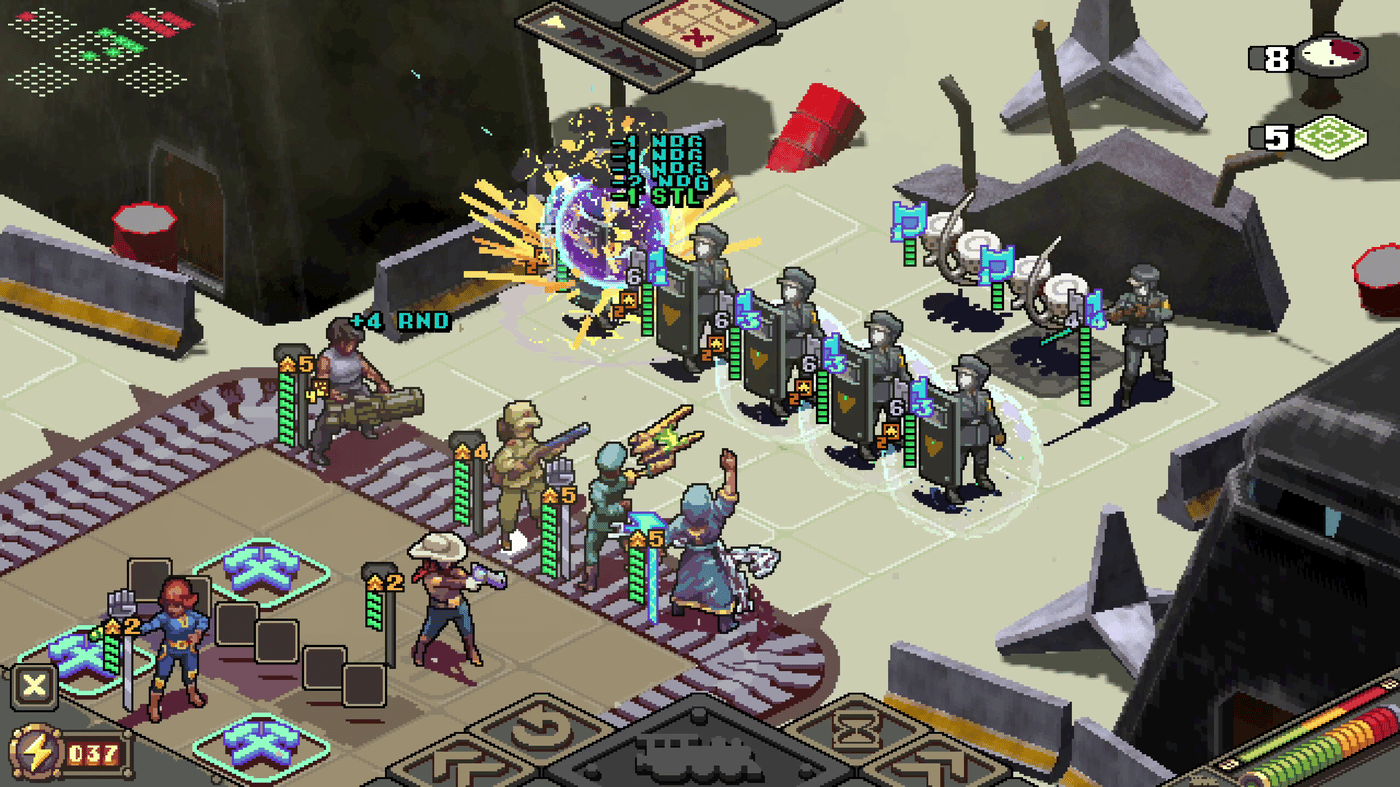
Ismail’s professional trajectory has often seen him push boundaries, but his choice of genre for Australia Did It represents a significant departure from his well-established areas of expertise. Known for the visceral, immediate "fun" of action games, he is now delving into the slower, more deliberate world of turn-based strategy. This shift brings with it a fundamentally different approach to game design and testing, particularly in measuring what makes a game "fun."
In his Vlambeer days, prototypes of action games could be rapidly iterated upon, with quick combat encounters immediately revealing whether a core mechanic was engaging. Ismail and Nijman famously had a rule: a game wouldn’t be greenlit unless it was fun "within two weeks." Strategy games, however, operate on a different temporal and conceptual plane. They reward long-term planning, intricate decision-making, and often require a substantial amount of content and a delicate balance of systems before their true "fun" emerges. "Everything is about getting that balance right. So you need everything kind of in there before you can go ‘ah-ha, it clicked!’" Ismail explained.
That elusive "click" for Australia Did It took significantly longer, manifesting about four to five months into development. "I remember when it first really clicked for Australia Did It and I was like ‘thank god, thank god,’ because it is such a strange game," he recalled. This experience forced Ismail to develop new metrics and instincts for evaluating strategy game balance, a testament to his adaptability as a designer.
What makes Australia Did It so "strange" is its unconventional approach to a familiar genre. While it’s a base-building strategy game, it eschews traditional base-building mechanics. Instead of constructing facilities that churn out units, players acquire units individually and then merge them in strategic ways to fit their evolving gameplay. To guide players through this novel system, the development team implemented a "progression checker," a subtle in-game mechanism designed to periodically assess a player’s unit composition and strategy, offering feedback on whether they are "up to speed." "I want this game, every 5-10 minutes, to just go ‘all right, let’s see how you’re doing,’" Ismail articulated.
This system directly addresses a long-standing frustration Ismail held with classic strategy games. He cited StarCraft, where early strategic choices, sometimes made just minutes into a match, could irrevocably determine the outcome, often without the player realizing their fatal error until much later in a replay. Similarly, he recalled his experience with 2003’s Fire Emblem, where an over-reliance on a powerful early-game character (Marcus the paladin) led to an under-leveled roster for critical late-game missions, forcing a painful sacrifice. "Those memories really went into Australia Did It," he revealed. This demonstrates how even the "screen-shake guy," known for fast-paced, "juiced" explosions, can translate his core design sensibilities – in this case, a desire for clear feedback and a dislike of hidden strategic pitfalls – into an entirely new style of gameplay.
Anticipation and the Future of Indie Innovation
As Australia Did It prepares for launch, Rami Ismail encapsulates the mixed emotions common to any creator unveiling their work. "I’m genuinely very proud of what I built with the team, and also I’m a little nervous what people think of it," he admitted. Despite extensive playtesting and robust internal systems designed to ensure balance and engagement, the ultimate arbiter remains the player community. His hope is simple yet profound: "I just want to see people make a merge, see it fire once, and go, ‘oh shit, that’s cool, or ‘oh I should not have done that.’ Both of those [outcomes] are amazing to me."
Ismail’s journey with Australia Did It is more than just the launch of a new game; it is a significant commentary on the evolving landscape of video game development. His adoption of a flexible, project-based team, his willingness to explore new genres, and his innovative design philosophies, all forged in the crucible of a challenging industry, offer a potential blueprint for other independent developers. In a world grappling with instability and risk aversion, Ismail demonstrates that expertise, adaptability, and a relentless pursuit of creative vision can still yield groundbreaking results. His return serves as a powerful reminder that even in the most brutal of times, the spirit of independent innovation continues to find new ways to thrive and enrich the global tapestry of interactive entertainment.
About the Author