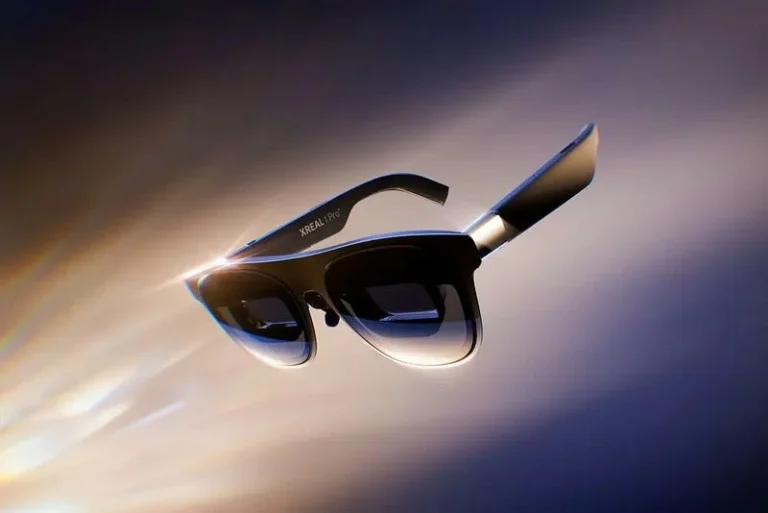
The landscape of wearable extended reality (XR) technology is poised for a significant shift as Samsung Electronics, in collaboration with Google and Qualcomm, nears the commercial release of its highly anticipated smart glasses. Recent filings with the Federal Communications Commission (FCC) indicate that the South Korean conglomerate has secured regulatory approval for two distinct hardware models, designated under the product codes SM-O200P and SM-O200J. These filings represent one of the final administrative hurdles before a product can be legally sold in the United States market, signaling a likely commercial debut before the conclusion of the fourth quarter of 2026.
Strategic Partnerships and Hardware Specifications
The FCC documentation reveals a bifurcated approach to the hardware’s aesthetic and functional design. Samsung has partnered with prominent eyewear brands Gentle Monster and Warby Parker to produce the two identified models. While the underlying technology—driven by Qualcomm’s specialized AR chipsets and Google’s optimized Android-based XR operating system—remains consistent across both versions, the separate FCC clearances were necessitated by the unique structural and material compositions of the different frames.
Industry analysts suggest that this partnership strategy is a direct response to the success of the Ray-Ban Meta smart glasses, which demonstrated that consumer adoption of head-worn wearables is heavily dependent on style and brand recognition. By offering both a high-fashion option through Gentle Monster and a more accessible, classic aesthetic through Warby Parker, Samsung aims to capture a broad demographic of users ranging from tech enthusiasts to mainstream fashion consumers.
Chronology of the Samsung-Google-Qualcomm Alliance
The journey toward this release began in early 2023 when Samsung officially announced a "tri-partite" alliance during its Galaxy Unpacked event. The timeline of development has been marked by several key milestones:

- February 2023: Samsung, Google, and Qualcomm announce a joint venture to build a next-generation XR platform.
- Late 2024: Qualcomm unveils the Snapdragon AR2 Gen 1 and subsequent iterations, providing the low-power, high-performance silicon necessary for slim-frame glasses.
- Mid-2025: Google provides early access to its "Project Astra" AI capabilities, which are expected to serve as the primary interface for the glasses.
- October 2026: FCC filings appear for models SM-O200P and SM-O200J, confirming imminent retail availability.
This timeline reflects a deliberate, multi-year engineering effort to solve the "thermal-to-weight" ratio that has historically plagued AR devices.
Retail Strategies: Snap Inc. and the Pop-Up Model
While Samsung prepares for a traditional retail rollout, Snap Inc. has pivoted toward experiential marketing to drive interest in its latest "Spectacles" AR glasses. The company recently inaugurated its first dedicated AR pop-up location at Westfield Century City in Los Angeles. Scheduled to remain open until November 7, 2026, the venue allows the public to engage directly with the hardware in a controlled environment.
The opening event, characterized by a high-profile attendance including Snap CEO Evan Spiegel and various entertainment industry figures, underscores a shift in how AR is marketed. Rather than positioning the glasses strictly as a productivity tool or a gaming peripheral, Snap is framing the device as a "glamorous" lifestyle accessory. This retail strategy addresses a fundamental challenge in the XR industry: the "seeing is believing" hurdle. Unlike smartphones, the value proposition of AR—spatial overlays and interactive digital elements—cannot be effectively communicated through 2D advertisements.
Technical Analysis of FOV and the Immersion-Portability Trade-off
As the industry moves toward smaller form factors, a technical debate has emerged regarding the Field of View (FOV) in compact VR and AR devices. Recent internal documentation from Meta regarding its latest lightweight VR glasses has sparked discussion within the developer community. While the hardware boasts a nominal FOV of 70°x66°, Meta’s official design guidelines recommend that developers optimize experiences for a perceived FOV of 58°x54°.
This discrepancy highlights a critical limitation in optical engineering. The "nominal" FOV represents the maximum possible viewable area under ideal conditions, where the user’s eyes are positioned at the optimal distance from the lenses (the eye relief). However, factors such as facial structure, the use of prescription inserts, or the physical constraints of a slim frame often increase the distance between the eye and the lens, effectively "shrinking" the visible digital canvas.

For comparison, traditional VR headsets like the Valve Index offer a FOV exceeding 110°, prioritizing immersion. The move toward 58° to 70° indicates a strategic pivot by Meta and its competitors to prioritize "all-day wearability" over total visual immersion. Analysts note that this compromise is necessary to achieve a weight profile that consumers will tolerate for extended periods.
Safety Recalls and Engineering Challenges
The difficulty of miniaturizing powerful computational hardware was recently exemplified by INMO International Technology Limited. The company issued a voluntary recall for several batches of its INMO Air3 smart glasses following reports of overheating. Users described a "burning sensation" during use, a symptom of the high thermal output generated by processors housed within thin plastic temples.
In response, the company has released a mandatory software update designed to throttle the computational unit’s performance to mitigate heat generation. This incident serves as a cautionary tale for the industry, emphasizing that as devices become smaller, thermal management becomes as critical a factor as battery life or display resolution.
Content Ecosystem and Community-Driven Innovation
Despite the hardware challenges, the XR content ecosystem continues to expand through both official channels and community-led initiatives. Meta’s Horizon+ subscription service recently expanded its value proposition by including in-game currency and cosmetic add-ons for popular titles like Orion Drift. This move mirrors successful subscription models in the traditional gaming industry, such as Xbox Game Pass or PlayStation Plus.
Simultaneously, the "Flat-to-VR" modding community has reached a new level of sophistication. Using AI-assisted porting tools, developers have successfully brought classic titles such as Titanfall 2 and Max Payne 2 to VR platforms. Additionally, progress in emulation has allowed for high-fidelity experiences of legacy PSVR titles, such as Astro Bot Rescue Mission, to run on modern PC VR and standalone Quest hardware. This community-driven influx of content provides a vital bridge for the industry, maintaining user engagement while first-party developers work on native XR experiences.

Broader Impact and Market Implications
The convergence of Samsung’s entry into the market, Snap’s retail push, and the technical refinement of Meta’s hardware suggests that the XR industry is entering a "consolidation and refinement" phase. The primary competition is no longer between different types of technology, but between different philosophies of use:
- The Immersion Philosophy: Represented by traditional VR headsets, focusing on gaming and deep-work environments.
- The Ambient Philosophy: Represented by the upcoming Samsung and Meta smart glasses, focusing on AI assistance, notifications, and light AR overlays integrated into daily life.
The success of Samsung’s SM-O200 series will likely depend on the seamless integration of Google’s AI ecosystem. If the "Google-Samsung-Qualcomm" alliance can provide a more utility-driven experience than the current social-media-centric offerings from Meta and Snap, it may redefine the smart glasses category from a niche gadget to a primary computing device. As regulatory approvals conclude and retail locations open, the final quarter of 2026 is set to be a transformative period for consumer electronics.
About the Author