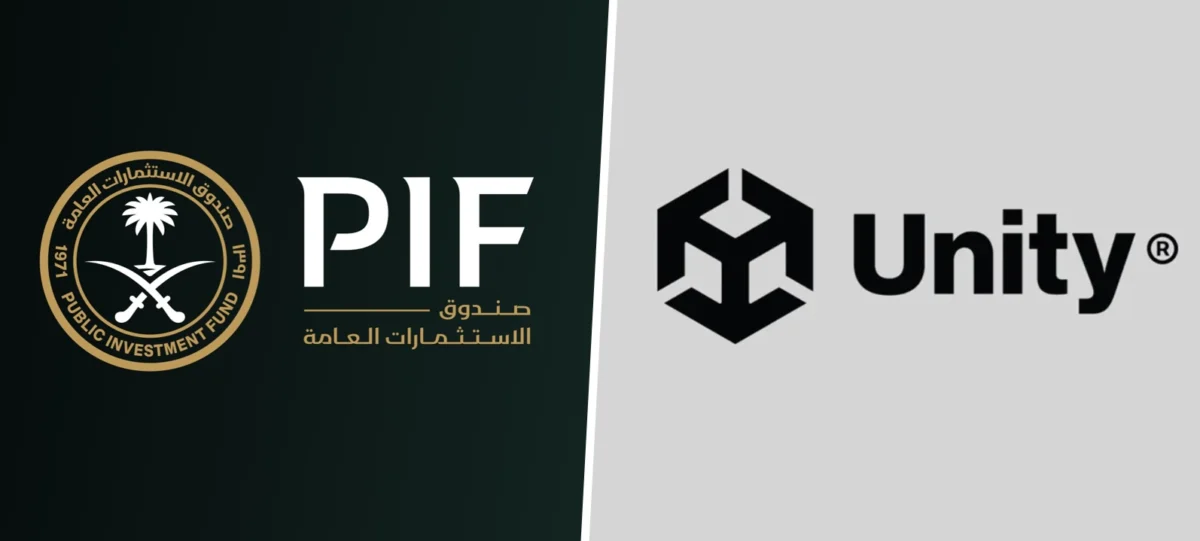
The global gaming industry faces a potential seismic shift as Saudi Arabia’s Public Investment Fund (PIF) and the private equity firm Silver Lake have reportedly entered preliminary discussions regarding a full acquisition of Unity Software Inc. According to sources familiar with the matter, the consortium, which recently orchestrated the landmark $55 billion takeover of Electronic Arts (EA), is looking to take Unity private in a deal estimated to be worth approximately $25 billion. These discussions were initiated prior to Unity’s most recent earnings report, which saw the company’s valuation climb following its first profitable quarter since its initial public offering in 2020.
Silver Lake, which already maintains an 8% stake in Unity, is a seasoned player in the technology investment space and has long served as a strategic partner for the gaming engine provider. The proposed acquisition would consolidate Unity’s diverse portfolio—ranging from its industry-standard game development engine to its sophisticated mobile advertising technology—under the umbrella of the PIF’s expanding interactive media empire.
The Financial Context of the Acquisition
The timing of the reported talks is particularly significant. Unity has spent much of the last several years restructuring its operations to achieve fiscal sustainability. After years of operating at a loss following its IPO, the company announced yesterday that it had achieved profitability in the third quarter of 2026. This financial milestone was largely driven by the success of "Vector," Unity’s proprietary AI-powered adtech platform, which has become a cornerstone of the company’s revenue model.
The $25 billion price tag discussed by the PIF and Silver Lake reflects a premium on Unity’s market capitalization prior to the post-earnings surge. Analysts suggest that the consortium’s interest is rooted not just in the software engine itself, but in the massive data ecosystem Unity controls. As the engine behind the majority of the world’s mobile games, Unity sits at the center of a vast network of user engagement and monetization data.
Saudi Arabia’s Expanding Gaming Portfolio
This move represents the latest and perhaps most strategic step in Saudi Arabia’s "Vision 2030" initiative, which seeks to diversify the Kingdom’s economy away from hydrocarbons. Through the PIF and its dedicated gaming subsidiary, Savvy Games Group, Saudi Arabia has spent tens of billions of dollars to become a dominant force in the global interactive entertainment sector.
The potential addition of Unity would join a prestigious roster of assets. The PIF-led consortium’s recent $55 billion acquisition of Electronic Arts signaled a shift from minority investments to total ownership of "AAA" publishers. Furthermore, the Kingdom already owns Scopely—the developer behind the mobile hit Monopoly Go!—and Moonton, the creator of Mobile Legends: Bang Bang. By acquiring Unity, the PIF would move from owning the content to owning the very infrastructure upon which the content is built.
A Timeline of Unity’s Strategic Pivot
To understand the value proposition for the PIF and Silver Lake, one must look at Unity’s trajectory over the past 24 months. The company has undergone a rigorous process of "portfolio simplification" to shed non-core assets and focus on high-margin software and services.
- Early 2024 – Mid 2025: Unity faced significant backlash and internal restructuring following changes to its pricing model. This period saw the departure of veteran leadership and a renewed focus on developer relations.
- Early 2026: Unity completed the sale of its mobile game publishing arm, Supersonic, to Tripledot Studios for $40 million. This move signaled Unity’s exit from the competitive publishing space to focus on its role as a service provider.
- Mid 2026: The company deepened its integration with big tech, striking a major deal with Google to power "Playground," an AI-driven platform designed to lower the barrier to entry for game creation.
- Q3 2026: Unity reported its first-ever profitable quarter. The growth was attributed to the Vector ad platform and a partnership with UA (User Acquisition) finance firm PvX Partners, which provides financing to mobile studios using Unity’s ecosystem.
The Strategic Importance of Mobile Adtech
While Unity is famous for its game engine—used by everything from indie hits to massive titles like Pokémon GO and Genshin Impact—its true financial engine is its Grow Solutions division. The Vector platform uses machine learning to optimize ad placements and user acquisition costs for mobile developers.
In the current economic climate, where privacy changes (such as Apple’s App Tracking Transparency) have made mobile advertising more difficult, Unity’s integrated approach offers a "walled garden" that is highly attractive to investors. For the PIF, owning the technology that facilitates monetization for millions of developers provides a level of industry influence that transcends the success or failure of any single game title.
Legal Hurdles and Competitive Friction
The path to acquisition is not without obstacles. Unity is currently embroiled in a high-stakes legal battle with AppLovin, its primary rival in the adtech space. AppLovin has accused Unity of anticompetitive data collection practices, alleging that Unity’s Ad Quality SDK harvests sensitive developer and user data without proper authorization.
This litigation introduces a layer of risk for the PIF and Silver Lake. However, industry observers note that Silver Lake’s existing 8% stake gives the consortium an "inside track" on assessing these legal liabilities. Furthermore, a transition to private ownership could allow Unity to resolve these disputes away from the scrutiny of quarterly public reporting, providing the management team more flexibility to settle or pivot their data strategies.
Reaction from the Gaming and Financial Communities
While neither the PIF nor Unity has issued an official statement regarding the acquisition talks, the market response has been one of cautious optimism. Financial analysts at major firms have noted that Unity’s transition to a private entity would be a logical step, given the volatility of the tech sector in 2026.
"Unity is a utility for the gaming world," said one senior analyst at a London-based brokerage. "If you own Unity, you effectively own a tax on the mobile gaming economy. For a sovereign wealth fund with a multi-decade horizon, that is an incredibly stable and attractive asset, provided they can navigate the current regulatory and legal headwinds."
Developers, however, have expressed mixed feelings. The prospect of a sovereign wealth fund owning the engine they rely on for their livelihoods raises questions about long-term neutrality and data privacy. Unity has spent the last year rebuilding trust with its community, and a change in ownership could either accelerate that process through increased investment or hinder it through fears of consolidation.
Broader Implications for the Industry
If the deal proceeds at the $25 billion valuation, it will solidify the PIF’s position as the single most influential entity in the games industry. The combination of EA’s massive IP library and Unity’s technological backbone would create a vertically integrated powerhouse capable of controlling every stage of the game lifecycle—from initial code to global distribution and monetization.
Moreover, this deal would likely trigger further consolidation in the "middle-ware" sector. Competitors like Epic Games (the creators of Unreal Engine) and AppLovin may feel compelled to seek their own strategic partnerships or acquisitions to maintain parity with a PIF-backed Unity.
The move also highlights the increasing convergence of gaming and AI. Unity’s Vector platform and its collaboration with Google on the Playground AI platform suggest that the future of game development is moving toward automated, data-driven creation. By acquiring these tools now, the PIF is positioning itself at the forefront of the next technological revolution in entertainment.
Conclusion and Outlook
As of November 2026, the talks remain private, and there is no guarantee that a formal offer will be accepted or that regulatory bodies in the United States and Europe will approve such a significant consolidation of power. However, the intent is clear: Saudi Arabia is no longer content with being a passive investor in gaming. Through the PIF and partners like Silver Lake, the Kingdom is attempting to build an end-to-end ecosystem that could define the industry for the next generation.
With Unity finally achieving profitability and its adtech stack proving its worth, the company has become the crown jewel of the gaming infrastructure market. Whether it remains a public entity or joins the growing list of PIF-owned giants will be the defining story of the 2026 fiscal year.
About the Author