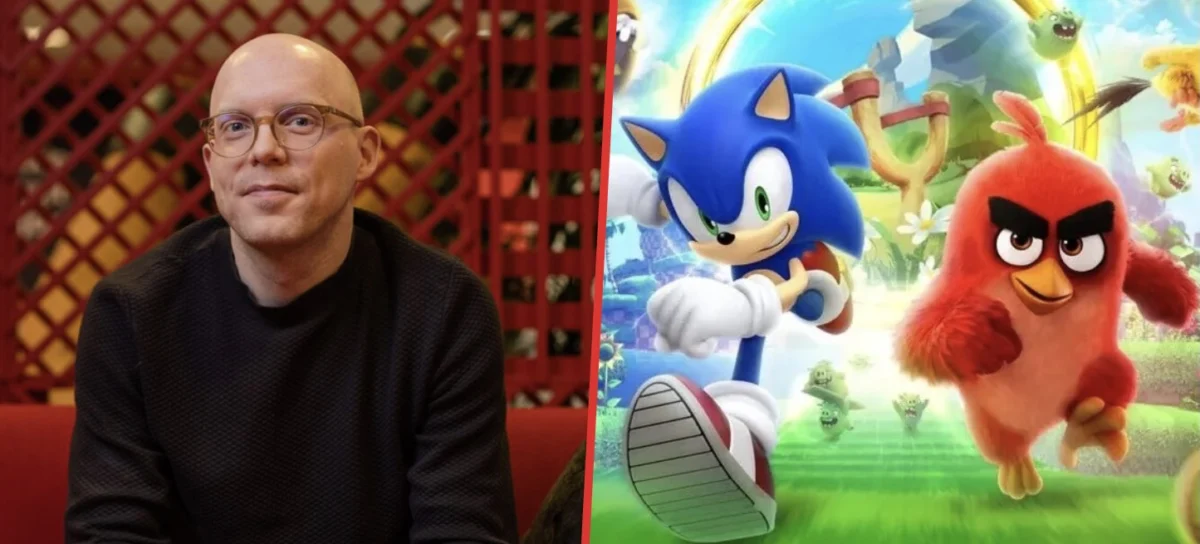
The appointment of Alexandre Pelletier-Normand as Chief Operating Officer of Sega West in July 2024 marked a significant shift in the internal hierarchy of the Japanese gaming giant’s international operations. Already serving as the CEO of Rovio Entertainment, the Finnish studio acquired by Sega for $775 million in 2023, Pelletier-Normand now balances a dual mandate. His expanded brief encompasses oversight of Sega’s premier Western subsidiaries, including Sports Interactive, Creative Assembly, and Two Point Studios, while simultaneously spearheading a comprehensive "rebuilding" phase for the Angry Birds creator. This restructuring comes at a pivotal moment as Sega seeks to reconcile the high cost of the Rovio acquisition with a mobile gaming market that has become increasingly volatile and expensive to navigate.
The Financial Context of the Sega-Rovio Integration
The strategic union between Sega and Rovio was initially framed as a transformative move to bolster Sega’s mobile presence. However, the first year of the partnership has been characterized by financial friction. In May 2024, Sega Sammy Holdings issued a candid assessment, stating that the acquisition had thus far failed to generate the anticipated "economic value." This admission followed a February 2024 decision to write down Rovio’s value by approximately $200 million.
The write-down was attributed to lower-than-forecasted profits and a challenging environment for Rovio’s core titles. Most notably, Angry Birds Dream Blast, a cornerstone of Rovio’s recent portfolio, began to show signs of decline. By October 2025, the company was forced to implement a workforce reduction of 36 staff members, a move driven by both the underperformance of Dream Blast and the logistical necessities of integrating Rovio into Sega’s global corporate structure. This period of contraction also saw the closure of Rovio’s Copenhagen office in August 2024 and the cancellation of Sonic Blitz, a mobile title that was intended to bridge the two companies’ intellectual properties.
A Chronology of Strategic Realignment
The path from the April 2023 acquisition announcement to the current restructuring highlights the complexities of merging a legacy console publisher with a mobile-first developer.
- April 2023: Sega announces the $775 million acquisition of Rovio Entertainment.
- August 2023: The acquisition is officially completed, bringing the Angry Birds IP and the proprietary "Beacon" growth platform under Sega’s umbrella.
- February 2024: Sega performs a $200 million impairment on Rovio’s valuation, citing a difficult market for business plan advancement.
- May 2024: Sega reports that the acquisition has yet to yield expected economic synergies.
- July 2024: Alexandre Pelletier-Normand is named COO of Sega West while retaining his role as Rovio CEO.
- August 2024: Rovio cancels Sonic Blitz and shutters its Copenhagen operations to consolidate resources.
- October 2025: Further layoffs occur as the company pivots toward a leaner, "thesis-driven" development model.
Mapping the New Rovio: Organizational Structure and Distribution
Following the recent consolidation, Rovio’s operational footprint has been reorganized to maximize efficiency and focus on core competencies. The company’s headquarters in Espoo, Finland, remains the primary hub of activity. Housing approximately 290 staff, the Espoo office manages the Puzzle Studio—responsible for Angry Birds Dream Blast and Match and Friends—as well as the Beacon technology team, licensing departments, and central support functions.
The secondary pillar of the organization is Rovio Stockholm. With a staff of roughly 70, this studio remains dedicated to the maintenance and growth of Angry Birds 2, which Pelletier-Normand identifies as a continuing success story. The Barcelona office, consisting of 35 employees, specializes in live operations and monetization strategies across the entire portfolio. Finally, the North American contingent comprises about 20 staff members across Montreal and Toronto, with the latter focusing heavily on titles for subscription services such as Apple Arcade.
The Rebuilding Philosophy: Focusing on Known Strengths
Pelletier-Normand’s vision for the "new" Rovio is centered on a return to fundamental strengths. "The main point now is that Rovio needs to be successful at being Rovio," he stated during a recent industry summit. This "back-to-basics" approach involves a renewed focus on the Angry Birds brand, leveraging existing intellectual property (IP), and optimizing live games while carefully selecting new projects.
The strategy also includes cross-media expansion, such as the upcoming Angry Birds movie, which is expected to drive renewed interest in the gaming ecosystem. By focusing on "what they know," Rovio aims to stabilize its revenue streams before attempting high-risk experimental ventures. This pragmatism is evident in the company’s current development pipeline. For instance, the match-3 puzzler Bloom City Match, which spent three years in soft launch, was recently pulled from app stores. The development team was subsequently reassigned to Angry Birds Match, a title that utilizes similar mechanics but benefits from the significant marketing "pull" of the established Angry Birds brand.
Navigating the Economics of the App Store
A significant hurdle for Rovio—and the mobile industry at large—is the evolving relationship between developers and platform holders like Apple and Google. Pelletier-Normand has been vocal about the "squeezed" position of developers. While Apple and Google maintain a 30% commission on in-app purchases, the cost of User Acquisition (UA) has skyrocketed due to privacy changes and increased competition.
"Ideally, what would happen is that Google and Apple would change their terms so that it’s more reasonable compared to what they’re offering," Pelletier-Normand remarked. He argued that while these platforms provide hosting and infrastructure, they no longer provide the organic visibility that once justified a high commission. To combat this, Rovio is following the industry trend of developing direct-to-consumer webstores. By bypassing the traditional app store payment rails for certain transactions, Rovio hopes to reclaim margins that are currently lost to platform fees and UA costs.
Future Prospects: New Launches and IP Synergy
Despite the recent focus on consolidation, the company maintains that stagnation is not an option. Pelletier-Normand emphasized that failing to release new content is a path to irrelevance. The company is preparing for a new wave of launches in 2026, though the approach will be "deliberate" rather than experimental.
Beyond Angry Birds, the integration of Sega’s flagship IP, Sonic the Hedgehog, remains a priority. While existing Sonic runners like Sonic Dash have been consistent performers, they are limited by their genre in terms of deep monetization. Rovio is currently investigating ways to bring Sonic into genres with more complex mechanics and higher engagement potential.
However, the path to synergy has not been without obstacles. Sonic Rumble Party, a mobile title developed by Sega Tokyo with publishing support from Rovio, has reportedly struggled to meet internal expectations. Pelletier-Normand acknowledged that the game is at risk of cancellation, highlighting the difficulty of managing a high-profile brand like Sonic. "There is no doubt that the game hasn’t been as successful as we would have liked," he admitted, noting that Rovio is no longer acting as the publishing partner for the title, leaving its fate in the hands of Sega’s Japanese headquarters.
Expanding Sega West’s Reach on Mobile
As the COO of Sega West, Pelletier-Normand is also looking to migrate traditional PC and console franchises to mobile platforms. He identified Two Point Studios (Two Point Hospital, Two Point Campus) and Creative Assembly (Total War) as having significant potential in the mobile space.
Two Point’s management simulations are viewed as a "perfect fit" for touch-based interfaces and subscription models like Netflix Games or Apple Arcade. Conversely, the Total War series presents a more significant technical and design challenge. Due to the depth and complexity of the strategy franchise, Pelletier-Normand suggested that a mobile adaptation would require a much longer development cycle to ensure the core experience is not compromised.
Broader Impact and Industry Implications
The restructuring of Rovio under the Sega West umbrella serves as a microcosm of the broader challenges facing the mobile gaming industry in 2024 and 2025. The era of "easy growth" fueled by cheap user acquisition and high organic visibility has ended. Major publishers are now forced to rely on established brands and more conservative development cycles to ensure profitability.
For Sega, the success of this "rebuilding" phase will determine whether the $775 million investment in Rovio was a masterstroke of diversification or a costly miscalculation. By placing a seasoned leader like Pelletier-Normand at the helm of both Rovio and Sega’s Western operations, the company is betting on a unified strategy that bridges the gap between traditional gaming excellence and mobile-first monetization. The coming years, particularly the planned launches of 2026, will be the ultimate test of whether the Angry Birds maker can thrive within the larger Sega ecosystem.
About the Author