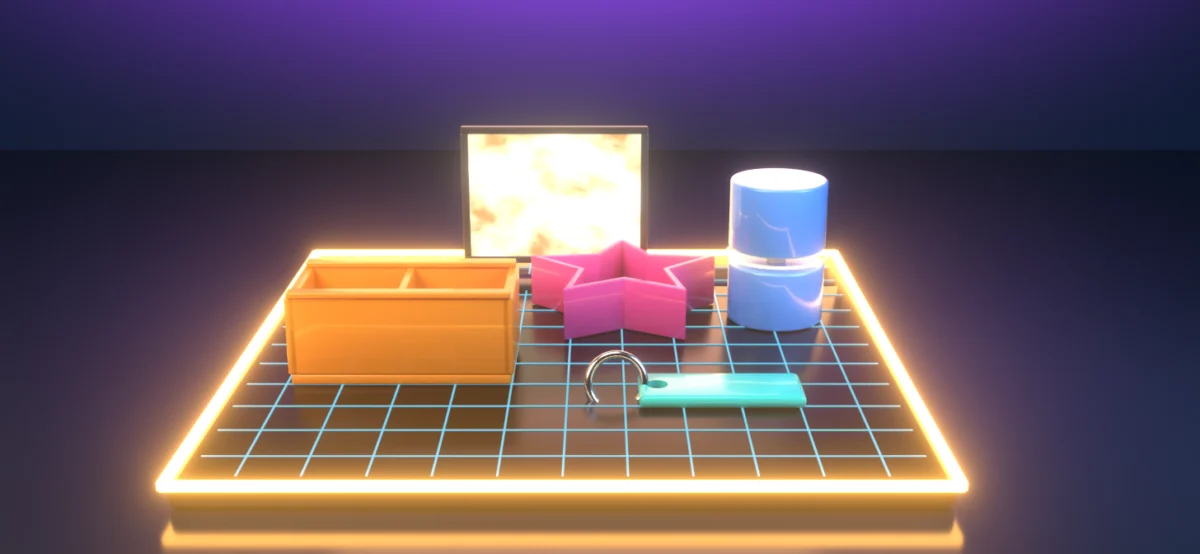
Sonneblom Digitaal has announced the release of its extensive "3D Print Suite," a bundled collection of 18 powerful add-ons designed to streamline and enhance the 3D printing workflow directly within Blender. This consolidated offering aims to provide users with a complete toolkit for preparing, repairing, optimizing, and even creating printable models, all within the familiar environment of the popular open-source 3D creation software. The suite is compatible with Blender 4.2 LTS and newer versions, with each add-on provided as an individually installable ZIP file, offering flexibility and modularity for users.
The 3D Print Suite addresses a wide spectrum of challenges and opportunities encountered by 3D printing enthusiasts and professionals. From the initial stages of model creation and validation to the final preparation for slicing and printing, the suite aims to automate and simplify complex processes. This release signifies a significant move by Sonneblom Digitaal to democratize access to advanced 3D printing tools, making them more accessible and cost-effective for a broader user base. The individual pricing of the 18 add-ons totals $228, but the newly released bundle is being offered at a substantially reduced price of $139, representing a considerable saving for those looking to acquire the full suite of functionalities.
Addressing the Core Challenges of 3D Model Preparation
The development of the 3D Print Suite by Sonneblom Digitaal comes at a time when the 3D printing industry continues its rapid expansion across various sectors, including hobbyist creation, product prototyping, manufacturing, and even artistic expression. As the complexity of 3D models increases and the demands for print quality and reliability grow, so too does the need for robust and user-friendly software tools. Traditional workflows often involve multiple software applications, requiring users to import and export models between different programs, a process that can be time-consuming, error-prone, and lead to data loss or corruption.
The 3D Print Suite’s primary objective is to integrate these essential functionalities directly into Blender, a platform already favored by many for its modeling capabilities. This integration aims to reduce friction in the workflow, allowing users to stay within a single application from initial design to print-ready file generation. The suite is built to work with Blender 4.2 LTS and newer versions, including the recently released 5.2 LTS, ensuring compatibility with current and future stable releases of the software. The add-ons are distributed under the GPL-3.0-or-later license, underscoring a commitment to open-source principles and community contribution.
A Comprehensive Toolkit for Model Integrity and Optimization
The 18 add-ons within the 3D Print Suite can be broadly categorized to illustrate the breadth of their functionality:
Model Repair and Validation
A fundamental aspect of successful 3D printing is ensuring that models are "watertight" and free from geometric errors that can cause print failures. The suite includes tools like Print Fix and AI Mesh Fixer, designed to automatically detect and repair common issues such as non-manifold geometry, inverted normals, and holes in the mesh. These tools leverage sophisticated algorithms, with the AI Mesh Fixer potentially employing machine learning techniques to intelligently address complex topological problems.
Before committing to a print, it’s crucial to verify a model’s printability. The Printability Check add-on provides a comprehensive analysis of a model’s suitability for 3D printing, flagging potential issues before they become costly mistakes. Complementing this, the Wall Thickness Checker is indispensable for ensuring that all parts of the model meet the minimum required wall thickness for the chosen printing technology and material, preventing fragile or hollow structures. The Overhang Finder + Auto-Orient tool is particularly valuable for FDM printing, identifying areas that will require support structures and offering automated orientation suggestions to minimize support material and improve print quality. For professional or large-scale projects, the Asset Preflight tool likely offers more advanced checks and reporting capabilities, ensuring that models meet specific project requirements or manufacturing standards.
Preparing Models for the Printing Process
Once a model is deemed printable, further preparation is often necessary to optimize it for the specific printing process and hardware. The Bed Fit Splitter is a practical tool for breaking down large models into smaller, manageable parts that can fit onto the build plate of standard 3D printers. This is particularly useful for ambitious projects or when working with limited build volume.
For resin 3D printing, Resin Hollow & Drain Holes is an essential utility. It allows users to hollow out solid models to save material and reduce print times, while automatically adding strategically placed drain holes to prevent resin from being trapped inside during the curing process, thus avoiding potential damage or deformation. The Elephant Foot Fixer addresses a common FDM printing artifact where the first few layers of a print can bulge outwards, distorting the base of the model. This tool helps to mitigate that issue, leading to cleaner and more accurate first layers.
Achieving precise fits for assembled components is critical in many applications. The Precision Holes & Inserts add-on likely facilitates the creation of accurate holes and the generation of complementary inserts, ensuring tight tolerances for snapping, screwing, or press-fitting parts together. Similarly, the Fit & Tolerance Test Generator enables users to create specialized test models designed to verify dimensional accuracy and clearances, crucial for functional parts and assemblies.
Exporting, Pricing, and Content Creation
The final stages of the 3D printing workflow involve preparing files for export and understanding the associated costs. The Print Pack Batch and Batch Print Exporter add-ons are designed to streamline the process of exporting multiple models or variations of a model simultaneously, saving significant time for users who frequently produce batches of parts. The Print Cost & Time Calculator is an invaluable tool for businesses and hobbyists alike, providing estimated print times and material costs based on model geometry and printer settings, allowing for accurate project planning and pricing.
Beyond preparation and optimization, the suite also includes tools for generating printable content. The Gridfinity Forge is likely designed to assist in creating components for the popular Gridfinity organization system, a modular system for 3D printed storage bins. The Keychain & Name Tag Maker offers a straightforward way to design personalized keychains and name tags, ideal for gifts or branding. The Lithophane Maker enables users to transform images into printable lithophanes, thin reliefs that reveal a detailed image when backlit, a popular application for personalized decor. Finally, the Emboss & Deboss Text Tool provides a simple yet effective way to add text or logos to models, either raised (embossed) or recessed (debossed), adding customization and detail to printed objects.
Background and Context: The Evolving 3D Printing Landscape
The journey of 3D printing from a niche industrial technology to a widely accessible tool has been marked by continuous innovation in both hardware and software. Early adopters often faced steep learning curves and relied on a patchwork of specialized software for different tasks. The rise of user-friendly 3D modeling software like Blender, coupled with increasingly affordable and capable 3D printers, has democratized the technology. However, the gap between digital design and a successful physical print has remained a significant hurdle for many.
Sonneblom Digitaal’s initiative to bundle these 18 add-ons reflects a growing trend towards integrated workflows and user-centric design in the 3D printing software market. By focusing on Blender, a platform with a massive and active user base, they are tapping into a community already proficient in digital creation. The comprehensive nature of the suite suggests a deep understanding of the common pain points experienced by 3D printing users, from hobbyists encountering print failures to professionals seeking to optimize production workflows.
The decision to offer these tools as a bundle at a discounted price also signals a strategic market entry. With individual add-ons costing a total of $228, the bundle price of $139 represents a significant value proposition. This pricing strategy is likely aimed at encouraging wider adoption and establishing Sonneblom Digitaal as a key provider of essential 3D printing tools for the Blender ecosystem. The licensing under GPL-3.0-or-later further aligns with the open-source ethos of Blender, potentially fostering community engagement and future development.
Chronology of Development and Release
While specific dates for the individual development of each add-on are not provided, the release of the bundled "3D Print Suite" marks a significant milestone. The fact that the suite is tested on Blender 4.2 LTS and 5.2 LTS indicates that these tools have undergone development and refinement over a period that encompasses these stable Blender versions. Blender’s Long-Term Support (LTS) releases are typically spaced out, with major version releases occurring annually. The presence of 4.2 LTS suggests a development cycle that has been active for at least several months leading up to this announcement, and potentially longer for some of the individual components.
The integration and bundling of these 18 add-ons into a single, cohesive suite would have required substantial effort in terms of packaging, documentation, and ensuring compatibility across all components. This suggests a deliberate strategy by Sonneblom Digitaal to consolidate their offerings and present a unified solution to the market. The transition from selling individual add-ons to offering a bundled suite often reflects a maturation of the product line and a strategic decision to simplify the purchasing experience for customers.
Supporting Data and Industry Trends
The 3D printing market is experiencing robust growth, with projections indicating continued expansion in the coming years. According to recent market research reports, the global 3D printing market size was valued at approximately USD 15.1 billion in 2023 and is expected to grow at a compound annual growth rate (CAGR) of over 20% from 2024 to 2030. This growth is driven by increasing adoption in various industries, including automotive, aerospace, healthcare, consumer goods, and education.
Within this broader market, the segment of desktop 3D printers, which are commonly used by hobbyists and small businesses, has seen particularly rapid adoption. This has led to a surge in demand for user-friendly software solutions that can simplify the design and preparation processes. Blender, being a free and open-source software with a vast array of creative capabilities, is a natural choice for many users in this segment. The availability of specialized add-ons that enhance its 3D printing capabilities directly addresses a key need within this growing user base.
Furthermore, the increasing complexity of 3D printable designs, from intricate mechanical parts to detailed artistic creations, necessitates sophisticated tools for error checking and optimization. Features like AI-powered mesh repair and automated overhang detection are becoming increasingly important as users push the boundaries of what is possible with 3D printing. Sonneblom Digitaal’s suite directly addresses these evolving demands by incorporating advanced functionalities that were once only available in high-end, professional software.
Official Responses and Community Reactions (Inferred)
While no direct statements from Sonneblom Digitaal were provided in the original content, the release of such a comprehensive suite can be interpreted as a proactive response to the needs and feedback of the 3D printing community. The decision to bundle 18 add-ons suggests that these tools have likely undergone testing and refinement based on user input. The inclusion of features like AI mesh fixing and automated orientation indicates an investment in cutting-edge technologies to solve persistent problems.
The 3D printing community, particularly within the Blender ecosystem, is known for its active engagement and demand for robust tools. Announcements of new add-ons and suites that promise to simplify workflows and improve print quality typically generate considerable interest. It can be inferred that Sonneblom Digitaal anticipates a positive reception from users who have been looking for integrated solutions within Blender. The availability of these tools under an open-source license further suggests a desire to contribute to and benefit from the broader open-source community.
Broader Impact and Implications
The launch of Sonneblom Digitaal’s 3D Print Suite has several significant implications for the 3D printing landscape:
Enhanced Accessibility and Cost-Effectiveness
By bundling 18 specialized add-ons into a single, affordably priced package, Sonneblom Digitaal is making advanced 3D printing preparation tools significantly more accessible. This can lower the barrier to entry for individuals and small businesses looking to leverage 3D printing for prototyping, custom manufacturing, or creative projects. The cost savings compared to purchasing individual add-ons are substantial, potentially enabling users to invest in other aspects of their 3D printing setup.
Streamlined Workflows and Increased Efficiency
The integration of these tools directly within Blender eliminates the need for users to switch between multiple software applications. This streamlining of the workflow can lead to significant time savings and reduced errors. Professionals and hobbyists alike can benefit from the ability to design, repair, optimize, and prepare models for printing all within a single, familiar environment. This efficiency can accelerate project timelines and improve overall productivity.
Democratization of Advanced 3D Printing Capabilities
Features like AI-powered mesh repair, automated overhang detection, and precision fit generation are typically found in high-end, professional 3D modeling and preparation software, often at considerable expense. By making these capabilities available through add-ons for Blender, Sonneblom Digitaal is democratizing access to advanced functionalities. This empowers a wider range of users to achieve professional-quality results without requiring expensive proprietary software licenses.
Contribution to the Open-Source Ecosystem
The distribution of the 3D Print Suite under the GPL-3.0-or-later license signifies a commitment to the principles of open-source software. This fosters collaboration, transparency, and the potential for community-driven improvements and extensions to the add-ons. By contributing to the Blender ecosystem in this manner, Sonneblom Digitaal not only benefits its users but also strengthens the broader open-source 3D creation community.
In conclusion, the release of the 3D Print Suite by Sonneblom Digitaal represents a significant development for 3D printing enthusiasts and professionals using Blender. By consolidating a comprehensive set of essential tools into an accessible bundle, the company is poised to empower a wider audience to unlock the full potential of 3D printing, simplifying complex processes and fostering greater creativity and efficiency within the Blender ecosystem.
About the Author