
The universe, an expanse estimated to be 13.8 billion years old, offers a perplexing contradiction: despite the seemingly astronomical probability of extraterrestrial life emerging across countless star systems, humanity has yet to detect any definitive signs of intelligent civilizations. This profound silence, often encapsulated by physicist Enrico Fermi’s famous question, “Where is everybody?”, lies at the heart of the Fermi Paradox, a central enigma in astrobiology and astrophysics that continues to challenge our understanding of life’s prevalence in the cosmos.
The Genesis of a Cosmic Conundrum
The Fermi Paradox originated from a casual lunch conversation in 1950 among scientists at Los Alamos National Laboratory, where Enrico Fermi famously posed his question regarding the apparent absence of extraterrestrial visitors. Given the age of the universe, the sheer number of stars, and the mechanisms of evolution, it seemed logical that advanced civilizations should have had ample time to develop and spread across the galaxy, if not the universe. Their lack of discernible presence, therefore, demands an explanation.
This informal query gained significant scientific traction over the decades, particularly with the advent of projects like SETI (Search for Extraterrestrial Intelligence) and theoretical frameworks such as the Drake Equation. Developed by astronomer Frank Drake in 1961, the Drake Equation provides a probabilistic argument for estimating the number of active, communicative extraterrestrial civilizations in the Milky Way galaxy. Its variables include the rate of star formation, the fraction of stars with planets, the average number of planets that can potentially support life, the fraction of those planets where life actually arises, the fraction of those where intelligent life develops, the fraction of intelligent civilizations that develop technology capable of interstellar communication, and the length of time such civilizations release detectable signals into space. While the precise values for these variables are largely speculative, even conservative estimates often suggest that our galaxy should be teeming with advanced life, deepening the paradox.
Early optimism surrounding the potential for contact was fueled by the nascent space age and breakthroughs in radio astronomy. Scientists reasoned that if civilizations were common, at least some would have developed radio technology, much like Earth, and their signals would be detectable across interstellar distances. Decades of dedicated listening, however, have yielded no unambiguous alien transmissions, leaving the cosmic airwaves eerily quiet.

The Universe’s Vastness and the Probability Puzzle
To fully appreciate the scope of the Fermi Paradox, one must grasp the staggering scale of the universe. Our home galaxy, the Milky Way, is estimated to contain between 200 and 400 billion stars. Beyond our galaxy, observations from telescopes like the Hubble Space Telescope suggest there are at least 2 trillion galaxies in the observable universe. Many of these stars host planetary systems, a fact confirmed by the rapid proliferation of exoplanet discoveries in recent decades. Missions like NASA’s Kepler Space Telescope and Transiting Exoplanet Survey Satellite (TESS) have identified thousands of exoplanets, with statistical analyses indicating that potentially billions of Earth-sized planets reside in the habitable zones of their stars within the Milky Way alone – regions where conditions might allow for liquid water, a key ingredient for life as we know it.
The universe’s immense age further compounds the paradox. With the first stars forming billions of years before our Sun, many planetary systems could have had a 13-billion-year head start on Earth in terms of evolution. This vast temporal advantage would provide ample time for life to not only emerge but to evolve into highly advanced, even interstellar, civilizations. On Earth, life arose relatively early in the planet’s history, within a billion years of its formation. Simple microbial life dominated for billions of years before the Cambrian explosion ushered in complex multicellular organisms, eventually leading to intelligent species. If this evolutionary trajectory is not unique, then countless other worlds could have followed similar paths, potentially reaching technological maturity eons ago.
Astrobiological research also broadens the horizons for where life might exist. The discovery of extremophiles on Earth – organisms thriving in environments previously thought inhospitable, such as deep-sea hydrothermal vents, highly acidic waters, or beneath Antarctic ice – suggests that life might be far more resilient and adaptable than once imagined. The potential for subsurface oceans on icy moons like Europa (Jupiter) and Enceladus (Saturn), or even ancient microbial life on Mars, hints that life’s requirements might not be as stringent as assumed, further increasing the probability of its widespread occurrence.
The Great Filter: Hypotheses for the Silence
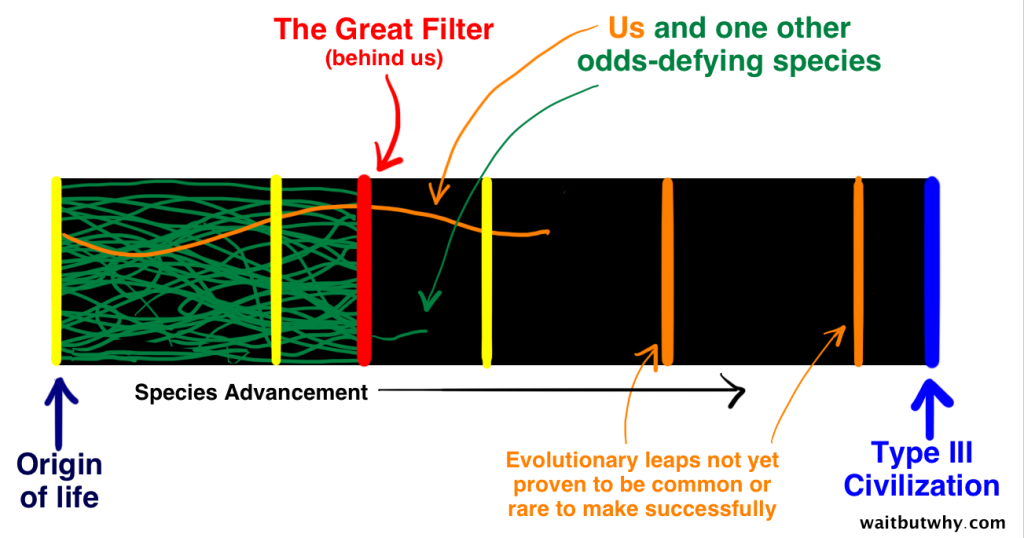
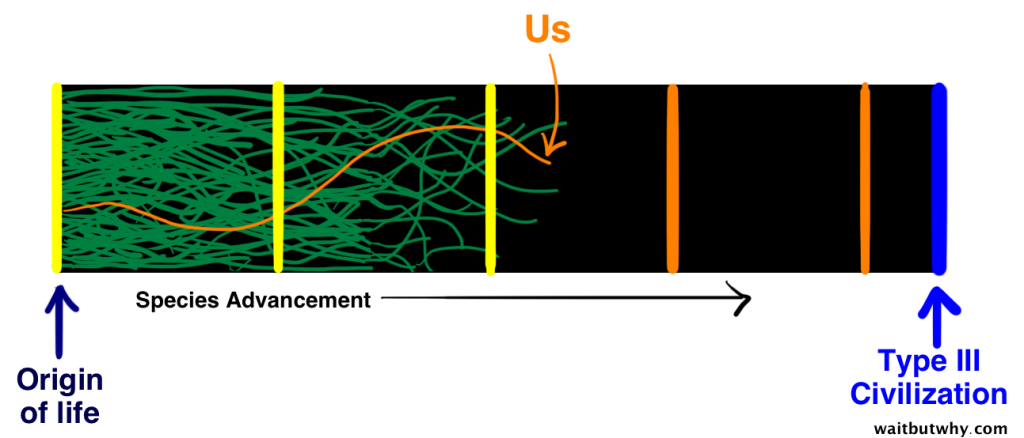
In response to the Fermi Paradox, the concept of the Great Filter emerged, proposing that at some critical juncture in the evolutionary path from inorganic matter to a Type III civilization (capable of harnessing the energy of an entire galaxy, as per the Kardashev scale), there exists an extremely improbable or impossible step that nearly all attempts at life fail to overcome. This "filter" could be behind us, meaning we are exceptionally rare, or it could lie ahead, posing a grave threat to our future. Scientific discourse has largely categorized these possibilities into three main types, as explored by various researchers and popular science communicators.

1. The Filter is Behind Us: We Are Uniquely Fortunate
This category suggests that the steps required for intelligent, communicative life to arise are so astronomically improbable that Earth represents an exceptional, perhaps singular, success story in the observable universe.
-
The Rare Earth Hypothesis: This theory posits that the specific combination of astrophysical and geological conditions necessary for complex life, and particularly intelligent life, is exceedingly rare. These conditions include:
- Being located in a galactic habitable zone, far enough from the chaotic galactic center but close enough to access heavy elements.
- Having a stable star like our Sun.
- The presence of a large moon (like Earth’s) to stabilize planetary tilt and create tides, crucial for early life.
- Plate tectonics, which recycles nutrients, regulates climate, and drives geological activity essential for long-term habitability.
- A strong magnetic field to protect against harmful solar radiation.
- The presence of a "gravitational shield" like Jupiter to deflect comets and asteroids.
The confluence of these factors, proponents argue, makes Earth an anomaly.
-
The Origin of Life (Abiogenesis): The transition from non-living chemicals to self-replicating biological entities remains one of science’s greatest unsolved mysteries. If abiogenesis is an extremely rare event, perhaps requiring highly specific, fleeting conditions, then life itself might be a cosmic rarity.
-
The Evolution of Eukaryotic Cells: After abiogenesis, the development of complex eukaryotic cells from simpler prokaryotes was a monumental evolutionary leap. This involved the engulfment of one bacterium by another, leading to organelles like mitochondria. This singular event, occurring only once in Earth’s history, might represent a significant filter.
-
The Emergence of Multicellularity and Intelligence: Subsequent filters could include the development of multicellular organisms from single-celled ones, and then the evolution of complex brains capable of abstract thought, tool-making, and communication. Each of these steps, while seemingly inevitable on Earth, could be incredibly unlikely across the vastness of space and time.

2. The Filter is in Our Future: A Looming Catastrophe
This terrifying prospect suggests that intelligent civilizations commonly arise, but almost invariably encounter a barrier that prevents their long-term survival or expansion. This filter, if it exists, could be a universal fate awaiting humanity.
-
Self-Destruction: As civilizations advance technologically, they may develop the means of their own destruction. This could manifest as:
- Nuclear warfare: The capacity for global annihilation.
- Ecological collapse: Unchecked industrialization leading to climate change, resource depletion, or widespread pollution.
- Runaway artificial intelligence: AI systems exceeding human control and acting against humanity’s interests.
- Novel biotechnologies: Genetically engineered plagues or unforeseen biological hazards.
- Grey Goo Scenario: Self-replicating nanobots consuming all matter on Earth.
The argument here is that technological prowess often outpaces wisdom and self-control, leading to an inevitable demise.
-
Technological Transcendence and Invisibility: Another hypothesis, though less catastrophic, suggests that advanced civilizations might undergo a profound transformation, evolving beyond their physical forms or beyond our current understanding of "life." They might merge with advanced AI, upload their consciousnesses to digital realms, or become so energy-efficient and subtle in their existence that they become undetectable by our current methods. This echoes the original article’s musing on intelligent life potentially becoming "smaller" and "faster," shedding physical constraints. As SETI astronomer Seth Shostak has posited, "Why build planet-size anything when the real action is in the small things? Small spaces, small units of time, everything gets smaller." He suggests that advanced societies might focus on building nanobots or highly efficient, compact systems, having little incentive or need to engage in large-scale, visible engineering projects that would betray their presence. If intelligence inherently gravitates towards efficiency, miniaturization, and potentially non-physical existence, then their "absence" might simply be a consequence of their advanced state.
-
Cosmic Cataclysms: While less tied to a civilization’s internal actions, external events could also act as a filter. Gamma-ray bursts, supervolcano eruptions, asteroid impacts, or even localized supernovae could wipe out emerging civilizations before they achieve interstellar capabilities. While these events are rare, over cosmic timescales and across billions of galaxies, they would certainly play a role in shaping the distribution of life.
3. They Are Out There, But We Can’t Detect Them
This category proposes that intelligent life is common, but various factors prevent us from making contact.
-
Distance and Time: The universe is unimaginably vast, and even light takes billions of years to traverse it. Signals from distant civilizations might simply not have reached us yet, or they might be too faint to detect over interstellar distances. Furthermore, civilizations might rise and fall within relatively short cosmic timescales, meaning their periods of broadcasting detectable signals might not overlap with humanity’s listening window.
-
Different Communication Methods: We primarily search for radio signals, assuming extraterrestrials would use similar technologies. However, advanced civilizations might employ entirely different methods of communication – perhaps neutrinos, gravitational waves, quantum entanglement, or even methods we cannot yet conceive or detect.
-
The Zoo Hypothesis: This intriguing theory suggests that advanced civilizations are aware of humanity but choose not to interfere, observing us as if we were animals in a cosmic zoo or a protected natural reserve. This non-intervention policy, often referred to as a "prime directive," would prevent them from contacting us until we reach a certain level of maturity or self-sufficiency.
-
The Dark Forest Theory: A more pessimistic variant, popularized in science fiction, proposes that the universe is a "dark forest" where every civilization is a hunter. To reveal one’s presence is to invite destruction from other, potentially hostile, civilizations. Therefore, silence becomes the ultimate survival strategy, explaining the cosmic quiet.
The Parallel with Time Travel
The Fermi Paradox finds an interesting conceptual parallel in the absence of time travelers from the future. Just as the lack of observable alien civilizations prompts the question "Where is everybody?", the lack of identifiable visitors from humanity’s future raises the question of whether time travel is truly possible. Given the enormous span of time stretching ahead of us, it seems intuitive that if time travel were ever to be invented, someone, somewhere, at some point, would have utilized it by now, potentially visiting our era.
This absence of evidence is often cited as an argument against the feasibility of time travel, suggesting that fundamental physical laws might preclude its development. However, as noted by figures like Carl Sagan, the lack of time travelers does not definitively prove impossibility. They might exist but are discreet, disguising their presence, or operate under rules that prevent interaction. This mirrors some explanations for the Fermi Paradox: alien civilizations might exist but are hidden, culturally disinclined to contact us, or simply beyond our current methods of detection. Both paradoxes underscore the limitations of drawing conclusions from an absence of evidence when dealing with phenomena that could be incredibly rare, subtle, or simply beyond our current understanding.
Ongoing Search and Future Prospects
Despite the enduring mystery, the search for extraterrestrial intelligence continues with renewed vigor and increasingly sophisticated tools. Projects like Breakthrough Listen, utilizing some of the world’s most powerful radio telescopes, are systematically surveying a vast array of stars and galaxies for artificial signals. The development of next-generation telescopes, such as the Square Kilometre Array (SKA), promises unprecedented sensitivity and observational capabilities.
Beyond radio astronomy, new avenues of research are emerging. The James Webb Space Telescope (JWST), with its ability to analyze the atmospheres of exoplanets for biosignatures (gases indicative of life, like oxygen or methane) and even technosignatures (chemical byproducts of industrial activity), opens up a new frontier in the search. Future missions may involve direct imaging of exoplanets or even interstellar probes, though these remain distant technological aspirations.
The implications of either finding or not finding extraterrestrial life are profound. A positive detection would fundamentally alter humanity’s perception of its place in the universe, potentially unifying our species and spurring unprecedented scientific and philosophical advancements. Conversely, if the cosmic silence persists indefinitely, it could reinforce the notion that intelligent life is an extraordinary rarity, placing an immense responsibility on humanity to safeguard its own unique existence. The Fermi Paradox, therefore, is not merely a scientific puzzle; it is a deep philosophical inquiry into our cosmic solitude and the potential destiny of life itself. The quest for an answer continues to drive scientific exploration, reminding us that the greatest discoveries may yet lie in the silent, star-filled depths of the universe.
About the Author







