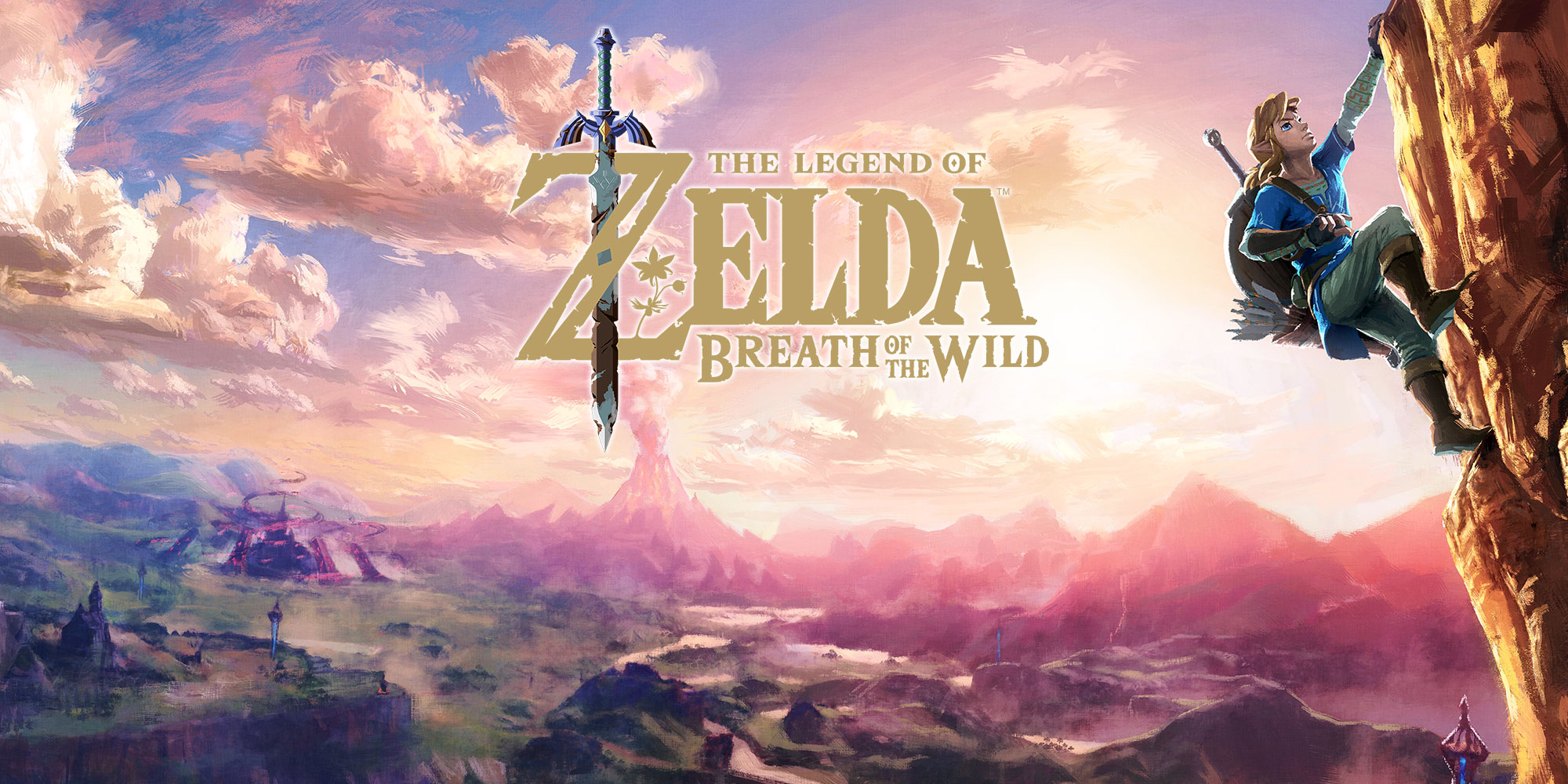
Nintendo, a titan in the video game industry, has consistently delivered experiences that transcend mere entertainment, carving out an enduring reputation built on innovation and iconic titles. Among these, The Legend of Zelda: Breath of the Wild stands as a monumental achievement, a modern classic that not only redefined its venerable franchise but also significantly influenced the broader open-world genre. Launched in 2017, the game garnered a staggering 97% Metacritic score, a testament to its universal critical acclaim, and has sold over 34 million units worldwide, solidifying its status as one of the best-selling and most beloved titles on the Nintendo Switch. This commercial and critical success was not merely a matter of innovative gameplay mechanics or expansive environments; a crucial, often understated, element was the profound emotional resonance achieved through its characters and their meticulously crafted dialogue. Nintendo masterfully uses dialogue to convey complex themes of pressure, responsibility, warmth, and loss, making even minor conversations contribute to a world that feels palpably alive and deeply affecting. As The Legend of Zelda series approaches its significant 40th anniversary, it is an opportune moment to revisit and appreciate the most memorable quotes from Breath of the Wild, exploring how they weave together the game’s intricate tapestry of heartbreak, hope, and resilience.
The Genesis of a Redefinition: Context and Development of Breath of the Wild
The Legend of Zelda series has a rich history spanning nearly four decades, characterized by a continuous drive for innovation within a beloved fantasy framework. From the groundbreaking open-world design of the original 1986 The Legend of Zelda to the 3D revolution of Ocarina of Time and the motion-controlled immersion of Skyward Sword, each installment pushed boundaries. However, by the early 2010s, the formula, while still excellent, was showing signs of maturation. Developers at Nintendo EPD recognized the need for a radical departure, a re-evaluation of the core tenets of Zelda to truly surprise and captivate a new generation of players while honoring the series’ legacy.
Development for Breath of the Wild began in 2011, initially targeting the Wii U. The team, led by director Hidemaro Fujibayashi and producer Eiji Aonuma, aimed to break conventions that had become ingrained in the series, such as linear progression, dungeon-based gameplay, and restricted exploration. Their philosophy centered on "breaking the rules" and creating a truly open-ended experience where player freedom was paramount. This involved designing a vast, interconnected Hyrule where players could go anywhere and do anything from the outset, a concept inspired by the original Zelda game’s sense of discovery. The game’s physics engine, chemistry system, and robust emergent gameplay elements were meticulously crafted to support this vision, allowing players to creatively interact with the environment in unprecedented ways. The decision to launch it simultaneously with the Nintendo Switch in March 2017 proved strategic, making Breath of the Wild a killer app that drove initial console sales and showcased the Switch’s capabilities.
The Story Unfolds: Awakening in a Shattered Hyrule
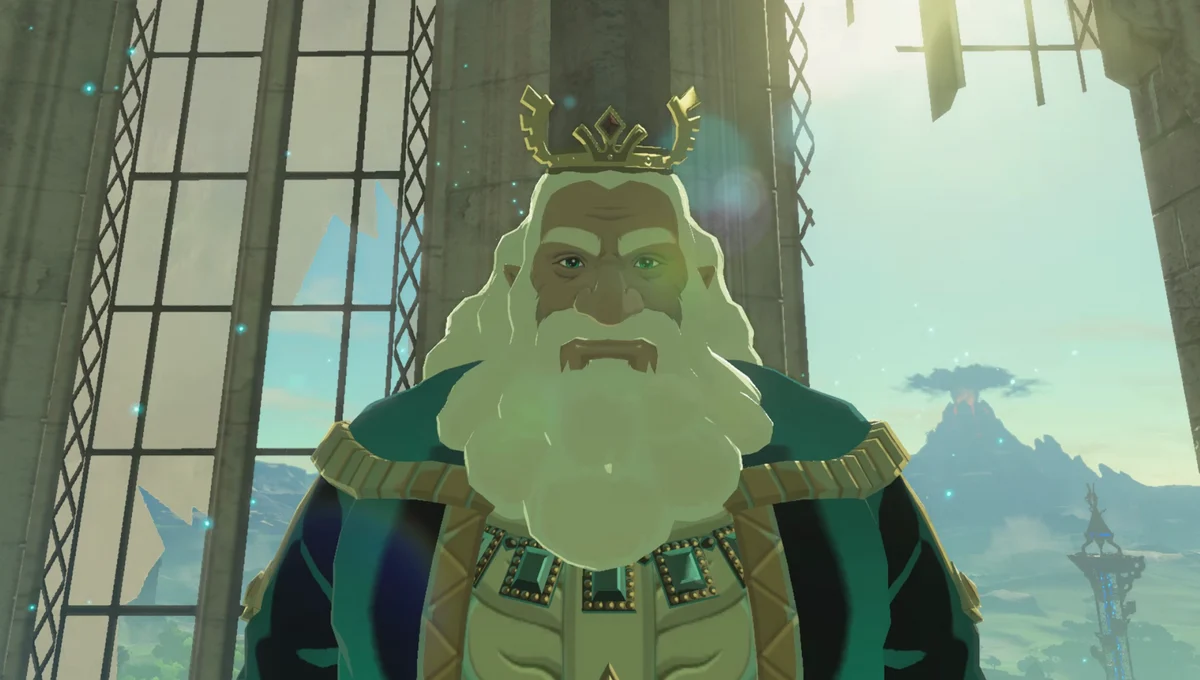
The Legend of Zelda: Breath of the Wild plunges players into a Hyrule ravaged by a century-old cataclysm known as the Great Calamity. The narrative begins with the protagonist, Link, awakening from a 100-year slumber in the Shrine of Resurrection, devoid of memory. He finds himself in a kingdom he barely recognizes, a desolate yet beautiful landscape reclaimed by nature and haunted by the lingering presence of Calamity Ganon. His immediate task, revealed by the spirit of King Rhoam, is to piece together his fragmented past, gather strength, and ultimately confront Ganon before Hyrule is irrevocably doomed.
This premise immediately establishes a powerful sense of loss and urgency. However, the game famously defines its experience through unparalleled freedom. After a brief tutorial on the Great Plateau, players are unleashed into a sprawling open world, free to approach the overarching quest at their own pace. They can spend countless hours climbing mountains, gliding across vast plains, discovering hidden shrines, learning recipes, and battling formidable foes. This non-linear approach to exploration and progression is intrinsically linked to the game’s unique storytelling method. Rather than relying on extensive cutscenes or overt exposition, Breath of the Wild employs a quieter, more reflective form of narrative delivery. The environment itself tells a story of decay and past glory, while scattered memories and character interactions slowly unveil the tragedy that befell Hyrule and Link’s pivotal role in it. The world, in essence, becomes a vast graveyard disguised as a playground, a place of silent heartbreak that gradually reveals itself as a story of rebuilding, resilience, and forging a new path forward. This unstructured discovery lends immense emotional weight to every conversation and revelation.
The Power of the Spoken Word: Memorable Quotes from Breath of the Wild
While Link, the playable character, remains a silent protagonist, the world of Hyrule is brought to life through a vibrant cast of characters whose words carry the story’s emotional weight. Their dialogue provides context, motivation, and profound insights into the struggles and hopes of a kingdom on the brink.
Princess Zelda
Princess Zelda is perhaps the most central emotional figure in Breath of the Wild. A member of Hyrule’s royal family, she is portrayed as intelligent, compassionate, and fiercely determined, yet burdened by immense pressure. Unlike previous iterations, this Zelda struggles profoundly with her inability to awaken her sealing power, leading to self-doubt and frustration as the Great Calamity looms. Her journey is one of immense personal growth, culminating in her eventual sacrifice to seal Ganon for 100 years. Her quotes often reveal her internal conflict, her dedication, and her ultimate resolve:
- "I’ve been a failure my whole life. My studies into ancient technology, my research into the Princesses of the past… I’ve been a disappointment in every way. I’ve done nothing to help Hyrule, and my powers… they’re still dormant." This quote, often heard in Link’s recovered memories, perfectly encapsulates Zelda’s profound sense of inadequacy and the immense pressure she feels to save her kingdom, a burden that makes her incredibly relatable.
- "May the Goddess smile upon you." A recurring phrase that highlights her faith and hope, even in the darkest times.
- "Link… you are the light—OUR light—that must shine upon Hyrule once again. Now, go. And save us all." Uttered as she seals Calamity Ganon, this line underscores her unwavering belief in Link and her ultimate self-sacrifice, transforming her self-doubt into resolute leadership.
- "Thank you, Link. You really are the best of the best." A moment of genuine appreciation, showcasing her growing trust and affection for Link.
King Rhoam Bosphoramus Hyrule
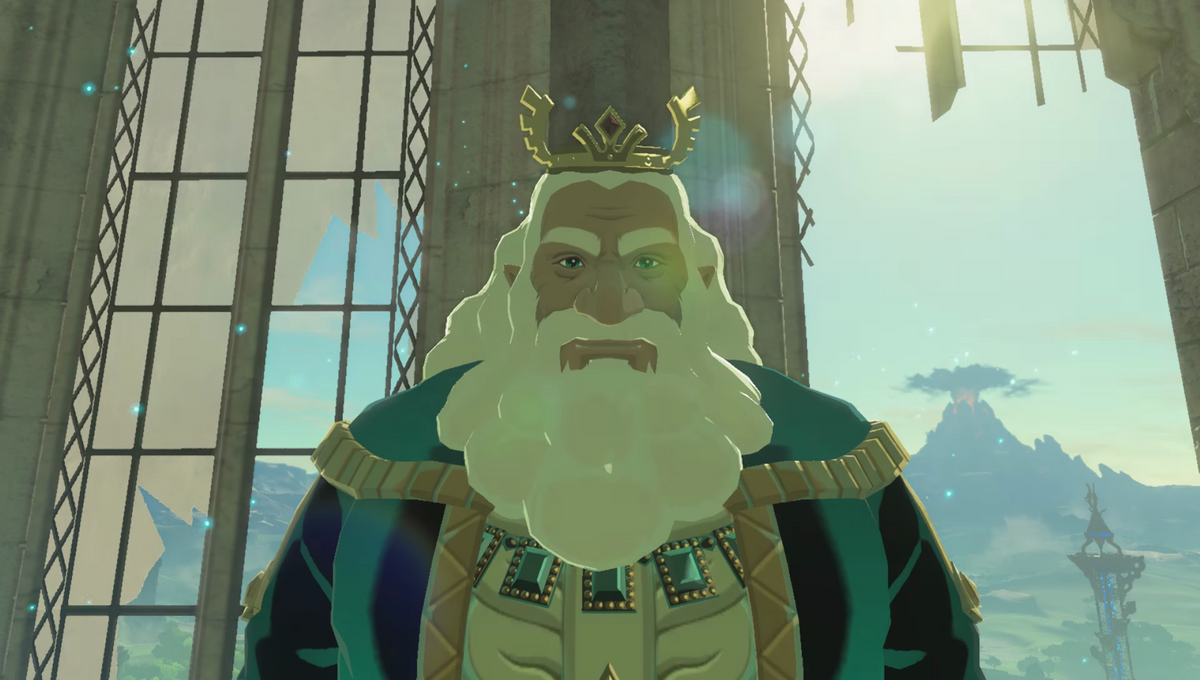
King Rhoam, Zelda’s father and the last king of Hyrule, appears to Link as a spirit guide on the Great Plateau. Initially presenting as strict and somewhat stern, his true nature as a caring father and a wise, albeit regretful, ruler is gradually revealed. His words provide crucial exposition and guidance, reflecting both the weight of his past failures and his enduring hope for Hyrule’s future.
- "The history of the royal family of Hyrule is also the history of Calamity Ganon, a primal evil that has been a threat since ancient times." This opening line sets the historical context for the entire game, immediately establishing the ancient, cyclical nature of the conflict.
- "You are the last hope for Hyrule… and my daughter." A powerful statement that places the immense burden of saving Hyrule and Zelda squarely on Link’s shoulders, conveying Rhoam’s personal sorrow and his desperate hope.
- "The time has come to fulfill your purpose, Link. You must defeat Ganon." A direct command that reinforces the gravity of Link’s quest and Rhoam’s role as a guiding, albeit spectral, authority.
- "I was too hard on her… I only wish I could have seen her smile more often." A poignant confession that reveals his deep love for Zelda and his regret over his strict parenting, adding a layer of tragic humanity to his character.
Urbosa
Urbosa, the Gerudo Champion, is a formidable warrior and one of Zelda’s closest confidantes. Known for her intimidating presence, she is also charismatic, fiercely loyal, and possesses a strong maternal affection for Zelda. Her dialogue often reflects her strength, her wisdom, and her personal connection to the royal family.
- "Little bird, you are as stubborn as your mother, but perhaps a bit more prone to tears." A tender yet teasing remark to Zelda, highlighting her deep affection and history with the royal family, particularly Zelda’s mother.
- "That wretched man… he stole everything from me! My people… my family… and now he threatens to take you too, little bird. I will not allow it!" Expressing her fierce hatred for Ganon and her protective instincts towards Zelda, this quote showcases her warrior spirit and personal vendetta.
- "That girl… she carries the hopes of an entire kingdom on her shoulders. She is burdened by a destiny she did not choose, and yet she faces it with courage. She is a true hero." Urbosa’s profound admiration for Zelda’s resilience, underscoring her role as a mentor and supporter.
- "May the light of the desert shine upon you, Link. Go, and bring peace to Hyrule." Her blessing to Link, a powerful endorsement from a respected warrior.
The Other Champions: Daruk, Mipha, and Revali
The other Champions, each representing a different race of Hyrule, also contribute significantly to the narrative through their memorable dialogue, often revealed in Link’s memories.
- Daruk (Goron Champion): Known for his jovial nature and unwavering bravery.
- "Look at you, Little Guy! All grown up and ready for adventure! Just try not to break too many bones, alright?" A warm, protective sentiment towards Link, characteristic of his big-hearted personality.
- "For Hyrule! For Zelda! For all of us!" A rallying cry that epitomizes his courageous spirit.
- Mipha (Zora Champion): Gentle, compassionate, and possessing healing powers, she harbored unrequited feelings for Link.
- "I will always protect you, Link. No matter what." A tender, heartfelt promise that foreshadows her ultimate sacrifice.
- "My healing power… it is yours now, Link. Use it to protect yourself… and Princess Zelda." Her final, selfless act, entrusting her power to Link.
- Revali (Rito Champion): Arrogant and competitive, but undeniably skilled, Revali often expressed disdain for Link while secretly respecting his abilities.
- "Don’t get cocky, Link. You may have the Master Sword, but I have the skies." A classic line reflecting his competitive nature and pride in his aerial prowess.
- "Hmph. Don’t think for a second this means I respect you. You’re still just a Hylian, after all." A characteristic dismissal, even in moments of grudging acknowledgment.
Lighter Moments and Supporting Characters
Beyond the main dramatic narrative, Breath of the Wild is peppered with charming, quirky, and sometimes humorous dialogue from its vast array of NPCs. These lighter moments provide welcome relief and enrich the game’s sense of place.
- Hestu: The Korok who needs his Maracas filled with Korok Seeds.
- "Yahaha! You found me!" His iconic, joyful exclamation upon being discovered, a staple for explorers.
- Kass: The Rito minstrel who sings ancient songs and riddles.
- "I sing of ancient legends, of heroes and princesses, of courage and wisdom. Perhaps you, too, will become a part of the song." His poetic words add to the game’s mythical atmosphere.
- Beedle: The traveling merchant.
- "Thank you! Come again! Oh! And if you see any beetles, you know who to call!" His enthusiastic and slightly eccentric pleas are memorable.
- Old Man (King Rhoam in disguise):
- "It’s dangerous to go alone! Take this." A nostalgic nod to the original Zelda game, delivered with a wry smile.
These exchanges, whether steeped in enthusiasm, charm, tension, or outright strangeness, collectively make The Legend of Zelda: Breath of the Wild an unforgettable experience. They deepen character motivations, provide essential exposition, and imbue the vast world of Hyrule with a palpable sense of history and life.
Broader Impact and Legacy
The Legend of Zelda: Breath of the Wild‘s success extended far beyond its critical acclaim and sales figures. It fundamentally shifted expectations for open-world game design, inspiring countless developers to reconsider elements like environmental interactivity, non-linear progression, and emergent gameplay. Its innovative physics and chemistry engines became benchmarks, showcasing how systems could create dynamic, player-driven experiences. Industry analysts often cite Breath of the Wild as a pivotal title that revitalized the Zelda franchise and cemented the Nintendo Switch’s early dominance in the console market.
The game’s narrative structure, with its focus on piecing together a broken past and the quiet emotional impact of its dialogue, also offered a fresh perspective on storytelling in expansive digital worlds. It proved that deep emotional resonance could be achieved without relying solely on cinematic sequences, instead allowing players to discover and internalize the tragedy and hope of Hyrule at their own pace.
As The Legend of Zelda series celebrates its 40th anniversary, Breath of the Wild stands as a testament to Nintendo’s willingness to innovate and reimagine its most cherished franchises. Its lasting legacy is not just in its groundbreaking gameplay, but also in the rich, emotive tapestry woven by its characters and their unforgettable words, which continue to resonate with players years after its release, reminding us of the enduring power of storytelling in video games. Its direct sequel, The Legend of Zelda: Tears of the Kingdom, released in 2023, further built upon its foundational design principles, showcasing the continuing evolution of a series that consistently dares to redefine itself.
About the Author