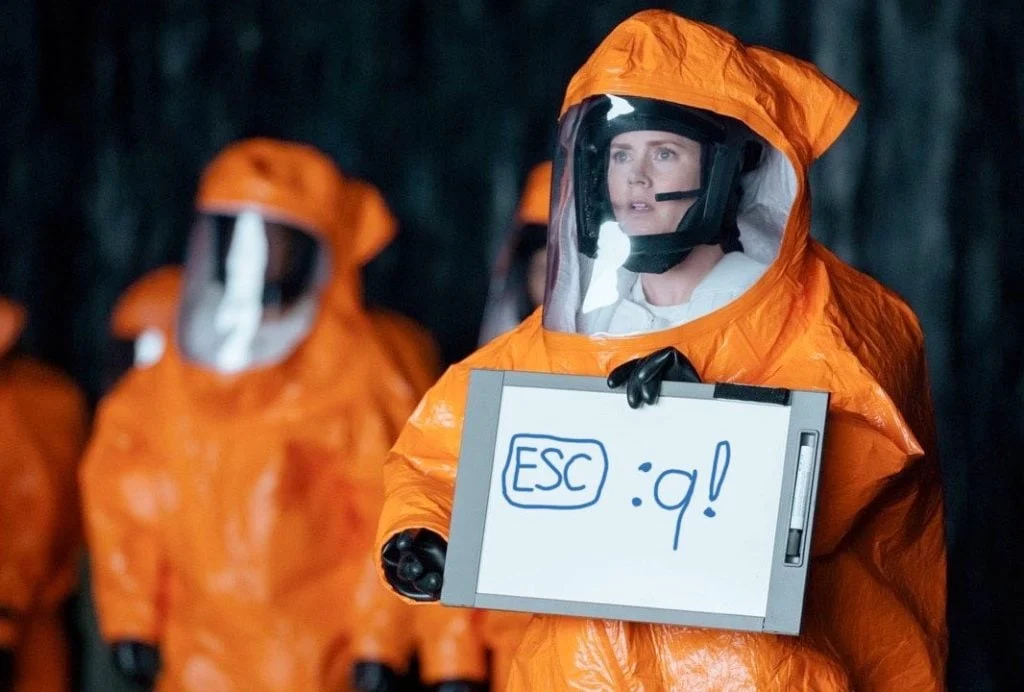
The vastness of the cosmos, teeming with an estimated 200 to 400 billion stars in our Milky Way galaxy alone, each potentially orbited by numerous planets, presents a profound cosmic conundrum: if life is common, and the universe has existed for 13.8 billion years, why have we not yet encountered any definitive evidence of extraterrestrial civilizations? This fundamental question, famously articulated by physicist Enrico Fermi in 1950, is known as the Fermi Paradox, challenging our understanding of life’s prevalence and destiny beyond Earth. It posits a stark contradiction between the high probability of extraterrestrial intelligence, suggested by statistical models like the Drake Equation, and the observable absence of any signs of such civilizations.
The Genesis of the Cosmic Question: The Fermi Paradox
The paradox originated during a casual lunch conversation at Los Alamos National Laboratory. Enrico Fermi, pondering the implications of UFO sightings and the potential for interstellar travel, reportedly asked, "Where is everybody?" His simple query underscored a powerful observation: given the immense age of the universe and the sheer number of stars and planets, even if intelligent life were exceedingly rare, a few civilizations should have emerged and had ample time to expand across the galaxy. If even a small fraction of these civilizations developed advanced technology, including the capacity for interstellar travel or communication, Earth should have been visited or at least detected their signals by now. The lack of any convincing evidence for such visitations or signals, despite decades of dedicated scientific search, forms the core of this enduring mystery.
This argument is often paralleled with the "absence of time travelers" paradox. Just as the lack of visitors from the future might suggest that time travel is impossible or at least exceedingly difficult, the silence from the stars raises similar questions about the feasibility of advanced civilizations persisting and spreading across cosmic distances. While the absence of evidence does not constitute evidence of absence, the profound silence from a universe seemingly ripe for life compels scientists and philosophers to explore a range of explanations.
The Drake Equation: Quantifying the Unquantifiable
In 1961, astronomer Frank Drake formalized the variables involved in estimating the number of active, communicative extraterrestrial civilizations in the Milky Way galaxy. The Drake Equation is expressed as:
N = R* * fp * ne * fl * fi * fc * L
Where:
- N: The number of civilizations in our galaxy with which communication might be possible.
- R*: The rate of formation of stars suitable for the development of intelligent life.
- fp: The fraction of those stars that have planetary systems.
- ne: The average number of planets that can potentially support life per star that has planets.
- fl: The fraction of those planets that could support life on which life actually appears.
- fi: The fraction of planets with life that develop intelligent life.
- fc: The fraction of intelligent civilizations that develop technology capable of interstellar communication.
- L: The length of time for which such civilizations release detectable signals into space.
While the first three variables (R*, fp, ne) have become more constrained by astronomical observations, especially with the discovery of thousands of exoplanets, the latter variables (fl, fi, fc, L) remain highly speculative. Even with conservative estimates for the unknown variables, the equation often yields a surprisingly large number of potential civilizations, further deepening the paradox. For instance, if even a tiny fraction of habitable planets develop intelligent life that lasts for a million years, the galaxy should be bustling with activity.

A Cosmic Chronology: The Universe’s Head Start
To appreciate the scale of the Fermi Paradox, it’s crucial to consider the cosmic timeline. The universe began approximately 13.8 billion years ago with the Big Bang. The first stars and galaxies formed within a few hundred million years. Our own Milky Way galaxy began coalescing around 13 billion years ago. Earth, however, is a relatively young planet, forming about 4.5 billion years ago. Life emerged on Earth surprisingly early, with evidence of microbial life dating back 3.8 billion years. Complex multicellular life only appeared around 540 million years ago, during the Cambrian Explosion, and anatomically modern humans evolved a mere 300,000 years ago.
This chronology highlights a significant point: many stars and planetary systems in the Milky Way are billions of years older than our Sun. If life follows a similar evolutionary path elsewhere, countless civilizations could have had a multi-billion-year head start on humanity. Such civilizations would have had ample time to achieve technological marvels far beyond our current comprehension, including interstellar travel, massive engineering projects (like Dyson spheres), or galaxy-spanning communication networks. The absence of such "megastructures" or widespread signals adds weight to Fermi’s original question.
The Great Filter: Bottlenecks in Cosmic Evolution
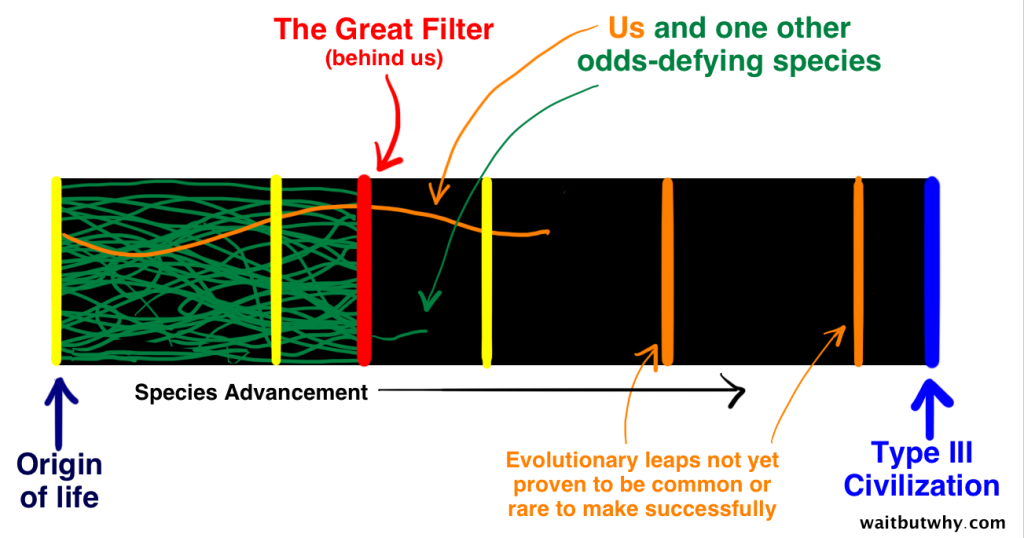
One of the most compelling explanations for the Fermi Paradox is the "Great Filter" hypothesis, proposed by economist Robin Hanson and later elaborated by philosopher Nick Bostrom. This theory suggests that at some point in the long evolutionary journey from abiogenesis (the origin of life) to a Type III civilization (capable of harnessing the energy of an entire galaxy), there exists an extremely improbable or impossible step – a "filter" – that prevents nearly all attempts at life from progressing further. The critical question then becomes: where is this filter located in humanity’s timeline?
Scientists categorize potential filters into three main groups:
-
Filters in the Past (We are incredibly rare): This scenario suggests that the Great Filter is behind us, meaning humanity has already overcome one or more extremely unlikely evolutionary hurdles. If this is the case, our existence is a rare exception, making the universe largely empty of advanced life.
- Abiogenesis: The transition from non-living matter to self-replicating life might be far more improbable than we imagine. Despite significant research, abiogenesis remains one of science’s greatest unsolved mysteries.
- Evolution of Complex Life: Even with life established, the journey from simple prokaryotic cells to complex eukaryotic cells, and then to multicellular organisms, might involve several highly improbable steps. Earth’s specific geological history, including plate tectonics, a large moon stabilizing its axis, and a protective magnetic field, may have been uniquely conducive to this process.
- Emergence of Intelligence: The development of advanced cognitive abilities, self-awareness, and problem-solving skills sufficient to create technology might be another extremely rare occurrence. While many species on Earth exhibit intelligence, only humans have developed a technological civilization capable of interstellar communication.
- Technological Civilization: The leap from intelligent life to a species capable of scientific inquiry, industrialization, and spacefaring technology could be a significant bottleneck. Many factors, including resource availability, environmental stability, and social cohesion, might play a role.
-
Filters in the Present (They exist, but we don’t detect them): This category proposes that advanced civilizations are out there, but various factors prevent us from detecting them or them from detecting us.
- Vast Distances and Time: The sheer scale of the galaxy means that even if civilizations exist, they might be incredibly far apart in space and time. Signals might be too weak to detect, or they might have existed and perished long before humanity developed the technology to listen.
- The Zoo Hypothesis: This intriguing idea suggests that advanced civilizations are aware of humanity but choose not to interfere, treating Earth like a protected natural preserve. They might have a non-interference policy, allowing nascent civilizations to develop naturally without external influence.
- The Dark Forest Hypothesis: Popularized by author Cixin Liu, this theory posits that the universe is a "dark forest" where every civilization is a hunter, and revealing one’s presence is an invitation for destruction. In such a hostile environment, silence becomes the ultimate survival strategy.
- Different Communication Methods: Extraterrestrial civilizations might communicate using methods we don’t yet understand or are not equipped to detect. They might not use radio waves, or their signals could be highly encrypted or directional.
- Transcendence to Non-Physical Forms: As proposed by scientists like Seth Shostak and echoed in the original article, truly advanced civilizations might eventually transcend physical forms. They could evolve beyond biological needs, perhaps uploading their consciousness into vast computational networks, existing at microscopic scales, or operating in ways that are not detectable by our current methods. "Why build planet-size anything when the real action is in the small things?" is a compelling question that suggests advanced life might prioritize efficiency and miniaturization over grand, observable constructs. If they inhabit "the infinite spaces between," as the article suggests, our detection methods might be entirely inadequate.
-
Filters in the Future (The greatest fear): This is perhaps the most sobering possibility: the Great Filter lies ahead of us, meaning that most, if not all, intelligent civilizations inevitably reach a point where they destroy themselves before achieving interstellar travel or long-term galactic presence.
- Self-Destruction through Technology: This is a prominent concern. Humanity’s technological progress has brought with it the capacity for global catastrophe through nuclear war, climate change, engineered pandemics, uncontrolled artificial intelligence, or nanotechnological "grey goo" scenarios. A universal pattern of technological self-annihilation could explain the cosmic silence.
- Resource Depletion and Environmental Collapse: Advanced industrial civilizations place enormous strain on their home planets. Unsustainable consumption, pollution, and climate disruption could lead to the collapse of complex societies before they can colonize other worlds.
- Inability to Escape Home System: Even if a civilization avoids self-destruction, the immense energy requirements and technological challenges of interstellar travel might be insurmountable for most, trapping them within their star systems until natural cosmic events or resource depletion ends their existence.
The Ongoing Search: SETI and Beyond
Despite the enduring mystery of the Fermi Paradox, humanity’s quest for extraterrestrial life continues with renewed vigor. The Search for Extraterrestrial Intelligence (SETI) program has been actively scanning the skies for decades, primarily listening for radio signals that might indicate intelligent life. Projects like Breakthrough Listen, funded by Yuri Milner, have significantly expanded these efforts, using powerful radio telescopes to monitor millions of star systems across a wide range of frequencies.
Beyond listening for signals, astronomers are also actively searching for exoplanets that might harbor life. Missions like NASA’s Kepler and TESS (Transiting Exoplanet Survey Satellite) have discovered thousands of exoplanets, many of which reside in the "habitable zone" around their stars, where conditions might allow for liquid water. The James Webb Space Telescope (JWST) is now providing unprecedented opportunities to analyze the atmospheres of these distant worlds, searching for biosignatures (gases like oxygen, methane, or ozone that could indicate the presence of life) or technosignatures (signs of technology, such as industrial pollutants or artificial light patterns).
Implications for Humanity’s Future
The Fermi Paradox carries profound implications for humanity. If the Great Filter is behind us, it underscores the incredible rarity and preciousness of life on Earth, placing a monumental responsibility on us to protect our unique existence. If the filter is ahead, it serves as a stark warning about the potential pitfalls of advanced technological development, urging us to address existential risks such as climate change, nuclear proliferation, and the ethical development of artificial intelligence.
The question "Where is everybody?" is not merely a scientific curiosity; it is a fundamental inquiry into our place in the universe and the potential trajectory of intelligent life. Whether the cosmic silence points to our unique fortune, a universal self-destructive tendency, or simply our current inability to perceive other forms of advanced existence, the ongoing search for answers continues to push the boundaries of human knowledge and inspire our gaze towards the stars. The answer, if ever found, would undoubtedly be one of the most transformative discoveries in human history, redefining our understanding of life, intelligence, and the universe itself.
About the Author