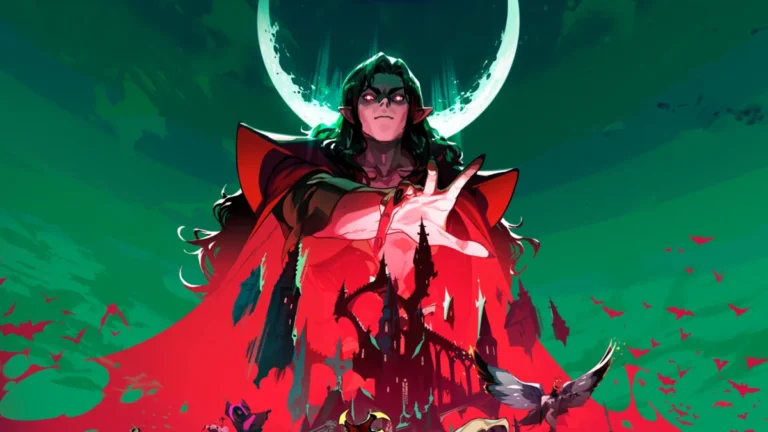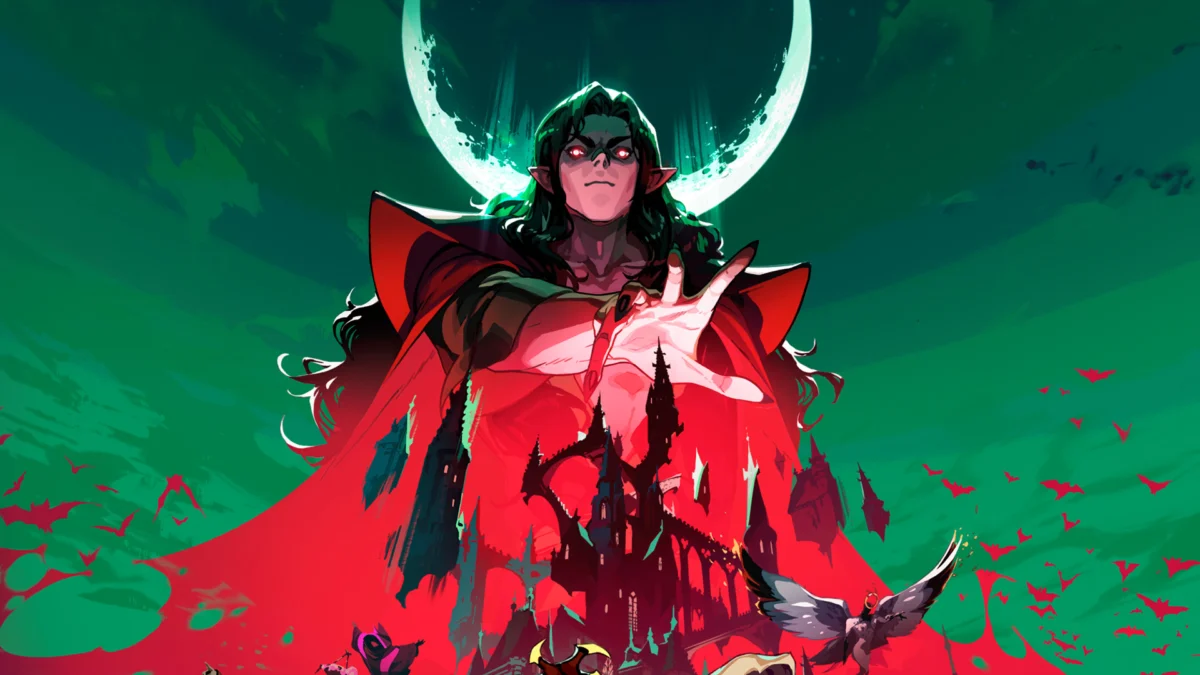
The burgeoning threat of generative artificial intelligence-enabled game cloning is compelling established game studios, particularly independent developers, to fundamentally reassess their development strategies and public engagement tactics. This seismic shift is dramatically impacting the industry, as evidenced by Digital Sun Games, the acclaimed indie studio behind titles like Moonlighter and Moonlighter 2: The Endless Vault. The Spanish developer recently announced a significant scaling back of a previously planned public playtest for their highly anticipated "Tower Defensevania" game, ReVamp, citing profound concerns over being outpaced in the market by rapidly produced, "vibe-coded" copycats leveraging sophisticated AI tools.
Digital Sun Games had initially unveiled ambitious plans earlier this month to host a comprehensive public playtest for ReVamp, aiming to harness invaluable player feedback, meticulously gather performance metrics, and iteratively refine the game ahead of its official launch. Such public testing phases are a cornerstone of modern indie game development, fostering community engagement, validating design choices, and generating crucial pre-release buzz. However, these plans have now been put on indefinite hold. In a candid statement disseminated across their official Steam page and Bluesky profile, the studio articulated its apprehension: "We are concerned by recent news of games being reverse-engineered, cloned, and published before the original is even out." This stark warning underscores a growing sentiment of vulnerability permeating the independent game development sector. The studio further elaborated on its decision, stating, "With launch still months away, a large public build of ReVamp felt like too big a risk." Consequently, Digital Sun Games will pivot to a more contained and controlled playtesting environment, inviting a select group of participants through its Discord server starting October 29. This strategic adjustment reflects a desperate balancing act between the imperative for early feedback and the increasing necessity for intellectual property protection in an accelerating digital landscape.
The Historical Context of Game Cloning
The phenomenon of game cloning is not entirely novel to the video game industry. Veteran developers and industry observers can readily recall numerous instances of "fast-follow" titles that have capitalized on the success of innovative originals. A notable example from the mobile gaming boom of the early 2010s is the rapid proliferation of clones that followed Vlambeer’s critically acclaimed Ridiculous Fishing and Asher Vollmer, Greg Wohlwend, and BigGiantCircles’ ingenious puzzle game Threes!. These incidents, occurring as early as 2013, demonstrated the ease with which successful game mechanics could be replicated and monetized, particularly within the nascent and less regulated mobile app stores. The cloning of Threes! by titles like 2048 was particularly egregious, with the copycat often overshadowing the original in terms of downloads and public recognition, despite offering a demonstrably less polished or original experience. Similarly, the explosive popularity of Flappy Bird in 2014 spawned an almost instantaneous wave of imitations, highlighting the significant financial incentives for rapid replication within a rapidly expanding market.
These earlier waves of cloning, while problematic, typically required a degree of manual effort in reverse engineering and coding. Developers would analyze a successful game, understand its core mechanics, and then manually recreate them with different assets and perhaps minor variations. This process, while faster than original development, still involved a significant time investment and development cost.
The AI Inflection Point: Speed and Scope
What distinguishes the current wave of cloning, however, is the transformative role of generative artificial intelligence. For the past several months, independent developers frequenting online communities such as Reddit’s r/gamedev have increasingly reported a disturbing trend: unscrupulous developers are reportedly feeding publicly available materials—such as game demos, promotional trailers, concept art, and even mere screenshots—into advanced generative AI tools. These sophisticated algorithms, including large language models (LLMs) like Anthropic’s Claude and OpenAI’s ChatGPT, alongside specialized image and code generation AI, are capable of rapidly reverse-engineering core gameplay loops, artistic styles, and fundamental game features.
The output is not necessarily identical code, but rather a functional recreation of the game’s essential "vibe" and mechanics, often rebuilt from the ground up in a fraction of the time and at a fraction of the cost typically associated with game development. This "vibe-coding" capability allows for the creation of functionally similar games that sidestep direct code infringement but nevertheless capture the essence of the original’s appeal, thereby directly competing with and potentially diluting the market for the genuine article. The technological leap provided by generative AI fundamentally alters the economics and speed of cloning. Where previously, cloning required a degree of manual reverse engineering and coding effort, AI can automate significant portions of this process, drastically shortening development cycles from months or years to mere weeks or even days. This unprecedented acceleration creates an existential threat for smaller studios, whose typical development timelines often involve extensive periods of iteration, community feedback, and refinement—all of which now present potential vectors for exploitation.
The Legal Quagmire: Limited Copyright for Game Mechanics
A critical factor enabling this new wave of AI-powered cloning is the long-standing limitation in copyright protections for video game mechanics. Copyright law, in most jurisdictions, protects the expression of an idea, but not the idea itself. In the context of video games, this means that while a game’s specific art assets, dialogue, music, and distinct narrative elements are generally copyrightable, the underlying gameplay mechanics—such as how a character moves, how puzzles are solved, or the rules of combat—are often considered unprotectable "ideas" or "functional elements." This distinction has historically made it challenging for developers to prevent others from creating games with similar gameplay loops, provided the visual and narrative presentation is sufficiently different.
This legal lacuna has been a recurring point of contention within the industry for decades. Landmark cases have often reinforced this principle, leaving developers with limited recourse when their innovative gameplay concepts are adopted by competitors. For example, while a unique character design or a specific level layout might be protected, the core mechanic of "match-three" or "tower defense" cannot be exclusively owned. The advent of AI exacerbates this problem by making it trivial to extract and re-express these unprotected mechanics in a new, albeit derivative, wrapper. The AI can analyze a game’s mechanics from a demo, infer the underlying rules, and then generate new code and assets to implement those rules in a novel visual and thematic context, thereby circumventing traditional copyright infringement claims which often require substantial similarity in expression. This legal gray area empowers "scurrilous developers" to rapidly create and deploy clones without necessarily infringing on the narrowly defined copyrightable elements of the original work.
Moreover, these AI tools are not solely being deployed for direct cloning; they are also driving a new burst of "vibe-coded mods." By analyzing existing game assets and code, AI can generate new content that adheres to the original game’s aesthetic and thematic "vibe," leading to a proliferation of derivative works that can further fragment player attention and potentially dilute the perceived value of official expansions or sequels. While modding has a long and celebrated history in gaming, AI-accelerated "vibe-coded mods" raise new questions about creative control, intellectual property, and the potential for market saturation with AI-generated content.
A Growing Industry-Wide Concern and Chronology
Digital Sun Games’ decision is not an isolated incident but rather indicative of a broader industry trend that has escalated significantly in recent months. The timeline of this growing concern can be traced:
- Early 2024: Reports begin to surface in developer forums and online communities like Reddit about unusual instances of rapid game replication, often seemingly leveraging AI to quickly build similar experiences based on early previews or trailers.
- Mid-2024: The frequency and sophistication of these AI-enabled cloning attempts intensify, leading to widespread discussion among independent developers about the risks of public demos and early access builds.
- October 2024: Alliance Arts and Who’s You announce the cancellation of the Steam Next Fest demo for their upcoming game, Drunken Goddess Reflux, directly citing concerns over AI cloning. This marked a significant public acknowledgment of the problem.
- Late October 2024: Digital Sun Games follows suit, announcing the scaling back of their public playtest for ReVamp and transitioning to a more controlled, private Discord-based testing environment. Their explicit mention of "vibe-coding copycats" highlights the specific nature of the AI-driven threat.
This situation creates a significant dilemma for the independent gaming sector, which thrives on transparency, community interaction, and the ability to showcase innovative concepts early in their development cycle. Indie studios, often operating with constrained budgets and smaller teams, rely heavily on early visibility to build an audience, secure funding, and generate momentum. As Digital Sun Games eloquently stated, "Showing games early is how indies get seen and find the fans who keep us going." If the fear of AI-enabled cloning forces these studios into a more secretive, closed-door development model, it could stifle innovation, impede market discovery for promising new titles, and ultimately harm the vibrant ecosystem of independent game development. The global video game market, estimated to exceed $180 billion in 2023, relies heavily on continuous innovation, a significant portion of which originates from the independent sector. The economic impact on these smaller studios, and by extension the broader market, could be substantial if their creative efforts are consistently undermined.
Implications for Platform Owners and the Future
The current crisis places significant pressure on major digital distribution platforms, most notably Steam, but also Epic Games Store, Itch.io, and others. These platforms serve as the primary gateways for games to reach consumers, and their policies regarding content submission, intellectual property infringement, and dispute resolution are paramount. Currently, platforms generally have mechanisms for developers to report copyright infringement. However, these systems are often reactive and can be slow, requiring substantial evidence to initiate takedowns. The speed and nature of AI-enabled cloning—where the "cloned" game might not be a direct copy but a functional derivative—present a new challenge for existing IP enforcement frameworks.
Industry observers suggest that platform owners may need to implement more proactive and sophisticated measures. This could include:
- Enhanced AI Detection: Utilizing AI to detect patterns indicative of cloned gameplay mechanics or art styles during the submission process, potentially flagging suspicious submissions for human review.
- Stricter Review Processes: Increasing human oversight for new submissions, particularly those that bear a striking resemblance to upcoming or recently showcased indie titles, requiring more rigorous checks on originality.
- Faster Takedown Procedures: Streamlining the process for original creators to report and swiftly remove infringing content, acknowledging the rapid pace of AI-driven threats.
- Developer Support Funds/Legal Aid: Exploring mechanisms to support independent developers in navigating the complex legal challenges associated with AI-driven IP theft, which can be prohibitively expensive for small studios.
- Policy Updates: Revising terms of service and content guidelines to explicitly address AI-enabled cloning and "vibe-coding" as forms of unfair competition or intellectual property abuse, even if direct copyright infringement is difficult to prove under existing statutes.
The call from Digital Sun Games for platforms to "keep strengthening protections for original work" is a direct appeal for these stakeholders to adapt to the evolving technological landscape. Without robust protections, the creative output of smaller studios, which often push the boundaries of game design, risks being devalued and exploited. If innovation is stifled by fear of replication, the entire industry could suffer from a reduction in creative diversity and quality.
The Broader Impact on Innovation and Creativity
Beyond the immediate financial concerns, the rise of AI-enabled cloning poses a profound threat to the creative integrity and innovative spirit of the video game industry. Developers, especially those in the indie space, are often driven by a passion for novel mechanics, unique narratives, and experimental gameplay. The prospect of having these creative efforts almost instantly replicated and monetized by others can be deeply demoralizing and disincentivizing. It may lead to a chilling effect, where developers become more hesitant to share groundbreaking ideas, fearing that transparency will be punished rather than rewarded.
This forced secrecy could erode the collaborative and community-driven aspects that have long characterized indie game development. Public forums, early access programs, and open development blogs—all vital for fostering player communities and refining games—might become too risky. Instead, studios may retreat into more closed development cycles, depriving them of crucial early feedback and connection with their potential audience. This shift could lead to games that are less polished, less resonant with players, and ultimately, less successful.
The challenge is not merely technological or legal; it is also philosophical. It forces the industry to grapple with fundamental questions about ownership, originality, and the value of human creativity in an age where machines can mimic and reproduce with unprecedented efficiency. How do we define originality when an AI can synthesize new "expressions" from existing "ideas"? How do we protect the spirit of innovation when the tools for creation can also be used for effortless replication?
The gaming community, developers, platform holders, and legal frameworks must collectively address this emergent threat. The measures taken—or not taken—in the coming months and years will significantly shape the future trajectory of game development, determining whether the industry continues to be a vibrant crucible of innovation or succumbs to a deluge of AI-generated derivatives. Digital Sun Games and other affected studios are not just fighting for their individual projects; they are sounding an alarm for the preservation of creative integrity across the entire video game landscape. The industry stands at a critical juncture, where the promises of AI must be carefully balanced against its potential to undermine the very foundations of original creation.
About the Author