
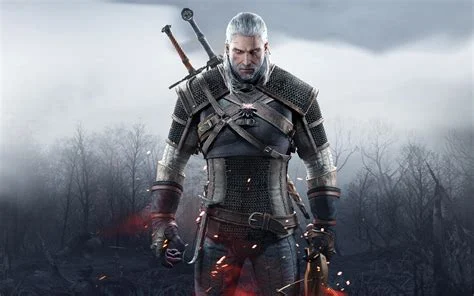
The Witcher 3: Wild Hunt, released in May 2015 by Polish developer CD Projekt Red, stands as one of the most critically acclaimed and commercially successful video games of all time, garnering numerous Game of the Year awards and selling over 50 million copies worldwide by late 2022. Heralded for its expansive open world, intricate storytelling, and technical polish, the action role-playing game frequently appears on "best of" lists. However, a deeper examination reveals that while its technical achievements are widely lauded, certain narrative choices, gameplay mechanics, and thematic elements have sparked ongoing discussions and, for some players and critics, generated a significant degree of detachment despite its perceived quality. This article explores the multifaceted reception of The Witcher 3, dissecting its celebrated strengths alongside the points of contention that continue to shape its legacy.
Unpacking Critical Acclaim: Technical Prowess and World Design
Upon its release, The Witcher 3 was lauded for pushing the boundaries of open-world design and narrative ambition. Critics consistently highlighted its stunning graphics, meticulous environmental details, and a vast, seamless world that felt alive and reactive. The game’s technical polish was a cornerstone of its success, offering a smooth and immersive experience across diverse landscapes, from the war-torn fields of Velen to the bustling city of Novigrad and the serene Skellige Isles. This level of craftsmanship, often described as an "exceptional videogame product," allowed players to effortlessly traverse its environments, engage with its systems, and absorb its rich atmosphere.
The foundational strength of The Witcher 3 also lies in its deep lore, meticulously adapted from Andrzej Sapkowski’s beloved book series. This pre-existing universe provided a robust framework for character development, political intrigue, and monster-hunting contracts that felt genuinely integrated into the world. The game’s ability to render this detailed world, populated by a myriad of non-player characters, side quests, and hidden secrets, contributed significantly to its immersive quality. The sheer volume of content, combined with high production values, established a benchmark for subsequent open-world RPGs, demonstrating what was possible when technical excellence met ambitious creative vision. Players could easily lose themselves in exploration, enjoying the simple act of moving through the world and discovering its hidden facets, a testament to the game’s environmental design and artistic direction.
Narrative Choices and Thematic Undercurrents
While the overarching narrative of The Witcher 3, centering on Geralt of Rivia’s search for his adopted daughter Ciri amidst a world-ending prophecy, received widespread praise for its maturity and complexity, specific story beats and thematic explorations have drawn scrutiny. One prominent example frequently cited involves the questline surrounding the Bloody Baron, a character presented as a brutal warlord and domestic abuser. The game dedicates substantial narrative effort to humanizing this character, exploring his motivations and offering players choices that can lead to various outcomes for him and his family.
For some observers, this narrative decision represents a problematic allocation of storytelling resources. The choice to focus on humanizing a character with such a morally reprehensible background, rather than spotlighting other, less ambiguous figures or exploring the plight of his victims with equal depth, raises questions about the game’s underlying values as a storyteller. Critics argue that while exploring moral grey areas is a hallmark of The Witcher universe, the specific emphasis on the Baron’s redemption arc, or at least his complex portrayal, can inadvertently diminish the severity of his actions or imply a "both sides" equivalency where none should exist. This perspective underscores the argument that "the most important choice storytellers make is choosing which story to tell," suggesting that the narrative spotlight here was misplaced.
Furthermore, the world of The Witcher 3 has been characterized by some as a "depressing" and "Hobbesian fantasy," depicting a grim, morally compromised reality. The frequent portrayal of a world dominated by "gruff, manly white men" and narrative references to invading forces as "the Black ones" (referring to the Nilfgaardian Empire’s black armor, not race) have also sparked discussions. The relative absence of diverse racial representation within its fantasy setting, despite its fictional nature, has been a point of contention for some players, prompting questions about the imaginative scope and intentionality behind such world-building decisions in a globalized gaming landscape.
Gameplay Mechanics: The Divisive Combat System
Beyond narrative, The Witcher 3‘s combat system has been a recurring point of debate. Despite the game’s overall technical fluidity, the act of engaging in combat is often described as "laborious" rather than consistently satisfying or challenging. Players navigate Geralt through encounters using a combination of sword fighting, magical signs (spells), and alchemical preparations. While the system offers depth through various attack types, dodges, parries, and strategic use of potions and oils, its execution has not resonated universally.
Compared to the precision and demanding difficulty of titles like Elden Ring, or the creative freedom and satisfying physics of The Legend of Zelda: Breath of the Wild, The Witcher 3‘s combat is perceived by some as lacking a distinct identity or engaging flow. It is not designed to be relentlessly challenging in the Souls-like tradition, nor does it offer the immediate, arcade-like gratification of hack-and-slash titles like Diablo, which often provide a constant stream of new abilities and randomized loot. Instead, for a segment of the player base, The Witcher 3‘s combat feels like a necessary chore, an impediment to exploration and narrative progression rather than an enjoyable core mechanic. This sentiment highlights a potential disconnect between the game’s expansive world and its combat loop, particularly given that fighting constitutes a central focus in most RPGs.
Controversies and Representation in the Witcher Universe
The Witcher 3 has also faced criticism regarding certain "distasteful" elements embedded within its vast content, specifically concerning the portrayal of sensitive topics. A notable example frequently cited is a particular Gwent card – the in-game collectible card game that became a popular mini-game within The Witcher 3 and later its own standalone title. The flavor text for the "Redanian Foot Soldier" card in Gwent reportedly alludes to the character being a rapist.
Such an inclusion, even as a minor piece of flavor text on a collectible item, has raised significant concerns about creative choices and their potential impact. Critics argue that such details, seemingly inserted without broader narrative necessity or meaningful exploration of the trauma involved, can be perceived as gratuitous or insensitive. The question arises regarding the intended player experience upon encountering such content and whether its inclusion aligns with responsible storytelling, particularly in a product consumed by a diverse global audience. This incident, though minor in the grand scope of the game, has been highlighted as indicative of a broader pattern of "choices" that, for some, reflect a lack of sensitivity or a particular cultural perspective that may not resonate universally. It underscores the ongoing industry-wide dialogue about representation, ethical content creation, and the importance of diverse perspectives within development teams to identify and address potentially problematic elements.
The Legacy and Future: Looking Towards The Witcher 4
Despite these critiques, The Witcher 3: Wild Hunt‘s status as a landmark title remains undisputed for many. Its influence on the RPG genre is profound, setting high standards for open-world design, moral complexity in storytelling, and the sheer scale of player choice and consequence. The game’s success paved the way for its two acclaimed expansions, Hearts of Stone and Blood and Wine, which further enriched its world and narratives, and its enduring popularity led to a next-generation update in late 2022, ensuring its continued relevance on modern hardware.
The discussions surrounding The Witcher 3‘s narrative and gameplay choices are not isolated but reflect a broader evolution in player expectations and critical discourse within the video game industry. As the medium matures, so too does the scrutiny applied to its content, especially regarding themes of representation, diversity, and the ethical implications of storytelling.
Looking ahead, the announcement of Project Polaris, widely understood to be The Witcher 4, has generated considerable anticipation, particularly concerning potential shifts in its protagonist. While Geralt of Rivia is synonymous with the franchise, speculation and hints from CD Projekt Red suggest that Ciri, Geralt’s adopted daughter and a character known for her unique powers and compelling backstory, may take on a more central role. For many, Ciri’s potential as a lead character offers a fresh perspective and an opportunity to explore new narrative avenues, potentially addressing some of the representation and thematic criticisms leveled at previous installments. Ciri’s character has been widely praised for her likability, strength, and distinct identity, making her a compelling candidate to lead the next chapter of the saga. This potential shift signals a recognition of evolving player preferences and a willingness to innovate within a beloved franchise, suggesting that the dialogue initiated by The Witcher 3 continues to shape the future of the series.
Conclusion: An Enduring Dialogue
The Witcher 3: Wild Hunt stands as a titan in the video game industry, a testament to ambitious game design, meticulous craftsmanship, and compelling narrative. Its unparalleled technical polish and expansive world have captivated millions, cementing its place in the pantheon of gaming greats. Yet, its journey is also a microcosm of the ongoing evolution within the medium, where technical excellence can coexist with critical discussions about narrative choices, thematic representations, and gameplay mechanics. For some, the game represents an "exceptional videogame product" that is nevertheless "uninteresting" or "blech" in its core engagement.
The enduring dialogue surrounding The Witcher 3 highlights the complex relationship between artistic vision, commercial success, and the ever-growing expectations of a diverse global audience. As the industry progresses, the lessons learned from both the triumphs and the critiques of games like The Witcher 3 will undoubtedly continue to inform and shape the future of interactive storytelling, pushing developers to not only create technically proficient worlds but also to craft narratives that resonate thoughtfully and inclusively with all players.
About the Author







