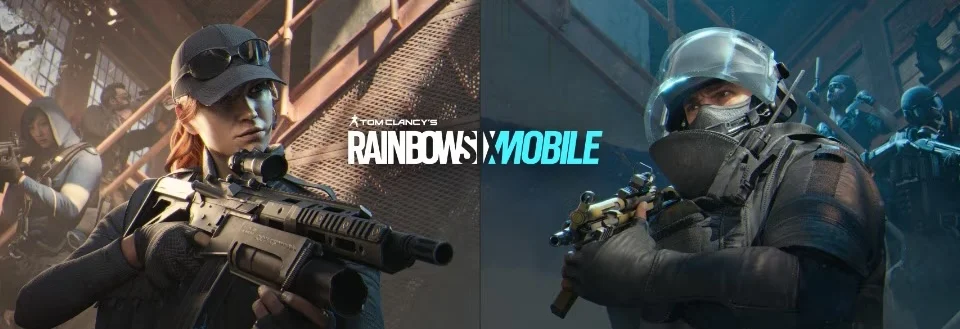
Ubisoft has officially confirmed the cessation of development for Rainbow Six Mobile, bringing an end to one of the most protracted and ambitious development cycles in the company’s mobile gaming history. In a formal statement released by the development team, the French publisher revealed that while the game’s next content season will proceed as scheduled next week, the project is slated for a permanent shutdown on January 15, 2027. This decision marks a significant shift in Ubisoft’s mobile strategy, particularly as the title was intended to be a cornerstone of the company’s expansion into the lucrative handheld competitive shooter market.
The announcement comes after a lengthy period of testing and iteration. Rainbow Six Mobile was designed to translate the complex, tactical, and destructible environment of the highly successful PC and console title, Tom Clancy’s Rainbow Six Siege, to iOS and Android devices. Despite the pedigree of the franchise and a massive collaborative effort involving over ten different global studios, the title failed to reach the commercial milestones necessary to sustain its long-term live-service operations.
A Protracted Development Timeline and Global Collaboration
The journey of Rainbow Six Mobile began long before its public unveiling. While the game was officially announced in April 2022, Ubisoft later disclosed that the title had already been in active development for three years prior to that date. By the time of the shutdown announcement, the project had been under construction for approximately seven years. This extensive development window is unusual for the mobile gaming sector, where rapid iteration and shorter time-to-market are typically prioritized to capitalize on hardware advancements and shifting consumer trends.
The scale of production was equally unprecedented for a mobile port. Ubisoft Montreal, the lead studio behind the original Rainbow Six Siege, headed the project. However, the development was a massive cross-continental effort. Ubisoft confirmed that 11 different internal studios contributed to the game, including branches in Winnipeg, Quebec, Halifax, Paris, Bucharest, Kyiv, Pune, Chengdu, and Shanghai, as well as Redlynx. Furthermore, Ubisoft partnered with Tencent, a global leader in mobile gaming and the developer behind successes like Call of Duty: Mobile and PUBG Mobile, to provide expertise in mobile shooter mechanics and live-service optimization.
This "all-hands-on-deck" approach underscored the importance Ubisoft placed on the project. The company aimed to replicate the "tactical hero shooter" niche on mobile, a genre that requires precise controls and high-fidelity graphics—elements that are notoriously difficult to balance on mobile hardware.
Financial Performance and Market Reception
Data provided by industry analyst firm AppMagic offers a glimpse into the commercial challenges that likely influenced Ubisoft’s decision. Since the game entered its extended soft launch phase in 2023, it has generated an estimated $5.3 million in lifetime in-app purchase (IAP) revenue. While this figure represents a respectable amount for many indie titles, it is considered underwhelming for a "Triple-A" mobile adaptation of a major global franchise, especially one that occupied the resources of 11 studios for seven years.
The game saw approximately 13.1 million downloads during its lifetime. While the download numbers suggest a strong initial interest and brand recognition, the conversion rate from free-to-play users to paying customers appears to have been insufficient to cover the high overhead costs of maintaining a global live-service infrastructure. In the competitive landscape of mobile shooters, Rainbow Six Mobile faced stiff competition from established giants such as Call of Duty: Mobile, Garena Free Fire, and PUBG Mobile, as well as newer entrants like Activision’s Warzone Mobile.
The tactical nature of Rainbow Six—which emphasizes slow movement, environmental destruction, and gadget usage—may have also presented a barrier to entry for the broader mobile audience, which typically favors faster-paced, "twitch-based" arcade shooters. The technical demands of the "Realblast" engine’s destruction mechanics, a hallmark of the Siege experience, also posed significant optimization hurdles for mid-range mobile devices, potentially limiting the game’s total addressable market.
The Sunset Process and Official Communication
In their message to the community, the development team expressed gratitude for the players who participated in the 15 seasons of the soft launch. The decision to keep the servers active until January 2027 provides an unusually long "sunset" period, likely intended to allow dedicated players to exhaust their in-game currency and experience the final planned content updates.
"Bringing the Rainbow Six experience to mobile has been an exciting journey, and we are proud of the passion, creativity, and dedication our team has put into the game," the statement read. "Since Soft Launch in 2023, you have helped us shape this game and build this vibrant community of players from around the world through 15 seasons."
Ubisoft has not yet detailed whether players will be eligible for refunds on recent purchases or if there will be any form of compensation within other Ubisoft titles, such as the PC/Console version of Rainbow Six Siege. Typically, in the mobile industry, once a shutdown is announced, in-app purchases are disabled shortly thereafter, though the game remains playable for a designated period.
Analysis of the Broader Impact on Ubisoft’s Strategy
The cancellation of Rainbow Six Mobile is not an isolated event but rather part of a broader trend within Ubisoft and the wider gaming industry. In recent years, Ubisoft has been undergoing a significant internal restructuring to focus on its "Big Three" pillars: Assassin’s Creed, Far Cry, and the Tom Clancy universe (specifically Siege and The Division). However, the path to mobile success for these brands has been fraught with difficulty.
This announcement follows the previous cancellation of other high-profile mobile projects and the underperformance of several "Free-to-Play" (F2P) initiatives. Industry analysts suggest that the "mobile curse" for hardcore shooters is becoming more evident. Electronic Arts (EA) faced a similar situation when it shuttered Apex Legends Mobile less than a year after its global launch, despite the game receiving critical acclaim and "Game of the Year" awards from both Apple and Google.
The failure to find a sustainable audience for Rainbow Six Mobile raises questions about the future of Ubisoft’s other major upcoming mobile title, The Division Resurgence. Like Rainbow Six Mobile, The Division Resurgence is an ambitious attempt to bring a complex, loot-based tactical shooter to the mobile platform. Ubisoft will likely take the lessons learned from the Rainbow Six Mobile shutdown—specifically regarding monetization structures and player retention in the tactical genre—to evaluate the viability of its remaining mobile pipeline.
The Competitive Landscape of Mobile Tactical Shooters
The mobile gaming market in 2024 and 2025 is vastly different from the environment in which Rainbow Six Mobile began development in 2019. The market has reached a state of saturation, where a few dominant titles command the majority of player time and spending. For a new title to succeed, it must not only offer high production values but also a gameplay loop that fits the "on-the-go" nature of mobile gaming while maintaining a fair and engaging monetization model.
The "Siege" formula, while highly successful on PC, relies on a high degree of communication and precision that is often lost in the casual environment of mobile play. Furthermore, the technical requirement of "pixel-peeking" and holding tight angles—key components of Rainbow Six gameplay—is difficult to replicate on a small touchscreen without significant aim-assist, which in turn can alienate the hardcore competitive fan base the game seeks to attract.
Conclusion and Future Outlook
The closure of Rainbow Six Mobile serves as a cautionary tale regarding the complexities of porting high-fidelity, tactical "Triple-A" experiences to the mobile market. Despite seven years of labor, the involvement of nearly a dozen studios, and the backing of a major industry partner like Tencent, the project could not find the necessary momentum to survive in an increasingly crowded and volatile market.
For Ubisoft, the focus now shifts to stabilizing its core console and PC business while re-evaluating how it approaches the mobile sector. The long lead time until the final shutdown in 2027 suggests that while active development has ceased, the company is committed to a graceful exit for its existing player base. As the industry watches, the fate of Rainbow Six Mobile will likely serve as a significant case study in the challenges of franchise extension and the evolving demands of the global mobile gaming audience.
About the Author