The fundamental ability to save and load game data, a cornerstone of player engagement and progression in modern interactive entertainment, has been significantly streamlined within Unreal Engine 5 through its robust, built-in SaveGame system. This developer-centric approach empowers creators to efficiently manage and persist game states to local files with remarkable ease, requiring only a handful of functions to implement. This development, coupled with comprehensive guides now emerging, promises to further democratize complex game development functionalities, making sophisticated data management accessible to a broader spectrum of studios and independent developers leveraging Epic Games’ flagship engine.
The Core Mechanism: A Developer’s Advantage
At the heart of Unreal Engine’s data persistence solution lies the SaveGame class, a preconfigured blueprint designed specifically for storing and retrieving various types of in-game variables. This class acts as a container for all data points that a developer wishes to save, from player coordinates and inventory items to quest progress and world states. Once variables are defined and populated within an instance of this class, the system handles the serialization and writing of this data to a dedicated file on the user’s machine. Subsequent loading operations then read this file, deserializing the data back into accessible variables within the game environment, allowing for a seamless continuation of the player’s experience.
The versatility of the SaveGame class is notable; it supports nearly every variable type commonly used in game development, ensuring that developers are not constrained by limitations when deciding what information to preserve. The physical location of these save files is standardized across major operating systems, contributing to a predictable and manageable development pipeline:
- Windows: Typically found within the user’s Local Appdata folder.
- MacOS: Resides in
Library/Application Support. - Linux: Stored in
/home/username/.local/share.
This consistent file management is crucial for debugging, user support, and even potential cloud-saving integrations in the future.
Background and Evolution of Game Saving
The evolution of game data persistence reflects the broader advancements in computing and player expectations. Early video games, limited by hardware and storage capabilities, often relied on simple password systems or single-session play. The advent of memory cards and internal storage in console gaming marked a significant leap, allowing players to save progress at designated points. PC gaming, with its more flexible file systems, offered greater freedom but often required developers to custom-engineer complex serialization routines.
As games grew in scope and complexity – particularly with the rise of open-world environments, persistent online components, and RPGs with intricate player choices – the demand for robust, reliable, and user-friendly save systems became paramount. A poorly implemented save system can lead to player frustration, data loss, and ultimately, abandonment of the game. Industry data consistently shows that a seamless save/load experience is a critical factor in player retention and overall game satisfaction. According to a 2022 survey by the Game Developers Conference, issues related to data persistence and loading times are frequently cited as key areas for improvement in player experience.
Unreal Engine, a dominant force in the game development landscape, recognized this need early on. The SaveGame system, while present in previous iterations like Unreal Engine 4, has seen continuous refinement, culminating in its current form within Unreal Engine 5. This iteration emphasizes ease of use through Blueprint visual scripting, allowing even non-programmers to implement sophisticated saving mechanisms.
Unreal Engine’s Approach to Data Persistence: Empowering Developers

Epic Games, the creators of Unreal Engine, has consistently prioritized providing powerful yet accessible tools to developers. The SaveGame system exemplifies this philosophy, offering a high-level abstraction that handles much of the underlying complexity of file I/O and data serialization. This allows developers to focus on what data needs to be saved rather than how it’s technically written to disk.

The system’s integration with the Game Instance class is a particularly clever design choice. The Game Instance is a unique object that persists throughout the entire lifetime of a game session, even across level changes. This makes it an ideal central hub for managing save data, ensuring that the loaded game state remains consistent and accessible regardless of which part of the game the player is currently in. This architectural decision significantly simplifies the flow of data between the save file and various game elements, promoting a cleaner and more maintainable codebase.
Step-by-Step Implementation Unveiled: A Methodological Overview
Implementing the SaveGame system in Unreal Engine 5 follows a logical, multi-stage process, meticulously detailed in recent educational resources, which begins with the creation of a custom save class and extends to the dynamic saving and loading of in-game variables.
-
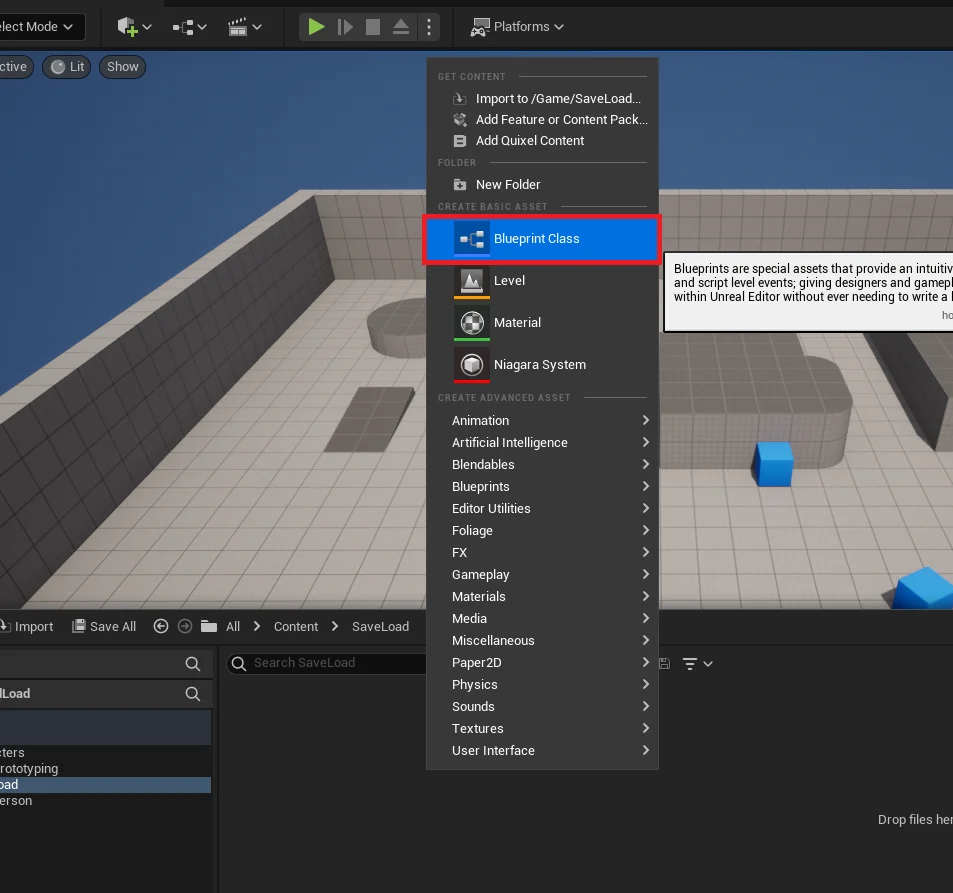
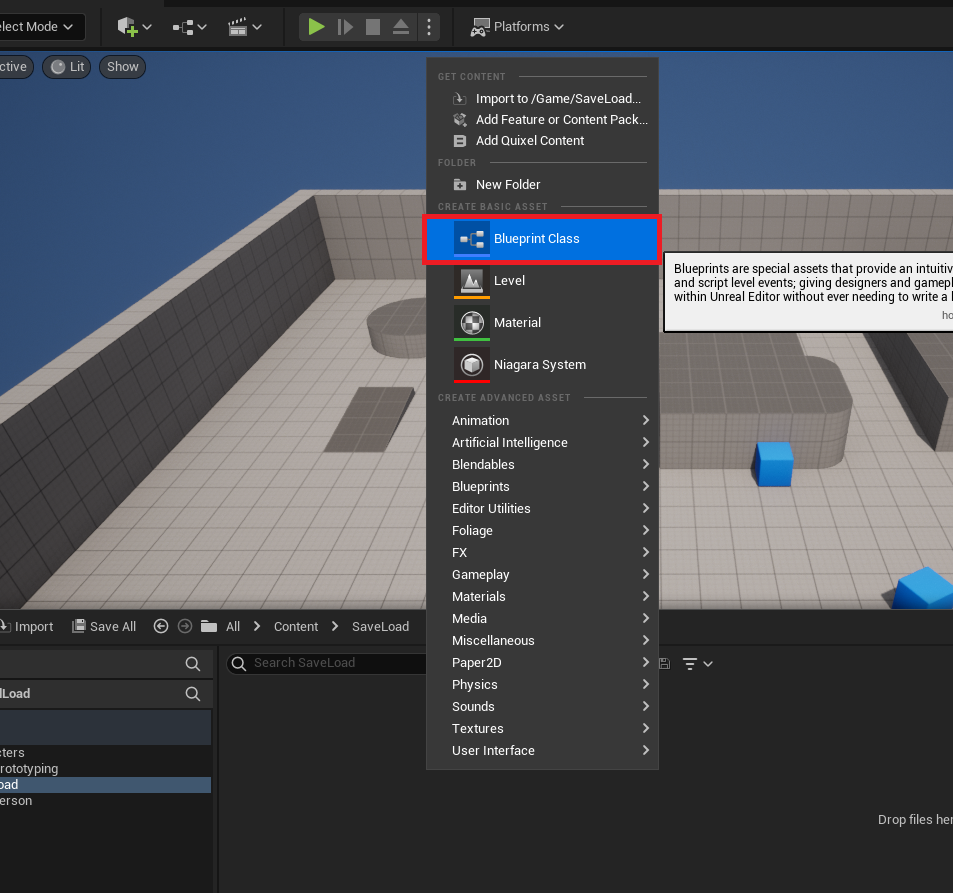
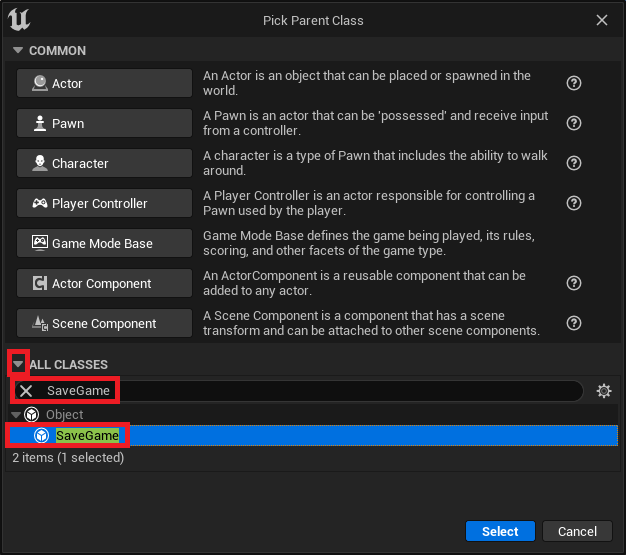
Creating the Save Class: The initial step involves creating a new Blueprint class derived from the base
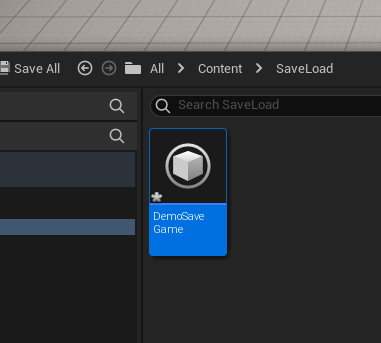
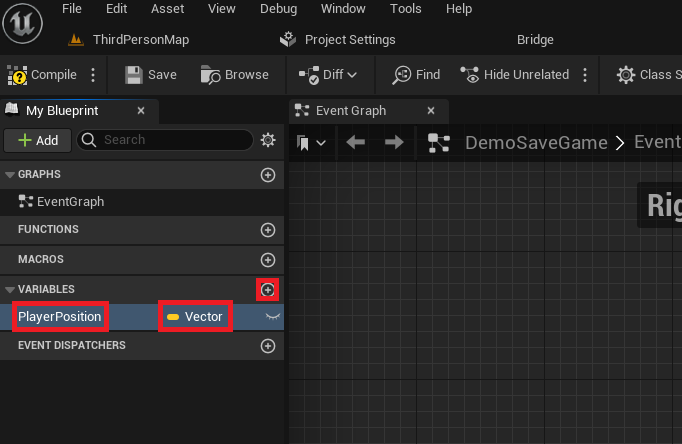
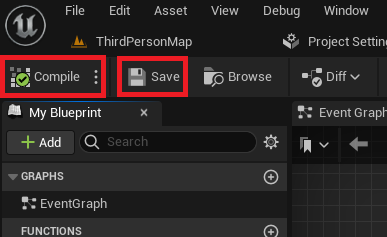
SaveGameclass. This custom class, for instance, namedDemoSaveGame, becomes the dedicated container for all project-specific data intended for persistence. Within this class, developers define variables crucial for their game state. A common example, and one used in many introductory guides, is aVectorvariable to store thePlayerPosition, essential for restoring a player’s physical location within the game world. After defining these variables, compiling and saving the Blueprint ensures that these data structures are ready for use.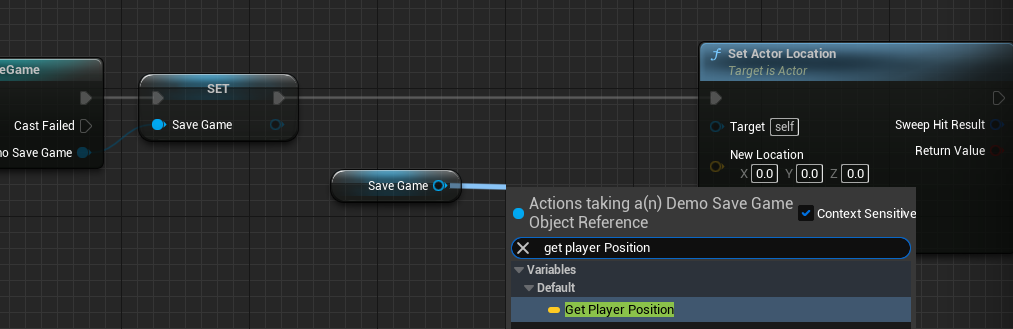
-
Integrating Functionality into Game Instance: To manage save and load operations centrally and ensure data persistence across different levels, custom events (
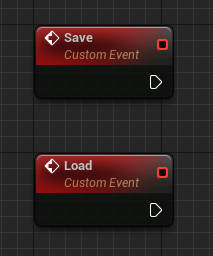
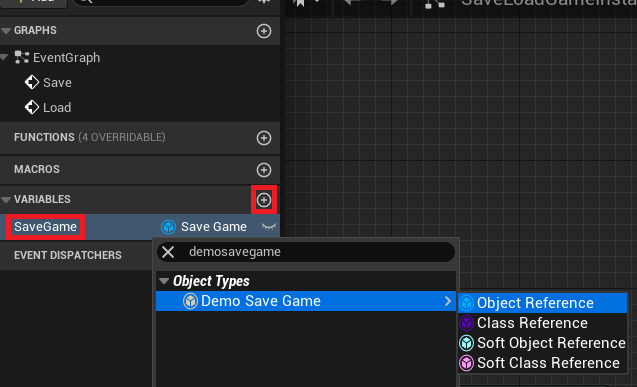
SaveandLoad) are typically added to the project’s customGame InstanceBlueprint. A dedicated variable of the customSaveGameclass type (e.g.,DemoSaveGame) is also established within theGame Instance. This variable will hold the activeSaveGameobject in memory, acting as the conduit for all save/load operations.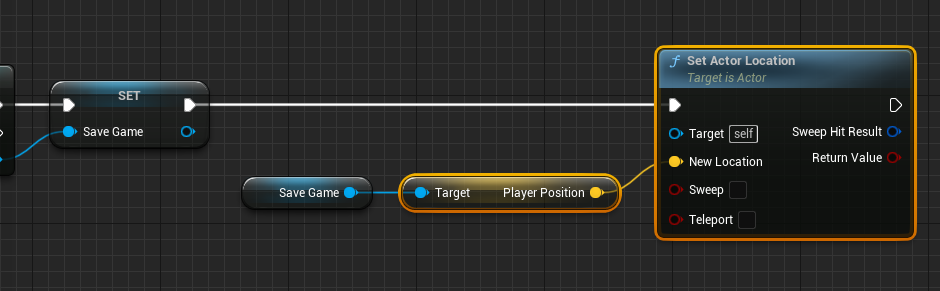
-
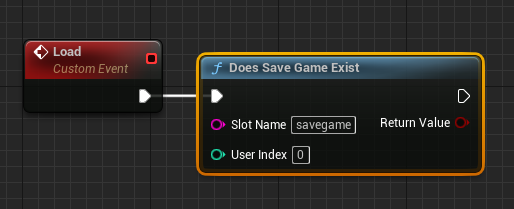
Handling Load Operations: Ensuring Seamless Resumption: The
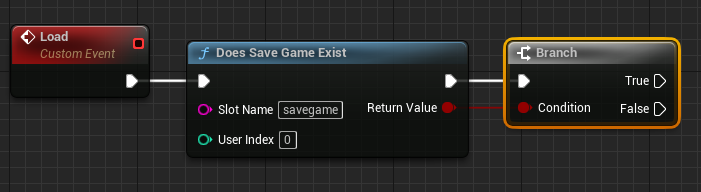
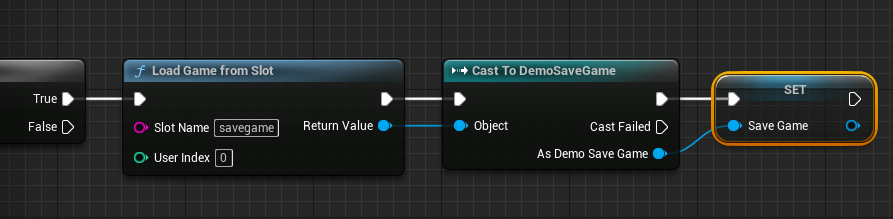
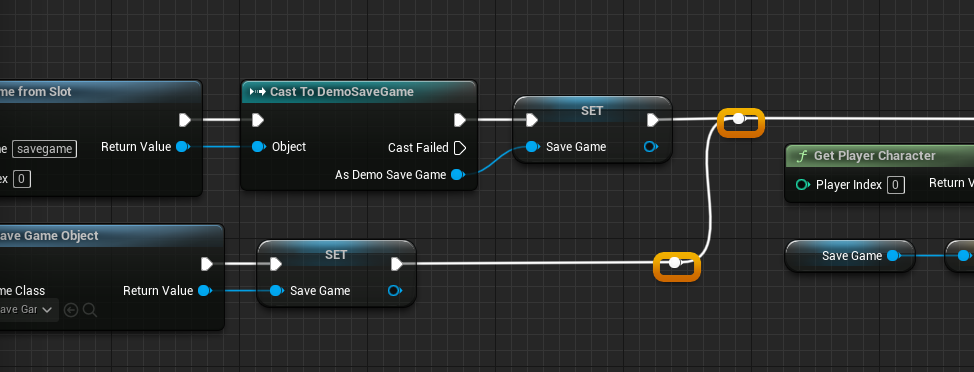
Loadevent in theGame Instanceorchestrates the retrieval of saved data. It begins by checking if a save file already exists for a specified "Slot Name" using theDoes Save Game Existnode. This "Slot Name" acts as a unique identifier for a particular save file.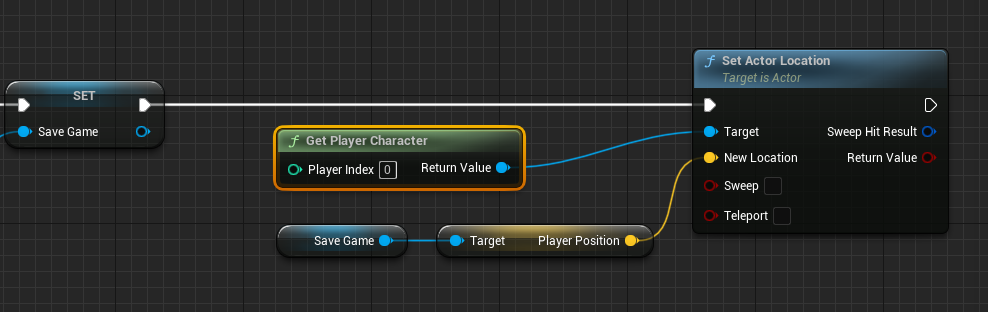
- If a save file exists (True branch): The system proceeds to
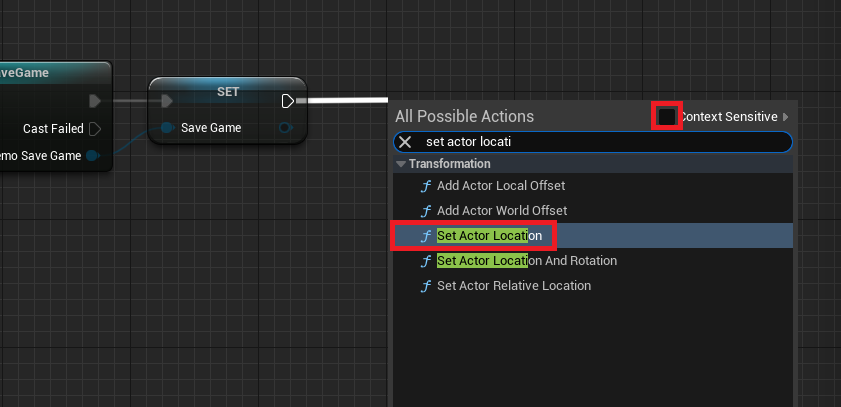
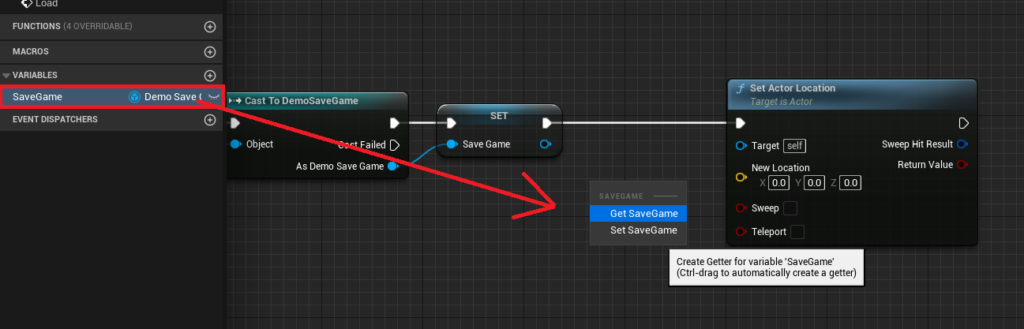
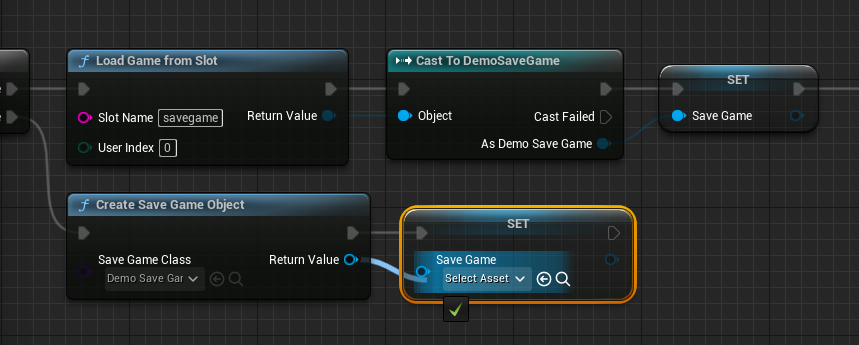
Load Game From Slot, retrieving the serialized data. This genericSaveGameobject is then "Cast To" the specific customSaveGameclass (e.g.,Cast to DemoSaveGame) to access its defined variables. TheGame Instance‘sSaveGamevariable is updated with this loaded object. Subsequently, specific game states, such as thePlayerPosition, are retrieved from the loadedSaveGameobject. In a practical application, thisPlayerPositionwould then be used with aSet Actor Locationnode, targeting thePlayer Character(obtained viaGet Player Character), to teleport the player to their last saved location. - If no save file exists (False branch): A new
SaveGameobject must be created using theCreate Save Game Objectnode, specifying the customSaveGameclass. This newly created object is then assigned to theGame Instance‘sSaveGamevariable, initializing the save system for the current session. The system then logically connects back to the point where an existing save file would have been handled, often leading to a default game state or a fresh start.
- If a save file exists (True branch): The system proceeds to
-
Implementing Save Operations: Preserving Player Progress: The
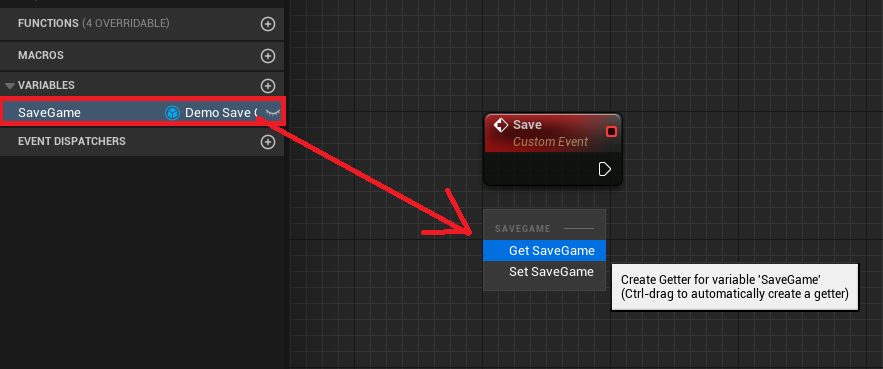
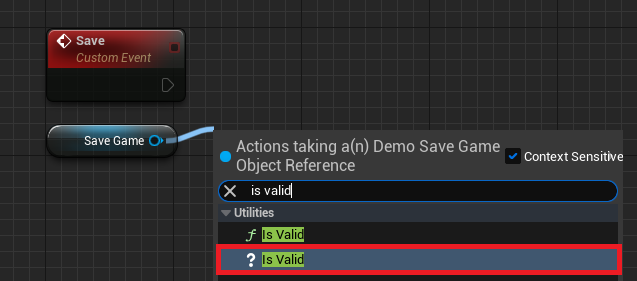
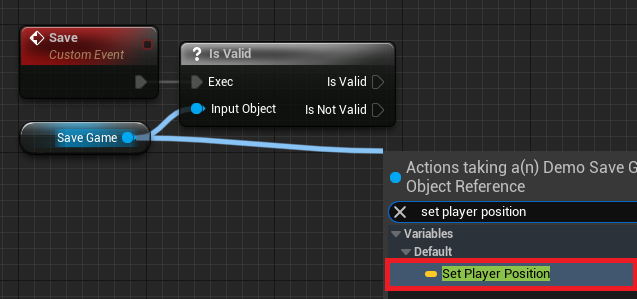
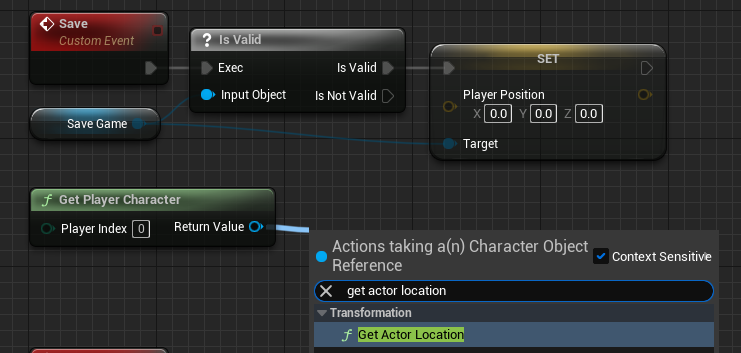
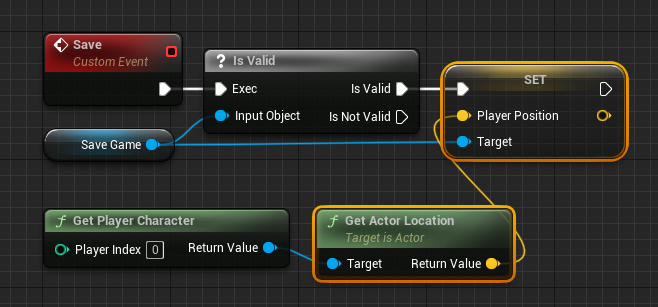
Saveevent in theGame Instanceis responsible for committing the current game state to disk. It first checks if theSaveGameobject referenced by theGame Instance‘sSaveGamevariable isValid(i.e., it has either been loaded or newly created).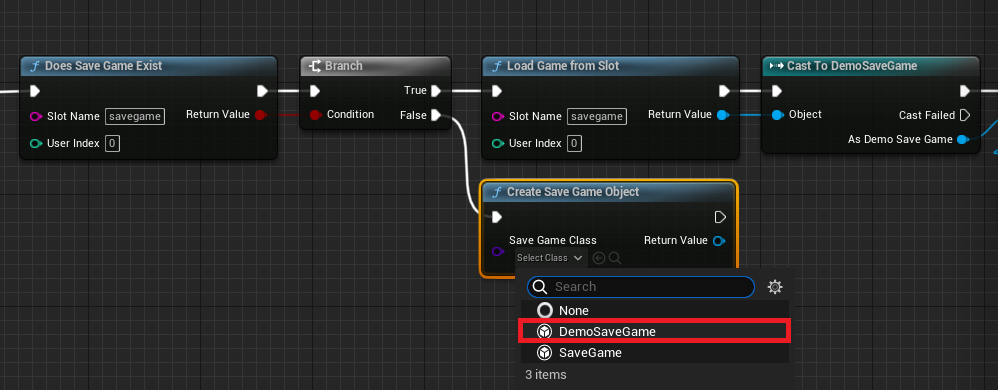
- If the
SaveGameobject is valid: The system retrieves the currentPlayer Character‘s location usingGet Actor Locationand then sets thePlayerPositionvariable within the activeSaveGameobject to this current location. - If the
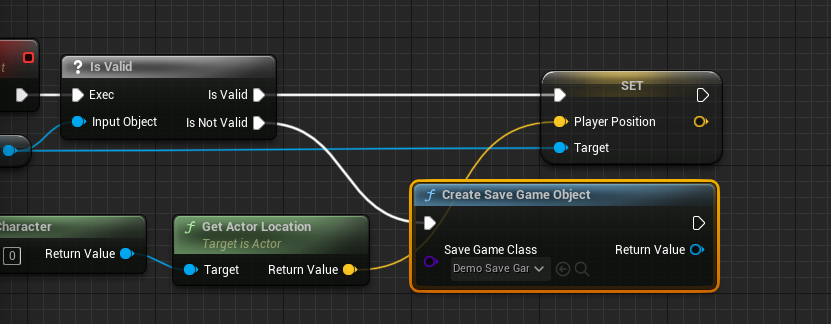
SaveGameobject is not valid: This indicates that no save file was loaded, and no newSaveGameobject was created (perhaps theLoadevent wasn’t called or failed). In this scenario, a newSaveGameobject is created and assigned to theGame Instance‘sSaveGamevariable, similar to the "False" branch of the load operation. After ensuring theSaveGameobject is valid and its variables are updated, the final step involves writing this data to disk. Developers have a choice betweenSave Game to Slot(synchronous) andAsync Save Game to Slot(asynchronous). For smaller data sets, the synchronous option is adequate. However, for games saving large amounts of information, the asynchronous option is highly recommended to prevent hitches or freezes in gameplay, ensuring a smooth user experience. Both nodes require the same "Slot Name" used during loading to ensure consistency.
- If the
Triggering Persistence: Player Interaction
To make these save and load functionalities actionable within the game, they are typically bound to player input. For demonstration purposes, developers commonly link these events to keyboard inputs within the Player Character Blueprint. For instance, pressing the "1" key could trigger the Save event, while the "2" key could trigger the Load event. This involves getting a reference to the Game Instance, casting it to the custom Game Instance class, and then calling the respective Save or Load custom events. This direct linkage provides a clear and immediate way for players to interact with the persistence system.
Implications for Game Development
The implications of Unreal Engine 5’s streamlined SaveGame system are far-reaching:
- Enhanced Player Experience: Reliable saving directly translates to a more enjoyable and less frustrating player experience, fostering greater immersion and encouraging continued play.
- Reduced Development Overhead: By providing a robust, built-in solution, Unreal Engine significantly reduces the time and resources developers would otherwise spend on custom save systems, allowing them to allocate more effort to core gameplay and innovation.
- Accessibility for Indie Developers: The Blueprint-driven nature of the system lowers the barrier to entry for independent developers and smaller teams, enabling them to implement professional-grade save functionality without extensive programming knowledge.
- Foundation for Complex Game Mechanics: A stable save system is foundational for implementing advanced features like player choice consequences, persistent world changes, and dynamic narratives that react to player actions across multiple play sessions.
- Cross-Platform Consistency: The standardized file locations and system architecture aid in ensuring that save data behaves predictably across different target platforms, simplifying multi-platform releases.
Industry Reactions and Future Outlook
Industry analysts have consistently highlighted the importance of robust engine features in driving game development efficiency. The continuous refinement of Unreal Engine’s SaveGame system is seen as a positive step, contributing to the overall maturity and capability of the engine. As games become more ambitious and player expectations for seamless experiences rise, such integrated solutions are not merely conveniences but necessities. The trend towards cloud-based saving and cross-platform progression further underscores the need for standardized, extensible data persistence frameworks, which Unreal Engine is well-positioned to support.
Educational Resources Empowering Developers
The availability of detailed, step-by-step guides, such as those published by educational platforms, plays a crucial role in empowering developers to harness the full potential of these engine features. By breaking down complex processes into manageable steps, these resources bridge the gap between theoretical engine capabilities and practical implementation, fostering a more skilled and confident developer community. The clear demonstration of how to implement the SaveGame system, from class creation to event triggering, serves as an invaluable asset for both new and experienced Unreal Engine users.
In conclusion, Unreal Engine 5’s refined SaveGame system represents a significant asset for game developers, offering a powerful, flexible, and accessible method for data persistence. By abstracting much of the underlying complexity and integrating seamlessly with other engine features, it enables creators to build more engaging, reliable, and player-friendly experiences, thereby strengthening the foundation of modern game development.
About the Author