Valve Corporation has officially moved the Valve Index into its "end-of-life" phase, marking a significant transition in the high-end virtual reality market. The discontinuation of the flagship tethered headset, which served as the gold standard for PC-based VR since its debut in 2019, comes as the company pivots toward its new hardware ecosystem, the Steam Frame. To facilitate the transition and clear existing inventory, Valve has initiated a 20% discount on remaining Valve Index units, including individual components such as controllers and Lighthouse base stations.
The Valve Index was widely praised for its high-fidelity audio, ergonomic "knuckle" controllers, and 144Hz refresh rate. However, by 2026 standards, its resolution and tethered requirement have been surpassed by more modern standalone and hybrid solutions. While the discontinuation was anticipated following the announcement of the Steam Frame, the move has sparked concern among the dedicated "Lighthouse" tracking community.
The Decline of Lighthouse Tracking and the Shift to Inside-Out Systems
The cessation of Index production represents more than the retirement of a single device; it signals a fundamental shift away from the SteamVR Tracking (Lighthouse) architecture. Introduced alongside the original HTC Vive, Lighthouse tracking utilizes external base stations to sweep a room with infrared lasers, providing sub-millimeter precision that remains the industry benchmark for accuracy.
Industry analysts note that while various third-party manufacturers, such as Bigscreen and Pimax, have released headsets that rely on the Lighthouse ecosystem, they generally do not manufacture the base stations or controllers themselves. With Valve halting production, the supply chain for these critical peripherals has become precarious. Although HTC Vive has officially stated it will continue to manufacture and sell compatible base stations, the market is clearly moving toward camera-based "inside-out" tracking.
This transition reflects a broader industry trend favoring user convenience over professional-grade precision. Inside-out tracking eliminates the need for complex room setups and external hardware, making VR more accessible to the average consumer. Experts predict that Lighthouse tracking will likely retreat into a high-end niche, serving enterprise sectors, location-based entertainment (LBE), and elite enthusiasts who prioritize tracking fidelity above all else.
Valve Steam Frame Updates and the Plano OLED Leak
As the Index exits the market, Valve is aggressively iterating on its successor, the Steam Frame. The company recently deployed SteamOS version 0.4, a software update focused on hardware optimization. The update reportedly improves battery efficiency by approximately 12% through refined power management protocols. Additionally, the firmware update addresses color accuracy issues during wireless streaming and provides a suite of stability fixes.

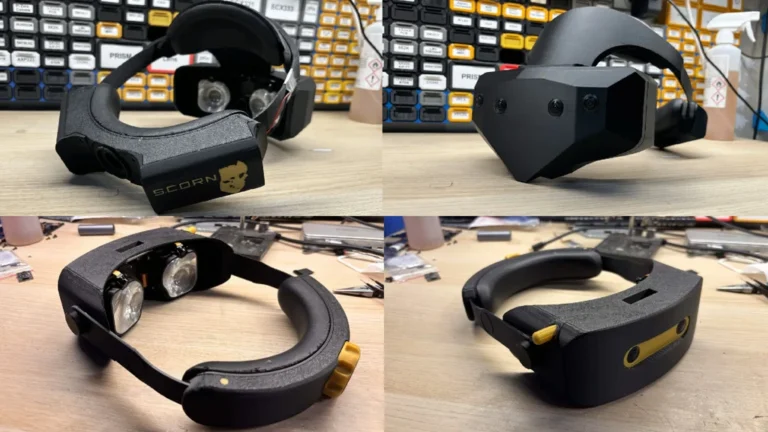
In a move consistent with its history of supporting "right to repair" and community modding, Valve has released the full CAD files for the Steam Frame. This allows third-party manufacturers and individual enthusiasts to design and 3D-print customized accessories, faceplates, and ergonomic modifications.
Simultaneously, technical documentation found within recent code repositories suggests Valve is developing a premium iteration of the Steam Frame, codenamed "Plano." The leaked specifications for Plano indicate a significant visual upgrade, featuring dual OLED displays with a resolution of 3,552 × 3,840 per eye. The move to OLED would address one of the primary criticisms of current LCD-based headsets: the inability to produce true black levels.
The Plano leak also highlights a new performance-saving technology known as "Foveated Scaling." Given that the device is expected to utilize the Snapdragon 8 Gen 3 chipset—which may struggle to render native 4K-per-eye content at high frame rates—Foveated Scaling will allow the system to render the user’s focal point at full resolution while upscaling peripheral areas. While the Plano project remains unconfirmed for commercial release, internal estimates suggest a potential launch window no earlier than late 2027.
Sony and the Future of PlayStation VR 2
Questions regarding the longevity of Sony Interactive Entertainment’s (SIE) virtual reality strategy have intensified following the delisting of the PlayStation VR 2 (PSVR 2) from the official PlayStation Direct store in the United States. Users attempting to access the product page were met with 404 errors, signaling that current stock has been exhausted and not replenished.
While the device remains available in European markets, the US delisting follows a series of concerning developments for the platform. Reports indicate that Sony has significantly scaled back its first-party VR software development, and the recent sale of several XR-related patents to Meta has fueled speculation that SIE may be preparing to exit the VR hardware space entirely. Sony has yet to issue an official statement regarding the production status of the PSVR 2.
Open-Source Hardware and the Rise of Modular VR
In contrast to the consolidated ecosystems of Valve and Sony, the open-source sector is seeing renewed activity. Walker Dev Industries recently launched a Kickstarter campaign for its "Vector Gear" and "Andromeda" headsets. These devices are designed to run on XRUIOS, an open-source operating system intended to provide a transparent alternative to the proprietary software of Meta and Apple.
The high-end Andromeda model features a resolution of 2560 × 2560 per eye and is priced at $1,250, while the standard Vector Gear offers 2160 × 2160 per eye for $980. These headsets include integrated eye-tracking and are marketed toward developers and privacy-conscious users. However, industry observers remain cautious, noting that hardware-focused Kickstarter campaigns frequently face manufacturing delays and logistical hurdles.

AR Glass Market Expansion: XREAL, Alibaba, and Meta
The augmented reality (AR) sector continues to diverge into two distinct categories: high-performance visual displays and AI-integrated "smart glasses."
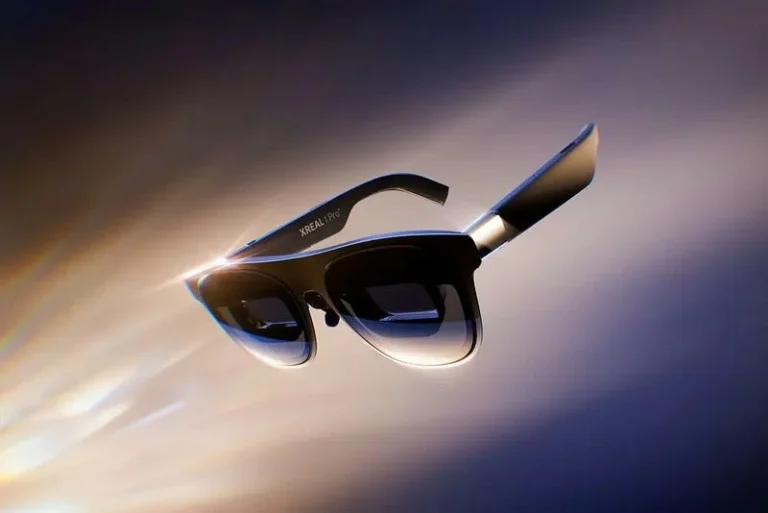
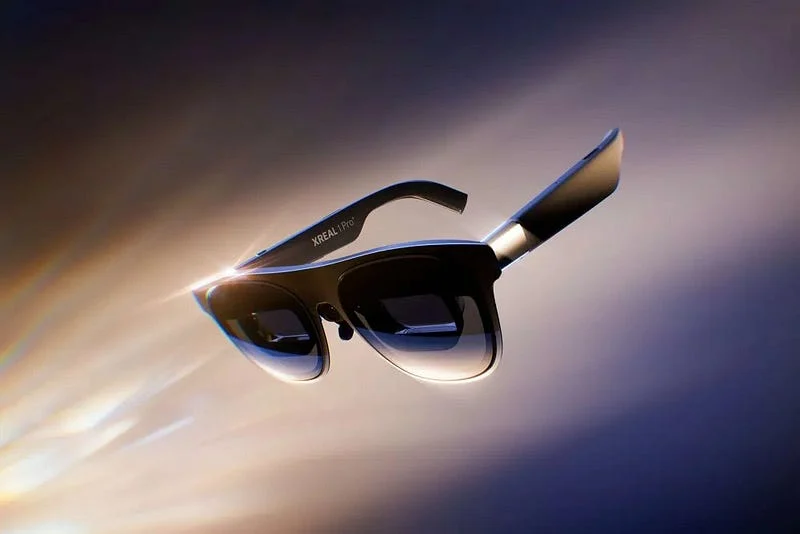
XREAL has announced the 1 Pro+, a refresh of its flagship AR glasses. The updated model increases maximum brightness to 1,200 nits and introduces AI-driven High Dynamic Range (HDR) processing. The glasses are designed for "spatial gaming" and media consumption, featuring an improved 60fps 2D-to-3D conversion engine.
Meanwhile, Alibaba has entered the Chinese market with its N1 and N1 Pro AI glasses. Unlike XREAL’s offerings, the Alibaba glasses do not feature a display. Instead, they focus on AI interaction and include an integrated eye-tracking system used for iris-based biometric payments and contextual awareness. By tracking what the user is looking at, the AI can provide real-time information about objects in the environment through audio feedback.
In the Western market, Meta has solidified its hardware ecosystem through a partnership with SanDisk. The "Made for Meta" initiative will produce specialized SD cards for Meta’s upcoming VR glasses, which feature expandable storage slots to supplement their 128GB internal capacity.
Software Retrenchment and AI Integration
The software landscape is undergoing a similar period of consolidation. Microsoft has officially discontinued "Immersive Events" within Microsoft Teams, effectively sunsetting the last remnants of the Microsoft Mesh platform. This move marks the end of Microsoft’s decade-long attempt to establish a dominant corporate metaverse framework, as the company shifts its focus toward generative AI and Copilot integration.
In the development tools space, Unity has unveiled "Unity Spark," a web-based engine that utilizes "vibecoding"—a process where developers use natural language prompts to generate game logic and assets. While the tool is designed to lower the barrier to entry for game creation, it has sparked debate within the professional community regarding the quality and "soul" of AI-generated content.
Conclusion and Market Implications
The VR/AR industry at the end of 2026 is characterized by a transition from experimental hardware to refined, AI-integrated ecosystems. The retirement of the Valve Index marks the end of the first major era of consumer PC VR, paving the way for more mobile, versatile, and software-intelligent devices. As Lighthouse tracking fades and OLED technology returns to the forefront, the market appears to be bifurcating: one path leading toward mass-market AI wearables and the other toward ultra-premium, high-fidelity immersive workstations. For consumers and developers alike, the coming year will be defined by how these hardware manufacturers balance the competing demands of performance, price, and privacy.
About the Author