The extended reality (XR) industry is bracing for a significant shift in the hardware landscape as Valve appears to be on the verge of unveiling its latest hardware, the Steam Frame. Industry analysts and enthusiasts have noted a series of technical and logistical indicators suggesting that an official announcement from Valve is expected within the coming days. This development coincides with leaked information regarding Samsung’s internal smart glasses prototypes and a confirmed timeline for luxury smart glasses from the Kering Group, the parent company of Gucci. Together, these updates signal a pivot toward both high-end gaming hardware and fashion-forward wearable technology.
Valve Steam Frame: Indicators of an Imminent Market Entry
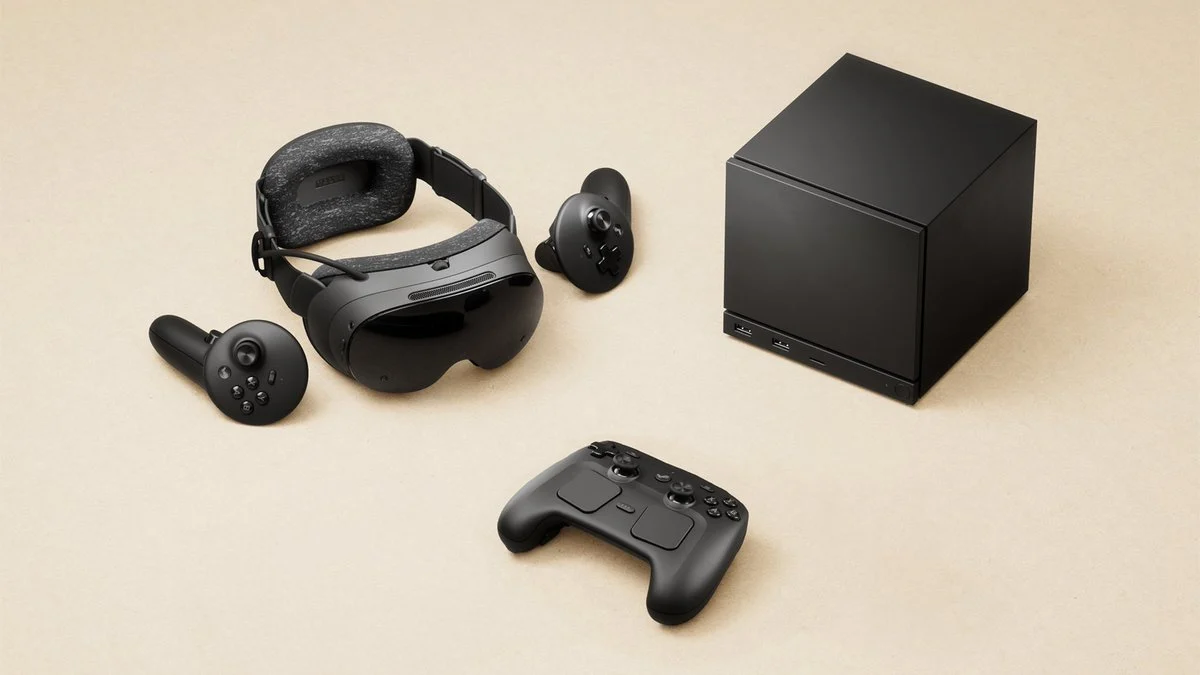
Speculation regarding the Steam Frame has reached a critical point following several high-profile leaks and updates to Valve’s distribution infrastructure. Observers have noted that Komodo, Valve’s official distribution partner in several Asian markets, recently published and then retracted product pages dedicated to new Steam hardware. Furthermore, Valve’s own internal servers saw the upload of an unboxing video for a new Steam Controller, a peripheral widely expected to be bundled with or sold alongside the Steam Frame.
The timeline for the launch remains unconfirmed, though rumors originating from Japanese retail sources suggest a potential release date of May 4. While Valve has not officially commented on the "Star Wars Day" launch theory, the company has a historical precedent for "stealth" launches—announcing products via direct website updates rather than traditional press conferences.
Market analysts suggest the Steam Frame will likely occupy a premium price bracket, estimated between $800 and $1,000. This positioning would place it significantly above the mass-market Meta Quest 3 but well below the enterprise-focused Apple Vision Pro. The leaked pricing of $99 for the accompanying Steam Controller further reinforces the theory that Valve is targeting the enthusiast "prosumer" market rather than attempting to compete on price with entry-level headsets.

Samsung Project Haean: The Next Generation of Integrated Displays
In the mobile sector, Samsung is reportedly expanding its wearable portfolio beyond audio-centric devices. Evidence discovered within the source code of Samsung’s upcoming One UI 9 firmware points to a new device model, designated SM-O500 and codenamed "Haean." This project is distinct from Samsung’s previously discussed collaboration with Google and Qualcomm, which is expected to result in a pair of smart glasses similar to the Ray-Ban Meta glasses later this year.
"Project Haean" appears to be a more advanced iteration of wearable technology, potentially featuring integrated displays for true augmented reality (AR) functionality. Current projections suggest a 2027 release window for this specific model. The existence of multiple model numbers suggests Samsung is pursuing a tiered strategy:
- Entry-level: Audio-only glasses focused on AI assistants and telephony.
- Premium: Display-equipped glasses capable of visual overlays and heads-up notifications.
This dual-track approach mirrors the broader industry trend of establishing a presence in the "smart frames" category before attempting to solve the complex optical and thermal challenges of full AR glasses.
Gucci and Android XR: The Intersection of Luxury and Technology
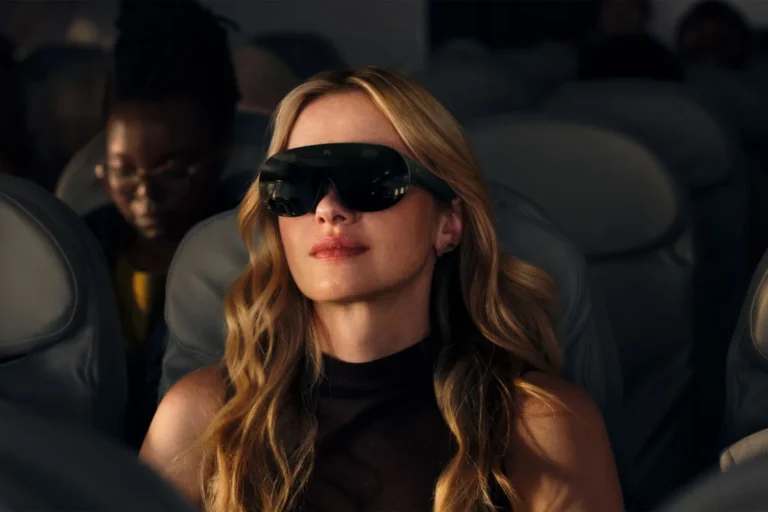
The fashion industry’s involvement in XR took a concrete step forward this week as the Kering Group provided updates on its partnership with Google. Luca de Meo, representing Kering, indicated that Gucci-branded smart glasses powered by the Android XR operating system are slated for a 2027 debut.
This move is seen as a strategic response to the success of Meta’s partnership with EssilorLuxottica. By leveraging the Gucci brand, Google aims to position Android XR as a sophisticated, lifestyle-oriented platform. Industry experts suggest that the success of smart glasses depends heavily on aesthetics; by integrating high-end fashion design with Google’s software ecosystem, the partnership seeks to overcome the "social friction" often associated with bulky, tech-heavy headsets.

Technical Milestones: WebGPU and Experimental Support in Quest Browser
On the software front, Meta has released v146 of the Quest Browser, which includes experimental support for WebGPU. This is a critical technical milestone for the development of WebXR applications. WebGPU allows web-based applications to access a device’s graphics processing unit (GPU) more efficiently than its predecessor, WebGL.
The implications for developers are substantial:
- Reduced Latency: Faster processing of complex 3D environments.
- Enhanced Visual Fidelity: Support for more advanced shaders and lighting effects within a browser.
- Cross-Platform Accessibility: The ability to run high-quality XR experiences without requiring a dedicated app store download.
As WebGPU becomes a standard feature, the barrier to entry for high-quality XR content is expected to drop, facilitating a more robust ecosystem of browser-based tools and games.
Emerging Research and Development in Haptics and Telepresence
While commercial hardware dominates the headlines, several research projects have emerged this week that push the boundaries of XR interaction.
- MUA (Multi-User Avatars): A project focused on enhancing the realism and synchronization of avatars in social XR spaces.
- Project Aria (Boxer): Research into how smart glasses can better understand and map indoor environments in real-time.
- HapticBots and HumanoidTurk: Experimental robotics projects exploring physical feedback in virtual environments, allowing users to "touch" digital objects through mobile robotic interfaces.
These research initiatives provide a glimpse into the long-term roadmap for XR, where visual immersion is supplemented by physical interaction and more intelligent environmental awareness.

Strategic Partnerships and Content Expansion
The XR ecosystem continues to mature through strategic alliances and the release of high-fidelity content. Mentra, the developer of the open-source MentraOS for smart glasses, has announced a partnership with Nimo, a startup specializing in ultra-lightweight hardware. This collaboration allows Nimo users to access the Mentra MiniApp Store, establishing a cross-platform software layer that could simplify the development process for third-party creators.
In the gaming sector, the transition of "Into the Radius 2" out of early access and the announcement of VR support for "Five Nights at Freddy’s: Secret of the Mimic" on PlayStation VR2 indicate a steady flow of high-profile content. Furthermore, the use of the Apple Vision Pro by director Jon Favreau during the filming of "The Mandalorian & Grogu" highlights the growing utility of XR in professional film production and "virtual production" workflows.
Market Impact and Broader Implications
The convergence of these developments suggests that 2025 and 2026 will be "bridge years" for the XR industry, transitioning from experimental hardware to refined consumer products. The imminent launch of the Valve Steam Frame is expected to reinvigorate the PC VR market, which has seen slower growth compared to standalone mobile VR.
Simultaneously, the entry of luxury brands like Gucci and tech giants like Samsung into the smart glasses space indicates a shift toward "all-day wearable" AR. While full-featured AR glasses with high-resolution displays remain several years away, the integration of AI, high-end optics, and fashion-first design is creating a new category of consumer electronics that seeks to eventually replace or supplement the smartphone.
As the industry prepares for the VR AR Expo China in mid-May, the focus will likely remain on how these disparate pieces—hardware, software, and fashion—can be integrated into a cohesive user experience that appeals to both the dedicated gamer and the general consumer.
About the Author