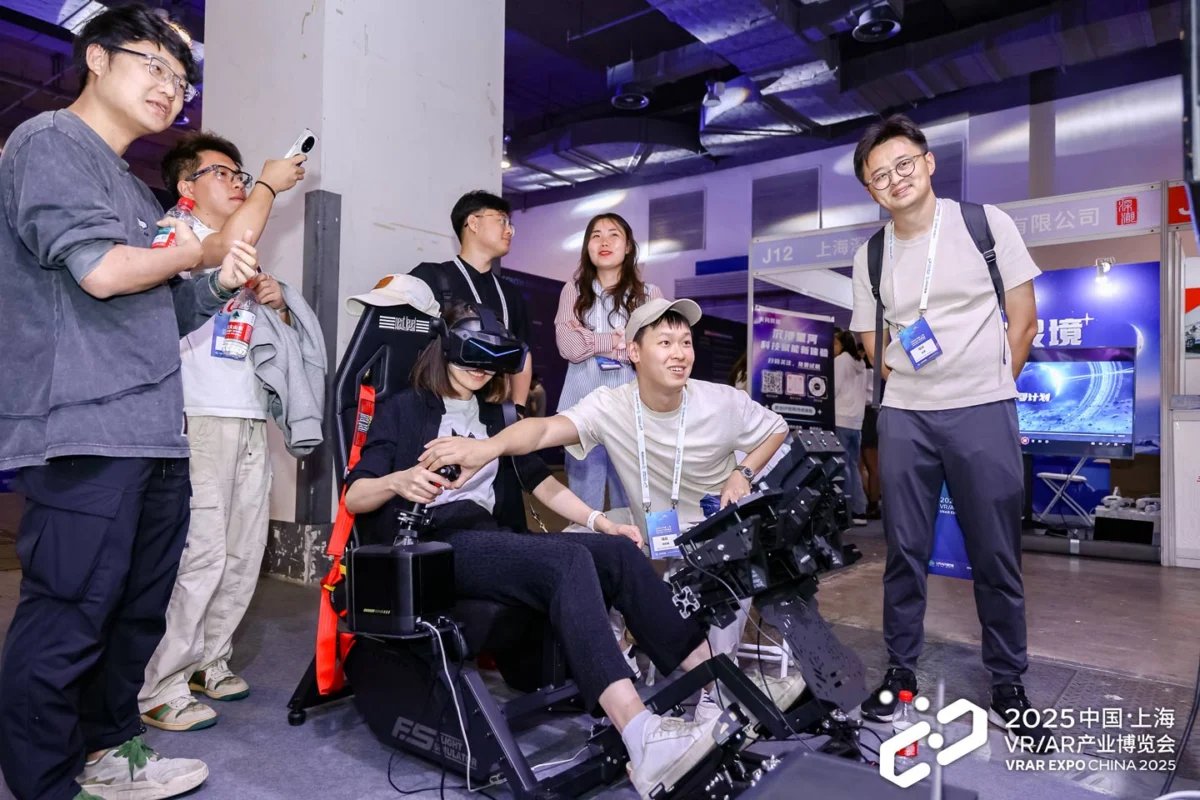
The VR AR Expo China, organized by VR AR World, is scheduled to take place in Shanghai on May 14-15, serving as a critical nexus for the global extended reality (XR) community. This annual event brings together hardware manufacturers, software developers, and content creators to showcase the latest advancements in virtual reality (VR), augmented reality (AR), and the burgeoning field of spatial computing. As the industry transitions from a period of experimental hype toward a value-driven ecosystem, the expo provides a platform for key regional players to discuss the strategic evolution of the immersive market.
Strategic Market Outlook: From Hype to Value Validation
The global XR market is currently navigating a complex phase often characterized by analysts as a period of consolidation. According to recent industry data, the worldwide AR and VR market is projected to generate significant revenue growth through 2025, driven largely by enterprise adoption and the integration of artificial intelligence (AI). Industry leaders participating in the Shanghai expo suggest that the current market "cooling" is not a sign of decline but rather a "natural selection" process.

Sunny Chen, founder of DPVR, characterizes this era as an inevitable transition from consensus-driven investment to value-driven industrialization. Following several years of speculative interest, the focus has shifted toward fundamental business metrics: high-frequency usage, sustainable business models, and the creation of irreplaceable value in specific professional and consumer scenarios. This sentiment is echoed by Near, a representative of INMO, who views the current climate as a period of refinement where resources are gravitating toward companies that solve genuine user pain points regarding wearable comfort and utility.
Hardware Innovation and the Quest for the Final Computing Platform
A central theme of the VR AR Expo China is the ongoing diversification of hardware. Manufacturers are increasingly balancing the competing constraints of processing power, battery life, aesthetics, and thermal management. The event will feature demonstrations of several flagship devices that represent the current state-of-the-art in both high-end PCVR and lightweight AR smart glasses.
High-End PCVR: The Pursuit of Visual Fidelity
Pimax, a veteran in the high-end PCVR space, continues to push the boundaries of resolution and weight reduction. Their latest model, the Dream Air, features a display packing 27 million pixels while maintaining a form factor lighter than a standard smartphone. Jaap Grolleman of Pimax notes that while components like RAM have seen price fluctuations, the general trajectory for high-end hardware remains positive as users become more accustomed to integrating these devices into professional and enthusiast workflows. Pimax will also showcase the Crystal Super, a more powerful headset aimed at users who prioritize maximum immersion over portability.

The Rise of AI-Integrated Smart Glasses
Parallel to the development of high-fidelity VR is the rapid advancement of "daily wear" AR glasses. INMO is positioning its products, such as the INMO Air 3 and INMO Go 3, as the next generation of mobile terminals. These devices emphasize a wireless, all-in-one approach that mirrors the aesthetics of traditional eyewear. The integration of AI assistants is a key differentiator, enabling real-time translation, notifications, and "Fusion Recording" capabilities.
DPVR is also expanding its portfolio to include AI smart glasses, leveraging its long-standing expertise in optical displays and spatial positioning. The company’s strategy involves a "dual-engine" system: deepening its focus on VR for professional training and cultural tourism while simultaneously developing AI glasses for daily consumer use. The goal is to move beyond "technical stunts" and toward seamless daily wear.
Comparative Analysis: The Chinese vs. Western XR Ecosystems
One of the most significant insights emerging from the lead-up to the expo is the distinct difference between the XR ecosystems in the East and the West. These differences are rooted in supply chain infrastructure, consumer behavior, and software development priorities.

Supply Chain Agility and Scenario Depth
The Chinese ecosystem, particularly centered in tech hubs like Shenzhen, benefits from the world’s most complete hardware supply chain. This proximity allows for rapid iteration and extreme efficiency in moving from prototype to mass production. Furthermore, China has seen a massive proliferation of Location-Based Entertainment (LBE) centers—thousands of physical venues where consumers can experience high-end VR. This LBE industry is significantly larger than its Western counterparts, providing a robust testing ground for new hardware and content.
Platform Sovereignty and Content Creation
Conversely, Western ecosystems, led by major North American tech giants, maintain a dominant position in "platform logic." This includes the development of underlying operating systems, global content distribution systems (such as the Meta Quest Store or SteamVR), and the definition of consumer standards. While the West leads in high-quality home-market VR adoption—driven by devices like the Quest series—the Chinese market excels in "scenario agility," quickly adapting XR technology for specific vertical uses in education, healthcare, and industrial simulation.
Timeline of the XR Evolution
To understand the current state of the industry, it is essential to view it through a chronological lens of development:

- 2014–2016: The "Early Hype" phase, marked by the arrival of the first consumer-grade PCVR headsets and massive venture capital influx.
- 2017–2019: A period of "Hardware Refinement," where companies like Pimax and DPVR began carving out niches in high-resolution displays and enterprise solutions.
- 2020–2022: The "Standalone Revolution," where mobile chipsets allowed for tetherless experiences, broadening the consumer base.
- 2023–Present: The "Value Return" and AI Integration phase. The industry is now focused on "spatial computing," where the physical and digital worlds are merged through sophisticated sensors and AI-driven interactions.
Broader Implications for the Future of Technology
The long-term vision shared by many participants at the VR AR Expo China is the eventual emergence of XR as the "final computing platform." Nikk Mitchell, CEO of FXG, suggests that just as the smartphone consolidated the camera, calculator, and telephone into a single device, XR will eventually merge the functions of phones, computers, and televisions into a single wearable form factor.
However, industry experts agree that this transition is a marathon rather than a sprint. The current stage involves "form-fitting" hardware—devices that users are actually willing to wear for extended periods. As AI continues to evolve, it will act as a catalyst, simplifying user interfaces and making the technology more intuitive.
The VR AR Expo China 2024 serves as a reminder that the path to widespread XR adoption is being paved by a combination of Western platform innovation and Eastern manufacturing and scenario-based agility. As companies like Pimax, INMO, DPVR, and FXG showcase their latest work in Shanghai, the focus remains on building a sustainable, open ecosystem that links hardware advantages with real-world commercial applications. The transition from "flashy tech stunts" to "seamless daily utility" marks the beginning of the industry’s true era of value.
About the Author