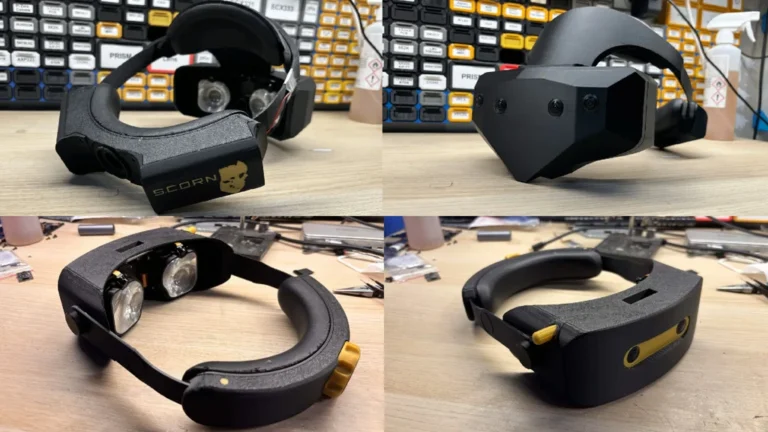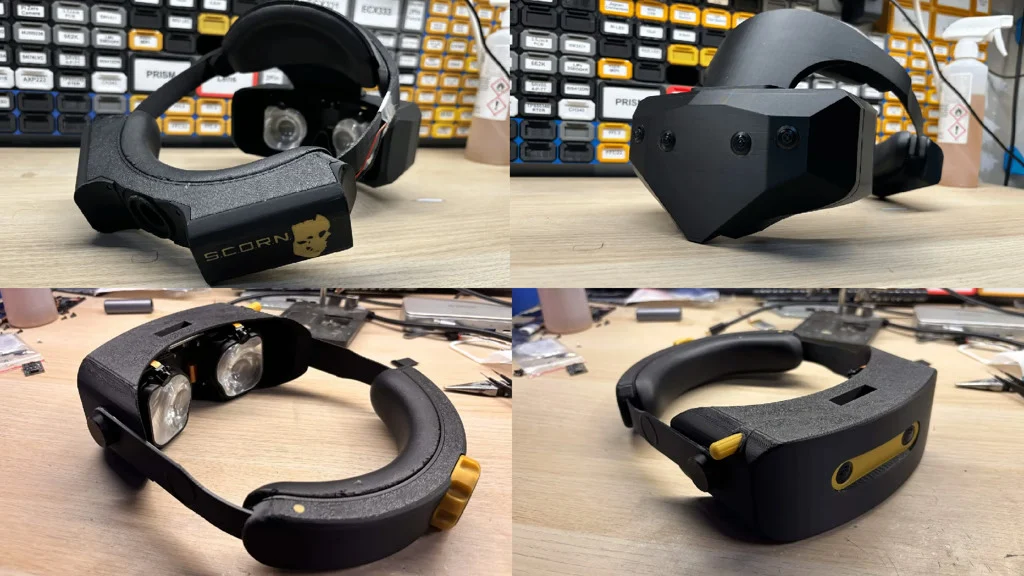
Walker Industries, a Japan-based hardware startup comprised of virtual reality enthusiasts and engineers, has officially launched a Kickstarter campaign to fund the production of its Vector Gear and Andromeda series headsets. This project represents a significant departure from the proprietary "walled garden" ecosystems maintained by major industry players like Meta and Apple, offering a fully open-source hardware and software stack designed for makers, researchers, and high-end enthusiasts. The flagship model, the Vector Gear, aims to provide a versatile mid-range solution capable of both standalone and PC-tethered operation, while the Andromeda series caters to the dedicated PCVR market with varying resolution tiers.
Project Origins and Development Philosophy
The inception of the Vector Gear project stems from a long-term vision to democratize virtual reality hardware. According to the company’s leadership, the project was inspired by the conceptual potential of immersive technology popularized in media over a decade ago. Over the past nine years, the founding team at Walker Industries has transitioned from enthusiasts to developers, focusing on modularity and user sovereignty.
Unlike traditional consumer electronics, where hardware is locked and software is obfuscated, Walker Industries has committed to releasing all design files and source code. This transparency is intended to allow users to modify, repair, and upgrade their devices without manufacturer intervention. This "right-to-repair" philosophy is a core tenet of the company’s mission, positioning the Vector Gear as a tool for innovation rather than a mere consumption device.

Technical Specifications: Vector Gear vs. Andromeda
The Kickstarter campaign outlines three distinct hardware configurations to address different segments of the XR (Extended Reality) market.
The Vector Gear (Flagship Model)
The Vector Gear is designed as a hybrid device, utilizing the Qualcomm Snapdragon XR2 Gen 2 chipset—the same silicon powering contemporary market leaders like the Meta Quest 3. This allows for high-performance standalone gaming and applications while maintaining compatibility with PCVR via a dedicated link.
- Resolution: 2560 x 2560 pixels per eye.
- Display: Dual LCD panels with a 90Hz refresh rate.
- Optics: Pancake lenses providing a 100-degree field of view (FOV).
- Tracking: In-house "AstroSLAM" inside-out tracking for both the headset and controllers.
- Biometrics: Integrated eye tracking and "Shinra Meisin" face tracking.
- Adjustment: Automatic Interpupillary Distance (IPD) adjustment.
The Andromeda Series (PCVR Specialized)
The Andromeda series omits the mobile chipset in favor of a direct PC connection, reducing weight and complexity for users who prioritize high-fidelity desktop-driven experiences.
- Andromeda 2160: A budget-conscious entry-point featuring 2160 x 2160 resolution per eye and a 90Hz refresh rate.
- Andromeda 2560: A premium tier matching the Vector Gear’s 2.5K resolution but optimized for high-end PC rendering.
Both Andromeda models utilize the same modular chassis design, allowing for the potential integration of third-party faceplates, such as Lighthouse tracking sensors for users already invested in the SteamVR ecosystem.

Proprietary Technology Developed In-House
A distinguishing factor of the Walker Industries initiative is the development of critical software modules in-house, rather than relying on licensed third-party solutions. This includes "AstroSLAM," a spatial localization and mapping system that enables 6-DOF (six degrees of freedom) tracking for the headset and its controllers. Notably, the controllers feature onboard cameras for independent inside-out tracking, allowing them to maintain spatial accuracy even when positioned behind the user’s head or obscured from the headset’s primary sensors.
Furthermore, the "Shinra Meisin" face tracking system was developed specifically to enhance social presence in virtual environments. By integrating high-speed cameras and custom algorithms, the headset can stream facial expressions via Open Sound Control (OSC) protocols. This functionality is primarily targeted at users of social platforms like VRChat and Resonite, where non-verbal communication through avatars is a high priority.
XRUIOS and the Yuuko Protocol
The software ecosystem of the Vector Gear is built upon XRUIOS, a custom operating system based on Arch Linux. Walker Industries describes the OS as a "spatial runtime" that functions similarly to a sandbox environment, allowing users to manipulate 3D widgets and applications within a persistent home space.
Key features of XRUIOS include:

- FEX Integration: Enables the execution of standard x86 Linux applications on the headset’s ARM64 architecture, significantly expanding the available software library.
- The Yuuko Protocol: A cross-platform synchronization tool designed to create a seamless experience across multiple devices. This protocol allows users to transition tasks—such as media playback or file editing—between a PC, a smartphone, and the VR headset without losing progress or state.
- Legacy Support: The OS includes built-in emulators, such as MS-DOS support, allowing for the visualization of legacy software in a spatial context.
Market Context and Competitive Landscape
The launch of the Vector Gear occurs at a time of increasing interest in open-source XR hardware. While the market is currently dominated by Meta’s Quest series, there is a growing niche for devices that do not require account linking or data sharing.
Analysts have noted that the Vector Gear will likely compete with Valve’s rumored "Steam Frame" and existing enthusiast headsets like the Pimax series. While the Steam Frame is expected to offer a high degree of moddability, Walker Industries differentiates itself by offering a higher level of total hardware transparency. However, the startup faces significant challenges. Historically, hardware-focused Kickstarter campaigns, such as those by Lynx and Tilt Five, have encountered substantial manufacturing delays and supply chain hurdles. Walker Industries’ decision to develop its own tracking algorithms and operating system increases the project’s complexity and potential for developmental bottlenecks.
Pricing, Availability, and Delivery Timeline
The Kickstarter campaign offers several backing tiers. The Vector Gear is currently priced at $980, while the Andromeda 2160 and 2560 are positioned at $650 and $1,250, respectively. To appeal to the "maker" demographic, the company is also offering "devkit" versions at a discount, which require the user to perform final assembly.
The current project timeline estimates worldwide shipping to begin in May 2027. This window allows for the finalization of the AstroSLAM algorithms and the scaling of manufacturing partnerships in Japan.

Broader Implications for the XR Industry
The success of the Vector Gear could signal a shift in the XR industry toward more sustainable and user-centric hardware cycles. By providing a platform that is designed to be disassembled and modified, Walker Industries is targeting not only gamers but also research institutions and universities. These entities often require the ability to integrate custom sensors or modify firmware for specialized studies in human-computer interaction, a task that is often impossible with consumer-grade hardware.
Furthermore, the open-source nature of the project serves as a safeguard for data privacy. With the full software stack available for audit, users can ensure that biometric data—such as eye and face tracking information—is handled locally and securely, addressing a primary concern regarding the widespread adoption of XR technology. As the campaign progresses, the industry will be watching to see if a small, independent team can successfully navigate the transition from prototype to mass production in a field dominated by multi-billion-dollar corporations.
About the Author