Washington State Secretary of State Steve Hobbs recently sparked considerable discussion within the video game industry by proposing a novel application for digital entertainment: its potential as a strategic instrument of "soft power" in international geopolitics. Addressing attendees at industry events like PAX West and the Seattle Loves Indies and Creators Expo (SLICE), Hobbs presented a vision where video games transcend their role as mere economic drivers to become potent vehicles for cultural exchange and diplomatic influence, aiming to foster global understanding and mitigate conflict. This perspective, while intriguing, opens a complex dialogue among developers, scholars, and policymakers, touching upon artistic expression, economic incentives, and the delicate balance of international relations.
The Secretary’s Pitch: From Pixels to Diplomacy
During his appearances at prominent gaming conventions, Secretary Hobbs, a former U.S. Army officer and current lieutenant colonel in the Army National Guard, articulated a compelling argument for the strategic importance of the video game sector. He acknowledged the well-established economic impact of the industry, particularly within Washington state, a hub for major developers and innovative studios. However, his core message revolved around an elevated purpose: leveraging video games as a means to project American culture, values, and understanding onto the global stage, thereby exercising "soft power."
This proposition likely caught many developers by surprise. For years, discussions surrounding politics in games have typically centered on themes of artistic expression, social commentary, or the potential for controversy. The idea of their creations being lauded as geopolitical tools by a government official presents a dual reaction: a sense of flattery for the recognition of their craft’s reach, and perhaps a degree of apprehension about the implications of such a designation. Hobbs’ personal background as a veteran who served in Kuwait and Iraq, and whose children have also served overseas, lends a poignant urgency to his advocacy. He emphasized that fostering good international relations through cultural exchange and trade could reduce the likelihood of military conflicts, thereby sparing families the anxieties and tragedies of war. "Right now we are in global competition. It is another Cold War," Hobbs stated, underscoring his belief in creative industries as a bulwark against escalating tensions. "As someone who has served overseas and been in wars… I don’t want to go to war. If there’s a way for you to reach hearts and minds through your games, to make this world a better place so people can understand one another, to create change through those countries that are restrictive—I think that’s a good thing."
Deconstructing Soft Power: Joseph Nye’s Framework
To fully grasp Hobbs’ message, it’s essential to understand the concept of "soft power" and its distinction from "hard power." The term was popularized by scholar and former assistant secretary of defense for international security affairs, Joseph Nye, in the 1980s and further articulated in his seminal 1990 Foreign Policy article. Nye defined soft power as "the ability to get what you want through attraction rather than coercion or payments." Unlike hard power, which relies on military force or economic sanctions to compel desired outcomes, soft power leverages a nation’s cultural appeal, political values, and foreign policies to persuade others to want what it wants. It’s about shaping preferences and building alliances through attraction and influence, rather than command.
Hard power, conversely, is characterized by its coercive nature, often manifesting through military interventions, the threat of economic sanctions, or direct political pressure. The historical record is replete with examples of hard power’s deployment, from armed conflicts to trade wars. Hobbs’ lived experience as a military officer provides a stark contrast, highlighting the human cost of hard power and the aspirational benefits of soft power in maintaining global stability.
The deployment of soft power has become a critical topic in international relations. China, for instance, has been identified by experts as extensively employing soft power tactics through cultural institutes (like Confucius Institutes), media outreach, and economic partnerships to enhance its global influence, particularly in regions like Africa and Southeast Asia. Similarly, the extensive investments by the Saudi Arabia Public Investment Fund (PIF) in the global video game industry, totaling billions of dollars, have been widely interpreted as a strategic soft power campaign aimed at diversifying its economy and burnishing its international image. These examples illustrate that the concept is far from theoretical; it is an active and evolving component of contemporary foreign policy.
Historical Precedents and Modern Manifestations
Hobbs’ vision draws parallels from historical cultural diplomacy efforts. He recounted a poignant anecdote from a member of the Games From Poland delegation, who shared how growing up under Soviet occupation during the Cold War, they secretly listened to Voice of America radio broadcasts. These broadcasts, disseminating American music and culture into regions otherwise cut off, served as a powerful, albeit subtle, form of soft power, fostering connections and shared values across ideological divides. Voice of America, established during World War II, aimed to promote freedom and democracy globally, though it has also faced criticism for potentially serving as a vehicle for the U.S. government’s agenda under the guise of independent journalism.
The effectiveness and political will behind such initiatives, however, can fluctuate. The Trump administration, for example, controversially attempted to slash funding for Voice of America, a move that Hobbs implicitly criticized. This shift underscores a broader debate within the U.S. about the value and allocation of resources to soft power initiatives versus military or economic coercion.
The Economic and Cultural Imperative: Insights from Katherine Cross
Sociologist and Game Developer contributor Katherine Cross provided further context during PAX, suggesting that the Trump administration’s attempts to defund soft power programs signaled a prioritization of hard power. She argued that this approach reflected a disdain for many of the elements that historically contribute to America’s cultural strength and global appeal. "We are living in a moment where the people in power in this country are deeply despising of many of the things that do make the US great," Cross explained. She cited instances like the dismantling of USAID, cuts to research capabilities at institutions like NIH and the National Science Foundation, and a general dismissiveness towards popular culture, often labeled as "woke." According to Cross, this stance fails to recognize that "the best things that the United States produces are that are peaceable, that are expressions of creativity, expressions of the best knowledge-based professions, are real and worth having."
Cross expanded on Nye’s theory, highlighting how prioritizing soft power has a beneficial "projecting backwards" effect on a nation’s labor force. It legitimizes and promotes creative, artistic, and knowledge-based professions as vital to national interests, attracting investment and fostering innovation. This encourages the growth of creative economies, providing substantial work opportunities for a skilled workforce. She pointed to nations like Turkey, Japan, and South Korea as prime examples of countries actively promoting their creative industries and cultural output as key components of their soft power strategies. "I would obviously much rather have Japan producing its enormous and beautiful cultural output than mass-producing warships," Cross remarked, illustrating the tangible benefits of this approach.
Video Games as Cultural Ambassadors: Global Examples and Local Impact
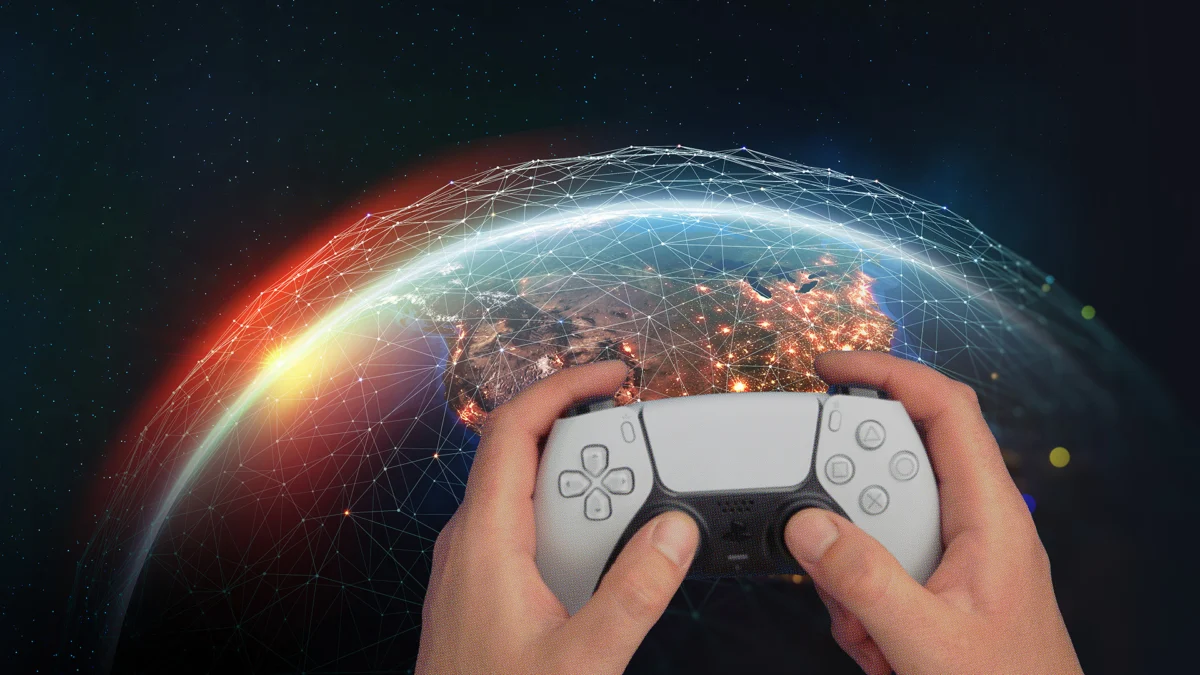
The global video game market is a colossal industry, projected to exceed $300 billion in annual revenue by 2027, with an estimated 3.2 billion players worldwide. This immense reach and cultural penetration make games an undeniable force in shaping narratives and influencing perceptions. Hobbs echoed Cross’s points, citing Polish developer CD Projekt Red’s The Witcher series as a prime example of successful cultural export. The games, deeply rooted in Polish history and folklore and based on the novels of Andrzej Sapkowski, have introduced millions globally to a rich cultural heritage, completing a full circle for a nation that once absorbed U.S. culture through Voice of America.
Hobbs contrasted this global engagement with what he perceived as a retreat by the United States from cultural investment, expressing hope for a future "where the pendulum will swing back." He argued that democratic nations possess an inherent advantage in this arena: "The great thing in a democracy is we have the ability to be creative, and authoritarian regimes can’t." This ability to foster unbridled creativity, he believes, is a powerful differentiator that authoritarian states struggle to replicate, as their control often stifles the very independent thought and expression essential for groundbreaking cultural works.
When confronted with the potential criticism that soft power could be seen as "cultural imperialism"—a concern that cultures receiving foreign content might view it as an encroachment on their own—Hobbs offered a nuanced perspective. He noted that rather than resorting to hard power, many nations respond by investing more heavily in their own creative industries, producing their own cultural exports. This suggests a healthy competition in the cultural sphere, where nations vie for influence not through coercion, but through the appeal and quality of their artistic output. The success of K-pop, anime, and Turkish dramas on the global stage are testaments to this dynamic, demonstrating that cultural exchange is often a two-way street, where distinct national identities can flourish and attract international audiences.
For game developers, understanding their potential role as agents of soft power offers a new lens through which to view their work. It connects their creative endeavors to broader national interests, potentially unlocking new avenues for state support, funding, and recognition. The correlation between national investment in culture and its impact on a country’s global standing becomes clear. Countries that foster vibrant creative economies are not only boosting their GDP but also cultivating goodwill and influence, creating a more interconnected and understanding world.
Implications for Developers and Policymakers
The conversation initiated by Secretary Hobbs has profound implications for the video game industry and national policy. For developers, it prompts a re-evaluation of their work’s societal impact beyond entertainment and economic return. While the pursuit of artistic integrity remains paramount, the recognition of games as cultural ambassadors could lead to increased governmental support, grants, and programs aimed at nurturing local talent and promoting cultural exports. Washington state’s existing efforts to "juice local game development" align perfectly with this broader soft power agenda.
For policymakers, Hobbs’ pitch highlights the strategic value of investing in cultural and creative industries. It suggests that funding for arts, education, and technological innovation is not merely a social expenditure but a critical component of national security and foreign policy. In an increasingly interconnected world, where information and culture flow freely across borders, the ability to shape perceptions and build relationships through attraction is an invaluable asset.
However, the "cultural imperialism" critique remains a valid point of consideration. Developers and policymakers must navigate this terrain carefully, ensuring that the promotion of national culture does not inadvertently overshadow or diminish the rich tapestry of global cultures. The goal should be mutual understanding and exchange, rather than unilateral projection. A truly effective soft power strategy embraces diversity and celebrates the unique contributions of all nations, fostering a global dialogue where games, like other art forms, can serve as bridges between peoples.
Ultimately, Steve Hobbs’ proposition elevates the video game industry to a new level of strategic importance. It challenges developers to consider the broader geopolitical resonance of their creations and encourages governments to recognize the immense, yet often underestimated, power of cultural diplomacy in shaping a more peaceful and prosperous world. As the digital landscape continues to evolve, the role of interactive entertainment in forging international connections and projecting national identity is only set to grow, making this discussion more relevant than ever.
About the Author