The burgeoning field of digital art and 3D modeling continues to benefit from the prolific output of talented creators, with Daniel Orji emerging as a significant contributor through his comprehensive tutorial series. On November 4, 2026, Orji released the fourth installment of his popular "Mech Girl" tutorial, focusing on the intricate and often challenging process of retopology. This latest video, published via the Blender Nation platform, provides viewers with advanced insights and practical tips designed to streamline a critical stage in the 3D asset creation pipeline.
Deep Dive into Retopology: A Crucial Stage in 3D Asset Creation
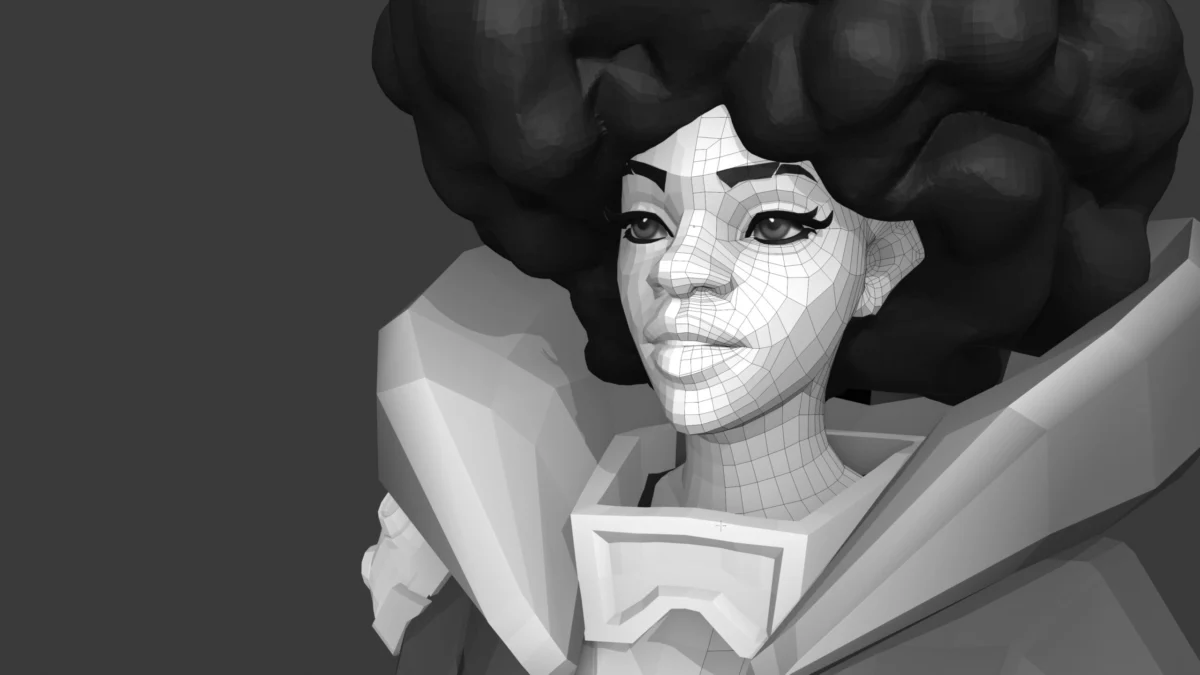
Retopology is the process of reconstructing a high-polygon, often organically sculpted 3D model into a lower-polygon mesh with optimized edge flow. This lower-polygon mesh is essential for various downstream applications, including animation, real-time rendering in game engines, and efficient texturing. A well-executed retopology ensures that a model deforms correctly during animation, renders efficiently, and is manageable for further development. Given its importance, tutorials that demystify and enhance this process are highly valued within the 3D art community.
Orji’s "Mech Girl" series has garnered considerable attention for its detailed approach to character design and modeling. Previous installments have likely covered aspects such as initial sculpting, blocking out forms, and potentially detailing. The decision to dedicate a significant portion of the fourth video to retopology underscores its complexity and the demand for expert guidance in this area.
Orji’s Approach: Practical Tips for Efficient Workflow
The recently released video, accessible via YouTube (https://www.youtube.com/watch?v=TP0DYB3mzjU), specifically addresses the challenges that artists commonly encounter during retopology. While the full scope of Orji’s techniques is detailed within the video, the announcement highlights his intention to share "a couple of tips that help me get through the retopo process." This suggests a focus on efficiency, problem-solving, and best practices that can save artists considerable time and frustration.
Retopology often involves manually drawing new polygons over a high-resolution mesh, meticulously planning edge loops to follow the contours of the model and anticipate deformation. Common pain points include maintaining clean topology, ensuring consistent polygon density, and avoiding issues like ngons (polygons with more than four vertices) or uneven quads. Orji’s sharing of his personal workflow indicates a commitment to providing actionable advice that can be immediately applied by viewers.
Contextualizing the "Mech Girl" Series
The "Mech Girl" concept itself is a popular subgenre within character design, often blending organic human or humanoid forms with mechanical elements. This fusion allows for a wide range of creative expression, from sleek, futuristic cyborgs to robust, industrial mechs integrated with a female aesthetic. The complexity of such designs, with their intricate mechanical components and potentially diverse surface materials, makes a robust and well-structured retopology process even more vital.
Daniel Orji’s consistent output and the multi-part nature of this series suggest a dedication to providing a thorough educational experience. The release of a fourth part indicates a substantial project that likely covers a broad spectrum of 3D modeling techniques, from initial concept to final optimization. The "Mech Girl" series, therefore, serves not only as a tutorial but also as a case study demonstrating a professional approach to complex character creation.
Supporting Data and Community Engagement
While specific data on the viewership and engagement metrics for Orji’s tutorials are not publicly detailed in the provided content, the fact that Blender Nation features his work and that he is releasing a fourth installment points to a significant and engaged audience. Blender Nation itself is a prominent platform for news, tutorials, and community updates related to Blender, one of the world’s leading open-source 3D creation suites. The platform’s role in disseminating such content highlights the strong demand for educational resources within the Blender community.
The "Community Reporter" designation for the author of the article suggests a collaborative effort between individual creators and news outlets, a common practice in niche communities like 3D art. This allows for wider dissemination of valuable content and fosters a sense of shared progress and learning. The dated content (November 4, 2026) places this release in the near future, indicating a forward-looking perspective on ongoing creative projects and educational initiatives.
Implications for 3D Artists and the Industry
The continuous release of high-quality tutorials like Daniel Orji’s "Mech Girl" series has a tangible impact on the 3D art landscape. For aspiring artists, these resources democratize access to advanced techniques, lowering the barrier to entry for learning complex software and workflows. For seasoned professionals, they offer opportunities to refine existing skills, discover new approaches, and stay abreast of evolving industry standards.
The focus on retopology in this installment is particularly significant. As game engines and real-time rendering technologies become more sophisticated, the demand for efficiently optimized 3D assets continues to grow. Artists who can master retopology are therefore in a strong position to contribute to a wide range of projects, from AAA video games to immersive virtual reality experiences and feature film visual effects.
Furthermore, the "Mech Girl" series exemplifies the power of ongoing, project-based learning. By following a single, complex character creation from start to finish, viewers gain a holistic understanding of the entire 3D pipeline. This approach is often more effective than learning isolated techniques, as it demonstrates how different stages of the process interrelate and inform one another. The success of such series also encourages other creators to share their knowledge, contributing to a richer and more dynamic educational ecosystem.
Future Prospects and Community Growth
The continued success of Daniel Orji’s tutorials and the broader engagement with platforms like Blender Nation suggest a healthy and growing community of 3D artists. As technology advances, the need for clear, practical, and expert-led instruction will only increase. Tutorials that focus on specific, challenging aspects of the 3D workflow, such as advanced retopology, are particularly valuable.
The insights shared by Orji in this fourth installment are likely to be well-received, offering practical solutions to common workflow bottlenecks. The commitment to sharing personal tips and tricks further enhances the value proposition, providing a glimpse into the professional practices of an experienced artist. This collaborative spirit, where creators share their knowledge to elevate the entire community, is a cornerstone of the open-source and digital art movements. The "Mech Girl" series, therefore, stands as a testament to the power of shared learning and the ongoing evolution of digital art creation.
About the Author