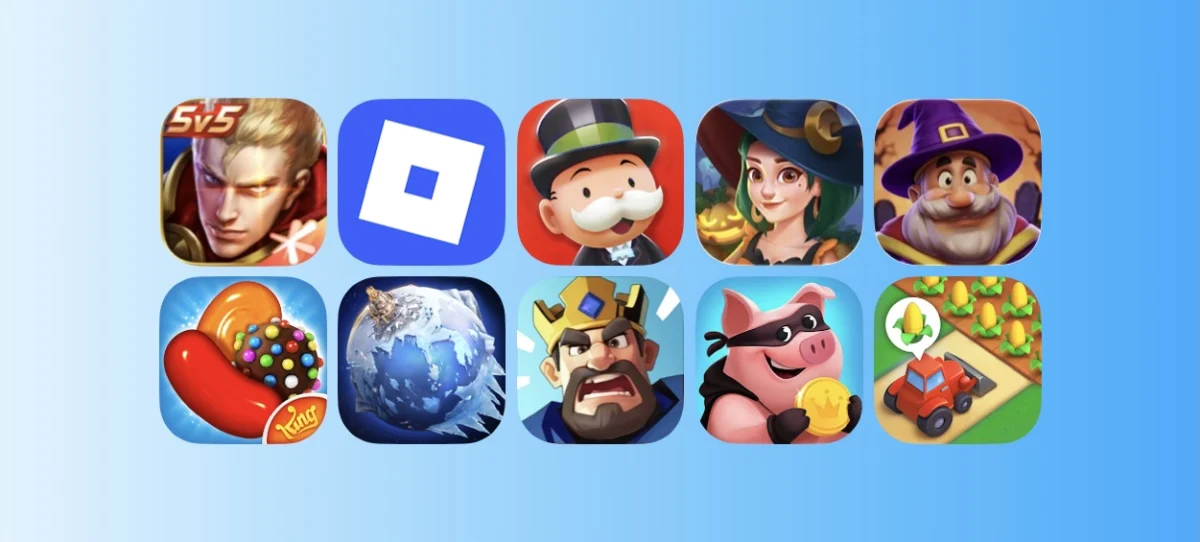
The global mobile gaming landscape in October 2026 revealed a period of stabilization and subtle realignment among the industry’s highest earners, according to the latest In-App Purchase (IAP) data from Appmagic. While the upper echelons of the charts remained largely occupied by established giants, the month was characterized by significant "microdramas" within the rankings, reflecting broader shifts in consumer behavior, the rise of alternative payment systems, and the cyclical nature of live-service game events. Tencent’s perennial powerhouse, Honor of Kings, maintained its pole position with $104 million in monthly IAP revenue, signaling a return to consistency after a year of notable volatility.
The figures provided by Appmagic represent estimated IAP earnings and specifically exclude advertising revenue, expenditures through external web shops, the standard 30% commission taken by Apple and Google, and revenue generated from China’s fragmented Android ecosystem. Consequently, the total economic impact of these titles is likely significantly higher than the reported figures, particularly as more developers pivot toward Direct-to-Consumer (D2C) models to bypass platform fees.
Analysis of the Top Five: Stability at the Summit
Tencent’s Honor of Kings continues to demonstrate why it is considered the most resilient MOBA (Multiplayer Online Battle Arena) in the mobile space. Between August 2025 and July 2026, the title experienced a period of erratic earnings, with revenue fluctuating significantly month-over-month. However, October marked the second consecutive month where the title sat comfortably in the $103–$104 million range. This stability suggests that Tencent has successfully calibrated its "LiveOps" and monetization strategies to maintain a steady baseline of player spending despite the maturity of the title.
Roblox secured the second spot with $94 million in IAP earnings. While this represents a slight uptick from September, it remains below the peak performance seen during the summer months of July and August 2026, when the platform cleared the $100 million mark. Historical data highlights that Roblox is highly susceptible to seasonal trends, often peaking during school holiday periods. The current figures, while robust, are still a far cry from the exceptional $144 million high recorded in July 2025, indicating a potential cooling of the hyper-growth phase the platform enjoyed in previous years.
Scopely’s Monopoly Go maintained its third-place ranking with $75 million in revenue. Although this marks the third consecutive month of sliding IAP earnings, the game has found a consistent floor around the $75 million mark since February 2026. Industry analysts suggest that Monopoly Go has moved into a "retention phase," where the focus has shifted from aggressive user acquisition to maintaining a high-spending core audience through social mechanics and recurring events.

The Competitive Puzzler Market: Royal Match Surpasses Candy Crush
One of the most significant shifts in October occurred in the Match-3 and puzzle category. Dream Games’ Royal Match rose to fifth place with $63 million, effectively leapfrogging King’s Candy Crush Saga, which fell to sixth with $56 million. For Royal Match, this performance represents a stabilization after a prolonged decline from its 2025 heights, when it frequently generated over $100 million per month. The decline in IAP revenue for Royal Match has led to speculation regarding the impact of Dream Games’ newer title, Royal Kingdom, which may be cannibalizing some of the original game’s audience, or a strategic move to push high-value players toward a web shop platform.
Candy Crush Saga, meanwhile, recorded its lowest monthly haul since February 2021. While King’s flagship remains a staple of the mobile industry, the steady downward trend in IAP revenue highlights the increasing competition in the casual puzzle space. The rise of merge games, such as Microfun’s Gossip Harbor, has introduced new mechanics that appeal to the traditional Match-3 demographic. Gossip Harbor itself saw a slight recovery in October, earning $74 million and holding the fourth spot, though it remains below its August 2026 peak of $78 million.
Strategy and Simulation: Century Games’ Dual Performance
Century Games remains a dominant force in the top 20, though its primary titles showed signs of cooling in October. Whiteout Survival, a standout success in the 4X strategy genre, earned approximately $52 million. This marks a significant drop from the $75–$85 million range the game commanded throughout much of early 2026. Similarly, Kingshot, which Century Games aggressively scaled in mid-2025, dipped below the $50 million mark for the first time in over a year, landing at $45 million in eighth place.
Despite the softening of its top-tier strategy titles, Century Games found success elsewhere. Tasty Travels, a newer entry in the merge puzzle category, climbed to the 20th spot with $20 million in revenue. The steady growth of Tasty Travels since early 2025 suggests that Century Games is successfully diversifying its portfolio, moving beyond core strategy into the lucrative casual merge market, directly challenging the dominance of Gossip Harbor.
Mid-Tier Volatility and the Pokemon Phenomenon
The middle of the top 20 chart (positions 11–20) was defined by the impact of event-driven spending and new launches. Playrix’s Township and Gardenscapes both benefited from the decline of other titles, moving up the rankings despite relatively flat or slightly declining revenue. Gardenscapes held steady at $29 million, while Township climbed to $30 million.
The most dramatic movement in the top 20 was observed in the performance of Pokémon GO. The Niantic-developed title saw its IAP revenue plummet from $52 million in September to $24 million in October, a drop of seven places. This volatility is characteristic of Pokémon GO’s monetization model, which is heavily reliant on massive global events such as "GO Fest" or "Safari Zones." When the event calendar is light, revenue tends to contract sharply.

In contrast, the Pokémon franchise saw a surge in another area. Pokémon TCG Pocket, a digital adaptation of the popular trading card game, rose 24 places to 27th spot with $14 million in its first major month of availability. The success of this title suggests a strong appetite for digital collectibles and card-based monetization, potentially providing The Pokémon Company with a more consistent revenue stream than the location-based mechanics of Pokémon GO.
Emerging Titles and Regional Impacts
Beyond the top 20, Kuro Games’ Wuthering Waves demonstrated the enduring power of the "Gacha" RPG model. The game jumped 27 places to reach the 25th spot with $15 million in revenue. Such spikes are typically tied to the release of new character banners or major story updates, which drive high-velocity spending over short periods.
The data also reflected the ongoing struggles of some legacy titles. Tencent’s PUBG Mobile and Konami’s eFootball both saw month-on-month declines, with PUBG Mobile falling to $21 million. These titles face increasing competition from newer tactical shooters and sports simulations, such as Delta Force, which itself saw a decline to $23 million in October after a strong launch period.
Industry Implications and Technical Context
The October revenue data underscores several critical trends currently shaping the mobile gaming industry:
- The Rise of Web Shops: The general decline in IAP revenue for long-standing titles like Royal Match and Candy Crush may not reflect a total loss of player interest, but rather a migration of spending. By offering players bonuses and discounts to shop directly on their own websites, developers can avoid the 30% "platform tax" imposed by Apple and Google. As these D2C channels mature, third-party data tracking solely based on IAP will become an increasingly incomplete picture of a game’s financial health.
- Market Saturation in Casual Genres: The fierce competition between Match-3 and Merge games indicates a saturated market where growth is often zero-sum. For a new title like Tasty Travels to rise, it often must draw time and money away from established leaders like Gossip Harbor or Candy Crush.
- The "Spiky" Nature of LiveOps: October’s rankings prove that consistency is rare. Only a handful of titles, such as Honor of Kings and Monopoly Go, have managed to find a stable revenue floor. For most of the top 100, monthly performance is a rollercoaster dictated by the frequency and quality of content updates.
- Regional Limitations: The exclusion of China’s Android revenue remains a significant caveat. Given the massive popularity of Honor of Kings and other Tencent/NetEase titles on Chinese Android devices, the actual revenue for these games is likely triple or quadruple the IAP estimates provided for Western and iOS markets.
As the industry moves into the final two months of 2026, analysts expect a surge in spending driven by Black Friday promotions and end-of-year holiday events. Historically, November and December represent the highest-grossing period for mobile games, and the current stabilization in October may be the "quiet before the storm" as developers prepare their most aggressive monetization campaigns of the year.
About the Author