The extended reality (XR) landscape is undergoing a significant transition as major technology players align their hardware cycles with the next generation of spatial computing and artificial intelligence. This week, Samsung and Google’s collaborative Android XR platform took a concrete step toward commercial availability with the announcement of partnership timelines, while Meta Platforms Inc. officially established an end-of-life roadmap for its most successful hardware to date, the Quest 2. Simultaneously, geopolitical tensions and supply chain constraints continue to create volatility in the broader semiconductor and AI sectors, highlighted by leadership uncertainty at NVIDIA and a deepening global memory shortage.
Samsung and Android XR Enter the Consumer Market
Following months of industry speculation regarding the "Moohan" project—a joint venture between Samsung, Google, and Qualcomm—official launch windows for the first Android XR-powered devices have been confirmed. Leading the rollout is eyewear retailer Warby Parker, which announced during its recent earnings call that pre-orders for its smartglasses will commence on November 12. The devices are slated for delivery during the upcoming holiday season.
Following closely, fashion-forward brand Gentle Monster has targeted a December launch for its own iteration of the hardware. The company has initiated a high-profile marketing campaign featuring Academy Award-winning actor Joaquin Phoenix. Industry analysts note that the marketing strategy for these devices mirrors that of Snap Inc.’s Spectacles and the Ray-Ban Meta glasses, focusing on lifestyle integration rather than technical specifications.
Technical Specifications and Market Positioning
The initial wave of Android XR glasses will feature an audio-only interface, lacking integrated displays. This strategic move aligns with the current market success of the third-generation Ray-Ban Meta glasses, which utilize AI-driven voice assistants and spatial audio to provide utility without the weight or battery constraints of full optical engines. By utilizing the Android XR operating system, Samsung and its partners aim to create a seamless ecosystem that leverages Google’s Play Store and existing mobile AI infrastructure.

The Sunset of the Quest 2 Era
Meta has formally initiated the discontinuation process for the Quest 2 and the enterprise-focused Quest Pro. While both headsets had already been largely superseded by the Quest 3 and the budget-friendly Quest 3S, Meta’s developer roadmap now provides a definitive timeline for the cessation of software support.
Support and Compatibility Timeline
According to Meta’s latest developer documentation, feature development for the Quest 2 and Quest Pro will conclude with the release of v213 of the operating system. This version is expected to reach all active devices by March 2027. Key milestones in the phase-out include:
- March 2027: Final OS feature update (v213) deployed. Subsequent APIs and platform capabilities will be exclusive to Quest 3, 3S, and future iterations.
- December 2027: Meta will cease accepting new applications or major updates targeting the Quest 2 and Quest Pro on the Horizon Store.
Market Impact and User Migration
The Quest 2 remains the most successful VR headset in history, with estimated sales exceeding 25 million units. Launched in late 2020 at a disruptive $299 price point, it capitalized on the surge in home entertainment during the global pandemic. The discontinuation poses a significant challenge for Meta: retaining a massive user base primarily composed of price-sensitive consumers and younger demographics. Industry observers suggest that Meta may need to implement aggressive discounting on the Quest 3S to prevent a contraction of its active user base as legacy hardware becomes obsolete.
Valve’s Steam Frame Achieves Rapid Market Penetration
In the high-end PC-based VR segment, Valve’s recently released "Steam Frame" headset has demonstrated unprecedented growth. Data from the October Steam Hardware Survey indicates that the Steam Frame has captured 5.49% of the SteamVR user base within its first month of availability.
This adoption rate significantly outpaces the launch trajectory of the Valve Index. Internal data suggests that a substantial portion of Steam Frame users are utilizing the device not for immersive VR, but as a high-fidelity virtual monitor for traditional "flat-screen" gaming. This trend highlights a shift in consumer behavior toward "spatial productivity" and versatile display usage rather than pure virtual reality gaming.

ByteDance and the Pico Space Pro Launch
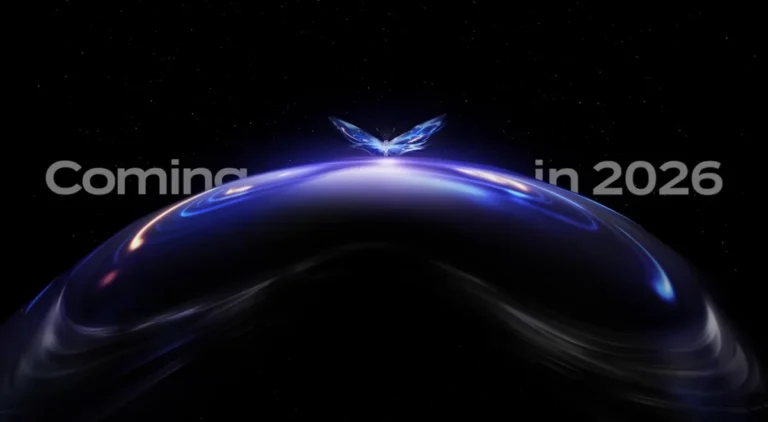
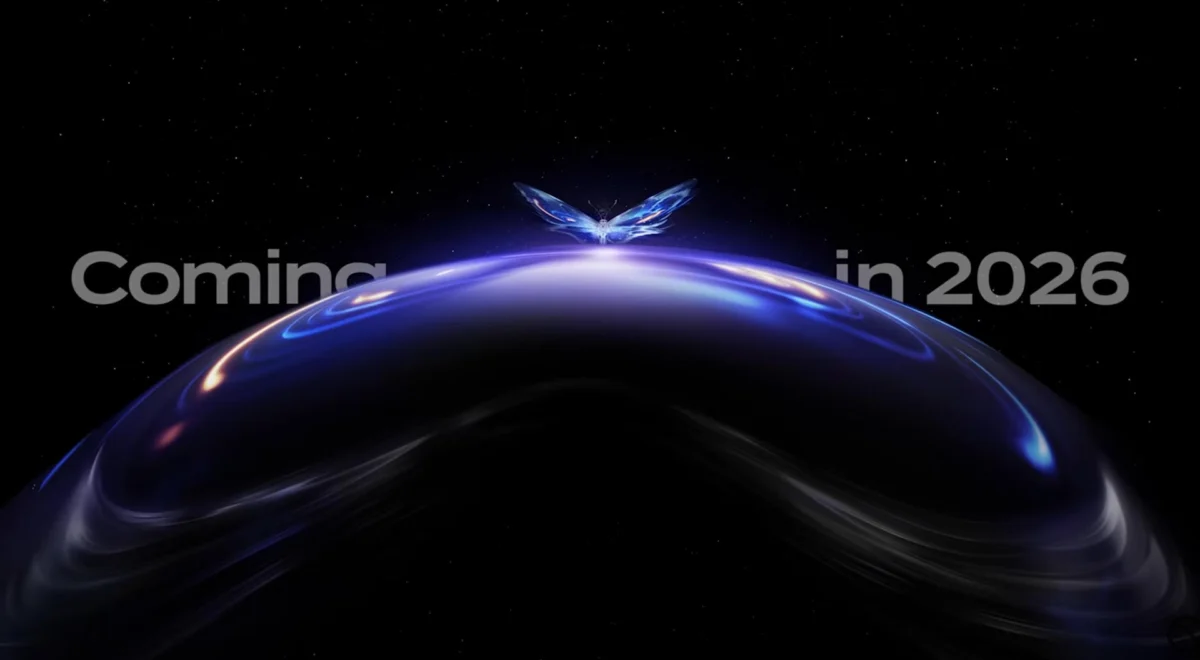
Pico, the XR subsidiary of ByteDance, is reportedly preparing for the launch of the Pico Space Pro—internally known as Project Swan—on December 2. The device represents Pico’s pivot toward the high-end "Pro" market, intended to compete directly with the Apple Vision Pro and Meta Quest Pro.
Integration of Generative AI
Reports from industry insiders suggest the launch was delayed to ensure the integration of ByteDance’s proprietary generative AI models. These models are expected to assist in real-time environment reconstruction and "world-building" capabilities. Pricing is expected to be premium, with estimates placing the device in the $2,500 range, reflecting its sophisticated sensor array and processing power.
Leadership Uncertainty and Geopolitical Risks at NVIDIA
The semiconductor industry is currently monitoring a developing situation involving NVIDIA CEO Jensen Huang. Reports from US intelligence agencies, initially surfaced by Bloomberg, allege that Huang was involved in a personal relationship with an individual identified as a foreign intelligence operative.
Corporate and Market Consequences
NVIDIA’s Board of Directors has launched an internal investigation to determine if proprietary AI architecture or trade secrets were compromised. As the dominant provider of GPUs for AI data centers, any instability in NVIDIA’s leadership could have cascading effects on the global tech economy. Market analysts have expressed concern that this development, combined with existing US-China chip export restrictions, could contribute to a cooling of the current AI investment cycle.
Global Supply Chain and Component Crisis
The technology sector continues to face a worsening shortage of high-performance memory and processing units. Team Group CEO recently warned that the demand for AI data center components is cannibalizing the supply of consumer-grade DRAM and VRAM.

Furthermore, NVIDIA has reportedly begun removing the RTX 5080 from its official retail listings, following the similar disappearance of the RTX 5090. Supply chain experts speculate that NVIDIA may be redirecting high-performance silicon toward its more lucrative enterprise AI sector, potentially leading to a scarcity of high-end graphics cards for the consumer VR and gaming markets throughout 2025.
Emerging Innovations in Mixed Reality UX
Despite corporate and supply chain challenges, the developer community continues to push the boundaries of mixed reality (MR) interaction. UX designer Greg Madison recently unveiled "Sphenomenon," an experimental interface that utilizes the Apple Vision Pro to transform a standard physical gym ball into a haptic controller.
By mapping digital overlays onto the physical sphere, Sphenomenon allows users to interact with virtual objects with a high degree of tactile presence. Madison has announced plans to open-source the code for this project, providing a framework for developers to explore how everyday physical objects can be integrated into spatial computing environments to solve the "haptic gap" in current MR hardware.
Software and Ecosystem Updates
The software ecosystem continues to evolve to support new hardware capabilities:
- Steam Link Improvements: Valve has updated its Steam Link software to improve text legibility and color reproduction for Quest and Pico users streaming PCVR content.
- YouTube VR Redesign: Google is reportedly testing a major interface overhaul for YouTube VR on Meta headsets, focusing on better integration of 3D and 180-degree content.
- Industrial Smartglasses: The "reGoggles" project has introduced a modular, open-source hardware platform for industrial AR, prioritizing durability and customization for factory floor applications.
As the industry moves toward the 2025 fiscal year, the divergence between lifestyle-oriented AI glasses and high-end spatial computing headsets is becoming more pronounced. The success of these platforms will likely depend as much on ecosystem stability and component availability as on technical innovation.
About the Author