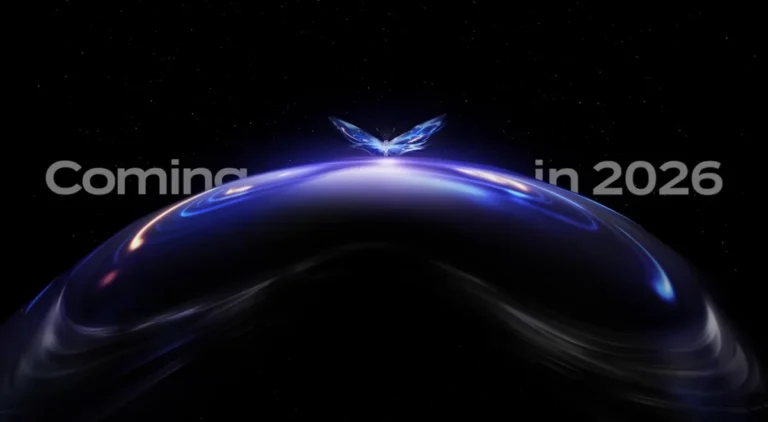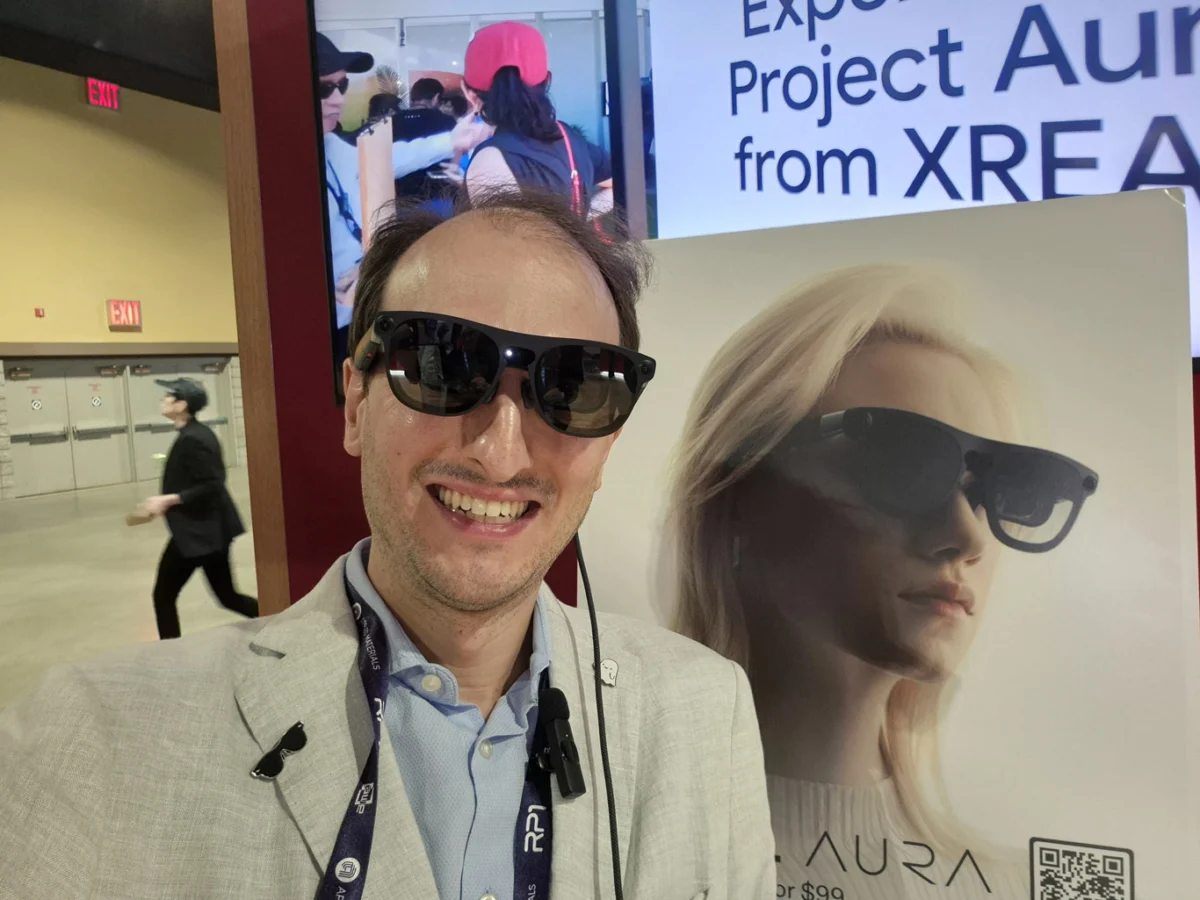
XREAL has officially entered the next phase of its market strategy with the formal launch of the XREAL Aura augmented reality (AR) glasses, an announcement made during the recent Android Dev Summit. The launch marks a pivotal moment for the manufacturer as it seeks to capture a larger share of the spatial computing market, currently dominated by Meta’s hardware ecosystem. The XREAL Aura is now available for direct purchase via the company’s official website and through major retail partners such as Best Buy. In a strategic move to undercut competitors and incentivize early adoption, XREAL has introduced a substantial launch discount, pricing the device at $1,099 for customers who purchase before the end of 2026—a $200 reduction from its standard $1,299 retail price.
The initial rollout of the Aura hardware is scheduled to begin in mid-November, targeting a select group of high-growth markets including the United States, Canada, Japan, and South Korea. Notably absent from the first shipping wave are the European Union and Australia. Industry analysts suggest this geographic limitation may be linked to varying regulatory environments regarding artificial intelligence and data privacy, particularly as these devices increasingly integrate sophisticated AI assistants.
Technical Integration and Developer Ecosystem
The Aura launch was accompanied by several key software and developer announcements designed to bolster the device’s utility. XREAL confirmed that the Godot game engine is now fully compatible with the Aura glasses, providing an open-source pathway for developers to create immersive content. Furthermore, the company highlighted new entertainment titles, such as an AR-enhanced version of the tabletop game "Fallout: Factions."

In a parallel development, Google has integrated its "XR Blocks" framework into Google AI Studio. This tool, powered by the Gemini large language model, allows for "vibe-coding"—a process where creators can generate physics-aware WebXR applications through natural language prompts. This capability is expected to lower the barrier to entry for AR content creation, potentially addressing the chronic lack of software that has historically hindered hardware adoption.
Meta Reality Labs Reports Revenue Contraction
While XREAL aggressively expands its footprint, the industry leader, Meta, is navigating a period of cooling demand for its flagship Virtual Reality (VR) headsets. In its most recent earnings call, Meta revealed that its Reality Labs segment generated $443 million in Q3 revenue, representing a 6% decline year-over-year. The company attributed this dip primarily to lower Quest headset sales, though the losses were partially mitigated by the strong performance of its AI-integrated smartglasses.
Meta CEO Mark Zuckerberg addressed the declining hardware sales by signaling a shift in the company’s release philosophy. Zuckerberg indicated that Meta will prioritize "major breakthroughs" over incremental updates. This suggests that the company may extend the lifecycle of current models like the Quest 3 and Quest 3S, choosing to wait until significant technological leaps—likely in form factor, display resolution, or optical weight—are ready for the mass market. Analysts interpret this as a defensive maneuver against the "VR is dead" narrative, focusing resources on products that have demonstrated more consistent consumer interest, such as the Ray-Ban Meta smartglasses.
The Rise of Smartglasses and the EssilorLuxottica Partnership
Contrastingly, the "smartglasses" category—distinct from full AR or VR headsets—is showing robust growth. EssilorLuxottica, Meta’s primary partner for the Ray-Ban Meta line, reported record-breaking revenues that exceeded market expectations. The manufacturer’s wearables sector, which includes smartglasses and hearing solutions, contributed approximately €486 million in revenue, accounting for 6.5% of its total quarterly intake.

While the growth rate for smartglasses moderated to 20% in the third quarter—down from a nearly 100% surge in the previous quarter—the figures remain a bright spot in the broader XR industry. This trend explains Meta’s increasing focus on the smartglasses form factor, which prioritizes daily wearability and AI utility over fully immersive digital environments.
Emerging Competition and Market Chronology
The fourth quarter of 2026 is becoming a crowded window for XR hardware. Alongside XREAL, several other players are positioning themselves for the 2027 fiscal year:
- Samsung Smartglasses: Reports from South Korean industry insiders suggest that Samsung may launch its own smartglasses in mid-December 2026. Like XREAL, Samsung is expected to target the U.S. and South Korean markets first. The timing of this rumored launch has drawn scrutiny from retail analysts, as it misses the critical Black Friday and Cyber Monday sales windows, potentially limiting its initial impact.
- Raven Prism 1: Raven has introduced the Prism 1, a monocular smartglass system designed as a portable, privacy-focused computer. Running on Linux and featuring a physical camera shutter, the device is positioned for the enterprise and privacy-conscious consumer market at a price point of $1,499. Shipping is slated for January 2027.
- Rokid Jungle Event: In China, Rokid recently unveiled three new products: the Rokid Color (AR glasses), Rokid Glasses 2, and the Rokid Ring. These announcements signify continued aggressive investment from Chinese manufacturers in the spatial computing sector.
Industry Headwinds and Content Challenges
Despite the influx of new hardware, the XR industry faces significant structural challenges. Valve, a major stakeholder in the PC VR space through the Steam platform, recently highlighted a "content dilemma." Data from the company suggests that users of its "Steam Frame" interface are increasingly using the hardware to play traditional flat-screen games in a virtual theater mode rather than dedicated VR titles. This lack of "killer app" content remains a primary hurdle for long-term user retention.
The economic pressure on content creators was further evidenced by a second round of layoffs at Schell Games, a veteran studio known for the "I Expect You To Die" franchise. The reduction in staff at such an established firm is seen by many as a warning sign for the VR gaming sector, particularly for titles targeting adult demographics rather than the younger "Roblox" and "Gorilla Tag" audiences.

Additionally, software development may face new hurdles due to changes in AI policy. Anthropic has reportedly updated its Claude LLM guidelines to prohibit tasks related to decompiling applications and reverse-engineering games. This move could potentially slow the vibrant VR modding community, which has historically relied on AI tools to port traditional PC games into immersive formats.
Broader Impact and Market Outlook
The current state of the XR market reflects a divergence between high-end immersive VR and lightweight, utility-driven smartglasses. While companies like XREAL and Rokid continue to push the boundaries of AR optics, the broader market appears to be gravitating toward devices that integrate seamlessly into daily life.
The success of the XREAL Aura will likely depend on whether its aggressive pricing and improved developer tools can overcome the general decline in consumer VR spending. As 2026 draws to a close, the industry’s focus is shifting toward the anticipated Samsung launch and the potential for a "refresh cycle" in 2027. For now, the hardware landscape remains in a state of flux, characterized by rapid technical iteration amidst a cautious consumer environment.
About the Author