KAT VR, a prominent developer in the field of virtual reality (VR) locomotion technology, has officially announced the KAT Walk C3 Ultra, a next-generation omnidirectional treadmill designed to enhance immersion for home-based VR enthusiasts. As the latest iteration in the company’s specialized hardware lineup, the C3 Ultra is engineered to translate physical movement into virtual navigation, effectively addressing the "locomotion problem" that has persisted in the VR industry since its inception. By allowing users to walk, run, and strafe within a fixed physical footprint, the device aims to mitigate motion sickness while providing a high-intensity fitness experience.

The KAT Walk C3 Ultra functions as a "slipmill," a specialized category of treadmill that utilizes a low-friction concave platform and sensor-equipped footwear. Unlike traditional motorized treadmills found in gyms, the C3 Ultra relies on the user’s physical gait and gravity. As a user takes a step, their foot slides back toward the center of the concave base, a movement detected by sensors embedded within the soles of the dedicated KAT shoes. This data is then transmitted via Bluetooth to a receiver, which communicates with the host computer to emulate thumbstick movement in VR environments.

Logistics and Technical Specifications
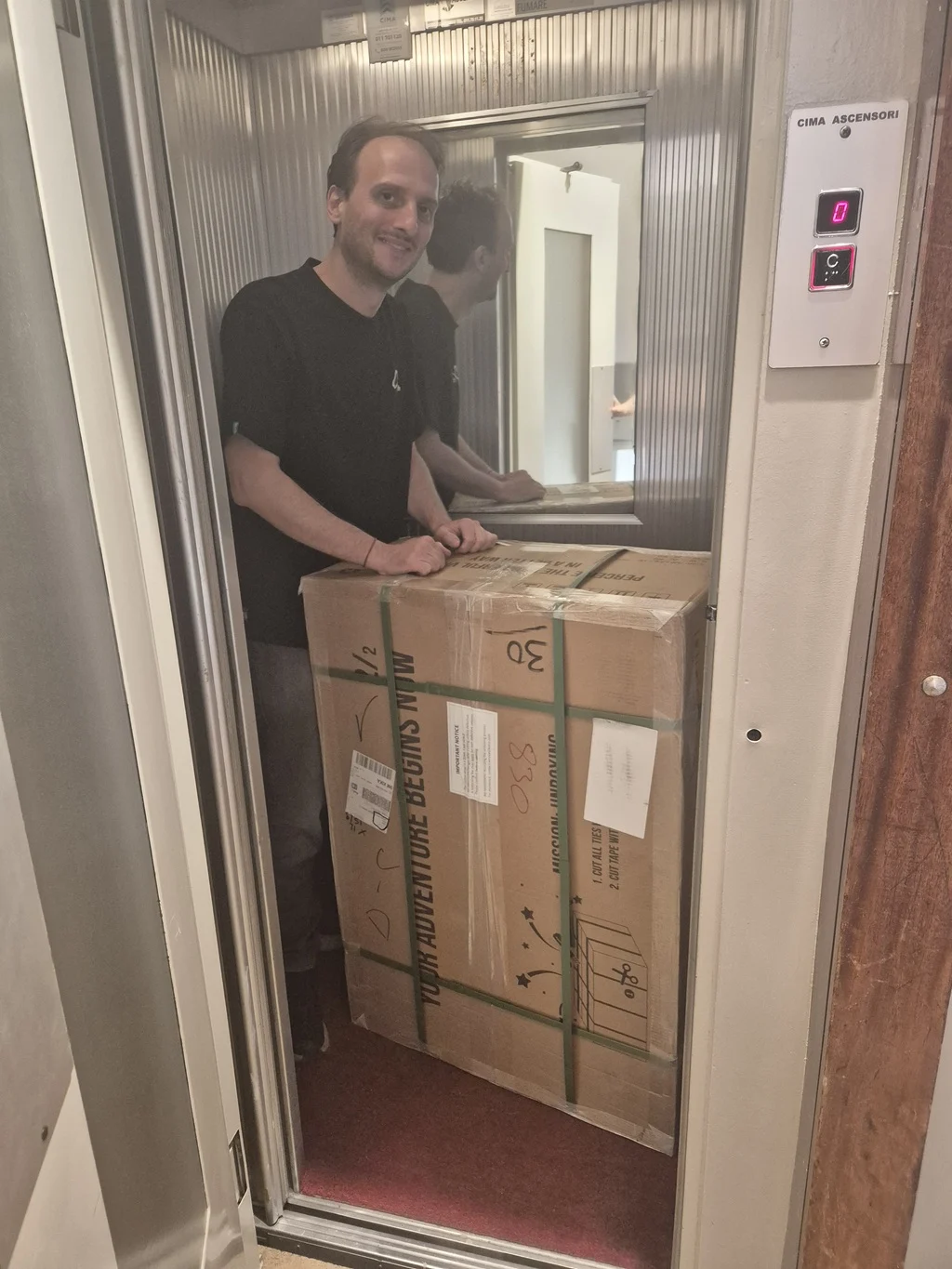
The KAT Walk C3 Ultra is a significant piece of hardware, emphasizing its positioning for the "prosumer" and hardcore enthusiast market. The device ships as a modular kit weighing approximately 70 kilograms (154 pounds), requiring substantial space for both assembly and operation. Once fully constructed, the treadmill occupies a footprint of roughly 1.5 meters by 1.5 meters (5 feet by 5 feet).

Industry analysts note that the logistics of such devices remain a barrier to mainstream adoption. The C3 Ultra arrives disassembled, following a modular design philosophy similar to high-end furniture. Assembly typically requires between 90 minutes and two hours, involving the connection of five base platform segments, the installation of a vertical support pillar, and the mounting of a 13-kilogram rotating harness. The unit requires a dedicated power outlet and a USB connection to a PC, though it is optimized for wireless headset configurations to prevent cable entanglement during 360-degree rotations.

Design Innovations and Harness Mechanics
A central feature of the C3 Ultra is its enhanced rotating harness system. To ensure user safety on the slippery platform, the device utilizes a "waist lock" mechanism. This harness is mounted on a vertical rail, allowing for a range of vertical motion including crouching and slight jumping. The back support structure is designed with low-friction bearings, enabling the user to turn 360 degrees with minimal resistance.

However, the physics of such a system introduce challenges related to inertia. The 13-kilogram rotating assembly possesses significant momentum; during rapid directional changes, the mass of the structure can continue to rotate after the user has stopped, requiring physical counter-exertion to maintain balance. KAT VR has addressed this by refining the harness ergonomics, though the company acknowledges that a learning curve exists for users to adapt their posture—typically involving a slight forward lean—to counteract the "slip" of the platform.

The C3 Ultra also introduces a haptic feedback system. The platform is capable of vibrating in synchronization with in-game events or the user’s footsteps. While intended to simulate terrain textures, early technical assessments suggest the current implementation serves primarily as an auditory and tactile indicator of movement rather than a high-fidelity haptic simulation.

Software Integration and Compatibility
The hardware is supported by the KAT Gateway software suite, which serves as the central hub for calibration and game-specific configurations. The software allows users to fine-tune parameters such as walking sensitivity, movement smoothing, and "dead zones" to prevent accidental drifting in the virtual space.

In terms of compatibility, the C3 Ultra is designed to interface with SteamVR, making it compatible with a vast library of PCVR titles that support smooth locomotion, such as Half-Life: Alyx, BONEWORKS, and VRChat. For standalone users, the company offers the KAT Nexus, a processing bridge that allows the treadmill to function with Meta Quest headsets without a direct PC link for the game itself, though a computer is still required for initial treadmill management.

Market Positioning and Pricing Tiers
The KAT Walk C3 Ultra is launched in two distinct versions to cater to different user requirements:

- Standard Edition: Priced at $1,499. This package includes the treadmill and one pair of sensor-integrated shoes.
- Power Edition: Priced at $1,699. This version includes an integrated charging system for VR headsets, allowing for extended play sessions without the need to manage internal headset batteries.
To incentivize early adoption, KAT VR has introduced "early-bird" promotional pricing, reducing the entry cost to approximately $1,199 and $1,359 respectively for the first wave of purchasers. Shipping is expected to begin in mid-November, with an initial limited run of 100 units designated for immediate dispatch.

Broader Impact on the VR Ecosystem
The release of the C3 Ultra reflects a broader trend in the VR industry toward "active VR." As the market for immersive gaming matures, there is increasing demand for solutions that provide physical engagement. The C3 Ultra effectively doubles as a piece of fitness equipment; high-intensity titles like Gorn or competitive shooters can result in significant caloric expenditure, a factor KAT VR has leaned into by including fitness tracking missions and achievements within their software.

From a technical standpoint, the C3 Ultra represents an incremental but important step in refining the "slipmill" concept. While it does not yet achieve the "perfect" walking sensation of high-end, multi-thousand-dollar motorized omnidirectional treadmills used in military simulations, it provides a viable consumer-grade alternative.

Industry experts suggest that the success of the C3 Ultra will depend on the "enthusiast" segment’s willingness to dedicate significant floor space and capital to a specialized peripheral. While the average consumer may find the $1,500 price point and 70kg weight prohibitive, the device fills a critical niche for users seeking to eliminate "teleportation" mechanics and joystick-based sliding, which are often cited as immersion-breaking elements in virtual reality.

As VR hardware continues to evolve toward higher resolutions and wider fields of view, the bottleneck for true presence remains the human vestibular system. By providing a physical correlate to visual movement, the KAT Walk C3 Ultra attempts to bridge this sensory gap, offering a glimpse into a future where virtual exploration is as physically demanding as it is visually stimulating.
About the Author