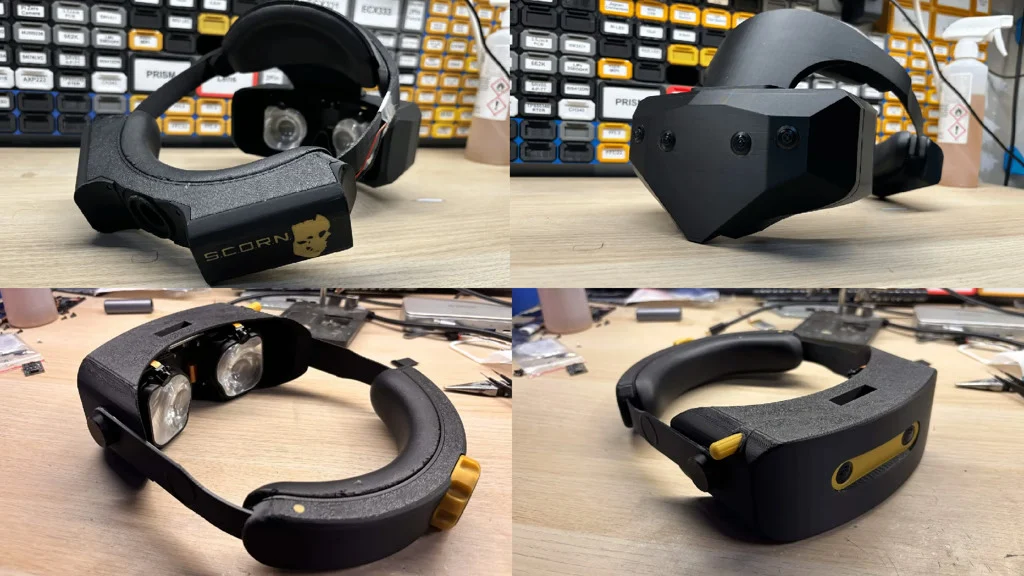
Walker Industries, a Tokyo-based hardware startup, has officially launched a Kickstarter campaign for the Vector Gear, a mid-range virtual reality (VR) headset distinguished by its entirely open-source architecture. The project, which has garnered significant attention within the developer and enthusiast communities over the last several months, aims to provide a transparent alternative to the closed ecosystems currently dominating the extended reality (XR) market. By releasing all hardware specifications and software source code, Walker Industries intends to empower users to modify, repair, and evolve their devices without the restrictions typical of major corporate manufacturers.
Technical Specifications and Product Variants
The crowdfunding campaign introduces a tiered product lineup designed to address different segments of the VR market, ranging from budget-conscious PC VR users to enthusiasts seeking standalone versatility. The flagship model, the Vector Gear, is a hybrid device capable of both standalone operation and PC VR connectivity.
The Vector Gear Flagship
The Vector Gear is powered by the Qualcomm Snapdragon XR2 Gen 2 platform, supported by 12GB of LPDDR5X RAM. Its visual system utilizes dual 2.56-inch LCD panels providing a resolution of 2560 x 2560 pixels per eye, complemented by pancake lenses that allow for a significantly slimmer profile than traditional Fresnel optics. The device features a 90Hz refresh rate and a field of view (FOV) of 100 degrees. Notably, it includes an integrated automatic Interpupillary Distance (IPD) adjustment system, ranging from 58mm to 72mm, and a high-capacity 7000mAh battery.

The Andromeda Series
In addition to the flagship, Walker Industries has unveiled the Andromeda line, which focuses exclusively on PC VR via DisplayPort 1.4. The Andromeda 2160 serves as the entry-level model, featuring 2160 x 2160 resolution per eye and a 90Hz refresh rate, priced at $650. Conversely, the Andromeda 2560 is positioned as a high-fidelity alternative, utilizing the same 2560 x 2560 panels found in the Vector Gear but optimized for tethered performance, with a retail target of $1,250.
Chronology of Development and Community Engagement
The inception of the Vector Gear project dates back approximately nine years, inspired by the founder’s early interest in the conceptual technologies depicted in science fiction media such as Sword Art Online. What began as a personal ambition transitioned into a professional venture with the formation of Walker Industries, a team comprised of specialized VR developers and engineers.
Over the past year, the company has maintained a rigorous schedule of public updates, primarily through platforms like Reddit. This transparent development cycle allowed the team to refine their prototypes based on direct community feedback. Key milestones in the development timeline include:
- Late 2025: Successful internal testing of the "AstroSLAM" tracking system and "Shinra Meisin" face-tracking algorithms.
- Early 2026: Integration of the XRUIOS operating system and the Yuuko Protocol for cross-device synchronization.
- Q3 2026: Finalization of the hardware design and preparation for the mass-production crowdfunding phase.
- October 2026: Launch of the Kickstarter campaign to secure the necessary capital for manufacturing and international distribution.
- May 2027: Projected delivery date for initial backer units.
Proprietary Software and In-House Innovations
A distinctive aspect of the Walker Industries approach is the decision to develop critical software modules in-house rather than relying on third-party licenses. This includes the "Shinra Meisin" face and eye-tracking system. By optimizing these algorithms specifically for the Vector Gear hardware, the team claims to have achieved high-fidelity avatar expression capabilities, which are increasingly sought after in social VR platforms like VRChat. The system supports Open Sound Control (OSC) data streaming, ensuring immediate compatibility with existing social software.

The tracking architecture, dubbed "AstroSLAM," is implemented in both the headset and the controllers. Unlike the infrared-based tracking found in the Meta Quest 3, the Vector Gear controllers utilize onboard cameras for independent inside-out tracking. This configuration allows the controllers to maintain spatial orientation even when positioned behind the user’s head or obscured by the body, a common limitation in traditional camera-based tracking systems.
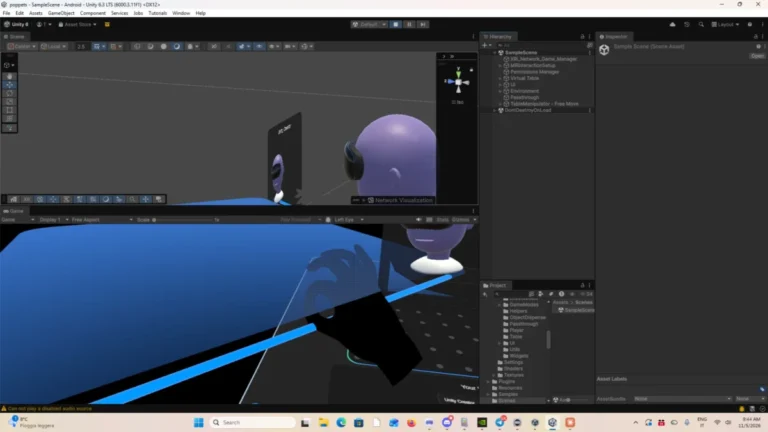
Furthermore, Walker Industries has developed XRUIOS, a specialized operating system built on the Arch Linux distribution. The OS is described as a "spatial runtime," allowing users to manipulate 3D objects within a persistent home environment. Through the integration of the FEX-Emu (FEX) translation layer, the headset—which runs on an ARM64 architecture—is capable of executing standard x86 Linux applications. This functionality extends to legacy software, including a built-in MS-DOS emulator.
The Yuuko Protocol and Ecosystem Integration
Central to the Walker Industries vision is the Yuuko Protocol, a cross-platform tool designed to facilitate a continuous user experience across disparate hardware. The protocol addresses the fragmentation of digital ecosystems by allowing seamless data handoffs between the VR headset, smartphones, and PCs.
For instance, a user could pause a media file on the Vector Gear and resume it from the exact timestamp on a mobile device without manual file transfers or cloud syncing. The protocol treats all connected hardware as components of a single, unified system, ensuring that files and application states are universally accessible. This "open-system" philosophy stands in contrast to the "walled garden" strategies employed by major technology conglomerates.

Market Analysis and Industry Implications
The entry of Walker Industries into the VR market comes at a time of transition for the industry. While established players like Meta and Valve dominate the landscape, there is a growing niche for "prosumer" hardware that prioritizes user agency.
Industry analysts have drawn comparisons between the Vector Gear and the rumored "Steam Frame" from Valve. Both devices target a similar performance bracket and offer varying degrees of modularity. However, the Vector Gear’s commitment to total open-source hardware sets it apart. While Valve has historically supported the "right to repair," Walker Industries is taking the concept further by providing the actual schematics and source code for every component.
Despite the enthusiasm, the project faces significant hurdles common to hardware startups. The history of VR crowdfunding is marked by both successes and high-profile failures. Companies such as Lynx and Tilt Five have encountered substantial manufacturing delays and financial pressures when moving from prototypes to mass production. Walker Industries must navigate global supply chain complexities and quality control challenges to meet its May 2027 delivery target.
Broader Impact on Privacy and Research
The open-source nature of the Vector Gear has profound implications for data privacy and academic research. In a standard consumer VR headset, tracking data and user metrics are often processed through proprietary, closed-source pipelines, raising concerns about corporate surveillance. The Vector Gear allows users and organizations to audit the code, ensuring that sensitive facial and eye-tracking data is handled according to their specific security standards.

For universities and research laboratories, the ability to completely disassemble and reassemble the headset, or to inject custom code into the tracking pipeline, makes the Vector Gear a highly versatile tool for experimental XR applications. By removing the "black box" element of VR hardware, Walker Industries may become a preferred provider for institutional and industrial sectors that require high levels of customization and data sovereignty.
As the Kickstarter campaign progresses, the success of the Vector Gear will serve as a bellwether for the viability of open-source hardware in the consumer electronics sector. If the team can deliver on its technical promises, it may catalyze a shift toward more transparent and user-serviceable technology in the broader XR industry.
About the Author