The virtual and augmented reality industry has entered a significant period of transition as legacy hardware makes way for next-generation ecosystems. Valve Corporation, a central figure in the high-end PC VR market, has officially confirmed the discontinuation of the Valve Index, its flagship headset released in 2019. This move coincides with the rollout of the Steam Frame, Valve’s newest hardware initiative, and highlights a broader shift in tracking technologies and platform priorities across the sector. To facilitate the clearance of existing inventory, Valve has implemented a 20% discount on remaining Index units, controllers, and base stations, signaling the final phase of a device that defined the premium consumer VR experience for over half a decade.
The End of the Valve Index and the Future of Lighthouse Tracking
The discontinuation of the Valve Index marks a pivotal moment for the SteamVR community, particularly regarding the future of "Lighthouse" tracking. Originally developed by Valve and launched in partnership with HTC for the original Vive in 2016, Lighthouse tracking utilizes external base stations to sweep the room with infrared lasers, offering sub-millimeter precision that remains the gold standard for high-fidelity PC VR.
While Valve’s new Steam Frame moves toward modern tracking solutions, the cessation of Index production raises concerns for enthusiasts and third-party manufacturers. Devices such as the Bigscreen Beyond, Pimax Crystal, and various Shiftall headsets rely on the SteamVR tracking ecosystem. While HTC has officially stated it will continue to manufacture and sell compatible base stations, the exit of Valve from the hardware manufacturing side of this specific technology suggests a move toward a "niche-premium" or enterprise-only status for external tracking. Industry analysts suggest that camera-based, inside-out tracking has reached a level of maturity where the "average consumer" no longer requires the complexity of external sensors, leading to a consolidation of the market around more user-friendly, self-contained systems.
Evolution of the Steam Frame and Rumors of an OLED Refresh
As the Index reaches its end-of-life, Valve is aggressively updating its successor, the Steam Frame. The company recently deployed SteamOS version 0.4, a firmware update specifically optimized for power management. Internal data suggests the update improves battery efficiency by up to 12%, addressing one of the primary criticisms of the mobile-integrated headset. Furthermore, Valve has released the full CAD (Computer-Aided Design) files for the Steam Frame to the public. This move toward open hardware allows third-party developers and the "maker" community to design ergonomic mods, cooling solutions, and specialized accessories, reinforcing Valve’s traditional stance on platform openness.
Beyond software updates, technical leaks within Valve’s latest code repositories have revealed a potential high-end hardware refresh codenamed "Plano." This rumored device is expected to feature:

- Display Technology: Dual OLED panels providing true black levels and higher contrast ratios.
- Resolution: 3,552 × 3,840 pixels per eye.
- Refresh Rate: A native 90Hz with an "Experimental Mode" capable of 120Hz.
- Processing: The Qualcomm Snapdragon 8 Gen 3 chipset.
Because the Snapdragon 8 Gen 3 may struggle to render native VR content at such high resolutions, the "Plano" architecture reportedly utilizes "Foveated Scaling." This technology leverages eye-tracking to prioritize rendering resources at the center of the user’s vision, upscaling the image where the eye is focused while maintaining lower computational loads in the periphery. While the existence of "Plano" in code does not guarantee a commercial release, it indicates Valve’s ongoing research into narrowing the gap between standalone mobility and PC-grade visual fidelity.
Market Instability: The Delisting of PlayStation VR2
In a development that has caused concern regarding the viability of console-tethered VR, the PlayStation VR2 (PSVR 2) has been delisted from the official PlayStation Direct store in the United States. Users attempting to access the product page are currently met with a 404 Error, although the device remains listed in several European markets.
This delisting follows a series of reports regarding Sony Interactive Entertainment’s (SIE) shifting XR strategy. Earlier this year, Sony was noted to have sold several XR-related patents to Meta Platforms. While Sony has not issued a formal statement regarding the 404 errors, the absence of the product from its primary direct-to-consumer channel in the US has fueled speculation that production may have been halted to clear existing retail channel stock. The PSVR 2, despite its advanced HDR OLED displays and haptic feedback, has faced challenges due to its tethered nature and a perceived lack of first-party software support compared to its predecessor.
The Rise of Open-Source Hardware and AI Integration
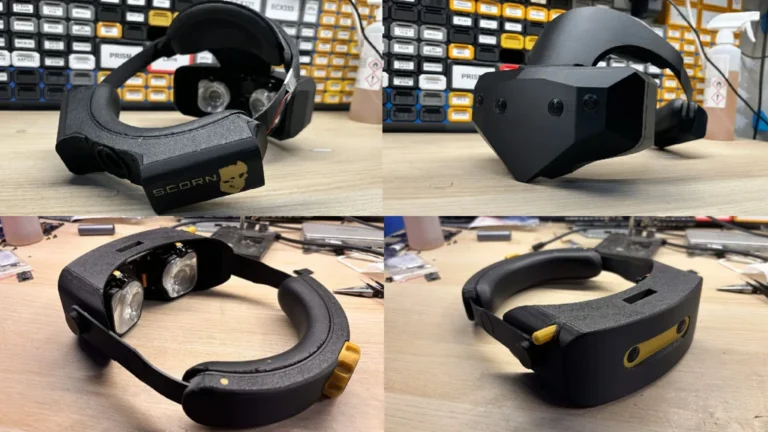
While major players like Sony and Valve are consolidating, the independent sector is attempting to fill the void with open-source initiatives. Walker Dev Industries has launched a Kickstarter campaign for its Vector Gear and Andromeda headsets. These devices are built on the "XRUIOS" operating system and aim to provide a transparent, user-modifiable alternative to the closed ecosystems of Meta and Apple.
The high-end Andromeda headset boasts a resolution of 2560×2560 per eye, while the standard Vector Gear offers 2160×2160. Both feature integrated eye-tracking and are priced between $980 and $1250. However, the projected shipping date of May 2027 highlights the significant lead times and manufacturing risks inherent in independent hardware development.
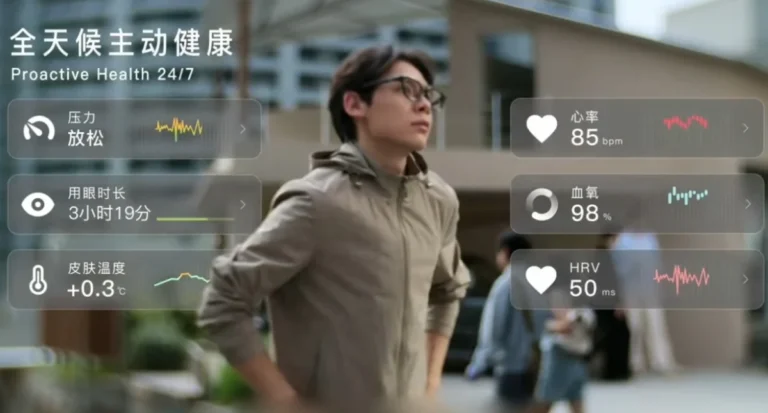
Simultaneously, the integration of Artificial Intelligence into wearable hardware is accelerating. Alibaba has introduced the N1 and N1 Pro AI glasses in the Chinese market. Unlike traditional AR glasses, these devices do not feature a display but include advanced eye-tracking sensors. This technology is utilized for:

- Iris Identification: Secure biometric authentication for digital payments.
- Contextual Awareness: Allowing the integrated AI to "see" exactly what the user is focusing on to provide more relevant audio feedback and data.
AR Market Refinements and Peripheral Partnerships
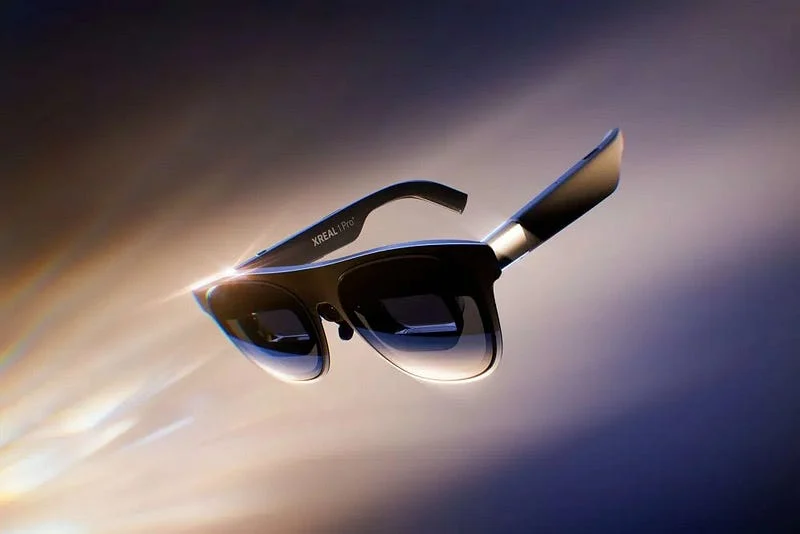
In the dedicated Augmented Reality (AR) space, XREAL has announced the 1 Pro+ glasses. This flagship refresh focuses on visual clarity and environmental usability, increasing peak brightness from 700 to 1200 nits. The inclusion of AI-driven HDR (High Dynamic Range) processing aims to improve color accuracy in varied lighting conditions, a critical factor for outdoor AR adoption.
The peripheral market is also adapting to the needs of mobile VR users. SanDisk has entered a formal partnership with Meta to produce "Made for Meta" microSD cards. These cards are specifically tested for the high read/write speeds required by modern VR applications, providing a standardized expansion path for the 128GB base storage of the latest Meta VR glasses.
Corporate Realignment: Microsoft and Unity’s Strategic Pivots
The software landscape is undergoing its own contraction. Microsoft has officially discontinued "Immersive Events" within Microsoft Teams. This move represents the final dissolution of the Microsoft Mesh framework as a consumer-facing "metaverse" product for corporate environments. After years of leading the sector with HoloLens and the Windows Mixed Reality platform, Microsoft appears to be retreating from VR-centric social spaces to focus on AI and foundational cloud services.
Conversely, Unity has launched "Unity Spark," a web-based engine designed for "vibecoding." This platform utilizes generative AI to allow users to build games through natural language prompting. While the move has been met with mixed reactions from traditional developers concerned about the proliferation of AI-generated content (often referred to as "slop"), it represents a clear industry-wide trend toward lowering the barrier to entry for spatial content creation.
As 2026 progresses, the XR industry is characterized by a "clearing of the deck." The retirement of the Valve Index and the potential sunsetting of PSVR 2 mark the end of an era defined by tethered, specialized hardware. The future appears to be moving toward integrated AI, open-source experimentation, and standalone devices that leverage foveated rendering and high-brightness optics to bring mixed reality into the mainstream.
About the Author