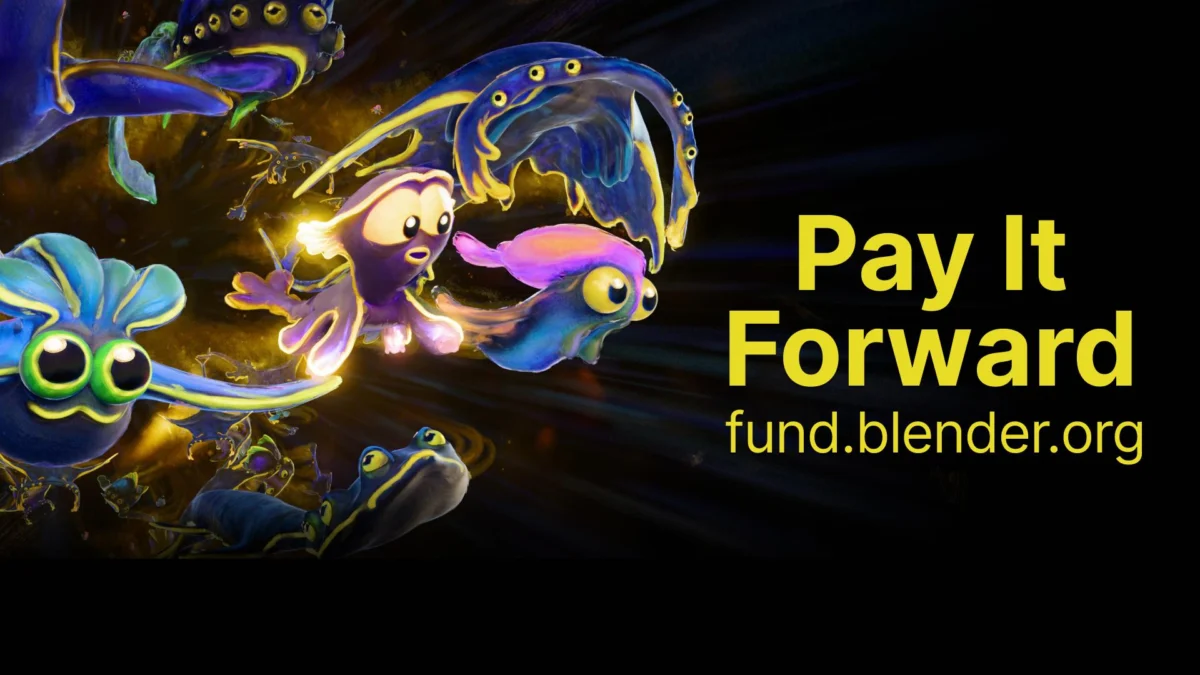
The Blender Foundation has initiated a significant fundraising campaign titled "Pay It Forward," with the ambitious objective of meeting its entire funding goal for the year 2027. This grassroots initiative hinges on the collective generosity of the active Blender user base, proposing that a modest contribution from each user this month could fully secure the foundation’s financial needs for the upcoming year.
The core principle of the "Pay It Forward" campaign is elegantly simple: acknowledge the foundational support that made Blender accessible to current users and extend that opportunity to future generations of artists and creators. The Blender Foundation articulated this sentiment in its campaign announcement, stating, "Someone’s donation made Blender free for you. The next artist who opens Blender for the first time is counting on the same thing. Now it’s your turn to invest in a brighter future." The specific call to action is a request for a €10 (approximately $11 USD, depending on current exchange rates) contribution from each active Blender user during the current month. The foundation projects that if this target is met by the community, their entire funding requirement for 2027 will be satisfied.
The Philosophy Behind Community Funding
Francesco Siddi, in an explanatory piece published on Blender.org, elaborated on the critical importance of this funding model. He emphasized that Blender’s enduring strength lies in its core philosophy: democratizing advanced 3D technology. "Blender’s strength comes from a simple idea: the best 3D technology should belong to everyone," Siddi stated. However, he candidly addressed the reality of maintaining and developing professional-grade software. "But maintaining and improving professional software isn’t free. It takes developers, designers, and infrastructure." This underscores the direct correlation between community contributions and the continued evolution and accessibility of Blender.
Crucially, Siddi highlighted Blender’s unique position in the software landscape. Unlike proprietary applications that rely on corporate ownership and costly subscription models, Blender’s development and sustainability are intrinsically linked to its community. "Blender does not have corporate owners or subscription fees. It has its community," he asserted, positioning the "Pay It Forward" campaign as a direct appeal to this foundational pillar of support.
A Chronology of Blender’s Community-Driven Growth
To understand the significance of the "Pay It Forward" campaign, it is essential to trace Blender’s journey from its origins to its current status as a global open-source phenomenon.
-
Early 1990s: Genesis at NaN
Blender originated as an in-house application developed by the Dutch animation studio NeoGeo. In 1998, Ton Roosendaal founded Not a Number (NaN) to further develop and market Blender as a commercial product. During this period, the software began to gain traction within specific creative circles. -
2002: The Crowdfunding Revolution and Open Sourcing
NaN faced significant financial difficulties. In a pivotal moment for the future of 3D graphics, Ton Roosendaal launched an ambitious crowdfunding campaign to buy back the source code of Blender from its creditors and release it under the GNU General Public License (GPL). This groundbreaking effort, the first of its kind for a major software project on the internet, successfully raised €100,000 (approximately $100,000 USD at the time) within seven weeks, largely through the contributions of over 3,000 individuals. This act of collective investment secured Blender’s future as free and open-source software. -
2002-Present: The Blender Foundation and Continuous Development
Following the successful open-sourcing, the Blender Foundation was established in 2002 to oversee the development and promotion of Blender. The foundation operates on a non-profit model, relying on donations, grants, and the Blender Development Fund to finance its operations. This fund is crucial for employing core developers, supporting infrastructure, and ensuring the software’s ongoing innovation. -
2020s: Surge in Popularity and Evolving Funding Needs
In recent years, Blender has experienced a significant surge in popularity, driven by its continuous improvement, the accessibility of its free model, and a growing number of high-quality tutorials and community resources. This increased adoption has also led to a greater demand for its development and a corresponding increase in funding requirements to keep pace with user expectations and the rapidly evolving 3D industry.
Supporting Data: The Impact of Community Contributions
The Blender Development Fund has been instrumental in powering the software’s evolution. While specific annual funding goals can fluctuate based on development priorities and global economic conditions, the success of previous campaigns and the consistent growth of the Blender community suggest a strong correlation between community investment and developmental milestones.
The €10 ask from the "Pay It Forward" campaign is strategically designed. It represents a minimal financial commitment for many users, especially those who rely on Blender professionally or for significant personal projects. If the campaign reaches its goal, it would not only cover the 2027 budget but also serve as a powerful testament to the community’s dedication.
Historically, similar community-driven initiatives have demonstrated significant impact. For instance, the initial crowdfunding campaign in 2002, though smaller in absolute terms, was monumental in its ambition and success, setting a precedent for open-source sustainability. More recent fundraising efforts by the Blender Foundation, such as those for specific development sprints or hardware upgrades, have consistently met or exceeded targets, indicating a deep reservoir of goodwill and commitment from its user base.
The Blender Foundation’s annual reports, when available, often detail the allocation of funds, showing investments in core development, bug fixing, UI/UX improvements, and the development of new features. These reports typically highlight the direct impact of donations on the software’s capabilities and stability.
Official Responses and Community Sentiment (Inferred)
While direct statements from all "related parties" are not publicly available, the announcement from the Blender Foundation itself, particularly Francesco Siddi’s statement, serves as the primary official response. The tone is one of earnest appeal, emphasizing shared responsibility and the value of collective action.
Inferring community sentiment, the "Pay It Forward" campaign is likely to resonate strongly with a significant portion of the Blender user base. Many users have benefited immensely from Blender’s free and open-source nature, often learning the intricacies of 3D art and animation without the barrier of expensive software licenses. This sentiment of gratitude is a powerful motivator for contributing back to the ecosystem that has empowered them.
However, as with any fundraising effort, there will likely be varying levels of engagement. Some users may already be monthly contributors to the Development Fund, while others may be new to the concept of direct financial support. The campaign’s success will depend on its ability to reach a broad spectrum of users and effectively communicate the tangible benefits of their contributions.
Broader Impact and Implications for Open Source
The "Pay It Forward" campaign is more than just a fundraising drive for Blender; it represents a broader commentary on the sustainability of open-source projects in the digital age.
-
Empowering Independent Development: Blender’s success story, fueled by community contributions, serves as a powerful model for other open-source software projects. It demonstrates that a dedicated community can collectively fund and sustain sophisticated professional software, challenging the dominance of corporate-backed alternatives.
-
Democratizing Access to Creative Tools: By ensuring Blender remains free and accessible, the campaign directly supports the democratization of 3D creation. This allows individuals, small studios, and educational institutions worldwide to access cutting-edge tools without financial constraints, fostering innovation and diversity in the creative industries.
-
Building a Resilient Ecosystem: The campaign aims to build a more resilient financial foundation for Blender, reducing its vulnerability to market fluctuations or shifts in corporate sponsorship. A consistent and robust funding stream ensures that development can continue uninterrupted, allowing Blender to adapt and thrive in the long term.
-
The "Pay It Forward" Ethos: The campaign’s name itself encapsulates a powerful philosophical approach. It encourages users to recognize that their current ability to use Blender is a result of past generosity, and they now have the opportunity to reciprocate and enable future generations. This fosters a sense of shared ownership and responsibility within the Blender community.
-
Potential for Scalability: If the "Pay It Forward" campaign proves successful, its model could potentially be adapted by other open-source projects facing similar funding challenges. The €10 ask is a deliberately accessible figure, suggesting that a similar approach, tailored to the user base of other software, could yield significant results.
In conclusion, the Blender Foundation’s "Pay It Forward" campaign is a strategic and ethically grounded initiative designed to secure the future of one of the world’s most vital open-source creative tools. By appealing to the collective spirit of its user base, the foundation aims to ensure that Blender continues to be a free, powerful, and evolving platform for artists and creators for years to come. The success of this campaign will not only benefit Blender but also serve as an inspiring testament to the power of community-driven support in the open-source landscape.
About the Author