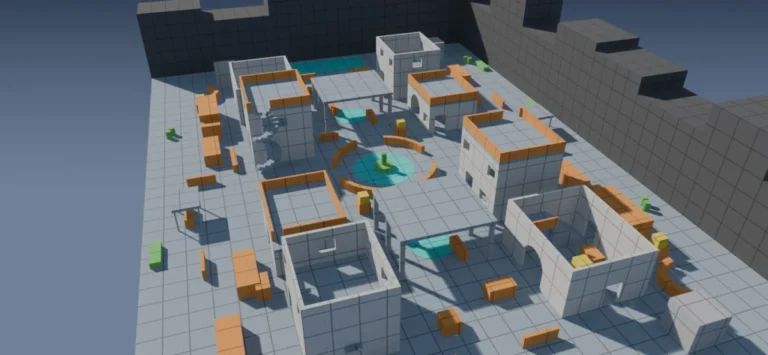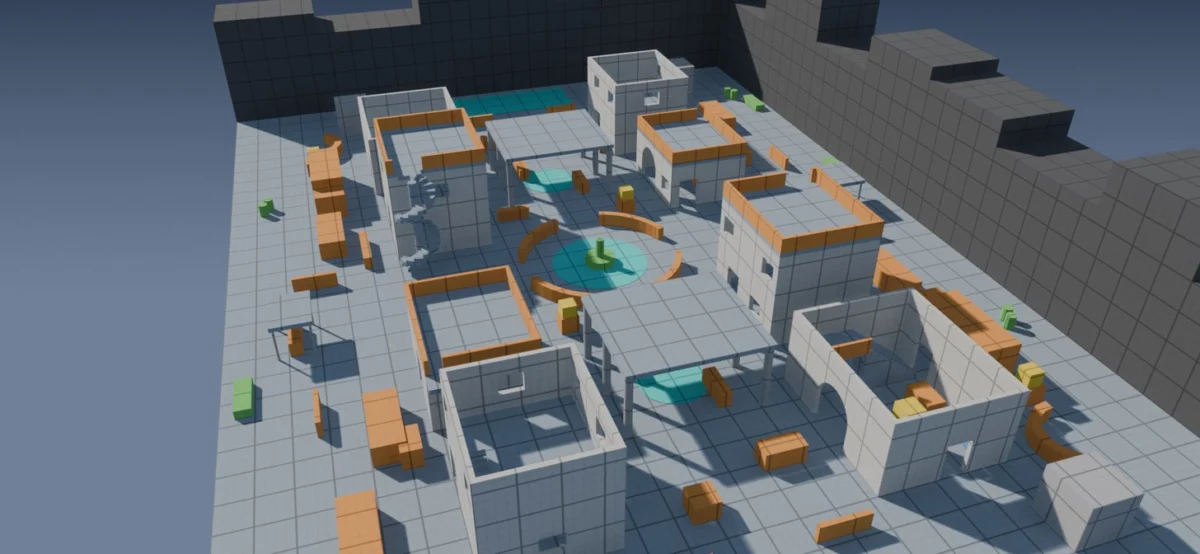
The Souk Galaxy, an emerging studio specializing in Blender tools, has officially launched Blockd, a novel add-on designed to significantly streamline the level blockout process for game developers. This innovative tool allows users to intuitively draw and construct architectural elements such as walls, floors, stairs, and doorways directly within Blender’s grid-based environment. A key feature of Blockd is its ability to precisely size these elements according to player metrics, ensuring accurate scale and proportion from the outset. Furthermore, the add-on facilitates seamless export of these blockouts with integrated collision data, compatible with major game engines like Unreal Engine, Unity, and Godot.
Genesis of Blockd: Addressing a Developer Pain Point
The development of Blockd stems from the direct experiences of Najim Filali Saksak, creative director and co-founder of The Souk Galaxy. Saksak, who boasts extensive experience as an environment artist on AAA game titles for industry giants such as Blizzard, Quantic Dream, 1047 Games, and Ubisoft, identified a persistent inefficiency in the traditional level design workflow. "Blocking out a level in Blender always took too many steps," Saksak stated, highlighting the motivation behind Blockd’s creation. This sentiment underscores a common challenge within game development pipelines, where the initial phase of level prototyping is crucial for establishing the foundational layout and flow of a game world. The time invested in this stage directly impacts the efficiency of subsequent development phases, including detailed art asset creation, gameplay scripting, and optimization.
Core Functionality: Intuitive Design and Parametric Control
Blockd empowers users to create a variety of architectural components with remarkable ease. The add-on’s core functionality revolves around a direct manipulation interface within Blender. Users can draw walls, floors, stairs, and doorways, along with an additional 16 distinct geometric shapes, directly onto the grid or snap them to existing geometry. A significant advantage of Blockd lies in its parametric nature. Each created element retains its defining parameters, allowing for effortless resizing and adjustment using intuitive viewport handles. This ensures that the blockout remains flexible and adaptable throughout the design process, a stark contrast to the often rigid and time-consuming manual adjustments required in conventional workflows.
The add-on supports the creation of essential level design elements, including:
- Walls: Designed for rapid construction of enclosed spaces and defining boundaries.
- Floors and Ceilings: Providing the foundational planes for environments.
- Stairs and Ramps: Enabling the creation of verticality and player navigation pathways.
- Doorways and Archways: Facilitating access between different areas and defining visual flow.
- Modular Kits: The ability to create and snap together pre-defined shapes for consistent architectural styles.
- Cover Elements: Tools for quickly placing obstacles and strategic points within gameplay spaces.
- Environmental Props (Basic): Simple shapes that can be quickly iterated upon for placeholder objects.
This comprehensive suite of tools aims to reduce the friction associated with translating conceptual level designs into tangible 3D forms within Blender.
Technical Specifications and Compatibility
Blockd is engineered to operate seamlessly within the latest versions of Blender, specifically supporting Blender 4.2 LTS through 5.3. This ensures compatibility with a broad spectrum of professional and hobbyist Blender users. The add-on is available across all major operating systems, including Windows, macOS, and Linux, further broadening its accessibility to the global game development community.
Pricing and Promotional Offer
Blockd is currently available for purchase through Superhive, a platform known for hosting and distributing creative software and assets. The add-on is priced at $15. To incentivize early adoption, The Souk Galaxy is offering a substantial 50% discount on Blockd until November 26. This promotional period presents a compelling opportunity for developers to acquire a powerful tool at a significantly reduced cost, encouraging experimentation and integration into their workflows.
Supporting Data and Industry Trends
The release of Blockd aligns with broader trends in game development that emphasize efficiency and rapid prototyping. The modern game development cycle, particularly for independent studios and smaller teams, often operates under tight deadlines and resource constraints. Tools that accelerate foundational tasks like level blockout can have a disproportionately positive impact on overall project timelines and budget management.
Data from industry reports consistently highlights the importance of efficient asset creation and workflow optimization. For instance, a 2023 survey of game developers indicated that over 60% of respondents cited "workflow bottlenecks" as a significant challenge in their development process. Furthermore, the increasing adoption of real-time engines like Unreal Engine and Unity, which heavily rely on modular assets and efficient level design, underscores the demand for tools that facilitate this methodology. Blender’s growing prominence as a versatile and accessible 3D creation suite within the game development community further solidifies the market for specialized add-ons like Blockd. The ability to export directly with collision data is also a critical factor, as it minimizes the need for manual collision setup in the target game engine, saving valuable developer hours.
Potential Impact and Developer Reactions
The implications of Blockd for game developers are substantial. By simplifying and accelerating the level blockout phase, the add-on has the potential to:
- Reduce Development Time: Faster iteration on level layouts allows for quicker testing of gameplay mechanics and player flow.
- Enhance Creativity: By removing tedious manual processes, developers can focus more on creative problem-solving and exploring diverse design ideas.
- Improve Collaboration: A standardized and efficient blockout process can lead to better communication and collaboration among team members.
- Lower Barriers to Entry: For indie developers or those new to level design, Blockd offers an accessible entry point into creating functional game environments.
While direct public statements from major game studios regarding Blockd have not yet been released, the underlying sentiment from developers like Saksak reflects a clear industry need. The enthusiasm within online Blender communities for tools that enhance game development workflows is palpable. Forums and social media platforms dedicated to Blender and game development often buzz with discussions about time-saving techniques and the search for efficient pipelines. The introduction of Blockd is likely to be met with considerable interest and positive feedback from these communities, particularly from environment artists and level designers.
The Souk Galaxy’s Vision for Blender Tools
Blockd represents the inaugural offering from The Souk Galaxy, indicating a strategic focus on empowering Blender users within the game development sector. The studio’s stated mission to create tools for Blender suggests a commitment to expanding the capabilities of this open-source software for professional applications. As the game industry continues to embrace more accessible and powerful creative tools, studios like The Souk Galaxy are poised to play a significant role in shaping the future of game asset creation and level design. Their emphasis on addressing real-world developer challenges, as exemplified by Blockd’s inception, positions them as a studio to watch in the evolving landscape of game development software. The success of Blockd could pave the way for further specialized tools from The Souk Galaxy, catering to other critical aspects of the game development pipeline within Blender.
The integration of Blender into professional game development workflows has seen a marked increase in recent years, driven by its powerful feature set, open-source nature, and affordability. Tools that bridge the gap between Blender’s artistic capabilities and the technical requirements of game engines are therefore highly valued. Blockd appears to be a prime example of such a tool, directly addressing the need for efficient and technically sound initial environment creation. The add-on’s ability to export with collision data is a crucial aspect, as it eliminates a common pain point where artists would create geometry in Blender that then required significant manual setup for collision detection within engines like Unreal Engine or Unity. By embedding this functionality directly into the blockout process, Blockd offers a more cohesive and streamlined workflow.
The promotional pricing strategy, with a significant discount offered for a limited period, is a common and effective method for driving early adoption and generating buzz around a new product. This approach not only makes the tool more accessible to a wider audience but also encourages users to try it out and provide valuable feedback, which can inform future updates and developments. The November 26 deadline for the 50% discount suggests a deliberate marketing campaign designed to capture the attention of developers during a period when many are planning for the upcoming year and evaluating their toolchains.
The presence of a demonstration video, as indicated by the embedded YouTube iframe, is a standard and highly effective way to showcase the functionality of a new software tool. These videos allow potential users to visually understand how the add-on works, observe its user interface, and witness its output firsthand. For an add-on focused on visual creation and workflow, a video demonstration is almost indispensable for conveying its value proposition. The title of the video, "Blockd 1.2: grid blockout for level design in Blender," suggests that this is not necessarily the initial release, but rather an updated version, implying ongoing development and improvement based on user feedback or further feature integration.
The context of the original article originating from a platform like BlenderNation, which focuses on news and resources for the Blender community, further highlights the target audience and the significance of this release. Such platforms serve as crucial hubs for disseminating information about new tools and techniques that directly benefit Blender users, particularly those in creative industries like game development, animation, and visual effects. The author’s personal background and extensive history with Blender add credibility and a deep understanding of the community’s needs, suggesting that Blockd is likely to be a well-considered and practical solution. The mention of "16 other shapes" alongside walls, floors, stairs, and doorways implies a robust library of basic geometric primitives that can be utilized for more complex blockout elements or as starting points for further refinement. This versatility is key to a successful level blockout tool, as it needs to accommodate a wide range of architectural styles and gameplay requirements.
About the Author