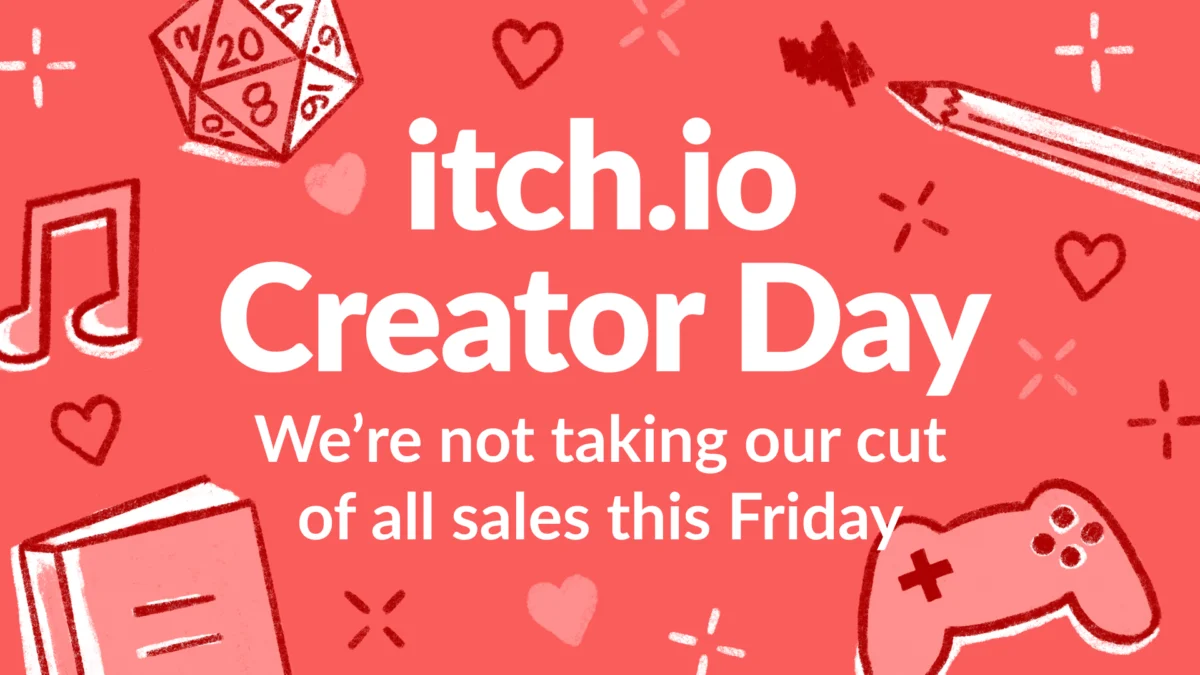
Independent game platform itch.io has officially announced the return of its highly anticipated Creator Day, scheduled for Friday, November 28th, 2025. This annual initiative will see the platform waive its standard fee on all transactions for a full 24-hour period, running from 8 AM to 8 AM UTC (midnight to midnight Pacific time). The move is designed to maximize revenue for creators, ensuring that developers receive the entirety of the purchase price from their sales during this critical window. Coinciding with the site’s extensive Black Friday 2025 sales event, which promises discounts on over 15,000 projects, Creator Day underscores itch.io’s steadfast commitment to fostering a sustainable ecosystem for independent game development and creative endeavors.
The announcement highlights itch.io’s unique position in the digital distribution landscape, where it has long championed a creator-first philosophy. Unlike mainstream storefronts that typically take a significant percentage of sales, itch.io offers flexible revenue sharing models, often allowing creators to set their own cuts, and occasionally waiving fees entirely, as is the case with Creator Day. This direct financial support comes at a crucial time for many independent developers, who frequently operate on tight budgets and rely on every dollar to fund ongoing projects, cover development costs, or simply sustain their creative work. The combined force of Creator Day’s 100% revenue share and the expansive Black Friday promotions is poised to deliver a substantial economic boost to thousands of creators worldwide.
The Genesis of Creator Day and itch.io’s Core Philosophy
Founded in 2013 by Leaf Corcoran, itch.io emerged as a direct response to the perceived limitations and high barriers to entry on established digital storefronts. From its inception, the platform was built on principles of openness, flexibility, and a deep-seated commitment to supporting independent creators. This ethos is reflected in its customizable storefronts, diverse content offerings—ranging from video games to tabletop RPGs, assets, tools, and comics—and its pioneering approach to revenue sharing. While many platforms adhere to a fixed 30/70 split (where the platform takes 30% and the creator receives 70%), itch.io allows creators to choose their desired revenue share, often as low as 0%, demonstrating an unparalleled level of creator autonomy.
Creator Day itself is an extension of this core philosophy, born from the understanding that even a single day of maximized earnings can make a significant difference for independent artists. While the precise inaugural date of Creator Day isn’t specified in the announcement, its consistent return signifies its success and importance within the itch.io community. These events serve not only as financial boons but also as powerful statements about the platform’s dedication to its user base, distinguishing it from more corporate-driven competitors. By aligning Creator Day with major retail events like Black Friday, itch.io strategically amplifies its impact, leveraging increased consumer traffic during a peak shopping period to direct more resources directly into creators’ hands. This strategic timing ensures that the spotlight on creator support shines brightest when consumer spending is at its highest.
Economic Impact: Maximizing Revenue for Independent Developers
The financial implications of Creator Day’s 100% revenue share are profound for the independent game development community. In an industry where profit margins can be slim and competition fierce, retaining the full sale price of a product, even for a limited duration, offers a tangible advantage. For small studios or individual developers, the absence of platform fees means that every dollar from a sale during Creator Day directly contributes to their bottom line. This can translate into critical funding for new development cycles, covering essential software licenses, hardware upgrades, marketing efforts, or simply providing a living wage for creators who often pour countless hours into their projects with uncertain financial returns.
Consider a hypothetical scenario: an indie developer sells 100 copies of their game at $10 each during Creator Day. They would receive $1,000 in gross revenue. On a platform with a standard 30% fee, they would only receive $700. The additional $300, while seemingly modest for larger enterprises, can be transformative for an independent creator. It could mean the difference between funding a new art asset pack, hiring a freelance sound designer for a critical project milestone, or simply allowing the developer to dedicate more time to their passion without immediate financial strain. Over 15,000 projects are expected to participate in the broader Black Friday sale, and even a fraction of these experiencing a sales bump during Creator Day could collectively inject hundreds of thousands, if not millions, of dollars directly into the indie developer economy. This direct infusion of capital helps to mitigate the inherent risks of indie development, fostering innovation and sustainability within a segment of the industry that thrives on creativity and passion.
Black Friday 2025: A Broader Sales Event and Consumer Benefits
Beyond the single day of Creator Day, itch.io’s Black Friday 2025 site-wide sale will extend through the weekend until December 3rd. This extended promotional period provides a significant opportunity for both creators and consumers. With over 15,000 projects already registered to go on sale, the event promises a vast array of discounted titles across various genres and categories. This scale not only enhances the visibility of countless independent games but also offers consumers an unparalleled chance to discover unique, innovative, and often overlooked titles at reduced prices.
For consumers, the Black Friday and Cyber Weekend sales on itch.io represent more than just savings; they offer a direct pathway to supporting the creative community. Purchasing a game or asset during this period means contributing directly to the livelihood of the developers, often without the intermediary fees that characterize other platforms. This sense of direct contribution fosters a loyal and engaged community, where players feel a more personal connection to the creators and their work. The sheer volume of participating projects also ensures a diverse marketplace, catering to a wide range of tastes and preferences, from experimental art games to polished, genre-defining experiences. It solidifies itch.io’s reputation as a treasure trove for those seeking experiences outside the mainstream, while simultaneously boosting developer visibility during a highly competitive retail season.
Chronology of itch.io’s Creator-Centric Initiatives
While specific historical dates for each Creator Day are not provided, the consistent messaging of "Creator Day returns" underscores its established place in itch.io’s annual calendar. The platform’s journey, which began with its launch in 2013, has been marked by a continuous evolution of its creator-first policies.
- 2013: itch.io officially launches, offering a unique platform for indie game distribution with flexible revenue sharing models from the outset.
- Early Years (2013-2015): The platform gains traction by fostering a strong community, providing tools for developers to easily upload and manage their projects, and experimenting with various payment structures.
- Introduction of Pay-What-You-Want: itch.io pioneers the "pay-what-you-want" model, empowering creators to set minimum prices while allowing buyers to pay more if they wish, further enhancing direct creator support.
- First Creator Day (Estimated Mid-to-Late 2010s): The concept of waiving platform fees for a full day is introduced, likely as a response to community feedback and a desire to further differentiate from competitors. These events typically coincide with major sales periods to maximize their impact.
- Annual Recurrence: Creator Day becomes an annual or semi-annual fixture, often aligning with key shopping seasons like Black Friday or holiday sales, evolving into a highly anticipated event for both developers and consumers.
- Expansion of Content: Beyond games, itch.io expands to include a vast array of digital assets, tools, tabletop RPGs, and other creative projects, broadening the scope of creators who can benefit from initiatives like Creator Day.
- 2025 Announcement: The current announcement for November 28th, 2025, signifies the continued commitment to this tradition, demonstrating its ongoing relevance and value to the platform’s ecosystem.
This timeline illustrates itch.io’s consistent trajectory towards empowering creators, with Creator Day serving as a prominent manifestation of its enduring mission.
Statements and Reactions: Community Discourse and Platform Challenges
The announcement, like many public statements from digital platforms, has elicited a range of reactions from the community, highlighting both the strengths of itch.io and the inherent challenges of running a large-scale online service. Positive sentiments are abundant, with users expressing gratitude for the platform’s creator-centric approach. Comments such as "Itch is based, I’ll always buy my game assets from here instead of Unity’s asset store" and "This is awesome way to support devs, appreciate it Itch :)" reflect a strong sense of loyalty and appreciation for the direct support offered to creators. Another user stated, "I’ll try to gather a small funding to further develop one of my prototype into a game! You miss every shot you don’t take, ah ah! Thanks Itch!", encapsulating the tangible hope and opportunity that such initiatives provide. These comments underscore the platform’s success in cultivating a dedicated user base that values ethical business practices and direct creator empowerment.
However, the comment section also reveals a more critical perspective, touching upon broader operational challenges faced by the platform. One user articulated concerns, stating, "i didnt know it was based not to pay creators who made you money, cave in to payment providers and censor people, prevent over 50% of the userbase from even commenting, and for mods to ignore users for over two months? maybe you dont know what based means". This feedback, while critical, points to common struggles faced by any large online platform: balancing community moderation with free expression, navigating complex payment provider requirements, ensuring timely support, and managing user expectations regarding policy enforcement. While itch.io’s official stance consistently emphasizes creator support, the reality of operating a dynamic digital marketplace means grappling with issues like content policy, moderation, and user experience, which can lead to friction within the community.
Inferred responses from itch.io, though not directly provided in the original text, typically involve a continuous effort to engage with its community, address reported issues, and refine its policies. Platforms like itch.io often operate with a lean team, making the scale of moderation and support a significant undertaking. The ongoing dialogue, even critical comments, serves as vital feedback that informs future platform development and policy adjustments, demonstrating the complex interplay between platform ideals and practical operational realities. These community sentiments highlight the continuous balancing act required to maintain a platform that is both creator-friendly and operationally sound, reinforcing the idea that even the most "based" platforms face their share of challenges and criticisms.
Broader Industry Implications and the Future of Indie Game Distribution
itch.io’s Creator Day and its overarching business model carry significant implications for the broader digital distribution industry and the future of independent game development. In an era dominated by large storefronts like Steam, PlayStation Store, and Xbox Games Store, which often command a 30% revenue share, itch.io stands as a powerful counter-narrative. Its commitment to maximizing creator revenue challenges the industry norm, pushing for a more equitable distribution of profits. This model encourages other platforms to reconsider their own fee structures, or at least to acknowledge the growing demand from creators for better financial terms.
The success of itch.io’s approach also highlights the increasing viability of direct-to-consumer and creator-centric models. As developers seek more control over their intellectual property, pricing, and community engagement, platforms that prioritize these aspects will likely gain further traction. This trend suggests a future where diverse distribution channels coexist, each catering to different needs and philosophies. itch.io’s emphasis on discoverability for niche and experimental content also plays a crucial role, providing a vital space for games that might otherwise be overlooked on more curated or commercially driven platforms.
Furthermore, events like Creator Day contribute to the overall economic resilience of the indie sector. By providing direct financial injections and increased visibility, itch.io helps to stabilize the often precarious careers of independent developers, fostering a more sustainable creative landscape. The platform’s influence extends beyond mere sales, shaping community expectations around fair compensation and ethical platform practices. As the digital content market continues to evolve, itch.io’s pioneering model serves as an important benchmark, demonstrating that robust commercial success can be achieved hand-in-hand with unwavering support for creators, ultimately benefiting both the developers who create the content and the consumers who enjoy it.
In conclusion, the announcement of itch.io’s Creator Day and Black Friday 2025 sales reaffirms the platform’s foundational commitment to its independent creators. By waiving platform fees for a critical 24-hour period and orchestrating an extensive site-wide sale, itch.io not only provides a substantial financial boost to thousands of developers but also reinforces its unique position as a beacon for equitable and creator-first digital distribution. Despite facing the inherent challenges of running a large online community, itch.io continues to champion a model that prioritizes the artists and innovators who drive the industry forward, shaping a more sustainable and diverse future for creative endeavors.
About the Author