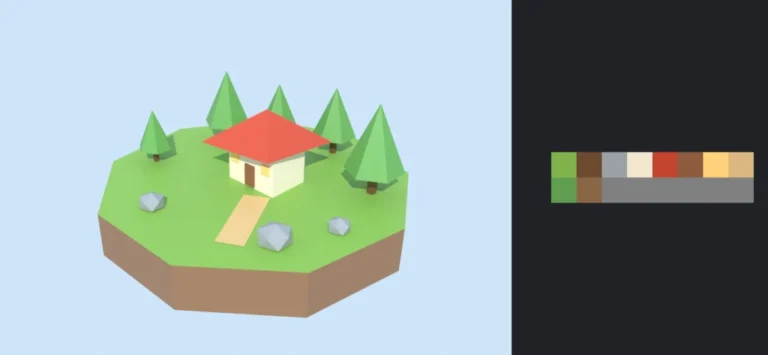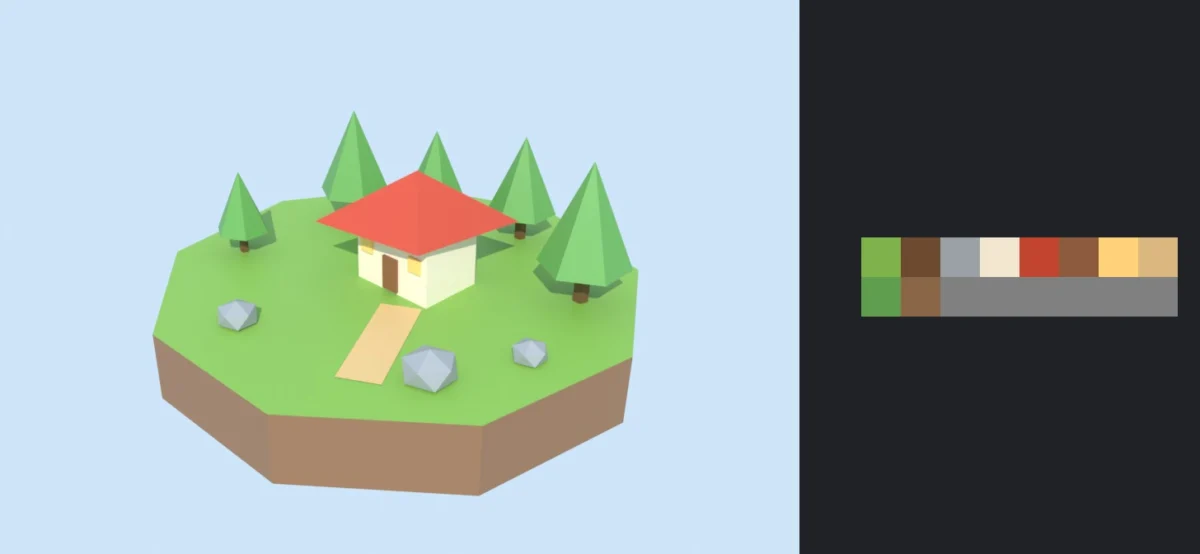
Swatchworks has officially launched HueAtlas Lite, a freely distributed, GPL-licensed add-on for Blender, designed to streamline and enhance the texturing process for low-poly game assets. This innovative tool empowers developers and artists to apply a single material to an entire game kit, utilizing a compact palette image to define textures. This approach is particularly beneficial for the creation of stylized and low-poly game environments, which often rely on efficient texturing techniques to maintain performance and artistic coherence.
The core functionality of HueAtlas Lite addresses a common bottleneck in game asset creation: the manual and time-consuming process of UV mapping individual faces onto a texture atlas. Traditionally, artists would meticulously unwrap each mesh element and then manually position those UV islands onto a larger texture sheet. This can be a laborious and error-prone undertaking, especially when dealing with large game kits or when frequent texture modifications are required. HueAtlas Lite aims to automate and simplify this workflow significantly.
A Paradigm Shift in Palette-Based Texturing
HueAtlas Lite introduces a workflow centered around a singular material and a small, curated palette image. The add-on intelligently maps every face of a 3D model onto a specific color swatch within this palette. This eliminates the need for artists to manually adjust UV coordinates for each individual face. Instead, the process becomes as straightforward as selecting a desired color swatch and assigning it to a mesh element with a single click.
According to Swatchworks, the add-on automates the creation of the palette image, ensuring exact color representation and incorporating 2-pixel gutters between swatches. These gutters are crucial for preventing texture bleeding, a visual artifact that can occur when pixels from adjacent swatches contaminate each other during rendering. Furthermore, HueAtlas Lite dynamically adds the necessary material to the mesh and crucially, it "remembers" which swatch each face is associated with. This intelligent tracking mechanism allows for seamless color updates. If an artist decides to change the color of a specific element later in the development process, the palette image will be automatically updated without requiring any manual intervention with the UVs. This feature alone represents a substantial time-saving advantage for iterative game development cycles.
Key Features and Technical Specifications
The release notes from Swatchworks highlight several key features that contribute to the add-on’s utility:
- Single Material Workflow: All textured elements share a single material, simplifying shader management and potentially improving rendering performance.
- Compact Palette Image: Textures are defined by a small palette image, reducing texture memory overhead.
- Automated UV Mapping to Swatches: Eliminates manual UV unwrapping and placement onto a texture atlas.
- One-Click Swatch Assignment: Artists can assign textures by simply clicking on a desired swatch.
- Dynamic Palette Generation: The add-on automatically creates and updates the palette image with precise colors and gutters.
- Color Recoloring Without UV Manipulation: Changes to swatch colors are reflected in the palette without altering UV coordinates.
- Mesh-Level Swatch Memory: The add-on retains information about which swatch is assigned to each mesh face.
HueAtlas Lite is compatible with Blender 4.2 and newer versions. The development team has reportedly tested its functionality across a range of Blender versions, including 4.2, 4.5, 5.2, and 5.3. This broad compatibility suggests a commitment to supporting a significant portion of the active Blender user base. The repository for the add-on also includes a headless test suite, indicating a focus on robust quality assurance and automated testing to ensure reliability and stability.
Interestingly, Swatchworks has disclosed that the development of HueAtlas Lite was partially assisted by AI, specifically using Claude Code. This marks a growing trend in software development where artificial intelligence tools are leveraged to accelerate the coding process, generate boilerplate code, and even assist in debugging. The integration of AI in the development of creative tools for 3D artists and game developers is a significant indicator of the evolving landscape of digital content creation.
Background and Chronology of Development
While specific dates for the inception of HueAtlas Lite are not provided in the initial announcement, its release signifies a culmination of efforts to address persistent challenges in game asset texturing. The "palette-texture workflow" itself has been a popular technique for stylized and low-poly games for many years. Games like Untitled Goose Game, Stardew Valley, and numerous mobile titles have effectively utilized this approach to achieve distinctive visual styles while maintaining performance on a wide range of hardware.
The manual implementation of this workflow, however, has often involved custom scripts or significant manual effort within Blender. The need for a more integrated and user-friendly solution has likely been a driving force behind Swatchworks’ development of HueAtlas Lite. The decision to make the add-on free and open-source under the GPL license further underscores a desire to contribute to the broader game development community and foster wider adoption.
The timeline leading to this release can be inferred as a period of research, development, and testing. The mention of testing across multiple Blender versions and the inclusion of a headless test suite suggest a rigorous development cycle. The AI assistance, as noted, likely played a role in accelerating this process. The final release marks the availability of this tool to the public, enabling artists and developers to immediately incorporate it into their projects.
Supporting Data and Industry Trends
The low-poly art style has seen a resurgence in popularity across various platforms, from indie games on PC and consoles to mobile gaming and even architectural visualization. This trend is driven by several factors:
- Performance Optimization: Low-poly models inherently require less processing power, making them ideal for mobile devices, VR/AR applications, and games targeting a wide audience with varying hardware capabilities.
- Artistic Versatility: The simplified geometry of low-poly art allows for a broad range of artistic interpretations, from minimalist and abstract to charming and stylized.
- Development Speed: Creating and texturing low-poly assets can often be faster than producing hyper-realistic models, enabling smaller teams and solo developers to bring their projects to life more efficiently.
The palette-texture workflow, in particular, aligns perfectly with these trends. By using a single material and a limited color palette, developers can achieve a cohesive and visually appealing aesthetic without the need for complex PBR (Physically Based Rendering) materials or high-resolution textures. This translates directly into smaller game file sizes and faster loading times, both critical factors for player engagement and retention.
Data from market research firms often highlights the continued growth of the indie game development sector. These developers frequently operate with limited budgets and smaller teams, making tools that enhance efficiency and reduce production costs highly valuable. Free and open-source add-ons like HueAtlas Lite are therefore of significant importance to this demographic.
Analysis of Implications and Broader Impact
The release of HueAtlas Lite has several significant implications for the Blender and game development communities:
- Democratization of Advanced Workflows: By providing a free and accessible tool, Swatchworks is democratizing a powerful texturing workflow that might otherwise require custom scripting or specialized knowledge. This can lower the barrier to entry for aspiring game developers and artists.
- Increased Efficiency for Stylized Games: For developers focusing on stylized or low-poly aesthetics, HueAtlas Lite offers a substantial boost in productivity. The time saved on manual texturing can be reinvested in other critical areas of game development, such as gameplay design, level creation, or polish.
- Potential for New Artistic Styles: The ease of use and the ability to quickly iterate on color schemes could inspire new artistic directions within the low-poly genre. Artists may experiment more freely with color variations and palettes, leading to more diverse and unique game visuals.
- Community Collaboration and Improvement: As a GPL-licensed add-on, HueAtlas Lite is open to community contributions. This could lead to further enhancements, bug fixes, and feature additions over time, driven by the collective expertise of Blender users.
- AI Integration in Creative Tools: The mention of AI assistance in development highlights a broader trend. As AI tools become more sophisticated, their integration into creative software is likely to increase, potentially leading to more powerful and accessible creative workflows.
While the current focus of HueAtlas Lite is on low-poly game kits, its underlying principles could potentially be extended or adapted for other applications within Blender that benefit from efficient material and texture management. The core concept of mapping mesh elements to a defined set of visual properties via a simplified interface holds broad appeal.
Future Outlook and Community Reactions (Inferred)
While no direct quotes or official statements from other parties have been provided, the reaction from the Blender community to such a release is typically enthusiastic. Tools that solve common problems and improve workflows are highly sought after. One can anticipate positive reception from game developers who have struggled with the manual aspects of palette texturing.
The success of HueAtlas Lite will likely depend on its continued stability, ease of use in practice, and the responsiveness of its developer to community feedback. The inclusion of a headless test suite suggests a commitment to quality, which is a crucial factor for professional adoption.
Looking ahead, it will be interesting to see if Swatchworks develops this further, perhaps adding features like support for multiple palettes, more advanced swatch editing tools, or integration with game engine export pipelines. The open-source nature of the add-on also opens the door for forks and independent development, potentially leading to specialized versions catering to specific game engines or artistic needs.
In conclusion, Swatchworks’ release of HueAtlas Lite represents a significant contribution to the Blender ecosystem and the broader game development landscape. By providing a free, efficient, and intelligent solution for palette-based texturing, the add-on empowers artists and developers to create visually compelling low-poly assets with greater ease and speed, further democratizing the creation of stylized games.
About the Author