Valve Corporation has officially suspended waitlists for its Steam Machine hardware, citing unprecedented volatility in the global supply chain and soaring component costs. The announcement, which comes after a period of logistical challenges following the launch of the Steam Machine and Steam Frame, signals a significant shift in the company’s hardware distribution strategy. While Valve confirmed that all reservations for the 512GB units have been fulfilled and purchase requests have been issued to 2TB reservation holders, the company warned that future availability remains uncertain. In a formal statement, Valve disclosed that it cannot currently project the total number of units it will be able to manufacture or the final retail price for future batches, primarily due to the rising costs of memory and storage driven by global demand for artificial intelligence infrastructure.
The 512GB SKU is currently available for direct purchase, though only while existing supplies last. Once current inventory is depleted, the product will be marked as out of stock without the option for consumers to join a waiting list. The situation for the 2TB model is more critical; Valve has indicated that remaining waitlist members are not guaranteed a unit, as the number of reservations significantly exceeds available inventory. Industry analysts suggest that Valve’s decision to manage hardware production internally, rather than through a traditional hardware partner like HTC—which collaborated on the original Vive—has exposed the company to the complexities of global manufacturing and logistics.
The Economic Impact of AI on Extended Reality Hardware
The hardware sector is currently navigating a paradoxical era where advancements in artificial intelligence are providing sophisticated new tools for development while simultaneously driving up the cost of the physical components required to run them. The massive scaling of data centers to support AI models has created a supply-demand imbalance for high-performance memory and dedicated graphics components. Consequently, hardware that was once considered standard for gaming and high-fidelity VR is becoming increasingly expensive to produce.

This trend poses a substantial risk to the broader adoption of virtual and augmented reality. As manufacturing costs rise, the barrier to entry for consumers increases, potentially slowing the growth of the user base that developers rely on for economic sustainability. Valve’s struggle to maintain a stable price point for the Steam Machine serves as a high-profile example of how the "AI arms race" is indirectly impacting the consumer electronics and gaming industries.
Meta VR Start Developer Competition Highlights Mixed Reality Innovation
While hardware manufacturers grapple with supply chains, the software ecosystem continues to see rapid evolution. The conclusion of the Meta VR Start Developer Competition 2026 has showcased a surge in creative applications for mixed reality (MR). With a total prize pool of $1 million, the contest attracted a diverse array of submissions ranging from gaming and entertainment to enterprise productivity.
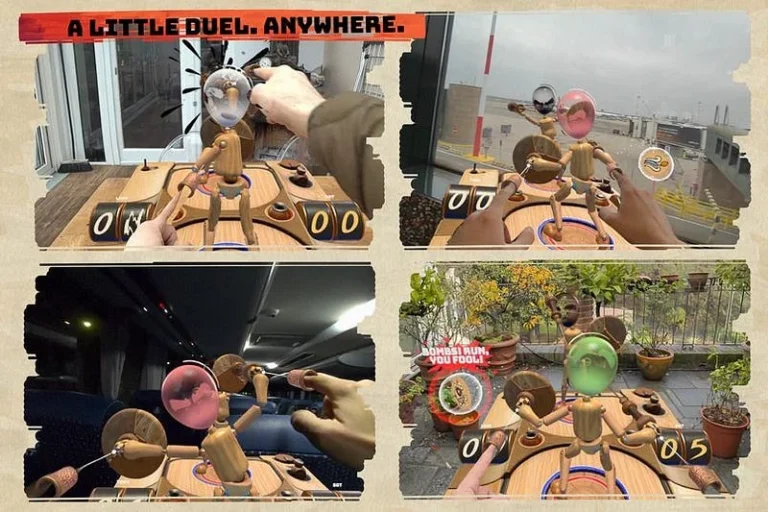
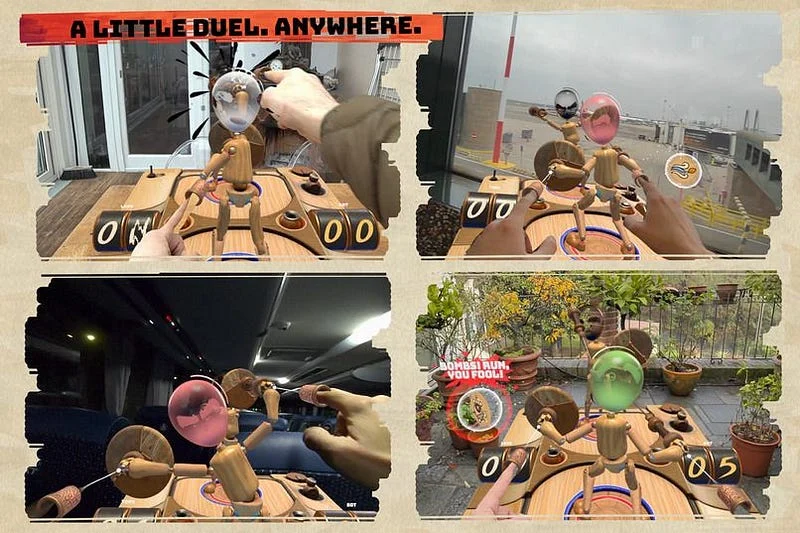
Notable submissions included innovative hand-tracking experiences, such as a "Portal"-inspired mechanic utilizing finger gestures and a virtual fishing simulation. In the productivity sector, developers demonstrated applications that transform physical desks into multi-functional digital workstations and personal AI assistants integrated into the user’s immediate environment. Among the prominent participants were established names in the XR space, including Lucas Martinic, Realities.io, and Valem VR.
The high caliber of these submissions suggests that development tools for MR have reached a level of maturity that allows for rapid prototyping of complex interactions. However, industry observers remain cautious. Many of the showcased projects are "mini-games" or casual experiences, raising questions about whether the current market can support long-term, high-budget MR development. The competition also highlighted a trend in the developer community: many talented creators are seeking contest prizes as a necessary alternative to traditional revenue streams, which remain lean in the current VR economy.

Strategic Rebranding and Market Maneuvers by Meta
In a strategic move to streamline its consumer offerings, Meta has begun a rebranding process for its mobile ecosystem. The "Meta Horizon" app, which previously integrated the company’s social metaverse platform with its hardware management tools, is being transitioned toward a more utility-focused identity. Reports indicate the app may be renamed "Meta VR," with the social "Horizon Worlds" features moving to a dedicated "Horizon Create" application. This shift reflects a broader industry trend of moving away from the abstract "metaverse" terminology in favor of more descriptive, functional branding like "Virtual Reality" and "Mixed Reality."
Simultaneously, Meta is leveraging the holiday season to bolster its hardware install base. Black Friday promotions for 2026 include significant discounts on the Quest 3S, with the 128GB model priced at $297 and the 256GB model at $382. Discounts of up to 25% have also been applied to the Ray-Ban Meta Gen 2 and Oakley Meta smartglasses. These aggressive pricing strategies are designed to secure market share ahead of the anticipated launch of Meta’s next generation of dedicated media consumption glasses.
Expansion of Immersive Media and Interoperability Standards
The utility of XR headsets is expanding beyond gaming into high-fidelity media consumption. Meta has officially launched its 3D movie rental and purchase service in the United States, offering a catalog of over 150 titles, including major releases from Disney. A centerpiece of this launch is the immersive concert film "Billie Eilish: Hit Me Hard and Soft: The Tour," co-directed by Eilish and James Cameron. This move positions the Quest 3 and 3S as legitimate competitors to traditional home theater systems and the Apple Vision Pro.
On the technical front, Android XR has become the first platform to integrate the Khronos Group’s new OpenXR "Spatial Containers" specification. These containers allow for the creation of 3D widgets that can exist alongside other applications in a shared physical space. While the current implementation is limited to full-space applications, the adoption of an open standard is a critical step toward cross-platform interoperability, allowing developers to create MR content that functions across devices from different manufacturers, including Google’s upcoming XR partners.

Institutional Adoption and Future Outlook
The practical application of XR technology is gaining traction in the public sector. The New York City Police Department (NYPD) recently demonstrated the use of Quest 3 headsets for large-scale immersive training simulations. This adoption by one of the world’s largest law enforcement agencies underscores the growing recognition of VR as a cost-effective and high-stakes training tool.
As the industry looks toward the end of the year, the Game Awards 2026 has announced its nominees for "Best VR/AR," highlighting the year’s top software achievements. The list includes:
- Batman: Arkham Shadow
- Arizona Sunshine Remake
- Metro Awakening
- Asgard’s Wrath 2 (Updated for 2026)
- Metal Hellsinger VR
The nominations have sparked debate within the community, particularly regarding the omission of Hot Dogs, Horseshoes and Hand Grenades 2, which received near-universal critical acclaim.
Finally, the long-term societal impact of these technologies remains a topic of high-level discourse. Anthropic CEO Dario Amodei recently suggested a future where humans may spend significant portions of their time in immersive XR environments as AI automates traditional labor. While such a "Ready Player One" scenario remains speculative, the rapid integration of AI-driven NPCs and brain-computer interface (BCI) technology—highlighted by Neuralink’s recent experiments allowing disabled users to play GTA VI via neural signals—suggests that the boundaries between physical and digital reality will continue to blur.
About the Author