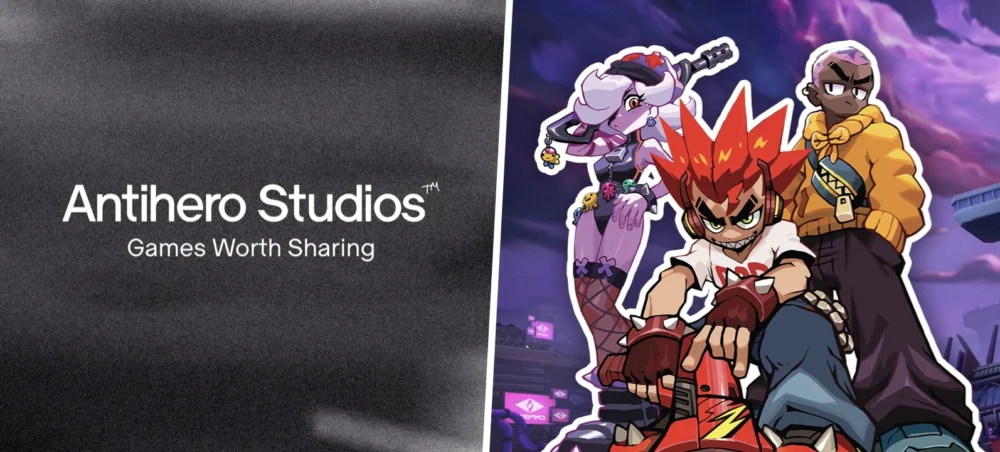
Antihero Studios, a newly established game development house founded by industry veterans from Supercell and King, has successfully closed a $4.5 million pre-seed funding round. The investment was led by Andreessen Horowitz (a16z Games), with significant participation from Laton Ventures and Sisu Game Ventures. This substantial capital injection is earmarked for the development of the studio’s debut title, "Misfitz," a mobile-first extraction shooter designed to blend competitive gameplay with high-stakes social dynamics. The studio, which emerged from stealth in early 2024, represents a growing trend of "Supercell alumni" striking out to form independent ventures, leveraging their experience in creating multi-billion-dollar mobile franchises to capture the next generation of players.
The Genesis of Antihero Studios and Its Leadership Pedigree
The foundation of Antihero Studios rests on a leadership team with a proven track record in the mobile gaming sector. The studio was co-founded by Brice Laville Saint-Martin, who serves as the Chief Executive Officer. Saint-Martin previously held the role of Art Director at Supercell, where he was instrumental in shaping the visual identity of some of the world’s most successful mobile titles. Joining him are Frank Yan, a former game designer for "Brawl Stars," and Andre Parodi, who previously served as a technical director at King, the Activision Blizzard subsidiary responsible for the "Candy Crush" phenomenon.
The collective resume of the Antihero team includes direct contributions to "Clash Royale," "Clash of Clans," and "Candy Crush Saga"—titles that have collectively generated billions of dollars in revenue and defined the mobile gaming landscape for over a decade. In addition to the core founding team, the studio has strategically recruited Fernanda Romano, the former Chief Marketing Officer of Supercell, to serve as a marketing advisor. This move underscores the studio’s intent to not only build a high-quality product but also to establish a resonant consumer brand that can compete in an increasingly crowded and expensive user acquisition market.
Misfitz: Bridging the Gap Between Extraction and Social Play
The studio’s first project, "Misfitz," is described as a "Brawl Stars-like" extraction shooter. While the visual style and accessible controls may draw comparisons to Supercell’s hit brawler, the core mechanics are rooted in the "extraction" genre—a gameplay loop popularized by PC titles like "Escape from Tarkov" and "Hunt: Showdown." In an extraction shooter, players enter a map, gather resources or loot, and must reach a specific exit point to secure their progress. Unlike traditional deathmatch or Battle Royale formats, where the objective is to be the last person standing, extraction games allow for multiple winners, provided they can survive and escape.
According to CEO Brice Laville Saint-Martin, the choice of the extraction genre was deliberate and driven by the social opportunities it presents. "In extraction, players don’t necessarily need to compete against each other to win—they can decide to collaborate, fight, or even team up for a short time and betray each other later," Saint-Martin explained. This "social emergence" is seen as a critical hook for Gen Z players, who increasingly view gaming platforms as social hubs or "third places" rather than purely competitive arenas.
The studio has already conducted extensive early-stage testing, reporting that over 70,000 players have participated in initial trials. To foster a dedicated community before the official launch, Antihero has collaborated with prominent content creators, including KairosTime, a leading figure in the Supercell creator ecosystem. This influencer-led strategy is designed to build organic momentum and bypass some of the traditional hurdles of mobile game marketing.
Strategic Context: The Rise of the Extraction Genre on Mobile
The investment in Antihero Studios comes at a pivotal moment for the mobile gaming industry. For years, the market was dominated by Battle Royale titles like "PUBG Mobile" and "Free Fire." However, as the genre has matured, players have begun seeking more complex "risk versus reward" mechanics. The extraction shooter represents the next evolution of this trend.
The "extraction" loop provides a high level of tension because players stand to lose the equipment and loot they have gathered if they are defeated before reaching an exit. By bringing this mechanic to mobile devices with a vibrant, accessible art style, Antihero Studios aims to capture a younger demographic that may find the gritty realism of PC extraction shooters intimidating.
Furthermore, the mobile gaming market is currently grappling with the "post-IDFA" (Identifier for Advertisers) landscape, where traditional performance marketing and user acquisition (UA) have become significantly more expensive and less efficient due to increased privacy regulations from Apple and Google. Antihero’s strategy focuses on building a "consumer brand" that resonates organically with players, reducing the long-term reliance on paid advertising.
Investor Perspectives and Market Implications
The participation of a16z Games in the pre-seed round highlights the venture capital firm’s continued confidence in the "founder-led" model of game development. Andreessen Horowitz has been a vocal proponent of the "Big Idea" in gaming, often backing teams with deep institutional knowledge from industry giants. Laton Ventures and Sisu Game Ventures also bring specialized expertise; Laton has a strong focus on the Turkish and European gaming hubs, while Sisu is known for its early-stage investments in Nordic and Western European studios.
Industry analysts suggest that the $4.5 million raise is a testament to the "Supercell Mafia" effect. Similar to the "PayPal Mafia" in Silicon Valley, former employees of Supercell have gone on to found numerous successful startups, such as Metacore and Dream Games. Investors are often willing to provide higher valuations and larger seed rounds to teams that have already demonstrated the ability to scale games to millions of daily active users.
The funding will likely be used to expand the development team, refine the "Misfitz" alpha, and prepare for a broader soft-launch phase. The studio has indicated that alpha testing will be opened to a wider audience in the coming months, providing a critical window for gathering data on player retention and monetization strategies.
Chronology of Antihero Studios’ Development
- Early 2024: Antihero Studios is officially formed by Brice Laville Saint-Martin, Frank Yan, and Andre Parodi. The team begins conceptualizing "Misfitz" as a social-first extraction shooter.
- Q1-Q2 2024: The studio conducts secret "grey-box" testing with a core group of players. Strategic advisors, including Fernanda Romano, are brought on board to shape the brand identity.
- Mid-2024: Initial player testing scales to over 70,000 participants. The studio begins formalizing partnerships with influencers like KairosTime to build a pre-launch community.
- Late 2024: Antihero Studios announces the closure of its $4.5 million pre-seed funding round led by a16z.
- Upcoming (Late 2024/Early 2025): The studio plans to move "Misfitz" into a public alpha testing phase, followed by regional soft-launches to test the game’s economy and social systems.
Analysis: The Shift from "Boring" Corporate Studios to Brand-Led Ventures
A recurring theme in Saint-Martin’s communications regarding the studio’s launch is the critique of the current state of mobile game publishing. He notes that many established studios have become "boring, uninspiring companies" that have lost touch with the cultural zeitgeist of younger gamers. By focusing on "brand foundations" during the early stages of development, Antihero is attempting to build a studio that functions more like a lifestyle or media brand than a traditional software house.
This approach is a response to the "commoditization" of mobile games, where many titles are clones of existing hits, designed primarily to maximize short-term UA metrics. Antihero’s emphasis on "social emergence"—the unscripted stories and interactions that happen between players—is an attempt to create a "sticky" ecosystem where players stay for the community, not just the mechanics.
If successful, Antihero Studios could provide a blueprint for other independent developers looking to navigate the challenges of the modern mobile market. By combining the rigorous data-driven methodologies of Supercell and King with a more agile, brand-centric creative philosophy, the studio is positioning itself to lead the next wave of mobile innovation.
Conclusion and Future Outlook
The $4.5 million funding round for Antihero Studios is more than just a financial milestone; it is a signal of the shifting power dynamics in the mobile gaming industry. As talent continues to migrate from large, established corporations to smaller, more nimble studios, the focus is shifting toward creative risk-taking and community-driven development.
The success of "Misfitz" will ultimately depend on whether the team can successfully translate the complex, high-stakes mechanics of extraction shooters into a format that is accessible and engaging for a mobile audience. However, with the backing of top-tier venture capital and a leadership team that has built the foundations of the mobile gaming industry, Antihero Studios enters the market with a significant competitive advantage. The upcoming alpha tests will be a crucial indicator of whether the studio’s vision of a social, extraction-based future will resonate with the millions of players searching for the next great mobile experience.
About the Author