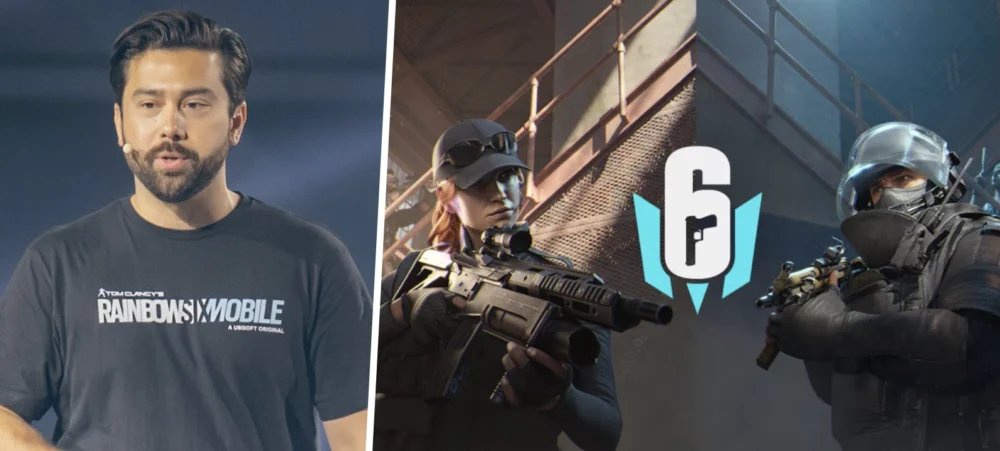
The global release of Rainbow Six Mobile represents a pivotal milestone for Ubisoft, marking the culmination of a seven-year development cycle and a significant strategic pivot in the company’s approach to the handheld gaming market. Developed under the leadership of Ubisoft Montreal with contributions from 11 different global studios, the title arrives at a time when the French gaming giant is navigating internal restructuring and a highly competitive mobile shooter landscape. By bringing the core mechanics of the critically acclaimed Rainbow Six Siege to mobile devices, Ubisoft aims to tap into the world’s largest gaming platform while maintaining the tactical integrity that has defined the franchise for nearly a decade.
The Seven-Year Development Journey and Collaborative Framework
The trajectory of Rainbow Six Mobile began long before its formal announcement in 2022. The project has been in active development for seven years, reflecting the technical complexity of translating the Siege experience—notorious for its destructible environments and high-fidelity tactical gameplay—into a mobile format. At the height of its production, the project saw simultaneous collaboration between six different development teams, eventually expanding to include 11 studios across the Ubisoft network.
Ubisoft Montreal, the primary architect of the Rainbow Six brand, led the initiative, ensuring that the mobile iteration remained faithful to the source material. However, the involvement of Ubisoft Winnipeg and other global subsidiaries was essential for optimizing the game for a vast array of mobile hardware. This collaborative "co-dev" model allowed the team to address the unique challenges of mobile optimization, such as touch-control precision and network latency, without sacrificing the environmental destruction that serves as the series’ hallmark.
The timeline of the game’s rollout illustrates a cautious and data-driven approach. Following a closed beta in September 2022, which allowed the developers to gather initial feedback on core mechanics, the game entered a soft-launch phase in August 2023. This period was crucial for stress-testing servers and refining the gameplay loop based on real-world player behavior in select territories.
Evolution of Gameplay Mechanics and Competitive Integrity
During the soft-launch phase, director Olivier Albarracin and his team observed a clear trend: players were not looking for a "watered-down" version of the franchise. Instead, the community demanded a deeper, more competitive experience that mirrored the intensity of the PC and console versions. This feedback led to a significant overhaul of the game’s tactical systems and ranked modes.
The development team focused heavily on "competitive integrity," a term used to describe the fairness and stability of the matchmaking environment. This involved implementing robust anti-cheat measures and ensuring that network stability could support the millisecond-perfect reactions required in high-stakes tactical shooters. By the time of the global launch, the game had transitioned from a simplified mobile shooter to a complex tactical simulator, prioritizing planning and gadget synergy over the "run-and-gun" mechanics typical of the mobile genre.
Strategic Shifts in Monetization and Player Retention
One of the most notable changes during the development cycle was the complete redesign of the game’s monetization strategy. Initially, Ubisoft experimented with a ticketing system—a common mechanic in mobile games that limits playtime or access to certain features. However, player data suggested that this system felt incongruous with the competitive nature of the Rainbow Six brand.
In a move to align the mobile title with the successful live-service model of Rainbow Six Siege, the developers pivoted to a "Reputation" and "Renown" system. Renown serves as the primary in-game virtual currency, earned through participation in events and successful matches. This currency allows players to unlock new "Operators"—the specialized characters that form the core of the game’s meta—without mandatory real-money transactions.
The current seasonal model incorporates a Battle Pass featuring a specific Operator of the season. Once a season concludes, that Operator becomes available for purchase with Renown, ensuring that the competitive meta remains accessible to the broader player base. To supplement revenue, Ubisoft introduced "Silver and Gold Bullets," a system that allows players to open cosmetic packs. This shift highlights a broader industry trend toward "fair-to-play" monetization in competitive titles, where player skill is not gated by financial investment.
Navigating Corporate Restructuring and the Vantage Studios Transition
The global launch of Rainbow Six Mobile coincides with a period of significant upheaval for Ubisoft. The company has recently undergone a major internal reorganization aimed at streamlining operations and focusing on its most profitable intellectual properties. As part of this shift, Rainbow Six Mobile now operates under the umbrella of Vantage Studios, a newly created subsidiary backed by the Chinese technology and gaming conglomerate Tencent.
Tencent’s involvement is strategic. As a minority shareholder in Ubisoft and a dominant force in the global mobile market, Tencent provides both financial stability and expertise in the mobile sector. This partnership is viewed as a safeguard for the project, especially following Ubisoft’s recent decisions to cancel several long-term projects, such as The Division Heartland, and implement staff reductions across various departments.
Director Olivier Albarracin has emphasized that despite the corporate turbulence, the commitment to Rainbow Six Mobile remains steadfast. The game is viewed not as a replacement for the PC and console versions, but as a necessary expansion of the brand to reach a global audience. With mobile being the primary gaming platform in regions like Southeast Asia, India, and Latin America, the success of the mobile iteration is critical for the franchise’s long-term global relevance.
The Competitive Landscape: Learning from Market Failures
The mobile shooter market is currently one of the most lucrative yet volatile sectors in the gaming industry. While titles like PUBG Mobile and Free Fire continue to generate billions in revenue, other high-profile Western imports have struggled. Electronic Arts (EA) famously shuttered Apex Legends Mobile less than a year after launch, and Activision has faced significant challenges with the performance and reception of Call of Duty: Warzone Mobile.
Industry analysts suggest that these failures often stem from a lack of technical optimization or a failure to adapt the core gameplay to the mobile format’s unique constraints. Ubisoft’s decision to take seven years for development suggests an attempt to avoid these pitfalls. By waiting for hardware capabilities to catch up—specifically the proliferation of high-performance chipsets and 5G connectivity—Ubisoft believes it can deliver a stable experience that was technically impossible several years ago.
Furthermore, Rainbow Six Mobile distinguishes itself by targeting a specific niche. While Call of Duty and PUBG focus on high-speed combat and battle royale mechanics, Rainbow Six emphasizes environmental destruction and strategic planning. This differentiation is key to its survival in a crowded market; it offers a "thinking man’s shooter" experience that is currently underrepresented on mobile devices.
Future Roadmap: Live Operations and Esports Ambitions
With the global launch now active, the focus shifts to "Live Ops"—the ongoing management and content delivery that sustains a modern mobile game. Ubisoft’s Montreal and Winnipeg teams are tasked with maintaining a rigorous content schedule, with seasons planned to last one month each. Every season will introduce a new Operator and Battle Pass, while every other season will feature a "landmark" event, introducing new maps or limited-time game modes.
The ultimate goal for the development team is the establishment of a professional esports circuit. Rainbow Six Siege already boasts a robust global esports ecosystem, including the Six Invitational, which draws millions of viewers. Ubisoft intends to replicate this success on mobile but is taking a cautious approach. Rather than forcing a competitive scene, the team is focusing on building the necessary tools—such as spectator modes and refined ranking systems—to allow a grassroots competitive community to flourish naturally.
Broader Impact and Industry Implications
The success or failure of Rainbow Six Mobile will likely serve as a bellwether for the "AAA-to-mobile" trend. If Ubisoft can successfully port the complex, destruction-heavy mechanics of Siege to mobile and maintain a profitable, fair monetization model, it will provide a blueprint for other publishers looking to mobilize their core franchises.
Moreover, the project represents a test of the Vantage Studios model. If the Tencent-backed subsidiary can successfully navigate the launch and growth of a major Western IP, it may lead to further collaborations between Ubisoft and external partners to stabilize its financial position.
In conclusion, Rainbow Six Mobile is more than just a port; it is a strategic attempt to modernize a decade-old franchise for the next generation of players. By prioritizing tactical depth, competitive integrity, and a player-friendly monetization system, Ubisoft is betting that the unique identity of Rainbow Six will allow it to carve out a permanent space in the competitive mobile ecosystem, regardless of the internal and external challenges the company faces. The next twelve months will be critical as the team focuses on player security, trust, and the foundational stability required to turn the title into a long-term global phenomenon.
About the Author