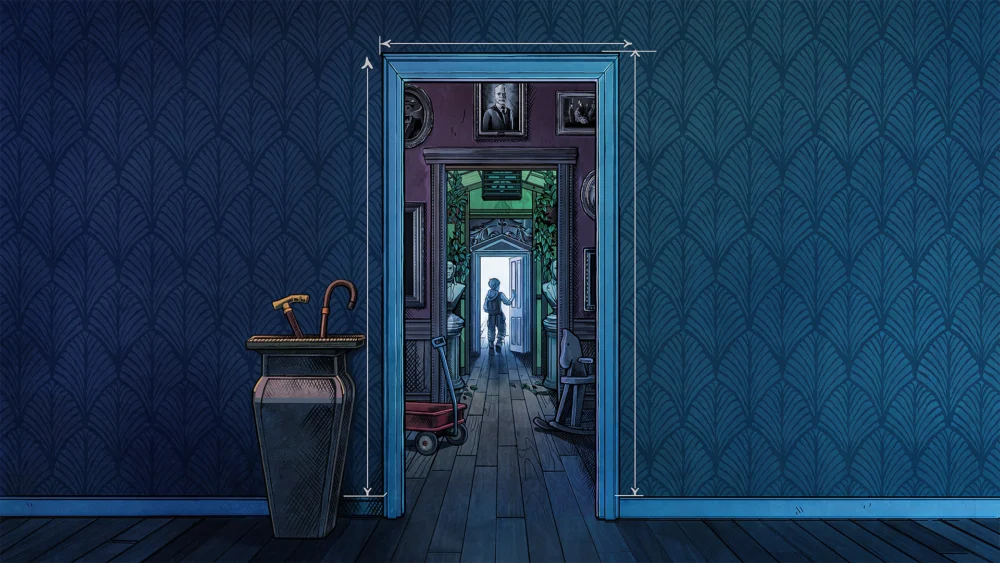
The critically acclaimed puzzle-adventure title Blue Prince, developed by Dogubomb and published by Raw Fury, solidified its status as one of the most significant games of 2025 by sweeping two major accolades at the 2026 DICE Awards. Creator Tonda Ros accepted the prestigious awards for "Outstanding Achievement in Game Design" and "Outstanding Achievement for an Independent Game" at the ceremony held in Las Vegas, Nevada, in February 2026. While the game has been lauded for its intricate puzzle design, dynamically randomized mansion layout, and multilayered mysteries, Ros revealed that the profound, melancholic atmosphere at the heart of the game drew its primary inspiration from the seminal 1993 adventure classic, Myst by Cyan Games.
DICE Awards Recognition and Industry Acclaim
The DICE Awards, presented annually by the Academy of Interactive Arts & Sciences (AIAS), are considered among the most prestigious honors in the video game industry, recognizing excellence in design, development, and artistic achievement. For Blue Prince to secure both "Outstanding Achievement in Game Design" and "Outstanding Achievement for an Independent Game" speaks volumes about its impact. The former award highlights the game’s innovative mechanics, particularly its procedural generation of the sprawling Mt. Holly Estate, which challenges players to optimize their exploration and puzzle-solving in unique ways with each run. The latter is a testament to the indie development scene’s capacity for innovation, allowing a smaller studio like Dogubomb to stand shoulder-to-shoulder with, and even surpass, larger AAA productions in terms of creative vision and execution.
Upon its release in late 2025, Blue Prince garnered immediate critical acclaim, boasting an average Metacritic score of 91/100, with reviewers praising its unique blend of exploration, logic puzzles, and a deeply interwoven narrative. Publications like IGN called it "a masterclass in environmental storytelling," while GameSpot lauded its "unparalleled atmosphere and intellectual challenge." Player communities quickly formed around the game, sharing strategies for navigating the randomized mansion and theories about the enigmatic Sinclair family history. The game’s success at the DICE Awards validates this widespread positive reception, elevating its profile further within the global gaming community.
The Phenomenon of Blue Prince: A Journey into Mt. Holly Estate
Blue Prince plunges players into the mysterious Mt. Holly Estate, a sprawling, ever-changing mansion that serves as both the setting and a character in itself. The core gameplay loop involves navigating its procedurally generated rooms, solving complex environmental puzzles, and gradually unearthing the dark secrets of the Sinclair family. The player character embarks on this journey ostensibly to claim their inheritance, but the celebratory tone often associated with such a premise is conspicuously absent. Instead, players are met with a pervasive sense of quiet unease and melancholic discovery.
The narrative of the Sinclair family—a saga steeped in backstabbing, betrayal, and intrigue—is not delivered through conventional cutscenes or exposition dumps. Instead, it is meticulously pieced together by the player through an array of found objects: faded photographs, cryptic letters, forgotten journal entries, and subtle environmental clues. This fragmented approach demands active participation from the player, transforming them into an archaeological detective sifting through the remnants of a bygone era. The acclaimed musical score by composers Trigg & Gusset plays a crucial role in this process, providing a quiet yet unsettling sonic backdrop that perfectly complements the game’s somber mood without ever becoming overtly mournful. This careful balance, as Ros articulated, was a cornerstone of the game’s design philosophy.
The Myst Connection: Crafting a Poetically Calm Atmosphere
Speaking to Game Developer after the awards ceremony, Tonda Ros elaborated on the unexpected yet profound influence of Myst. "The atmosphere [of Myst] was poetically calm, but there’s a rich history there," Ros explained. "It’s the environmental storytelling of a past that is just out of the player’s reach—and yet there is such meaning behind this world." This statement succinctly encapsulates the essence of Blue Prince‘s narrative approach.
Released in 1993, Myst revolutionized the adventure game genre with its pre-rendered 3D graphics, point-and-click interface, and a focus on atmospheric exploration and complex logic puzzles over character interaction or explicit narrative. Its deserted, dreamlike islands, filled with intricate machinery and enigmatic journals, forced players to deduce a tragic family history through environmental cues alone. Myst‘s quietude was not empty; it was laden with untold stories and implied conflicts, creating a profound sense of wonder and isolation.
Blue Prince consciously adopts and evolves this "poetically calm" approach. While Myst explored themes of scientific hubris and fraternal rivalry in fantastical ages, Blue Prince grounds its narrative in a more gothic, domestic tragedy within the confines of a decaying estate. Both games excel at creating worlds that feel lived-in and historically rich, where the absence of living characters amplifies the weight of the past. Ros emphasized this parallel: "In Blue Prince‘s case…the impetus of the story is tragic. Your great uncle has died. But there’s something beyond that fact that I think players can just intuitively feel." This intuitive understanding, born from carefully placed clues and a pervasive emotional tone, is a direct lineage from Myst‘s groundbreaking design.
Navigating the Delicate Balance of Mood and Mystery
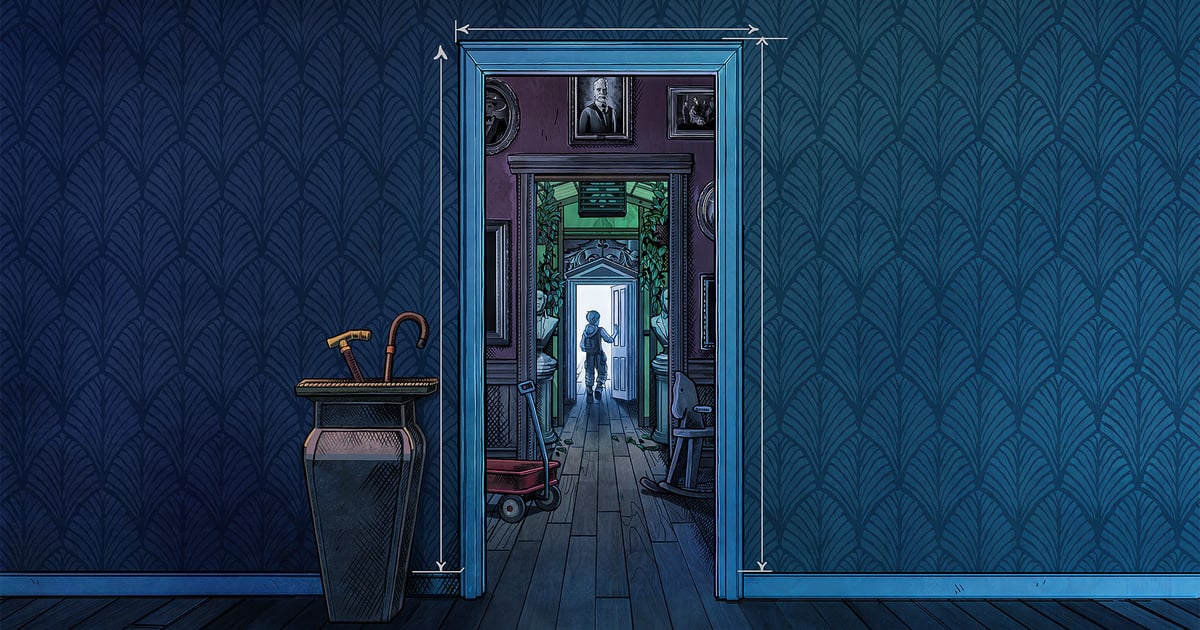
The challenge in creating such a mood, as Ros acknowledged, lies in striking a precise balance. A game too somber or frustrating could alienate players, leading them to abandon the experience. Conversely, insufficient mystery or emotional weight could diminish the game’s unique grip, especially on casual puzzle enthusiasts. Blue Prince navigates this tightrope with remarkable finesse. The initial hours of gameplay often involve a more straightforward, if challenging, engagement with the mansion’s logic puzzles and the intriguing mechanics of room generation and rerolling. This period of intellectual stimulation gradually gives way to a deeper emotional resonance as players delve further into the estate’s secrets.
The publisher, Raw Fury, known for its curated selection of distinctive indie titles, has also voiced its support for Dogubomb’s vision. A statement from Raw Fury’s CEO, Jonas Antonson, following the DICE Awards, read: "From the moment we saw Tonda Ros’s initial concept for Blue Prince, we knew it had the potential to be something truly special. It takes immense courage and artistic conviction to craft a game that prioritizes atmosphere and subtle narrative over overt action, and Dogubomb executed it flawlessly. We are incredibly proud of their achievements and the recognition they have received." This sentiment underscores the industry’s appreciation for games that dare to explore nuanced emotional landscapes.
The "Tomb" Revelation: Capturing the Grief of a Life Fully-Lived
A pivotal moment in Blue Prince‘s narrative, and one that exemplifies its shift from "fun puzzle mystery" to something "more heartbreaking," occurs upon the discovery of "The Tomb." This area serves as a gateway to many of the manor’s darkest secrets and marks a significant tonal departure. Here, players uncover a deeply personal letter from Herbert Sinclair, the recently deceased great-uncle, addressed directly to the player character, Simon.
The letter begins with a stark, almost resigned tone: "Simon, so here’s where it all ends. At least for me." Herbert’s words immediately establish a sense of finality and regret. He laments the Sinclair family tradition of being buried in the dreary, sunless tomb, a fate shared by his father and grandfather, both of whom, ironically, cherished the outdoors. "They say there is no stronger bond of servitude than tradition. And family tradition? Thrice as strong. These are chains that seldom bend and never break," he writes, articulating a profound sense of entrapment within his inherited lineage.
One particular line resonates with a universal human experience of reflection and wistfulness: "In our youth, we are gifted with dreams and ambitions. At our death, we are left with realities and regrets." This poignant confession encapsulates the theme of the "grief of a life fully-lived," acknowledging the gap between youthful aspirations and the compromises or unfulfilled desires that often define later life. Herbert’s rage against carrying on tradition for tradition’s sake is palpable, as he expresses a yearning for a burial beneath a beautiful oak tree, rather than in the "dreary dank dungeon" of the family tomb.
Yet, in a powerful twist that defines the game’s complex thematic undercurrents, Herbert then strangely urges Simon to continue the very tradition he decries. He instructs Simon to build a shrine, turn the tomb into "hollow ground," bury him within, and leave a letter for the next heir, just as he has done. This cyclical command reveals a tragic inability to break free from the "chains that seldom bend and never break," even in death. It’s a testament to the insidious power of legacy and expectation, showing how individuals, even those who yearn for change, can become conduits for the very patterns they wish to disrupt. This moment delivers a profound emotional gut punch, forcing players to confront the weight of generational burdens and the bittersweet nature of human experience, a stark contrast to the initial thrill of architectural manipulation and logical puzzle-solving.
Broader Impact and Legacy
The success of Blue Prince at the 2026 DICE Awards, coupled with its robust critical and commercial performance, signifies a broader trend in the video game industry: the increasing recognition of narrative depth, artistic integrity, and innovative design, particularly within the independent sector. Blue Prince serves as a powerful reminder that compelling storytelling and evocative atmosphere can be just as impactful as high-octane action or cutting-edge graphics.
Its unique approach to environmental storytelling, drawing inspiration from classics like Myst while forging its own distinct path, is likely to influence future game developers. The game demonstrates that players are eager for experiences that engage them intellectually and emotionally, rewarding their curiosity and patience with richly woven narratives that unfold through subtle clues rather than explicit exposition. Dogubomb’s achievement with Blue Prince cements its place as a significant contributor to the evolution of the puzzle-adventure genre, proving that the quiet contemplation of a tragic past can resonate just as powerfully as any grand heroic epic. As the gaming landscape continues to diversify, Blue Prince stands as a beacon for thoughtful design and profound narrative artistry.
About the Author