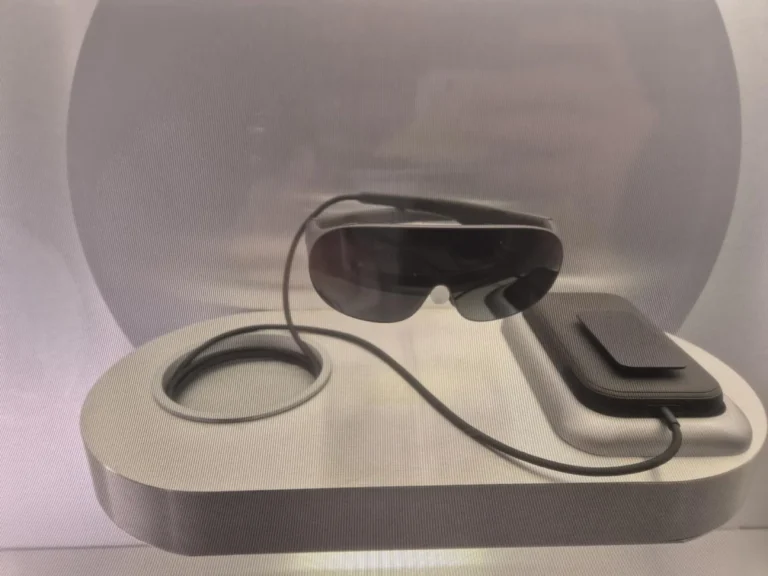
Pico, the immersive technology subsidiary of ByteDance, has formally introduced its next-generation operating system, Pico OS 6, alongside a preliminary reveal of a high-performance mixed reality (MR) headset currently designated as Project Swan. The announcement, delivered via a specialized developer presentation, signals a strategic pivot for the company as it moves away from its traditional focus on consumer-grade virtual reality gaming toward the burgeoning "spatial computing" sector currently led by the Apple Vision Pro. The event highlighted significant advancements in display clarity, processing architecture, and multitasking capabilities, positioning the upcoming hardware as a direct competitor in the premium enterprise and prosumer XR (Extended Reality) markets.

Development Timeline and Event Context
The developer event served as a milestone for two parallel development tracks within Pico’s engineering departments. According to the presentation, Pico OS 6 is the culmination of two years of software refinement, while the Project Swan hardware has been under internal development for approximately three years. This timeline suggests that Pico began conceptualizing its high-end MR strategy well before the public debut of contemporary competitors in the spatial computing space.
The presentation was structured to provide developers with immediate access to the tools necessary for building applications on the new architecture. While the video broadcast lasted only 15 minutes, it established a comprehensive roadmap for the company’s transition to a dual-chip hardware design and a more open, multitasking-centric software environment. Industry analysts noted that the timing of the release—aligned with major Asian and North American business hours—indicates Pico’s intent to reassert its global footprint following recent restructuring efforts within ByteDance’s XR division.

Pico OS 6: A New Framework for Spatial Computing
The core of Pico’s software evolution is Pico OS 6, which is built upon three foundational pillars: Efficiency, Intuition, and Openness. The operating system introduces the Pico Spatial Engine, a rendering framework designed to handle the simultaneous execution of 2D and 3D applications within a shared environment.
Multitasking and the Pico Spatial Engine
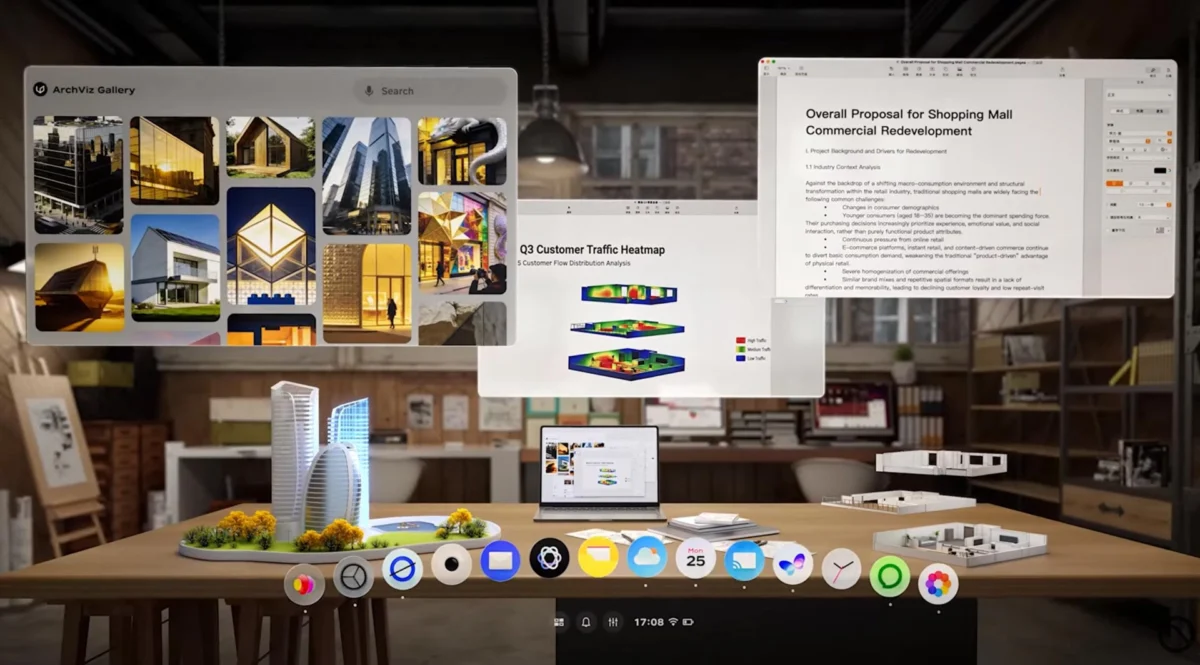
The Pico Spatial Engine represents a departure from traditional VR operating systems, which typically prioritize a single immersive application at a time. In OS 6, the rendering burden is shifted from individual applications to the system level, allowing users to interact with multiple windows and 3D objects concurrently. For instance, a user can operate a web browser while simultaneously engaging with a 3D tabletop simulation or a productivity tool. This "spatial multitasking" is intended to bridge the gap between traditional computing and immersive environments.

The Cloud Crystal Design Language
To support this new interaction model, Pico introduced "Cloud Crystal," a design language characterized by translucent UI elements and adaptive lighting. The interface is engineered to respond dynamically to the user’s physical environment, ensuring that text remains legible and windows feel grounded in real-world space. This aesthetic shift aligns Pico’s visual identity with the current industry standards for high-end MR, emphasizing clarity and environmental integration over stylized virtual menus.
Interaction Modalities
Pico OS 6 supports four distinct interaction methods, providing a flexible input system for different use cases:

- Eye and Hand Tracking: Allowing for "look-and-pinch" navigation similar to the Apple Vision Pro.
- Pico Controllers: Maintaining precision for gaming and complex industrial design.
- Voice Commands: For hands-free system management.
- Peripheral Support: Full compatibility with physical keyboards and mice for productivity workflows.
Project Swan: High-Fidelity Hardware Specifications
While the full industrial design of the new headset remains under wraps, Pico detailed the technical specifications of Project Swan, emphasizing its role as a flagship productivity device.
Display Clarity and PPD
One of the primary barriers to XR productivity has been the inability to read fine text comfortably over long periods. Pico addresses this in Project Swan by utilizing dual 4K displays. The headset achieves an average of 40 Pixels Per Degree (PPD), with a peak of 45 PPD at the center of the visual field. This represents a significant leap from the sub-20 PPD found in previous-generation consumer headsets and places Project Swan in the same tier as the highest-resolution devices currently available.

Dual-Chip Architecture and "Pico Silicon"
To manage the intensive demands of high-resolution mixed reality, Project Swan employs a dual-chip architecture. The primary "Flagship SoC" handles application logic and graphics rendering. Pico claims this new chipset offers double the CPU and GPU performance of the current Qualcomm Snapdragon XR2 Gen 2, leading to speculation that the device may be among the first to feature a next-generation Qualcomm XR platform.
Complementing the main SoC is "Pico Silicon," a custom-designed secondary processor dedicated entirely to sensor fusion and tracking. This chip manages eye tracking, hand tracking, and environment understanding, reducing the total motion-to-photon latency in MR mode to below 12 milliseconds. By offloading these tasks, the primary SoC is freed to dedicate its full resources to application performance.

Developer Ecosystem and Open Standards
Pico’s strategy for OS 6 emphasizes compatibility and ease of transition for developers. The company confirmed that all applications built for previous Pico headsets will remain compatible with the new hardware. Furthermore, OS 6 supports a wide array of development environments, including:
- Game Engines: Deep integration with Unity and Unreal Engine.
- Web Standards: Support for WebXR and standard 2D Android APKs.
- OpenXR: Full compliance with the industry-standard OpenXR framework.
Pico has already released a suite of developer tools, including a headset emulator, allowing creators to begin building and testing spatial multitasking apps immediately. These tools are accessible via the Pico Developer Portal.

Industry Implications and Market Positioning
The announcement of Project Swan and Pico OS 6 marks a clear intent by ByteDance to compete in the professional and enterprise XR markets. By adopting a "spatial computing" nomenclature and a hardware-heavy specification list, Pico is positioning itself as the primary Android-based alternative to the Apple Vision Pro.
Enterprise and B2B Focus
With its emphasis on text clarity and multitasking, Project Swan is expected to find significant traction in B2B sectors such as architecture, medical training, and industrial prototyping. The ability to run standard 2D Android apps alongside 3D models provides a bridge for companies looking to integrate XR into existing digital workflows without requiring a complete overhaul of their software stack.

Global Early Access Program
In a move to ensure a robust software library at launch, Pico announced a Global Early Access Program. This initiative invites experienced development teams to apply for early hardware units to provide feedback and optimize their applications for the OS 6 environment. This program suggests that while the hardware is nearing completion, Pico is prioritizing software refinement and developer relations ahead of a commercial release.
Chronology and Future Outlook
Pico confirmed that Project Swan is scheduled for a 2026 release, though a specific launch window and pricing structure have yet to be disclosed. Given the high-end components, including custom silicon and 4K displays, industry observers expect the device to be priced significantly higher than the consumer-focused Pico 4, likely placing it in the $1,000 to $2,500 range to compete with the Galaxy XR and high-end Meta offerings.

The developer presentation concluded with a promise of more information to be shared at upcoming industry events, including the Game Developers Conference (GDC). As the XR landscape shifts from isolated gaming experiences to integrated spatial computing platforms, Pico’s success will likely depend on its ability to attract high-quality productivity software and maintain its reputation for reliable, high-performance hardware in an increasingly crowded premium market.
About the Author