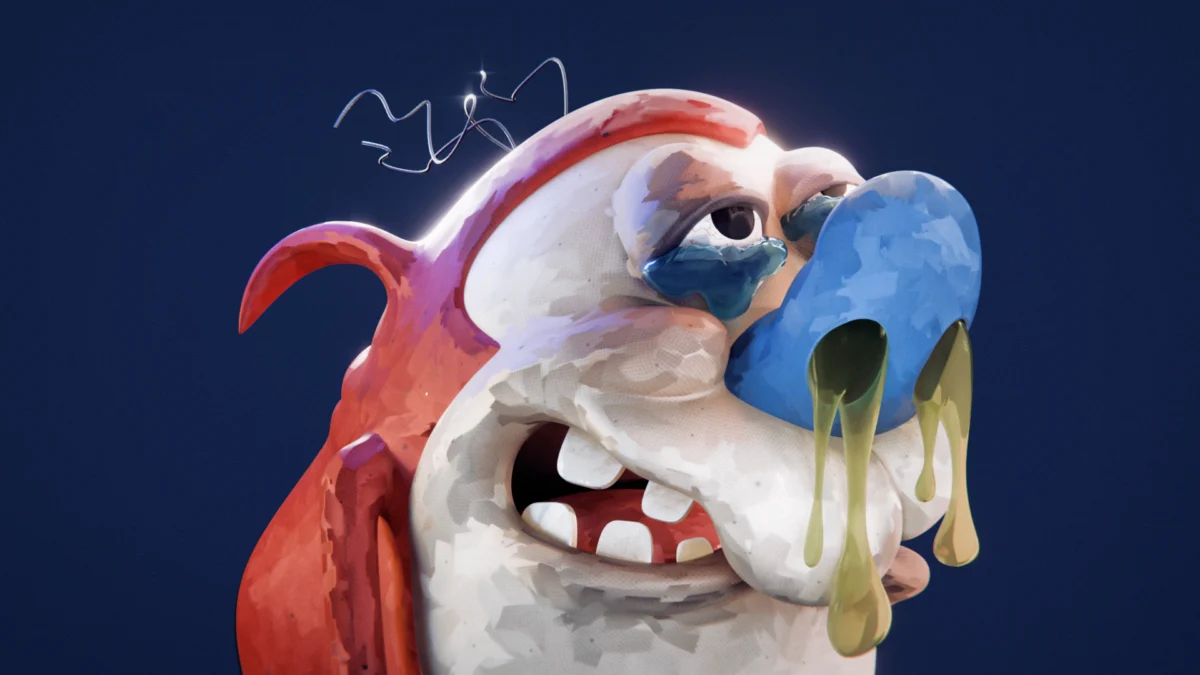
The enduring cultural impact of the 1990s animated series The Ren & Stimpy Show continues to manifest in contemporary creative endeavors, as evidenced by the recent work of digital artist Reggie Perry, Jr. Perry has meticulously recreated and reinterpreted iconic characters Ren Höek and Stimpy, transforming them into detailed 3D models that capture the show’s signature blend of surrealism and "gross-out" humor. These digital "gross ups" have garnered significant attention within the 3D art and animation communities, highlighting the continued relevance of the series’ distinctive aesthetic and the technical prowess of modern digital artists.
Perry’s project, documented through a series of insightful YouTube videos detailing his workflow, offers a comprehensive look into the process of bringing beloved 2D characters into the third dimension with a deliberate emphasis on amplifying their inherent grotesqueness. This artistic approach not only serves as a nostalgic nod to a generation that grew up with the show but also functions as a case study in character interpretation and advanced 3D modeling techniques. The detailed exploration of his methods provides valuable insights for aspiring 3D artists and animators, demonstrating how traditional artistic principles can be translated and amplified within a digital medium.
Genesis of a 90s Revival: The Creative Spark
The impetus behind Perry’s ambitious project appears to stem from a deep-seated appreciation for The Ren & Stimpy Show‘s unique brand of humor and visual style. The series, which originally aired from 1991 to 1995, was groundbreaking for its unapologetic embrace of the bizarre, the disgusting, and the darkly comedic. Created by John Kricfalusi, the show pushed the boundaries of mainstream animation, often drawing criticism from parents and network executives while simultaneously cultivating a devoted following among viewers who appreciated its edgy and often transgressive content. This very transgressive nature, characterized by exaggerated facial expressions, bodily fluids, and unsettling scenarios, is precisely what Perry has sought to capture and enhance in his 3D interpretations.
Perry’s personal connection to the series, as articulated in the original announcement, underscores the project’s nostalgic roots. He recalls the show as a "cornerstone of my development" during his childhood in the nineties, a sentiment likely shared by many who experienced the show’s formative impact. The fact that his parents "hated it" further cemented its rebellious appeal, a common experience for children drawn to counter-cultural entertainment. This personal resonance has clearly fueled Perry’s dedication to not just replicating the characters but imbuing them with a new level of detail and visceral impact.
The Digital Sculpting Process: From Concept to "Gross Up"
Reggie Perry, Jr.’s approach to creating these 3D "gross ups" is a testament to the sophisticated tools and techniques available in modern digital art software, with Blender being his primary platform. His process, as revealed in his accompanying video content, can be broken down into several key stages, each contributing to the final, highly detailed, and characteristically unsettling result.
1. Character Selection and Reference Gathering:
The initial phase likely involved revisiting the original character designs of Ren and Stimpy. This would include meticulous study of their iconic poses, facial expressions, and anatomical quirks as depicted in the 2D animation. For a project focused on "gross ups," the artist would specifically seek out moments and expressions that emphasized the characters’ inherent disheveledness, exaggerated features, and often-unpleasant physical states.
2. Base Mesh Creation and Sculpting:
Using Blender’s powerful sculpting tools, Perry would have begun by creating a base mesh for each character. This foundational model would then be sculpted with a high degree of detail. The emphasis here is on translating the exaggerated, often distorted, linework of the original animation into three-dimensional forms. This would involve pushing and pulling vertices to create bulging eyes, distorted snouts, and other characteristic features that define Ren and Stimpy. The "gross up" aspect implies a deliberate exaggeration of these features, perhaps making the textures more pronounced, the skin more saggy, or the overall form more unsettling.

3. Texturing and Material Development:
A critical element in achieving the desired "gross" aesthetic lies in the texturing and material development. Perry would have likely employed a combination of procedural texturing and image-based texturing to create realistic, yet stylized, skin surfaces. This would involve simulating pores, wrinkles, blemishes, and perhaps even subtle wetness or grime. The choice of shaders and material properties would be crucial in conveying the tactile qualities of the characters’ skin – making it appear somewhat clammy, slightly greasy, or even a bit inflamed, in line with the show’s visual language.
4. Detailing and Refinement:
The "gross up" element is further realized through the addition of fine details. This could include elements such as exaggerated mucus strands, particularly for Stimpy, or visible pores and imperfections on Ren’s often-irritated skin. The aim is not just to replicate the characters but to amplify their existing physical characteristics to a degree that is both humorous and slightly repulsive, staying true to the spirit of the original show. This stage requires a keen eye for anatomical detail, even within a stylized context, to ensure that the exaggerated features remain grounded enough to be recognizable and impactful.
5. Lighting and Rendering:
The final presentation of the 3D models is heavily influenced by lighting and rendering techniques. Perry would have employed lighting setups designed to accentuate the sculpted details and textures, perhaps using dramatic shadows to enhance the sense of depth and form, or rim lighting to highlight the contours of the exaggerated features. The rendering process would then bring these elements together, ensuring that the final output captures the intended mood and aesthetic of the "gross ups."
Timelines and Chronology of the Project
While a precise timeline for Reggie Perry, Jr.’s Ren & Stimpy project is not explicitly detailed in the provided information, the presentation of his work suggests a phased approach, typical of complex 3D art creation.
- Initial Concept and Planning: This phase would have involved revisiting Ren & Stimpy, re-watching episodes, and gathering reference materials. Perry’s personal reflections indicate a long-standing appreciation, suggesting this planning phase may have been ongoing or a culmination of years of thought.
- Model Development (Ren and Stimpy): It is probable that Perry worked on one character at a time, or perhaps alternated between them. The provided YouTube links offer a chronological insight into the creation process:
- "Creating a 3D Animated GROSS UP in #blender | Ren + Stimpy": This video likely serves as an overarching introduction to his methodology for both characters.
- "Ren Hëek (from Ren + Stimpy) | 3D Animated Gross Up": This timelapse showcases the sculpting and modeling of Ren, suggesting a focused effort on bringing this particular character to life in 3D.
- "STIMPY | Sculpting Stylized Characters from the 90s in 3D #blender": Similarly, this timelapse details the creation of Stimpy, highlighting the specific techniques used for his distinct features.
- Texturing, Rigging (if applicable for animation), and Rendering: Following the initial sculpting, these stages would have been undertaken to finalize the models. The videos focus on sculpting and creation, implying that the full animation process might be a separate, future endeavor, or that the "gross ups" are intended as static renders or short animated loops.
- Publication and Community Engagement: The sharing of these works on platforms like YouTube and likely other 3D art communities (such as Blendernation, where the original article appeared) marks the public release and subsequent engagement with his art. This dissemination allows for feedback and appreciation from fellow artists and fans.
The existence of separate timelapses for Ren and Stimpy suggests a significant investment of time and effort for each character, reinforcing the idea of a deliberate and methodical creative process.
Supporting Data: The Legacy of Ren & Stimpy
The enduring appeal of The Ren & Stimpy Show can be quantified by its cultural footprint and continued relevance in popular culture.
- Original Broadcast Run: The show aired for five seasons on Nickelodeon, from August 11, 1991, to October 22, 1995. Despite its controversial nature, it achieved considerable ratings and critical acclaim, earning awards such as an Emmy for Outstanding Music Composition for a Series.
- Critical Reception and Impact: Ren & Stimpy is widely regarded as a landmark in animation history. It is credited with influencing a generation of animators and creators with its bold artistic choices, surreal storytelling, and mature humor. Its impact can be seen in subsequent animated series that embraced more edgy and adult-oriented content.
- Fanbase and Nostalgia: Decades after its conclusion, the show retains a dedicated fanbase. The internet has facilitated the preservation and rediscovery of Ren & Stimpy, with fan communities, merchandise, and retrospective analyses continuing to engage audiences. Reggie Perry, Jr.’s project taps directly into this wellspring of nostalgia, offering fans a new way to connect with characters they loved.
- Digital Art Trends: The rise of 3D modeling and digital art has opened new avenues for fan art and creative reinterpretations of beloved characters. Projects like Perry’s demonstrate the growing sophistication of digital tools and the increasing desire among artists to explore and expand upon existing intellectual properties. The ability to render characters with such intricate detail and "gross" texture is a direct benefit of advancements in software like Blender.
Analysis of Implications: Digital Artistry and Nostalgia Marketing
Reggie Perry, Jr.’s Ren & Stimpy "gross ups" offer a compelling case study in several contemporary trends within the creative industries:
- The Power of Nostalgia: The project capitalizes on the potent force of nostalgia, a marketing and creative strategy that leverages fond memories of past cultural touchstones. For those who grew up with Ren & Stimpy, these 3D models evoke a powerful sense of familiarity and affection. This approach is increasingly prevalent across various media, from film reboots to retro-inspired gaming.
- Skill Demonstration and Portfolio Building: For digital artists, projects that reinterpret iconic characters serve as excellent vehicles for showcasing technical skill, artistic vision, and understanding of character design. Perry’s work demonstrates a mastery of Blender’s sculpting, texturing, and rendering capabilities, making it a valuable addition to his professional portfolio. Such projects can attract attention from studios and clients seeking talented 3D artists.
- Community Engagement and Content Creation: The sharing of the creative process through YouTube videos is a crucial element. It not only educates and inspires other artists but also fosters a sense of community around the work. This type of content creation is vital for building an online presence and engaging with an audience, as exemplified by platforms like Blendernation.
- Pushing Aesthetic Boundaries: By deliberately amplifying the "gross" elements of Ren & Stimpy, Perry is not merely replicating but actively engaging with and extending the show’s original artistic intent. This act of reinterpretation can spark discussions about artistic style, the evolution of humor, and the ways in which digital tools can be used to explore and enhance established aesthetics. It highlights how digital art can move beyond simple homage to become an active commentary on the source material.
- Potential for Further Development: While the current focus appears to be on static renders or short loops, the high quality of the 3D models leaves open the possibility for future animation projects. The detailed character models could serve as the foundation for new animated shorts or even fan-made episodes, further extending the legacy of Ren & Stimpy in the digital realm.
The success of Reggie Perry, Jr.’s project underscores the enduring power of well-executed fan art and the sophisticated capabilities of modern digital art tools. It demonstrates how a deep understanding of source material, combined with technical expertise, can result in compelling and resonant creative works that appeal to both established fanbases and new audiences discovering these classic characters through a fresh, high-fidelity lens. The "gross ups" are not just a technical feat but a heartfelt tribute to a show that dared to be different, translated into a medium that allows for unprecedented levels of detail and visceral impact.
About the Author