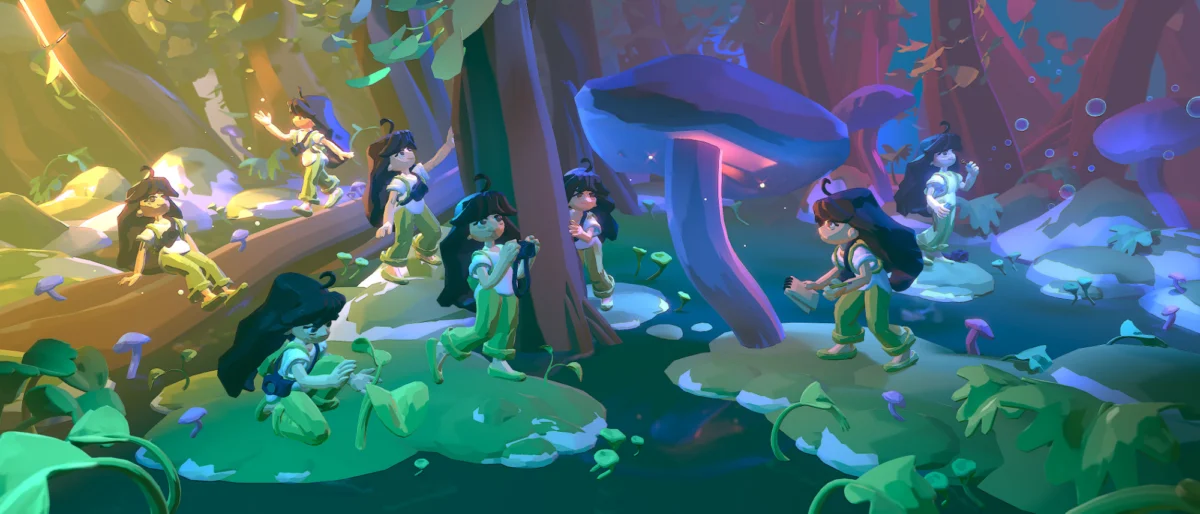
Wacom, a global leader in digital pen technology and interactive solutions, has announced an initiative aimed at demystifying 3D creation for artists, particularly those with a background in 2D mediums. The company is offering a complimentary four-week workshop, "Blender Fundamentals: The Painterly Path to 3D," scheduled to run every Saturday afternoon from April 25th to May 16th. This program is designed to encourage a more fluid, expressive, and less technically intimidating approach to using Blender, the popular open-source 3D creation suite.
Bridging the Gap Between 2D and 3D Artistry
The workshop, led by artist iris muddy, is specifically curated to address common anxieties faced by 2D artists when transitioning to the 3D realm. Many artists accustomed to the direct control and immediate feedback of traditional drawing and painting find the geometric precision and technical workflows of 3D software to be a significant barrier. "For many 2D artists, the leap into 3D can feel like stepping into a labyrinth of technical hurdles and rigid geometry," the announcement states, highlighting this prevalent challenge.
The core philosophy behind "The Painterly Path to 3D" is to reframe 3D creation not as a pursuit of absolute perfection, but as an extension of playful, sketch-like exploration, akin to the artistic soul found in a painted image. This approach seeks to leverage the existing creative instincts of artists, encouraging them to view 3D modeling as a new medium for their expressive capabilities rather than a purely technical discipline.
Workshop Structure and Target Audience
The workshop is structured to accommodate a wide range of participants, from complete novices to experienced 2D illustrators curious about 3D capabilities, and even those who have previously attempted Blender but found themselves overwhelmed. The emphasis is on a "unique, artist-centric perspective," assuring attendees that the environment will be one of experimentation and discovery, where "there are no mistakes here, only sketches, experiments, and the magical possibilities of 3D artwork!"
While specific curriculum details were not fully elaborated in the initial announcement, the title and description suggest a focus on foundational Blender skills integrated with a painterly workflow. This could involve techniques for achieving organic forms, applying textured materials that mimic traditional media, and understanding lighting and rendering in a way that enhances artistic expression rather than technical accuracy. The intention is to equip participants with the confidence to begin their 3D journey with a focus on creative output, rather than getting bogged down in complex modeling techniques or software intricacies.
Background and Context: Wacom’s Commitment to Creative Tools
Wacom’s involvement in this initiative underscores its long-standing commitment to empowering artists across all disciplines. For decades, Wacom has been a leading provider of pen tablets and displays, essential tools for digital artists seeking natural and intuitive input methods. The company has consistently sought to bridge the gap between digital tools and artistic expression, recognizing that technology should serve creativity, not hinder it.
The choice of Blender as the software focus is also significant. Blender’s open-source nature and its powerful, comprehensive feature set have made it increasingly popular among independent artists, small studios, and educational institutions. Its accessibility, coupled with its professional-grade capabilities, makes it an ideal platform for an introductory workshop aimed at a broad artistic audience. By supporting a Blender-focused workshop, Wacom is aligning itself with a growing segment of the digital art community and further solidifying its position as a comprehensive solution provider for digital creators.

The timing of the workshop, spanning four consecutive Saturday afternoons, suggests a deliberate effort to make the program accessible to professionals and hobbyists alike, allowing for focused learning without significant disruption to weekday schedules. This format is common for intensive introductory courses, providing a structured environment for skill acquisition and practice.
Potential Implications and Broader Impact
The "Blender Fundamentals: The Painterly Path to 3D" workshop has several potential implications for the digital art landscape.
Firstly, it could significantly lower the barrier to entry for 2D artists considering a foray into 3D. By offering a free, artist-focused program, Wacom is removing financial and perceived technical obstacles. This could lead to a more diverse range of artists exploring 3D, potentially bringing fresh perspectives and unique stylistic approaches to the medium. The emphasis on "messy, expressive creation" directly challenges the notion that 3D is inherently sterile or overly precise, a common misconception that may deter many artists.
Secondly, the workshop could contribute to the broader adoption and appreciation of Blender. As more artists, particularly those with strong foundational art skills, become comfortable with Blender, its influence and user base are likely to grow. This, in turn, can foster a more vibrant ecosystem of tutorials, plugins, and community support, further enhancing Blender’s appeal.
Thirdly, Wacom’s initiative highlights a growing trend in the creative technology industry: the focus on user experience and artistic workflow. Rather than simply providing powerful tools, companies are increasingly investing in educational resources and community building to ensure artists can effectively leverage these tools to achieve their creative vision. This approach acknowledges that technical proficiency is only one part of the creative process; artistic intent and expressive freedom are equally crucial.
While direct statements from Wacom leadership or iris muddy beyond the initial announcement were not immediately available, the strategic positioning of this workshop suggests a clear intent. Wacom likely anticipates that by fostering a positive and accessible entry point into 3D for artists, they are cultivating future users of their own hardware solutions. Artists who discover a passion for 3D through this workshop may then seek out Wacom’s pen displays and tablets to further enhance their digital sculpting and painting workflows in the 3D environment.
The success of such initiatives can be measured not only by participation numbers but also by the quality and originality of the work produced by attendees afterward. Online forums and social media platforms are often vibrant hubs for artists to share their learning journeys, and it will be interesting to observe how participants from this workshop apply their newfound 3D skills.
In essence, Wacom’s "Blender Fundamentals: The Painterly Path to 3D" workshop represents a thoughtful and strategic move to democratize 3D creation and foster a more expressive, less intimidating creative environment. By leveraging the expertise of iris muddy and the accessibility of Blender, the company aims to empower a new generation of digital artists to explore the boundless possibilities of three-dimensional art. The four-week duration provides a solid foundation, and the "no mistakes, only sketches" philosophy promises an encouraging and productive learning experience for all involved.
About the Author