In a significant philanthropic announcement, tech entrepreneur Jeff Atwood, co-founder of Stack Overflow and Discourse, has pledged half of his remaining family wealth over the next five years to initiatives aimed at revitalizing the American Dream. This substantial commitment, accompanied by immediate donations of $8 million to non-profit organizations, is driven by Atwood’s deep concern over growing societal inequalities, political polarization, and the erosion of pathways to opportunity in the United States. The move underscores a growing trend among successful individuals to address systemic issues beyond traditional charitable giving, seeking to influence long-term structural change.
A Bold Philanthropic Commitment to Systemic Change
The announcement outlines a two-pronged approach to philanthropy. Firstly, Atwood’s family has already distributed eight $1 million donations to various non-profit groups directly addressing immediate needs across America. These initial contributions signify an urgent response to current socio-economic challenges, providing direct support to vulnerable communities.
Secondly, and more notably, Atwood has committed half of his family’s remaining wealth within the next five years to long-term efforts. This accelerated timeline contrasts with the typical generational transfer of wealth seen in many philanthropic pledges, including the "Giving Pledge" model popularized by figures like Warren Buffett. Atwood explicitly stated his admiration for Buffett but noted the incompleteness of pledges that defer wealth transfer until death, particularly when considering the urgency of contemporary issues. His decision to front-load a significant portion of his giving is framed as a direct response to the perceived crisis facing the nation, specifically citing the outcomes of the November 2024 United States presidential election as a catalyst. The pledge is rooted in a vision of the American Dream "founded on love," aiming to foster empathy and unity in a deeply divided nation.
From Hardscrabble Origins to Tech Success
Atwood’s journey provides a compelling narrative for his philanthropic conviction. Born to parents from rural West Virginia and North Carolina, his early life was marked by economic struggle and personal challenges, including parental alcoholism. Despite these adversities, his parents, through their eventual healing and unconditional love, instilled in him a profound capacity for empathy and connection. This foundational experience shaped his understanding of the importance of community and mutual support.
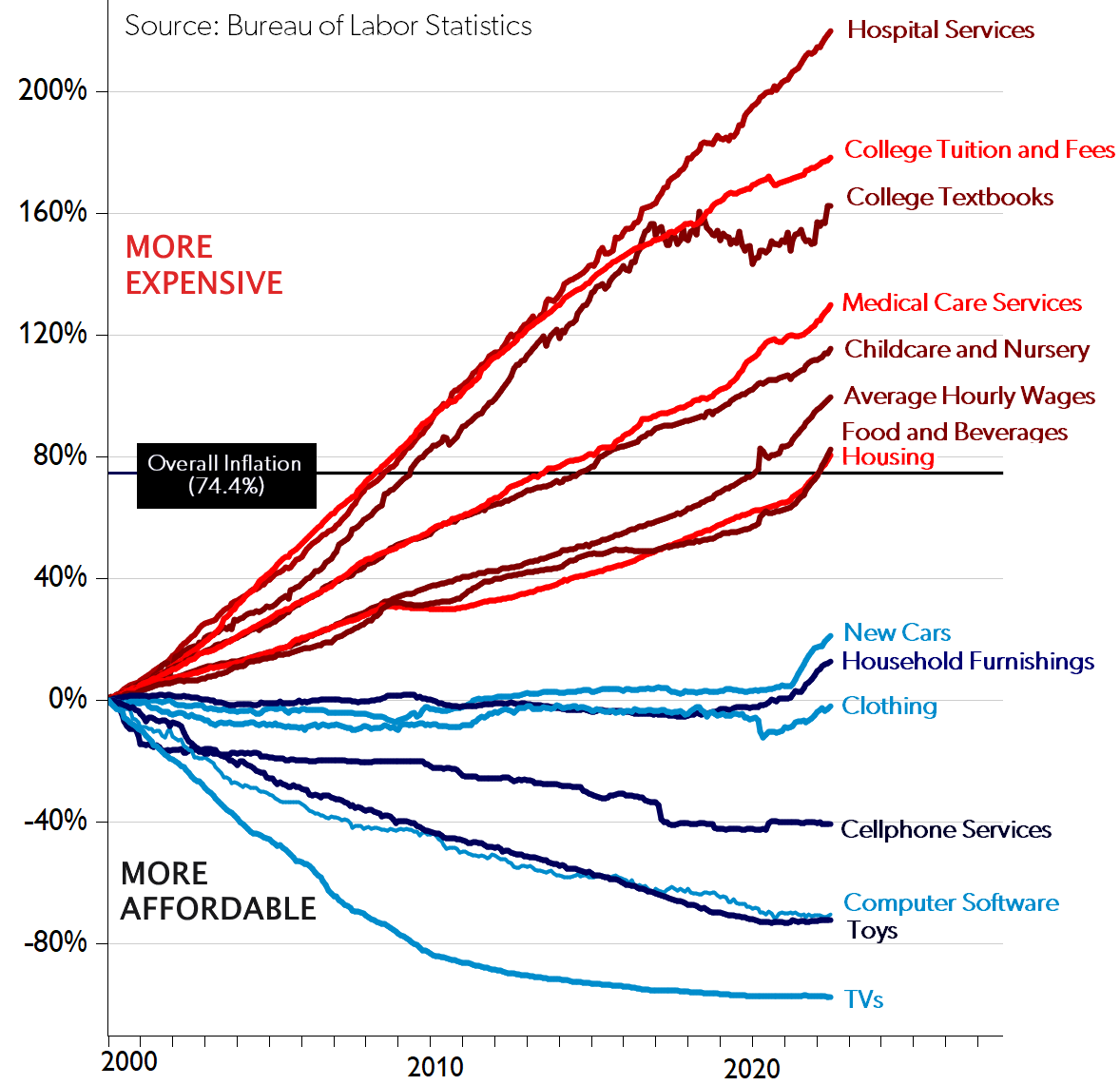
His educational path highlights the once-accessible nature of upward mobility. Atwood attended public schools in Chesterfield County, Virginia, and graduated from the University of Virginia in 1992, an institution founded by Thomas Jefferson, a key architect of the American Dream’s foundational principles. During his college years, Atwood worked part-time as a cashier at Safeway, earning the federal minimum wage, supplementing his income with government Pell grants and scholarships to cover tuition. At the time, annual in-state tuition at UVA was approximately $3,000. This experience stands in stark contrast to the current educational landscape, where the average cost of college tuition at state schools has skyrocketed to around $23,000 per year, an eightfold increase over three decades. This exponential rise in the cost of education, alongside escalating expenses in healthcare and housing, is cited by Atwood as a significant barrier to the American Dream for many contemporary students and families.

Pioneering Digital Democracy: Stack Overflow and Discourse
Atwood’s professional career saw him co-found two highly influential platforms that embody his belief in democratic principles and community empowerment. In 2008, he co-founded Stack Overflow with Joel Spolsky, a Q&A website that rapidly became an indispensable knowledge base for programmers worldwide. Stack Overflow was built on principles of "digital democracy," where users collectively ranked questions and answers, and community moderators were elected through ranked-choice voting. This model demonstrated the power of collective intelligence and self-governance in the digital sphere, creating a shared Creative Commons resource. The platform’s success culminated in a significant acquisition, validating its innovative approach.
Building on the lessons learned from Stack Overflow, Atwood co-founded Discourse, an open-source tool designed for constructive, empathetic community discussions. Discourse aims to bridge the gap in online interactions, providing frameworks and moderation tools that empower communities to set and enforce agreed-upon boundaries, fostering respectful dialogue even amidst disagreement. This evolution from pure digital democracy to "digital democracy and empathy" reflects Atwood’s growing conviction that genuine connection and kindness are crucial in an increasingly digital world, where anonymity often fosters adversarial behavior. He views both Stack Overflow and Discourse as "projects for the public good" that, by chance, became successful corporations, proving that the American Dream could be realized through impactful work.
The Erosion of the American Dream and Rising Inequality
Atwood’s personal success, earning "millions of dollars," led to a profound realization about the widening chasm of wealth inequality in America. He observed that accumulating significant wealth inadvertently distanced his family from the daily struggles faced by most Americans, removing the need to consider the cost of basic necessities that remain challenging or unreachable for many. This experience led him to label extreme wealth, particularly the billionaire status, as "unamerican," echoing the sentiments of many who view vast disparities as antithetical to the nation’s founding ideals.
Statistical data supports Atwood’s concerns regarding wealth concentration. According to Pew Research Center, the top 1% of Americans held 24% of the nation’s wealth in 2012, a figure that climbed to 30% by 2021. Globally, Oxfam reports that the richest 1% now possess nearly twice as much wealth as the rest of the world combined. These trends highlight a stark divergence from the vision of national prosperity articulated by W.E.B. Du Bois, who posited that a nation’s well-being should be measured not by the number of millionaires, but by "the absence of poverty, the prevalence of health, the efficiency of the public schools, and the number of people who can and do read worthwhile books." Atwood’s pledge is, in essence, a practical effort to redirect wealth towards these very indicators of societal health.
Challenges to Democracy: The Aftermath of the 2024 Election
A significant impetus for Atwood’s accelerated philanthropic action was the outcome and implications of the November 2024 presidential election. He expressed a deep concern that "enough of us voted for people who interpret the dream in a way that I don’t understand," signaling a fundamental disagreement on the nation’s direction and values. Beyond the election results themselves, Atwood highlighted critical issues undermining democratic participation and representation.
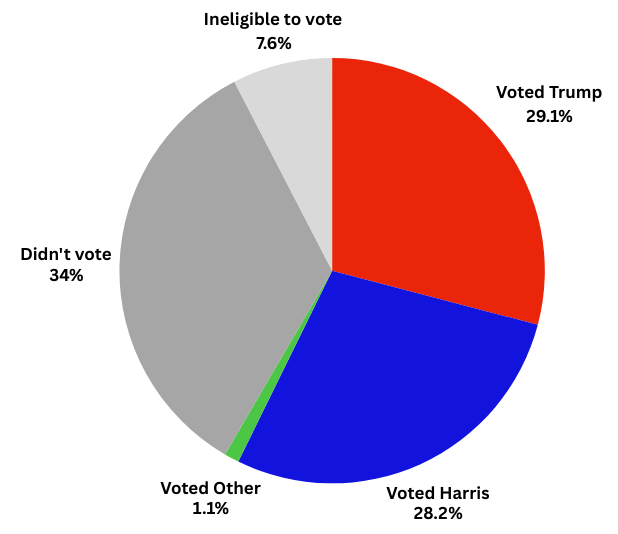
Data indicates that a substantial portion of the American adult population did not participate in the 2024 election. Approximately 34% of eligible adults did not exercise their right to vote, while an additional 7.6% were ineligible due to factors such as non-citizenship or felony convictions. This means nearly 42% of adults living in America had no say in shaping the nation’s leadership. Atwood attributes this low turnout and disenfranchisement to a combination of factors, including voter suppression tactics, gerrymandering that creates uncompetitive districts and fosters indifference, and a pervasive feeling among some citizens that their vote simply "didn’t matter."
In response to these democratic deficits, Atwood advocates for several electoral reforms designed to enhance participation and ensure fairer representation. These proposals include making Election Day a national holiday, implementing universal mail-in voting, and adopting ranked-choice voting, which ensures that winning candidates have broader support. He also stresses the importance of strengthening independent institutions crucial to maintaining democratic integrity, such as state and local election boards, and the Federal Election Commission.
Political Polarization and the Quest for a Shared Dream
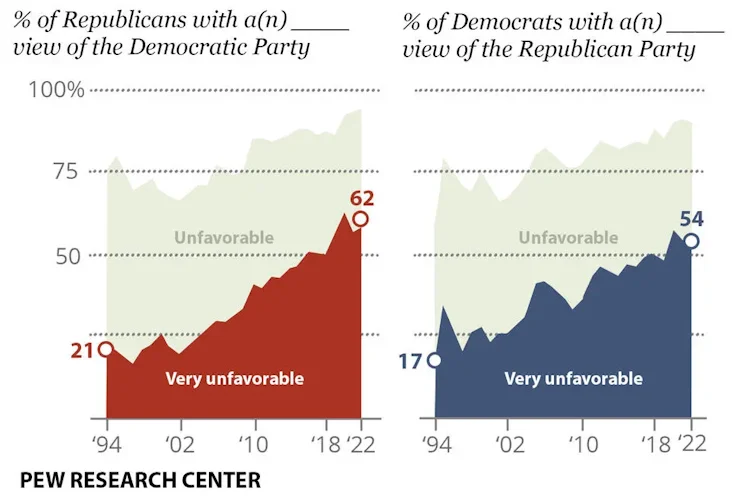
The ability of the U.S. government to address these systemic issues is severely hampered by unprecedented levels of political polarization. Atwood points out that the last meaningful constitutional amendment passed in the U.S. was the 26th Amendment in 1971, which lowered the voting age to 18. This stagnation in legislative and constitutional progress over the past half-century highlights the profound gridlock caused by the current political climate. Historical analysis confirms that political polarization in the United States is at historically high levels, mirroring periods like the Gilded Age. In a two-party system, such intense division can render governance counterproductive, and even dangerous, raising the fundamental question of whether Americans still share a common understanding of the "American Dream."

Atwood’s reflections draw parallels to iconic cultural touchstones, from the inspiring message of "staying gold" – interpreted as "sharing the American Dream" – from S.E. Hinton’s The Outsiders, to the stark contrast of "love and hate" articulated in Spike Lee’s Do the Right Thing and Martin Luther King Jr.’s teachings. He acknowledges that the American Dream has always contained both paths, and the nation continually struggles to reconcile them. His pledge explicitly commits his family’s wealth to an "American Dream founded on love," signaling a deliberate choice to support initiatives that promote unity, empathy, and collective well-being over division and self-interest.
Implications and the Path Forward
Jeff Atwood’s significant pledge represents a powerful statement from the tech sector, traditionally associated with rapid wealth accumulation, about the responsibility of wealth in addressing societal inequities. His emphasis on both immediate relief and long-term systemic change, coupled with a willingness to accelerate the transfer of wealth, positions his philanthropy as a model for proactive engagement.
The implications of such a pledge are far-reaching. While the specific long-term initiatives are yet to be fully detailed (with a follow-up blog post and a Cooper Union talk co-presented with Alexander Vindman scheduled for March 20th), they are expected to target areas that align with his stated concerns: fostering democratic participation, addressing economic disparities, and promoting civic discourse and empathy. Philanthropic experts often commend such visionary pledges, noting their potential to catalyze broader engagement and innovation in addressing complex social problems. Economists and social scientists frequently highlight that private philanthropy, while not a substitute for robust governmental action, can play a crucial role in pilot programs, advocacy, and direct support where political gridlock hinders public sector solutions.
Atwood’s call to action extends beyond his personal financial commitment, encouraging every American to contribute "however you can" to organizations effectively helping those in need. He emphasizes collaboration, stating he will "gladly advise and empower others working towards the same goal." This collaborative spirit, reminiscent of the community-building ethos behind Stack Overflow and Discourse, suggests a desire to build a broader movement for a more equitable and unified America.
In a nation grappling with profound divisions and economic anxieties, Atwood’s initiative serves as a poignant reminder of the enduring ideals embedded in the Declaration of Independence – "Life, Liberty and the pursuit of Happiness" – and the ongoing struggle to make these unalienable rights accessible to all. The question remains, as Atwood implicitly asks, which American Dream will prevail: one driven by individual accumulation or one founded on shared prosperity and love. The coming years will reveal the impact of this substantial commitment on the pursuit of that shared ideal.
About the Author