The ability for non-player characters (NPCs) or antagonists controlled by artificial intelligence (AI) to actively track and pursue a player character is a cornerstone of modern video game design, enhancing immersion, challenge, and narrative engagement. A recent technical guide has illuminated the remarkably streamlined process for implementing this fundamental AI functionality within Unreal Engine 5 (UE5), demonstrating that what might appear to be a complex system can be achieved with just a few visual scripting nodes. This development underscores Epic Games’ commitment to making sophisticated game development accessible, even for creators without extensive programming backgrounds.
The Evolution of AI in Interactive Entertainment
The concept of AI in games has evolved dramatically since the early days of arcade machines where enemy patterns were often pre-scripted and predictable. Initial forms of game AI were rudimentary, relying on simple state machines or hardcoded paths. Classic examples include the ghost behaviors in Pac-Man or the movement patterns of aliens in Space Invaders. As computational power increased, so did the sophistication of in-game AI. The 1990s saw the introduction of basic pathfinding algorithms and more complex decision-making processes, leading to games where enemies could react to player presence, albeit often in a limited fashion.

The turn of the millennium brought significant leaps with titles like F.E.A.R. (2005), which showcased advanced squad AI that could flank players, suppress fire, and communicate. This era marked a shift towards AI that not only moved but also made tactical decisions. Modern AI, as seen in games like Horizon Zero Dawn or The Last of Us, integrates intricate behaviors, environmental awareness, and even emotional responses, contributing to highly dynamic and believable interactions. The "following" mechanic, while seemingly basic, is the foundational layer upon which these more elaborate AI systems are built, allowing characters to navigate complex 3D environments to reach a specific target—the player.
Unreal Engine 5: A Platform for Accessible Innovation
Unreal Engine has long been a powerhouse in game development, known for its cutting-edge graphics, robust toolset, and flexible architecture. With the advent of Unreal Engine 5, Epic Games has pushed the boundaries further, introducing features like Nanite virtualized geometry and Lumen global illumination, alongside a continuously refined visual scripting system known as Blueprints. Blueprints empower designers and artists to create game logic, interactions, and complex systems without writing a single line of C++ code, effectively democratizing game development.
The implementation of AI following mechanics in UE5 exemplifies this accessibility. The engine provides a comprehensive suite of AI tools, including:
- NavMesh: A crucial component that defines walkable areas for AI agents, allowing them to intelligently navigate complex terrains and structures while avoiding obstacles.
- AI Controllers: Specialized controllers that dictate the behavior of AI characters, separate from their visual representation.
- Behavior Trees: A hierarchical system for designing complex AI decision-making processes.
- Environmental Query System (EQS): A tool for AI to query its surroundings and make informed decisions based on environmental data.
The core "AI MoveTo" node, central to the following mechanic, leverages these underlying systems to provide an efficient and reliable way for AI characters to traverse the game world.
Deconstructing the AI Following Blueprint: A Step-by-Step Implementation
The technical guide outlines a clear, concise pathway to establishing persistent AI pursuit within UE5. This process builds upon an existing NavMesh setup, a prerequisite for any AI pathfinding within the engine.
1. Initial Blueprint Configuration and Pruning:
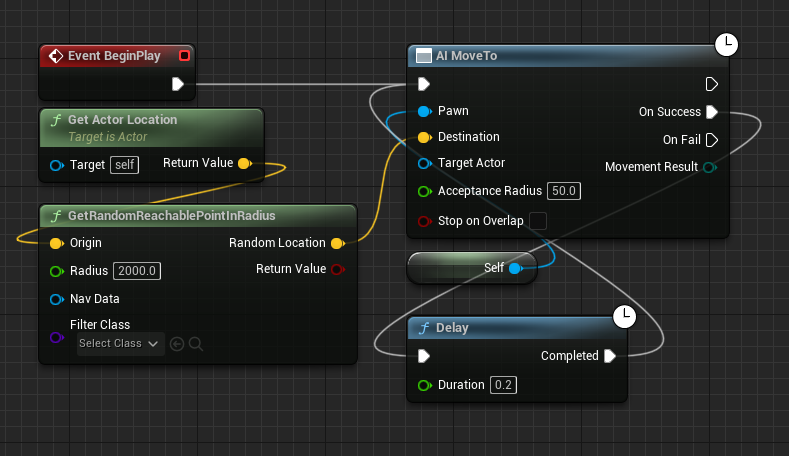
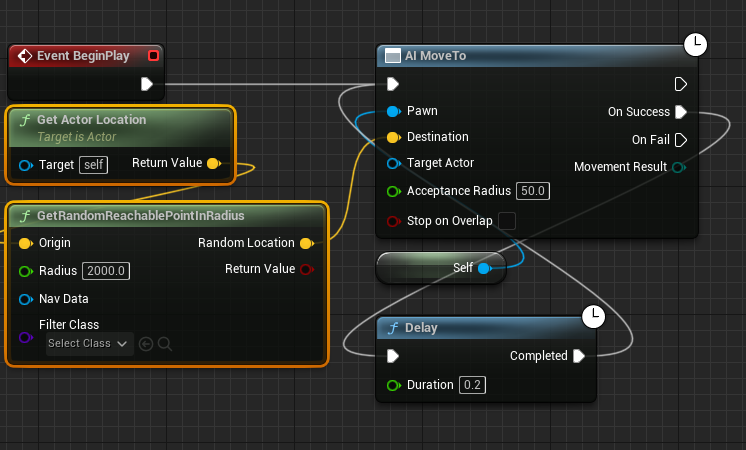
The starting point involves an existing AI movement Blueprint, likely configured for basic, non-targeted movement, such as patrolling or moving to random points. Typically, this would involve nodes like Get Actor Location (which retrieves the AI’s own position) and GetRandomReachablePointInRadius (which calculates a random, valid destination within a specified range around the AI). For targeted player pursuit, these nodes are redundant. The first critical step is to remove these elements from the Blueprint graph. This clean-up ensures that the AI’s intent shifts from undirected wandering to precise player tracking. The previous setup, while useful for ambient behaviors, does not align with the objective of constant player engagement.
2. Identifying the Target: The Player Character:
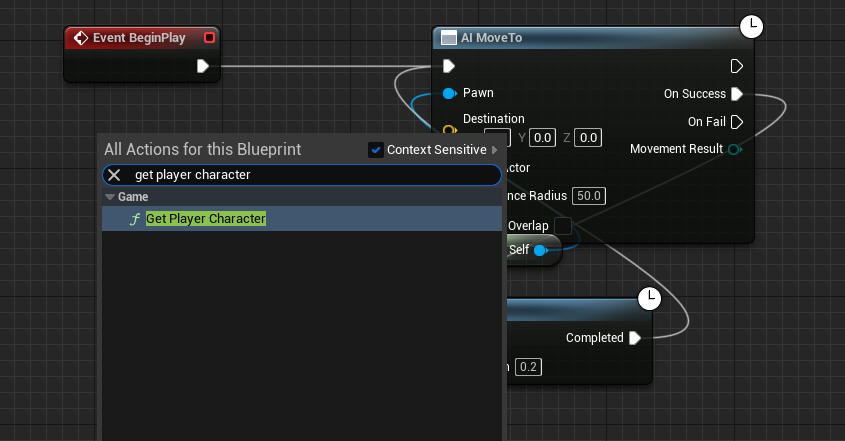
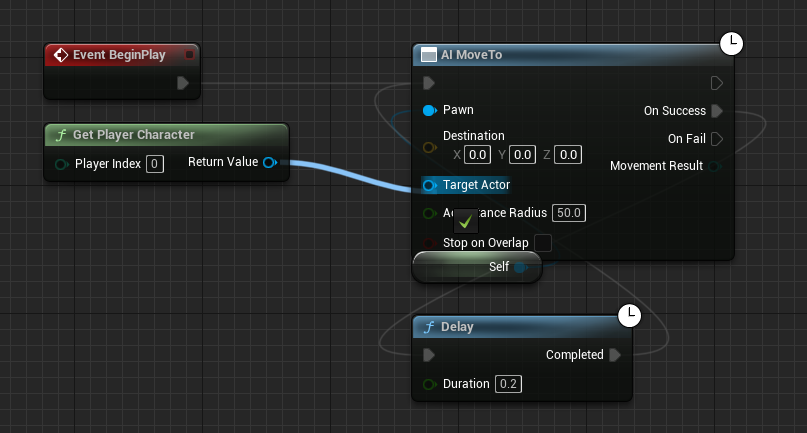
With the random movement logic removed, the AI needs a new target: the player. This is achieved by introducing the Get Player Character node into the Blueprint graph. This node serves a singular, vital purpose: it retrieves a reference to the active player character in the game world. In multiplayer scenarios, variations like Get Player Pawn or iterating through GetAllActorsOfClass might be used for specific player indices, but for a single-player context, Get Player Character is the most straightforward and efficient method. This node acts as the bridge, linking the AI’s movement intentions directly to the player’s current position and presence.
3. Establishing the Pursuit Command: Connecting to AI MoveTo:
Once the player character reference is obtained, it must be fed into the AI’s movement command. The AI MoveTo node is the primary instruction for an AI controller to navigate to a specific location or target actor. The Get Player Character node’s blue "Return Value" pin, representing the player’s actor reference, is connected directly to the "Target Actor" pin of the AI MoveTo node. This connection is the heart of the pursuit mechanism. It tells the AI controller, "Move to where the player character currently is." The AI MoveTo node then internally handles the complexities of pathfinding via the NavMesh, calculating an optimal route from the AI’s current position to the player’s location.
4. Ensuring Persistent Pursuit: Robust Error Handling:
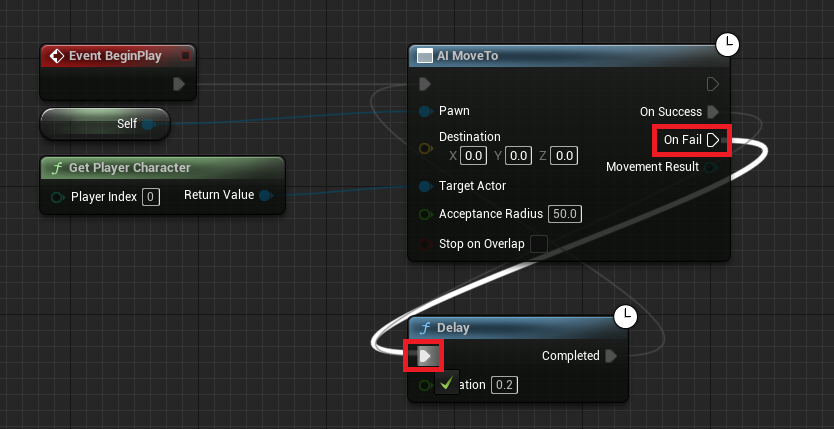
A crucial aspect of reliable AI behavior, particularly for persistent tasks like following, is robust error handling. Game environments are dynamic; players move rapidly, obstacles may appear, or the player might momentarily step outside a NavMesh-defined area, causing the AI MoveTo operation to fail. Without proper handling, the AI might simply stop, breaking immersion. The guide addresses this by connecting the "On Fail" execution pin of the AI MoveTo node directly to a "Delay" node. The "Delay" node, after a short configurable duration (e.g., 0.5 seconds), then re-executes the AI MoveTo command.
This loop is vital: if the AI successfully reaches the player or its path, the "On Success" pin would typically trigger further actions (e.g., attacking, interacting). However, if the movement fails for any reason—be it an unreachable target, a blocked path, or a temporary NavMesh issue—the "On Fail" branch activates, prompting the AI to pause briefly and then attempt the movement again. This continuous retry mechanism ensures that the AI will relentlessly track the player, adapting to changes in the environment and player position, regardless of momentary pathfinding glitches. This proactive error management elevates the basic follow function into a robust, always-on pursuit system.
5. Finalizing Changes: Compilation and Saving:
As with any modification in Unreal Engine’s Blueprint system, the final step involves compiling and saving the Blueprint editor. This action processes the visual script into executable code, applying all changes to the game logic. Without this, the newly configured AI behavior will not be present during gameplay.
Use Cases and Broader Implications
This seemingly simple Blueprint setup has profound implications for game design, enabling a vast array of AI behaviors across various genres:
- Hostile AI: This is the most intuitive application. Enemies in survival horror games, action-adventure titles, or first-person shooters can actively chase the player, creating tension and dynamic combat encounters. Further layers of AI can be built on this foundation, such as attack patterns, evasive maneuvers, or calling for reinforcements once the AI has successfully closed the distance.
- Companion AI: Friendly NPCs, whether quest-givers, sidekicks, or animal companions, can follow the player character. This is essential for escort missions, party-based RPGs, or simply providing a sense of companionship in open-world games. Advanced companion AI might include formation following, context-sensitive interactions, or assisting in combat.
- Dynamic Quest Givers: NPCs that lead players to specific locations or provide guidance can use this system to navigate the player through a level, enhancing narrative progression.
- Environmental AI: Certain non-hostile creatures or objects could "follow" the player’s proximity, reacting to their presence in a game world to create more dynamic and believable ecosystems.
The ease of implementing this foundational AI mechanic democratizes game development. Small indie studios and solo developers can quickly prototype and integrate sophisticated character behaviors without needing dedicated AI programmers. This accelerates iteration times and allows creators to focus more on unique gameplay mechanics and narrative design, rather than being bogged down by complex code.
Industry Perspectives and Future Outlook
Industry analysts frequently point to the increasing sophistication of game engines as a key driver for innovation in interactive entertainment. Tools like Unreal Engine’s Blueprints are often cited as pivotal in lowering the barrier to entry, fostering a more diverse and vibrant developer ecosystem. Developers at Epic Games have consistently articulated their vision for accessible yet powerful tools, noting that visual scripting significantly empowers a broader range of creators.
The demand for more intelligent and believable AI in games is only set to grow. As hardware capabilities continue to advance, players expect increasingly complex and reactive virtual worlds. While the basic "follow" mechanic remains fundamental, future advancements in AI integration within engines like Unreal Engine 5 are likely to include more sophisticated machine learning algorithms for emergent behaviors, procedural generation of AI logic, and enhanced integration with large-scale simulations. These developments promise even richer, more unpredictable, and deeply immersive player experiences, building directly upon the accessible foundations laid by current Blueprint systems.
Conclusion
The ability to implement AI characters that intelligently follow the player character in Unreal Engine 5 with just a few Blueprint nodes is a testament to the engine’s robust design and Epic Games’ commitment to developer accessibility. This core functionality, while simple in its execution, forms the bedrock for a vast array of complex AI behaviors that define modern gaming experiences. From relentless enemies to loyal companions, the power to bring these dynamic interactions to life is now more attainable than ever, enabling creators to craft compelling and immersive virtual worlds that captivate and challenge players. This ease of implementation not only streamlines current development workflows but also paves the way for future innovations in game AI, ensuring that player experiences continue to evolve in depth and realism.
About the Author