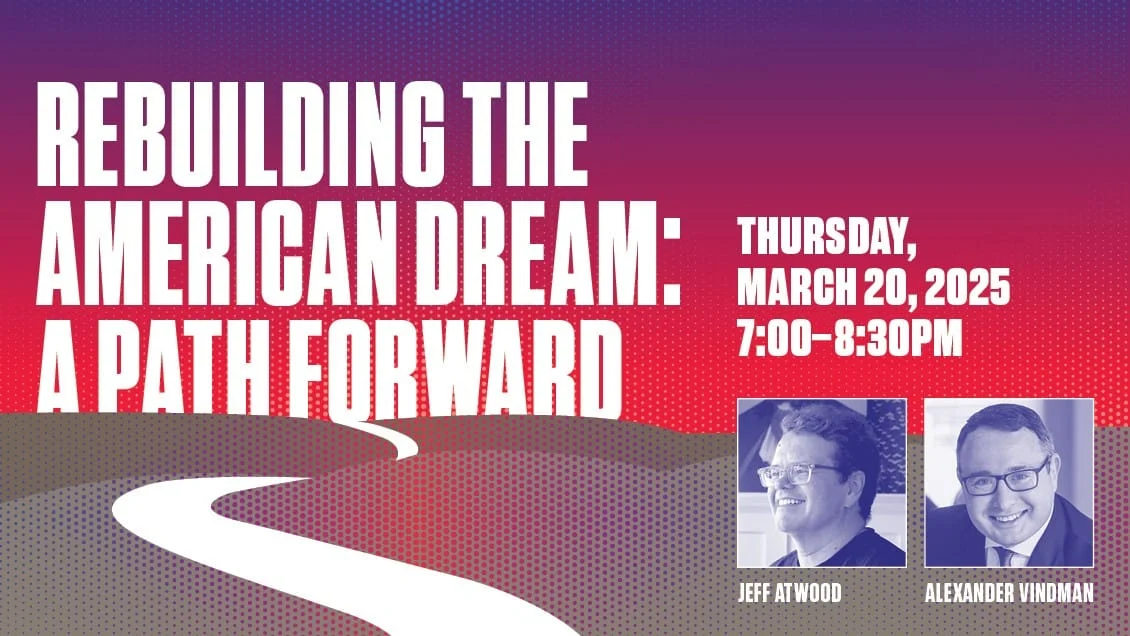
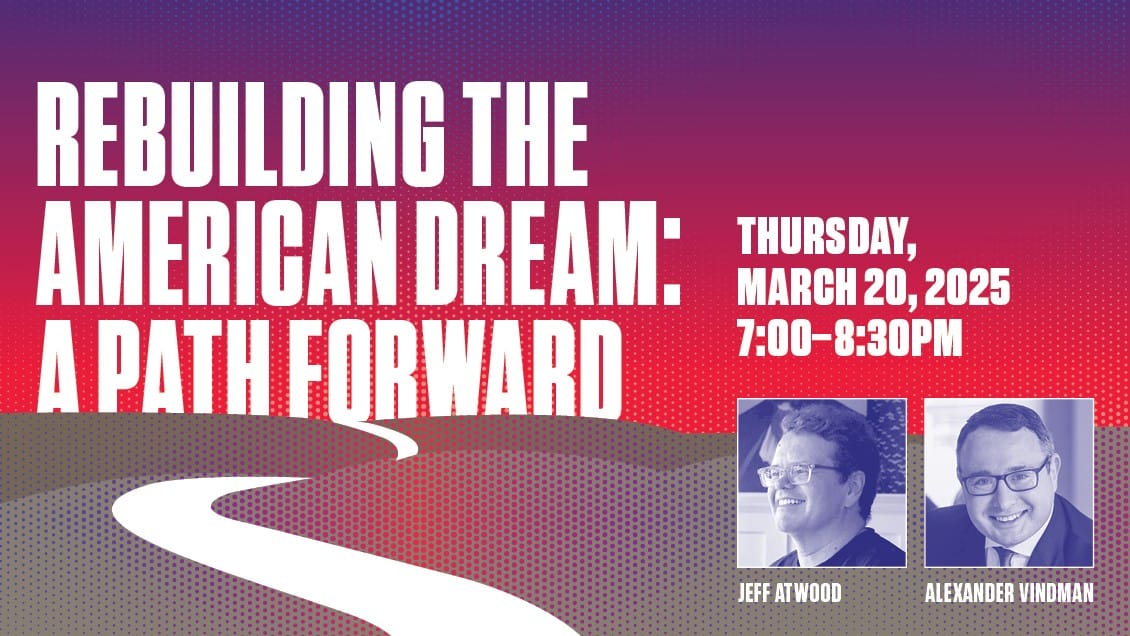
New York, NY – In a highly anticipated event that brought together disparate yet complementary perspectives, tech luminary Jeff Atwood, co-founder of Stack Overflow and Discourse, joined forces with retired U.S. Army Colonel Alexander Vindman, a pivotal figure in the defense of democratic principles, for a public dialogue at the historic Cooper Union Great Hall. The joint address, titled "Rebuilding The American Dream: A Path Forward," convened on [Insert Date – 14 days after "a few months ago," so if original post was Jan 2025, this would be spring 2025] and explored the urgent question of how to revitalize the American Dream for all citizens in an increasingly complex global and domestic landscape. The discussion transcended individual anecdotes, aiming to identify systemic pathways toward security, dignity, and opportunity, moving beyond mere individual generosity.
The Convergence of Ideals: A Unique Partnership
The collaboration between Atwood, a software developer renowned for building massive online communities, and Vindman, a decorated military officer and former National Security Council official, represented a unique synthesis of digital-age insights and traditional civic duty. Their shared platform at Cooper Union underscored a belief that the challenges facing the American ideal require multifaceted solutions, drawing from both the architecture of digital interaction and the bedrock of democratic governance. Atwood, in an earlier blog post leading up to the event, articulated the necessity of "staying gold" – a commitment to preserving the best aspects of American society, which he emphasized is an active, demanding endeavor requiring difficult conversations and a clear vision for the future. This active pursuit of ideals formed the intellectual foundation for their joint presentation.
The event, streamed live via the Cooper Union Great Hall YouTube channel, attracted significant interest from policymakers, community organizers, tech enthusiasts, and engaged citizens eager to hear a fresh perspective on national challenges. It positioned itself as more than just a lecture; it was framed as a deliberate effort to foster a national dialogue on actionable strategies for structural change.
The Cooper Union Great Hall: A Stage for National Discourse
The choice of the Cooper Union Great Hall for this significant discussion was deeply symbolic. Located in New York City’s East Village, the Great Hall has served as a crucible for American ideas and a platform for some of the nation’s most impactful speeches since its opening in 1859. It was here that Abraham Lincoln delivered his pivotal "Might Makes Right" speech in 1860, a powerful address that significantly bolstered his presidential campaign and articulated a moral stance against slavery. Over the decades, the hall has hosted luminaries such as Frederick Douglass, Susan B. Anthony, Mark Twain, and multiple U.S. presidents, becoming synonymous with free inquiry, public discourse, and the pursuit of social progress. Its legacy as a venue for addressing pressing national issues provided a fitting backdrop for Atwood and Vindman’s exploration of the American Dream’s contemporary relevance. The institution itself, founded by industrialist Peter Cooper, was established on the principle of providing free education and public lectures, embodying an early vision of opportunity and accessible knowledge.
Defining the American Dream in the 21st Century
The core of Atwood and Vindman’s discussion centered on the evolving nature and perceived fragility of the American Dream in 2025. Traditionally defined as the belief that anyone, regardless of their background, can achieve success and prosperity through hard work, the concept has faced increasing scrutiny and skepticism. Data from various sources highlight growing concerns about economic mobility and equity. A 2022 Pew Research Center study, for instance, indicated that only about half of Americans believe the American Dream is attainable for most people, a significant decline from previous decades.
Economic inequality continues to be a major impediment. According to the Federal Reserve, the wealthiest 10% of American households held 68% of the nation’s wealth in 2023, while the bottom 50% held just 2.5%. This disparity raises questions about whether "hard work" alone is sufficient in an economic system where structural advantages and disadvantages play a significant role. Furthermore, access to quality education, affordable healthcare, and stable housing—key components of upward mobility—remain unevenly distributed. The speakers acknowledged these systemic barriers, asserting that the dream’s promise feels more like a question mark than an assured pathway for many. Their joint inquiry sought to move beyond lamenting these challenges to actively proposing constructive solutions.
Colonel Alexander Vindman: Defender of Democratic Principles
Colonel Alexander Vindman’s journey to the Cooper Union stage is a testament to his unwavering commitment to American ideals. Born in the Soviet Union and immigrating to the United States as a child, his lived experience profoundly shaped his understanding of freedom and democracy. Growing up in Brooklyn, he enlisted in the U.S. Army, embarking on a distinguished 21-year career. His service included deployments to Iraq, where he earned a Purple Heart for injuries sustained, and culminated in his role as Director for European Affairs on the National Security Council.
Vindman rose to national prominence during the 2019 impeachment inquiry of then-President Donald Trump. As a key witness, he testified about concerns regarding a phone call between President Trump and Ukrainian President Volodymyr Zelenskyy, in which Trump appeared to pressure Ukraine to investigate a political rival. Vindman’s testimony, given under oath and in defiance of immense political pressure, embodied a profound act of civic duty. He stated that he "had to choose between looking the other way or upholding the values he swore to protect," a choice that ultimately cost him his career in the White House and led to his early retirement from the military. His actions were widely lauded by proponents of democratic integrity and civilian control of the military, who saw him as a courageous figure who prioritized constitutional principles over personal gain. His presence at Cooper Union brought a powerful, real-world example of the sacrifices sometimes required to uphold the American Dream’s foundational promises of justice and rule of law.
Jeff Atwood: Architect of Digital Democracies
Complementing Vindman’s experience in national security and traditional governance, Jeff Atwood offered insights gleaned from his pioneering work in creating and scaling online communities. Atwood is best known as the co-founder of Stack Overflow, a widely used question-and-answer website for programmers, and Discourse, an open-source discussion platform. These platforms, at their core, are exercises in digital self-governance, requiring careful design to foster constructive interaction, maintain fairness, and encourage participation among millions of users globally.
Atwood’s work involves navigating the complexities of human behavior in digital spaces, establishing "clear expectations, fair systems, strong boundaries, and a shared sense of purpose." He argued that these principles are not unique to online forums but are universally applicable to any successful community, including nations. His perspective highlighted how the mechanisms for building robust, equitable digital environments – moderation, reputation systems, transparent rules, and collective decision-making – offer valuable lessons for strengthening civic engagement and democratic processes in the physical world. He has spent years analyzing how people interact online, how communities thrive or fail, and how to design spaces that produce "artifacts for the common good," akin to public parks that everyone can enjoy. This experience, he contended, is surprisingly relevant to the future of democracy itself.
From Digital Forums to National Foundations: A Shared Vision
The core synergy of Atwood and Vindman’s presentation lay in their shared conviction that the fight for the American Dream is not passive but an active, ongoing effort that requires both principled stands and thoughtful systemic design. Vindman’s emphasis on the integrity of institutions and the courage to defend constitutional norms found a parallel in Atwood’s focus on building resilient, fair systems from the ground up, whether in software or society.
They explored how the principles of democratic participation and accountability, often discussed in grand political terms, could be observed and even optimized in the micro-level interactions of online communities. Atwood suggested that the challenges of managing disinformation, fostering respectful debate, and ensuring equitable participation in digital spaces mirror, in many ways, the broader challenges facing national democracies. Vindman, in turn, provided the crucial perspective of what happens when these systems are challenged at the highest levels of power, underscoring the vital importance of individual integrity within institutional frameworks. Their dialogue illuminated the idea that "rebuilding the American Dream" isn’t solely about grand policy shifts but also about cultivating a culture of active citizenship and designing systems that inherently promote fairness and opportunity.
Beyond Individual Acts: Towards Systemic Change
A central tenet of their joint message was the need to transcend individual generosity and focus on creating structural change. While individual acts of kindness and philanthropy are valuable, they argued, they are insufficient to address the deep-seated inequalities that challenge the American Dream. The conversation delved into specific areas where systemic interventions could yield significant results, though detailed policy prescriptions were not the primary focus. Instead, they emphasized the approach to problem-solving: identifying foundational issues and designing durable systems that generate "security, dignity, and possibility for all."
This involves rethinking access to education, reforming economic policies to reduce wealth disparities, strengthening democratic institutions against internal and external threats, and fostering a renewed sense of shared purpose within diverse communities. Atwood alluded to a long-term structural change that he had been working to "figure out," suggesting that their discussion would move beyond abstract ideals to concrete frameworks for action. The objective was to lay the groundwork for a future where the American Dream is not a privilege for a few, but an attainable reality for every citizen, guaranteed by robust, equitable systems rather than reliant on chance or individual benevolence.
Public Reception and Future Implications
The event garnered positive reactions from attendees and observers, many of whom appreciated the depth and honesty of the conversation. Early feedback from social media indicated that the audience found the juxtaposition of Atwood’s technological insights with Vindman’s geopolitical and ethical experiences particularly compelling. "It’s rare to hear such a nuanced discussion about democracy that connects the dots between our digital lives and our civic responsibilities," remarked one online viewer. Another attendee praised the speakers for their "candid assessment of challenges without resorting to cynicism, offering instead a path for collective action."
The implications of such a high-profile dialogue extend beyond the Great Hall. By bringing together voices from technology and national security, Atwood and Vindman have contributed to a growing national conversation about the need for systemic reform and active civic engagement. Their collaboration serves as a model for interdisciplinary approaches to complex societal problems, suggesting that solutions often lie at the intersection of diverse fields of expertise. The event is likely to inspire further discussions in academic circles, policy think tanks, and community organizations, encouraging a broader public re-evaluation of how to truly make the American Dream accessible and sustainable for future generations. The call to "imagine what we could do if we all worked together" resonated as a powerful closing statement, urging a collective embrace of responsibility for the nation’s future.
About the Author