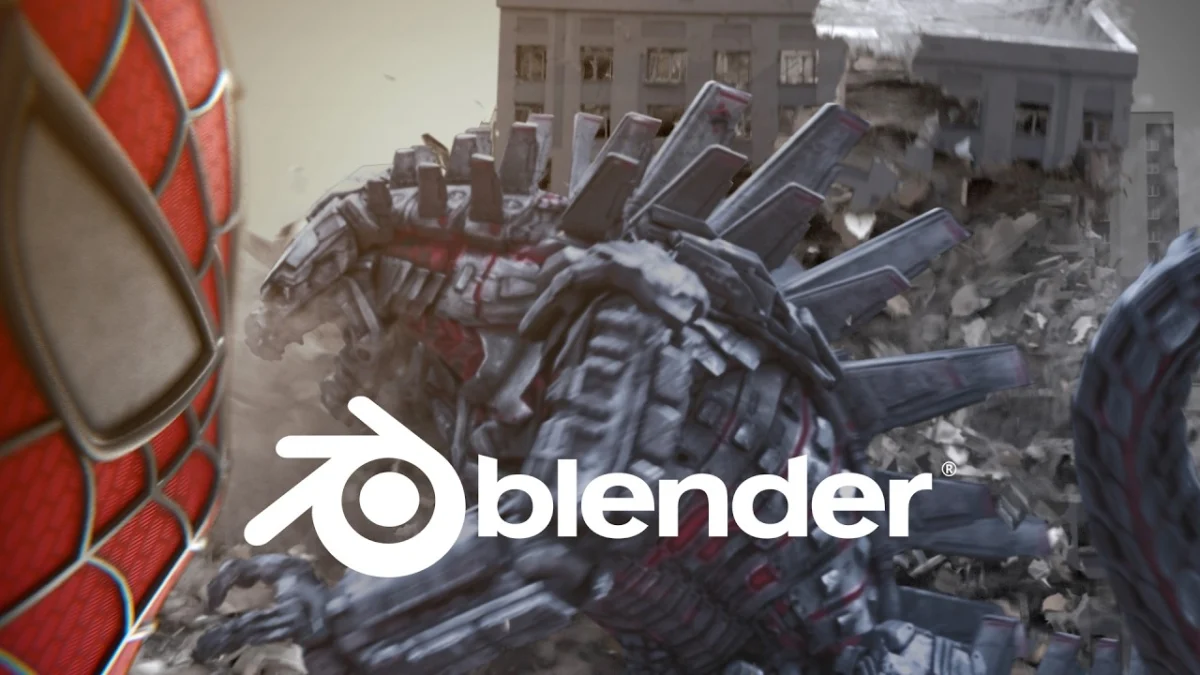
In a significant demonstration of the evolving capabilities of independent digital artists, creator Raffo VFX has unveiled a visually stunning short film, "Spiderman VS MechaGodzilla," a project that meticulously blends Blender’s 3D animation prowess with DaVinci Resolve’s post-production power. The project’s standout feature is the extensive integration of motion capture technology, specifically utilizing a Rokoko motion capture suit, a testament to the increasing accessibility and effectiveness of professional-grade tools for individual creators. This endeavor not only showcases impressive artistic execution but also highlights a growing trend in the VFX industry where sophisticated techniques are no longer the exclusive domain of large studios.
The Genesis of a Digital Spectacle
Raffo VFX’s journey into creating "Spiderman VS MechaGodzilla" began with a clear ambition: to push the boundaries of what a single artist could achieve in terms of visual storytelling and technical execution. The core of this ambition was fueled by the acquisition of a Rokoko motion capture suit. This acquisition marked a pivotal moment, allowing for a more nuanced and realistic portrayal of character movement, a crucial element in bringing iconic characters like Spiderman and the formidable MechaGodzilla to life. The decision to forgo AI in the production process, as explicitly stated by the creator, underscores a commitment to traditional animation and VFX workflows, emphasizing the artist’s direct creative input and control. This approach, while more labor-intensive, often results in a more authentic and artistically driven final product.
The development timeline, though not explicitly detailed by Raffo VFX, can be inferred to span a considerable period, given the complexity of character rigging, animation, scene composition, lighting, rendering, and the intricate visual effects required for such a cinematic confrontation. The integration of motion capture data necessitates careful cleanup and retargeting, a process that demands both technical skill and artistic sensibility. Following the animation and VFX work, the final stages would have involved editing, color grading, and sound design within DaVinci Resolve, a comprehensive post-production suite widely respected for its professional capabilities. The fact that no AI was used in the final output suggests a dedication to handcrafted artistry, focusing on the subtle nuances of performance and the meticulous construction of each visual element.
Leveraging Accessible Technology for Professional Results
The choice of a Rokoko motion capture suit is particularly noteworthy. Rokoko is a company that has been instrumental in democratizing motion capture technology. Their suits, like the Smartsuit Pro, are designed to be relatively affordable and user-friendly compared to traditional, studio-based systems that can cost tens of thousands of dollars and require specialized setups. These suits utilize inertial sensors to track the wearer’s body movements in real-time, capturing data that can then be applied to 3D character models within animation software. For an independent creator like Raffo VFX, this accessibility is a game-changer, enabling the incorporation of highly realistic character performances into projects that would otherwise be unattainable.
Blender, the open-source 3D creation suite, served as the primary engine for this project. Its robust features, encompassing modeling, sculpting, texturing, rigging, animation, simulation, rendering, and compositing, provide a complete pipeline for digital artists. The continuous development and active community surrounding Blender have made it a formidable competitor to proprietary software, offering professional-grade tools at no cost. The film’s success in utilizing Blender for such ambitious VFX work further solidifies its position as a go-to platform for independent animators and VFX artists worldwide. Data from the Blender Foundation indicates a consistent year-over-year growth in its user base, with millions of active users globally, many of whom are engaged in professional or semi-professional projects.
DaVinci Resolve, developed by Blackmagic Design, complements Blender by offering a powerful and integrated solution for editing, color correction, visual effects (Fusion), and audio post-production (Fairlight). Its adoption by Raffo VFX for the final polish of "Spiderman VS MechaGodzilla" signifies the software’s versatility and its ability to handle complex post-production workflows. Blackmagic Design’s commitment to providing professional tools with a relatively accessible pricing model, including a highly capable free version, has also contributed to its widespread use among independent filmmakers and studios.
The "Behind the Scenes" Narrative: An Insight into the Creative Process
The accompanying "behind the scenes" video, which serves as the core of the announcement, is more than just a supplementary piece of content; it is a crucial element in understanding the effort and skill involved. By offering a glimpse into the production pipeline, Raffo VFX provides valuable context for the final film. This transparency allows viewers to appreciate the technical challenges overcome, the artistic decisions made, and the sheer dedication required to bring such a vision to fruition. The creator’s statement, "A lot of VFX work, a lot of fun!", encapsulates the passion that drives independent creators in the digital arts. This enthusiasm, coupled with the demanding nature of the work, is often what differentiates professional-level independent productions from hobbyist projects.

The behind-the-scenes footage likely details stages such as:
- Motion Capture Data Integration: Showing how the captured movements were applied to the Spiderman and MechaGodzilla 3D models. This would involve rigging, retargeting, and potential manual adjustments to ensure fluidity and accuracy.
- 3D Modeling and Texturing: Illustrating the creation of the character models, environments, and props. This stage requires meticulous attention to detail to achieve a believable aesthetic.
- Animation and Keyframing: While motion capture provides a foundation, keyframe animation is often used for specific movements, dynamic actions, or to enhance the captured data.
- VFX Simulation: Demonstrating the creation of effects like explosions, energy blasts, debris, and environmental interactions, which are critical for a battle scene of this magnitude.
- Lighting and Rendering: Revealing the process of setting up lights to create mood and atmosphere, followed by the computationally intensive rendering phase.
- Compositing and Editing: Showing how different visual elements are layered together and how the final sequence is assembled and refined in DaVinci Resolve.
The emphasis on "no AI" is a significant point in the current landscape of digital content creation. While AI tools are rapidly advancing and offer potential for speeding up certain aspects of production, their use can sometimes raise questions about artistic authorship and originality. Raffo VFX’s deliberate choice to rely on manual animation and VFX techniques underscores a commitment to traditional craftsmanship and a desire to showcase their direct creative abilities. This decision may resonate with a segment of the audience that values human artistry and the tangible effort behind visual creations.
Broader Implications for the VFX Industry and Independent Creators
The success of projects like "Spiderman VS MechaGodzilla" has profound implications for the broader VFX industry and the burgeoning community of independent digital artists. Firstly, it demonstrates that high-quality, cinematic visual effects are no longer confined to the budgets and resources of major Hollywood studios. The combination of accessible software like Blender and DaVinci Resolve, coupled with increasingly affordable professional hardware like Rokoko motion capture suits, is leveling the playing field.
Secondly, it highlights the power of online platforms and communities. Websites like BlenderNation, which featured this project, serve as vital hubs for sharing work, knowledge, and inspiration. The ability for creators to reach a global audience directly through platforms like YouTube means that talent can be discovered and appreciated regardless of geographical location or traditional industry gatekeepers. This fosters a more diverse and dynamic creative ecosystem.
Thirdly, such projects contribute to the ongoing discourse about the future of storytelling. As more independent creators gain access to sophisticated tools, we can expect to see an influx of original, visually compelling narratives that might not otherwise find funding or production opportunities within mainstream channels. This democratization of content creation has the potential to enrich the media landscape with a wider variety of voices and perspectives.
Finally, the technical achievements in "Spiderman VS MechaGodzilla" serve as an educational resource for aspiring artists. The "behind the scenes" aspect is invaluable for those looking to learn and replicate similar workflows. It provides concrete examples of how complex visual effects can be achieved with dedication and the right tools, inspiring the next generation of digital artists.
While specific data on the financial return or audience reach of Raffo VFX’s film is not publicly available, the viral nature of such impressive visual content on platforms like YouTube and art-focused websites suggests a significant organic reach. The number of views, likes, shares, and positive comments on the "Spiderman VS MechaGodzilla" video and its associated behind-the-scenes content would serve as a qualitative indicator of its impact and success within the digital creation community. Projects that garner substantial attention often lead to further opportunities for the creator, including freelance work, collaborations, or even the development of their own educational content.
In conclusion, Raffo VFX’s "Spiderman VS MechaGodzilla" is more than just an impressive fan film; it is a landmark achievement in independent digital filmmaking. It showcases the power of accessible technology, the dedication of a passionate artist, and the exciting future of visual storytelling. By meticulously crafting a narrative with a blend of traditional animation techniques and cutting-edge motion capture, Raffo VFX has not only delivered a thrilling cinematic experience but has also provided a compelling blueprint for what is possible in the hands of a talented and determined independent creator.
About the Author