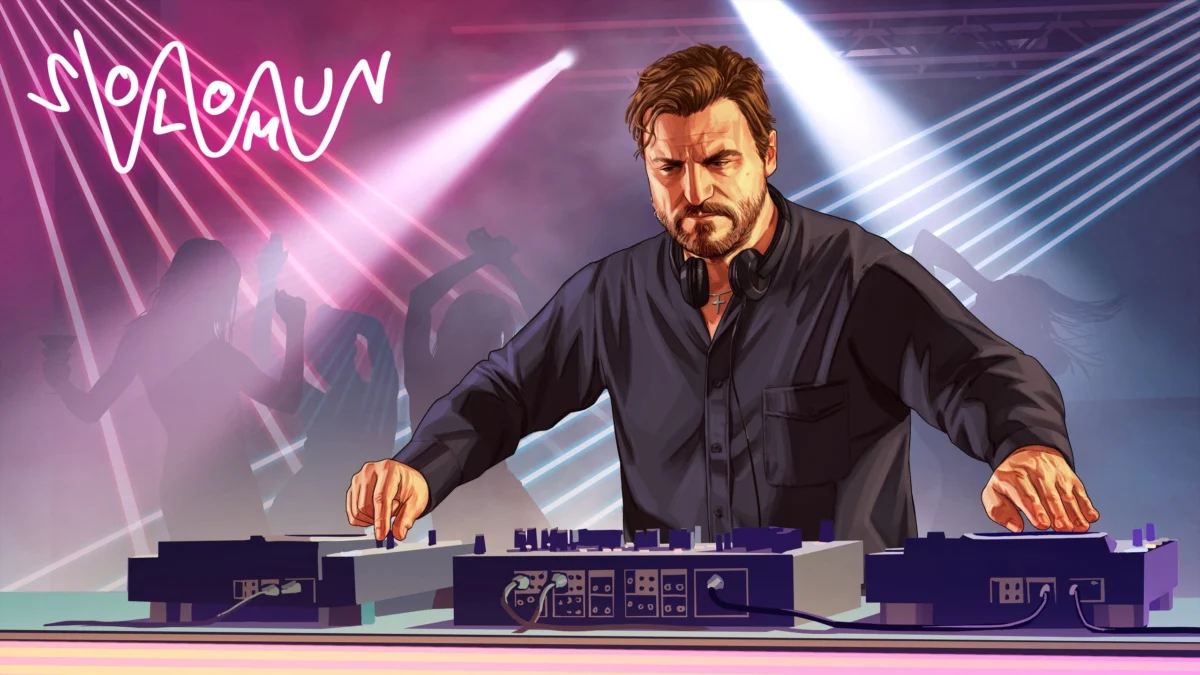
Twenty-five years ago, the groundbreaking futuristic racing simulator Wipeout on PlayStation’s PAL version redefined the relationship between video games and music. In 1995, developers Psygnosis and PlayStation ingeniously licensed a curated selection of the UK’s most electrifying electronica acts, including Leftfield, Orbital, and The Chemical Brothers, to soundtrack the game. This audacious move transformed Wipeout into a cultural phenomenon, a digital playground for a generation immersed in the vibrant pulse of nightclub culture. The hard-hitting beats and pulsating synths were not merely background noise; they were an integral part of the experience, perfectly complementing the high-speed, neon-drenched races through abstract alien landscapes. The critical acclaim at the time lauded the soundtrack as a defining characteristic of the game’s unique style, leading to separate CD and vinyl releases. This trend continued with subsequent Wipeout installments, featuring artists like The Prodigy, Paul Van Dyk, and Sasha, cementing the series’ enduring association with the mid-’90s British dance music explosion. While Wipeout wasn’t the first game to feature licensed tracks, it unequivocally set a new gold standard, demonstrating the profound synergy achievable when music and gameplay are meticulously aligned.
This innovative approach, once a creative gamble, has blossomed into a sophisticated and lucrative industry in its own right. Today, dedicated teams comprising audio directors, music supervisors, and A&R (Artists and Repertoire) experts are integral to game development, tasked with the crucial responsibility of selecting and integrating music. The function of this music varies widely depending on the game. It might manifest as curated playlists and in-game radio stations, akin to those found in monumental titles like Grand Theft Auto and Watch Dogs, or it can be meticulously broken down and re-edited for promotional materials such as launch trailers.
The impact of this evolution has been amplified by recent global events. The COVID-19 pandemic, which brought a near-complete halt to live music performances, has spurred artists and their management teams to seek alternative avenues for reaching new audiences. Video games have emerged as a prime platform, offering unparalleled opportunities for exposure and fan engagement. Managers, agents, and record labels are actively exploring these new frontiers, recognizing the immense potential for music synchronization – the process of integrating music with visual media. However, navigating this complex landscape and securing a coveted spot on a game’s soundtrack often involves intricate negotiations and behind-the-scenes discussions, making it a challenging endeavor for many aspiring artists.
To demystify this process, industry experts from both the gaming and music sectors have shared invaluable insights and practical advice for bands and artists aiming to get their music featured in video games.
The Architects of Game Audio: Who Decides What We Hear?
In larger game development studios, dedicated in-house teams of music supervisors and A&R professionals collaborate closely with record labels to identify music that aligns with their artistic vision. For studios without these internal resources, external music consultancy firms, such as Feel For Music, are frequently engaged to assist with music discovery and the licensing of tracks, ensuring that the chosen music perfectly meets the project’s specific requirements. Ben Sumner, director at Feel For Music, highlights the immense variability in these briefs, which are dictated by the game’s genre, target audience, and the creative team’s overarching goals.
"Most people appreciate music, but some individuals are deeply passionate about it from the outset, and this often influences when we are brought into the project," Sumner explains. "Larger-scale games typically involve audio directors, brand directors, and game directors, all of whom possess strong convictions about the desired sonic identity of the game. Sometimes our role is to refine an existing soundscape. Other times, the team may have a less defined vision, requiring more extensive guidance."
Sumner emphasizes the critical role of objectivity in his work. "Music taste is inherently subjective," he states. "A significant part of our function is to introduce objectivity, demonstrating how specific music resonates with particular demographics, how it complements the gameplay, and the cultural cachet it brings to the overall brand."
Alex Hackford, Head of A&R at Sony Interactive Entertainment America, observes that the exponential growth of the gaming industry has significantly eased the process of articulating the value of these musical collaborations to record labels, publishers, and artist managers. "The increased accessibility for direct conversations with labels and publishers about the tangible value of video game involvement has lowered the barrier to entry. This is largely due to the visible impact these collaborations have had," Hackford notes. "Consequently, securing buy-in from our partners for these projects is becoming considerably more straightforward."
He further elaborates on successful integrations: "For Marvel’s Spider-Man: Miles Morales, we commissioned four original tracks that were simultaneously released across digital service providers (DSPs), within the game, and as a physical release. We produced music videos for each track, all of which were gameplay-driven. We employed a similar strategy in our partnership with RMCA for Death Stranding. I believe I speak for many when I say we are actively seeking to expand these types of initiatives."
Unlocking the Gates: Getting Your Music Discovered
The universal aspiration for any artist is to have their music heard by as many people as possible. However, as Duncan Smith, Head of Music at Sony Interactive Entertainment Europe, points out, there is no singular "magic formula" or shortcut to getting music featured in a video game. "Every game operates under different criteria, and the music requirements are contingent on the game’s narrative and thematic intentions. A game might benefit from a contemporary tracklist featuring established artists, or it might be enhanced by exploring more obscure bands that can deepen the player’s immersion," Smith explains.
With an almost infinite library of music available to music supervisors, here are several strategic approaches to enhance an artist’s chances of being discovered:
-
Maximize Accessibility: Music supervisors actively seek out new talent. Having your music available on all major streaming platforms – Spotify, Apple Music, Deezer, Google Play, and YouTube – is paramount for discoverability. Stephen Root, Vice President of Development Creative Services at Codemasters, relies heavily on Spotify: "I use Spotify extensively because it’s user-friendly and possesses an excellent interface. When we were developing the soundtrack for Dirt 5, Spotify was an efficient tool for curating playlists and sharing them with key stakeholders within the company."
-
Embrace the Unexpected: Broad availability can lead to serendipitous opportunities. Jim Hodge, vocalist for the metal band Mastiff, recounts an unsolicited approach from CD Projekt Red that resulted in their track "Acid Breather" being included in the highly anticipated Cyberpunk 2077. "We initially thought it was a prank until we engaged in proper communication," Hodge admits. "They were interested in an unreleased track, and we had literally just finished recording it the month prior. At that time, we were not under contract, which significantly simplified the release process. Having a track featured in one of the most significant game releases ever is truly astonishing, and hearing our music in the game still feels surreal."
-
Leverage Record Label Support: Being signed to a major record label often means having a dedicated team working on music placement. Stephen Root frequently attends specialized listening sessions hosted by record labels, providing him with early access to unreleased music and insights into artists’ future plans. "I spend a considerable amount of my time focusing on emerging artists," Root states. "I strive to understand which artists these labels are investing in and their rationale for believing in their future success."
-
Unsigned Artists Have Opportunities: Despite the advantages of major label backing, opportunities abound for unsigned artists and those on independent labels. "I’m always open to giving new talent a chance," Root continues. "I have a strong affinity for up-and-coming artists, so I encourage labels and managers to submit all their new material for my consideration. I’m happy to sift through it."

Sony’s Duncan Smith reassures artists with smaller fan bases: "One of the aspects I most enjoy about this role is that, more often than not, we are searching for music that enhances the overall gaming experience or a specific scene. The artist’s track count, stream numbers, or view metrics are frequently secondary. The primary objective is to discover music that elevates the experience, makes it compelling, and fosters a connection with the player. Therefore, major label affiliation is not a prerequisite."
Even artists not directly affiliated with Sony Music can find their way onto PlayStation titles. Tom Mackay, President of Premium Content A&R at Sony, clarifies, "Ultimately, great music transcends labels. Is there a strategic goal to prioritize Sony Music artists in our projects? Naturally, there is. However, would it be short-sighted and potentially detrimental to a game or project to consider only Sony artists? Absolutely. It’s a delicate balance. If an exceptional record surfaces that is a perfect fit for the game and resonates with everyone involved, we would never impede its inclusion."
Cultivating a Unique Sound: The Power of Individuality
Making a memorable first impression is paramount, and possessing a distinct musical identity can be a significant advantage. Joe Henson, from the music composition duo The Flight, emphasizes the importance for artists to develop their unique voice. "Don’t merely emulate what others are doing, as they already occupy that space," Henson advises. "Resist the urge to exclusively create epic orchestral scores, as this is a common approach. If you have access to a unique instrument, leverage it to its full potential."
Duncan Smith echoes this sentiment, believing that artists with a one-of-a-kind sound are more likely to leave a lasting impression. "Develop your own distinctive sound and cultivate a strong artistic identity. Avoid chasing fleeting trends in gaming or music synchronization," Smith recommends. "Focus on the fundamental aspects of building your unique identity, and then proactively seek to connect with individuals like myself and Alex. Stay informed about our current projects, endeavor to build relationships, and your efforts will be recognized."
Smith elaborates, "If you possess a strong identity, we might revisit your work a year or so later if a project arises that specifically requires your style – whether that’s industrial, drum ‘n’ bass, folk, or any other genre. Stay true to your artistic vision and infuse it with passion."
Navigating the Pitch: Strategic Approaches for Success
The ultimate goal is to ensure your music reaches the widest possible audience of decision-makers, and effectively getting your emails opened by the right people can be a significant challenge. Here are key strategies to enhance your chances:
-
Targeted Submissions: Many video games are meticulously branded to align with specific musical styles or genres. For instance, the NBA 2K series is renowned for its embrace of rap and hip-hop, while the soundtrack of Life is Strange predominantly features indie and folk artists. Instead of broadly distributing your music to numerous contacts, meticulously research which titles or franchises would be the most compatible match for your sound.
Tom Mackay of Sony stresses the importance of a cohesive creative synergy: "We aim for a seamless creative bond between the artist and their representation – their sound, their visual aesthetic, and their overall vibe – and how that integrates with the game itself. We dedicate considerable time to collaborating with directors and game developers to fully comprehend their vision. Subsequently, we meticulously research bands globally to identify those that will align with this vision."

-
Proactive Research: Once you’ve identified suitable game titles, pinpoint the most relevant contacts. Ben Sumner notes that this level of due diligence is often overlooked: "Many individuals are unwilling to invest the effort in this research, so leverage this to your advantage." You can typically identify key individuals by examining a game’s credits for audio and music department personnel, or by utilizing search engines like Google and LinkedIn to find music supervisors and audio directors. If a launch trailer or promotional video has impressed you with its musical selection, investigate the video description on YouTube for credited individuals.
-
Leverage Management and Agents: If you are unsure where to begin, consider enlisting professional assistance. Stephen Root encourages artists to have open discussions with their management or agents about their interest in video games, ensuring they are considered for relevant opportunities. "I would advise any artist, whether they are on the cusp of being signed or have recently signed, to communicate their enthusiasm for gaming to their management," Root suggests. "Task them with identifying and approaching companies to explore potential placements for your music. This is a highly beneficial step."
For managers or labels lacking experience in this area, hiring a sync representative – a professional dedicated to identifying commercial opportunities and connecting clients’ music with the appropriate industry contacts – is another avenue recommended by Duncan Smith. "It’s crucial to make an effort to understand our current projects, and this is where third-party sync representatives can be invaluable," Smith asserts. "It’s particularly challenging to stay abreast of music supervisors’ ongoing work and cultivate those relationships. If you lack a label or publisher with established connections to music supervisors, seek out a reputable sync representative who can facilitate these introductions."
-
Tailored Pitches: Alex Hackford emphasizes the importance of personalizing formal pitches. "When submitting a formal proposal, it is essential to know precisely who you are pitching to and to reference games that they have directly worked on, rather than making broad references to cross-platform products that may not be as relevant to their specific contributions."
Duncan Smith concurs: "Cultivating a relationship and making a genuine effort will always stand out, especially when compared to the deluge of emails we receive, often addressed to dozens of supervisors simultaneously, sent without any attempt to ascertain our current projects."
Feel For Music, a busy music consultancy, receives an overwhelming 200 to 250 emails daily from bands, artists, labels, and publishers seeking game placements. Ben Sumner acknowledges the sheer volume: "While it might be challenging for us to review every submission, persistence, focus, and a clear understanding of where your music fits are excellent starting points. We typically give most incoming inquiries a chance. If an email is missed, a polite follow-up ensures it will be reviewed." Sumner cites Sufjan Stevens’ manager’s persistent yet focused approach as instrumental in securing his music for Life is Strange: The Amazing Adventures of Captain Spirit.
-
Format and Accessibility: Ensure your music is available in a variety of file formats. For trailer submissions, providing isolated instrumental and vocal tracks (stems) alongside complete stereo files is essential. Stems are crucial for editors needing to rework music for trailers or interactive in-game elements. "Having your music in the correct formats is incredibly important," Sumner explains. "Do you have an instrumental version? Do you have the vocals? We will always require stems if we intend to rework the music for a trailer."
Furthermore, consider re-arranging your music into structures more amenable to in-game placement or advertising. Sumner suggests: "For trailers, instead of a typical verse-chorus structure, consider a version that features an intro, a middle section, and an outro, which is more aligned with how trailer music is typically constructed."

-
Understanding Project Timelines: The games industry can be notoriously difficult to penetrate, especially for composers. Joe Henson of The Flight notes, "In film and television, you can often ascertain what projects are entering production and engage with individuals to learn about their progress. In gaming, you might not discover what people are working on until an initial, significant meeting. We might conclude a project with Ubisoft and have no immediate insight into their next endeavors. Work often emerges unexpectedly, and due to stringent Non-Disclosure Agreements (NDAs), video games can present considerable entry barriers."
While new intellectual properties (IPs) are challenging to access, annual franchises like FIFA and Call of Duty offer a predictable release schedule, allowing artists to align their own music release plans accordingly. Alex Hackford explains, "With many annual game releases, artists can often work backward from the release date. We typically commence work on music eight to ten months pre-release, during the pitching and active development phases for a game’s soundtrack."
Artists should also consider their own release schedules. If you have unreleased tracks, inform potential collaborators. Studios often welcome the opportunity to feature debut music from promising artists.
The Business of Sound: Meeting Briefs and Maximizing Collaborations
Licensing music involves intricate legalities. If you are signed to a label or have prior experience with one, ensure you have a clear understanding of who owns the various rights to your music. Addressing any ambiguities in ownership at the project’s inception is crucial. Hackford states, "I am currently navigating a situation where I genuinely like a track, but there are significant questions surrounding its ownership, which will likely necessitate its exclusion. This is the last outcome anyone desires when the song has already reached a certain stage of consideration."
For artists fortunate enough to have their music selected, exploring avenues for additional value creation is highly recommended. Consider how you can maximize the impact of the collaboration. Can you engage with the game’s social media platforms to amplify the launch? Never hesitate to pose these questions, as they often unlock further opportunities.
Smith advocates for this proactive approach: "I appreciate it when a manager states that the fee is negotiable, but inquires about what else can be done for their artist. DJ Shadow’s manager engaged in this dialogue when I was working on Driveclub. We ultimately incorporated his album artwork onto the in-game cars, a direct result of the manager’s proactive inquiry, which sparked further discussion with the development team. Always consider ‘what else is possible’ and explore cross-promotional opportunities."
Stephen Root highlights the benefits of active artist participation: "One of the exclusives for Dirt 5 was a band called Broken Witt Rebels. They didn’t just participate; they fully committed, even creating a music video using gameplay footage. We were thoroughly impressed by their dedication."
Any music placement requires meticulous planning, particularly when coordinating unreleased music with an upcoming game launch. Root emphasizes the importance of budget awareness from the outset. Careful budgeting for Codemasters’ off-road racer Dirt 5 enabled the team to curate a diverse soundtrack featuring debut tracks from emerging artists alongside established hits. "I assess the overall budget from the beginning and then determine how many tracks can be accommodated and how that budget can be allocated across the game," Root explains. "I categorize fees into three tiers: up-and-coming or newer artists, artists who have achieved a moderate level of success, and finally, the major artists."

Securing a spot on a video game soundtrack may not lead to immediate financial windfalls. While some video game composers benefit from additional contractual terms that grant royalties on their scores, the compensation for contributed tracks from external artists often differs. Ben Sumner notes a significant shift: "In the early days of Grand Theft Auto, royalties were offered on tracks. The artists who contributed music to those initial GTA games saw substantial benefits from those placements. Currently, it’s predominantly a fixed-rate scenario, which represents a fundamental change."
Sumner elaborates, "Royalty payments are generally a thing of the past, though exceptions exist, particularly for writers registered with certain European PROs [Performance Rights Organizations], as they have specific regulations concerning music licensing in games. I have also encountered mobile games with minimal upfront budgets that offer royalties."
Duncan Smith believes that managing expectations can lead to greater long-term financial benefits. "Maintain realistic expectations regarding a deal. Avoid fanciful notions of life-changing sums of money. It’s more about being pragmatic, being a pleasure to work with, being helpful, and providing us with all the necessary materials," Smith advises. "If we have a positive working experience with an artist, label, or publisher, we are more inclined to collaborate with them again. This fosters repeat business and enduring relationships, rather than isolated transactions."
The Enduring Impact: Benefits of Game Music Integration
The profound impact of having music featured in the right video game cannot be overstated. John Feldmann, lead singer of the punk-rock band Goldfinger, revealed in a 2020 interview that their song "Superman" became their "biggest song ever written," largely due to its inclusion in Tony Hawk’s Pro Skater. For many other bands, appearing in the series was akin to receiving a "badge of honor."
While music placements in games are now more commonplace than two decades ago, the relatively recent trend of artists debuting new music within video games allows them to instantly connect with millions of players. Hackford shares, "For Marvel’s Spider-Man: Miles Morales on the PS5, we collaborated with an independent artist named Lecrae on two original tracks. His streaming numbers saw a significant surge based solely on those two songs. The expansion in audience and reach derived from having access to a title like Spider-Man: Miles Morales is substantial."
The symbiotic relationship between the gaming and music industries is further exemplified by Hideo Kojima’s Death Stranding, which featured new music from prominent artists like Bring Me The Horizon, CHVRCHES, Major Lazer, and Khalid. Despite the uncertain landscape for musicians created by the COVID-19 pandemic, the industry’s pivot towards video games has accelerated. This is evident in GTA V Online’s December DLC update, which introduced a staggering 250 new tracks, and collaborations between artists like Katy Perry and Post Malone with The Pokémon Company.
"The gaming industry will increasingly influence how the music industry thinks, operates, and strategizes on a daily basis going forward," states Tom Mackay from Sony. "I believe the reasons for this are twofold: firstly, the demonstrable market effectiveness when these collaborations are executed successfully, and secondly, the inherent joy and excitement these partnerships bring to both artists and fans. What I can confidently assert is that what has been achieved thus far is merely scratching the surface. These gaming platforms are emerging as the new ‘water cooler’ – a central meeting point for news and discussion, particularly for millennials and younger generations."
About the Author