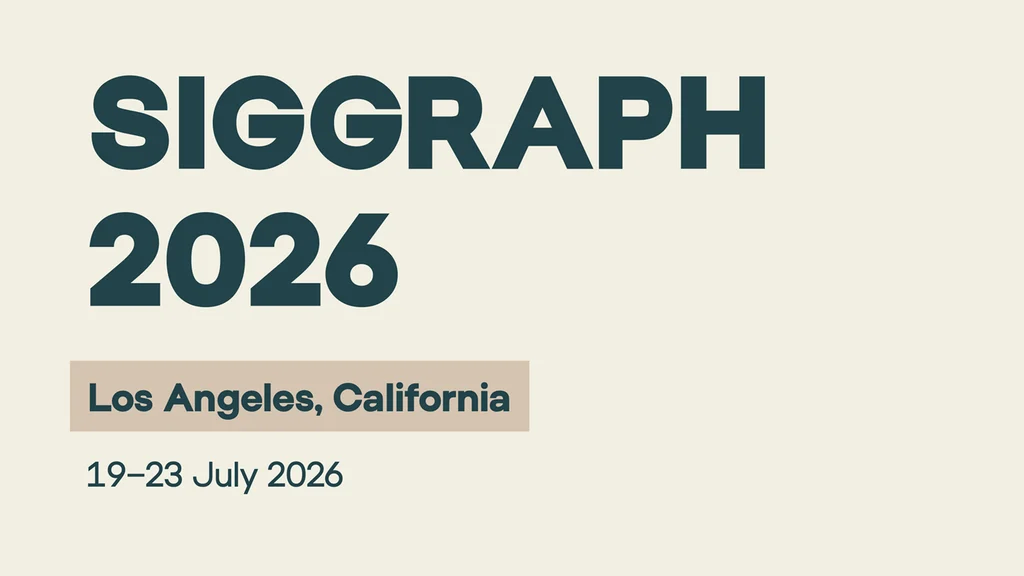
The Blender development team is set to be a prominent presence at the prestigious SIGGRAPH 2026 conference, a leading international forum for computer graphics and interactive techniques. Scheduled to run from Sunday, July 19th, to Thursday, July 23rd, 2026, the event will provide a crucial platform for Blender to connect with its vast user base, industry professionals, and researchers. Attendees can anticipate a comprehensive program featuring a dedicated community booth, insightful "Birds of a Feather" (BoF) sessions, and a significant presentation on Blender’s ongoing support for the OpenPBR (Physically Based Rendering) standard. This annual gathering at SIGGRAPH has become a cornerstone for the open-source 3D creation suite, offering a vital opportunity for collaboration, feedback, and the dissemination of cutting-edge developments.
SIGGRAPH 2026: A Nexus for Computer Graphics Advancement
SIGGRAPH, an acronym for Special Interest Group on Computer Graphics and Interactive Techniques, has a storied history dating back to 1974. Organized by the Association for Computing Machinery’s (ACM) Special Interest Group on Computer Graphics (SIGGRAPH), it serves as a critical annual convergence point for researchers, developers, artists, and educators from academia and industry. The conference is renowned for its rigorous peer-reviewed technical papers, innovative technology demonstrations, and vibrant exhibition floor. For a project like Blender, which operates at the forefront of accessible yet powerful 3D creation tools, SIGGRAPH represents an unparalleled opportunity to engage with the very community that drives its evolution and to showcase its advancements on a global stage. The conference typically attracts tens of thousands of attendees, making it a highly influential event in shaping the future of digital media, visual effects, animation, and game development.
Blender’s Multifaceted Presence at SIGGRAPH 2026
The Blender team’s participation at SIGGRAPH 2026 is designed to foster a robust exchange of ideas and information. The community booth will serve as a central hub, offering hands-on demonstrations of the latest Blender features, providing direct access to core developers for questions and feedback, and showcasing impressive user-generated content that highlights the software’s capabilities. This interactive space allows for informal networking and problem-solving, reinforcing the strong community ethos that underpins Blender’s success.
Complementing the booth, a series of "Birds of a Feather" (BoF) sessions are scheduled. These informal, attendee-driven gatherings provide a dedicated forum for specific interest groups within the Blender ecosystem to meet, discuss challenges, share workflows, and brainstorm future developments. Topics for BoFs can range from specific add-ons and scripting to advanced rendering techniques and pipeline integration. These sessions are invaluable for surfacing niche needs and fostering grassroots innovation, ensuring that Blender’s development remains responsive to the diverse requirements of its user base.
A key highlight of Blender’s presence will be a dedicated talk focusing on its support for OpenPBR. This initiative signifies Blender’s commitment to industry-standard material definition and rendering practices. OpenPBR is an open standard for defining physically based materials, aiming to ensure consistency and interoperability across different rendering engines and software packages. By actively supporting and contributing to OpenPBR, Blender is enhancing its ability to integrate seamlessly into professional production pipelines, particularly in areas like visual effects, game development, and architectural visualization where standardized material workflows are paramount. The presentation will likely delve into the technical implementation, benefits, and future roadmap for OpenPBR integration within Blender, underscoring the software’s growing maturity and its alignment with professional industry demands.
A Look Back: The Evolution of Blender at SIGGRAPH
Blender’s journey to SIGGRAPH has been intrinsically linked to its open-source transformation. Initially a proprietary software developed by Dutch animation studio NeoGeo, it was famously open-sourced in October 2002 following a successful crowdfunding campaign. This pivotal moment marked the beginning of Blender’s global community-driven development model. Since then, SIGGRAPH has served as a recurring stage for showcasing Blender’s rapid advancements. In previous years, the Blender Foundation has used the event to announce major milestones, such as the introduction of the Cycles rendering engine, significant UI overhauls, and the ongoing expansion of its feature set to rival commercial alternatives. The consistent presence of the Blender team at SIGGRAPH underscores the conference’s importance as a benchmark for technological progress in computer graphics and a vital venue for the open-source community to demonstrate its capabilities and gather support. The annual pilgrimage to SIGGRAPH allows the Blender project to measure its progress against the industry’s leading innovations and to reaffirm its commitment to providing a powerful, free, and open alternative for 3D content creation.
Data-Driven Growth and Community Impact
The growth of Blender has been nothing short of extraordinary, particularly since its open-sourcing. While precise real-time attendee numbers for the Blender community at SIGGRAPH are not publicly aggregated, the broader impact can be gauged by several key metrics. The Blender Foundation’s crowdfunding campaigns have consistently exceeded their goals, demonstrating a strong financial commitment from users worldwide. For instance, the successful crowdfunding campaign for Blender 2.8, which introduced a significant user interface redesign and workflow enhancements, raised over €2.6 million. This financial support directly fuels development and enables features that are showcased at events like SIGGRAPH.
Furthermore, the Blender user base has expanded exponentially. While exact figures fluctuate, millions of active users are estimated globally, with downloads of Blender reaching hundreds of millions. The Blender Cloud platform, which offers training resources, assets, and collaborative tools, also plays a role in community engagement. The sheer volume of user-generated content shared online, from short films and animated features to game assets and architectural visualizations, serves as a testament to the software’s power and accessibility. The increased professional adoption of Blender in studios of all sizes, from independent creators to established production houses, further validates its position in the industry. This growth trajectory is often discussed and analyzed within the context of major industry events, with SIGGRAPH serving as a critical barometer for the software’s standing and future potential.
OpenPBR: A Strategic Alignment for Enhanced Interoperability
The focus on OpenPBR at SIGGRAPH 2026 is a strategic move that highlights Blender’s commitment to professional workflows and interoperability. Physically Based Rendering (PBR) has become the industry standard for creating realistic materials and lighting in 3D graphics. It relies on a set of parameters that simulate how light interacts with real-world surfaces, leading to more accurate and believable results. However, different software packages and rendering engines have historically used proprietary methods for defining these materials, leading to inconsistencies when transferring assets between them.
OpenPBR aims to address this fragmentation by establishing a vendor-neutral, open standard for describing PBR materials. This allows artists and studios to create materials once and use them across various DCC (Digital Content Creation) applications and renderers with predictable results. By actively supporting OpenPBR, Blender is signaling its intent to be a fully integrated participant in professional production pipelines. This means that assets created in Blender using OpenPBR materials can be seamlessly exported and utilized in other PBR-compliant software, and vice-versa. This is particularly crucial for large-scale productions where collaboration between different teams and software solutions is common. The presentation at SIGGRAPH will likely elaborate on the specific implementation details within Blender, such as the shader nodes and file format support, demonstrating how this integration enhances efficiency and reduces costly rework. The adoption of such standards is a key indicator of a software’s maturity and its suitability for high-end professional work, a crucial aspect for Blender as it continues to gain traction in industries like film, television, and AAA game development.
Future Implications and Industry Reception
Blender’s consistent and increasingly sophisticated presence at SIGGRAPH reflects its evolution from a niche open-source project to a formidable contender in the professional 3D graphics landscape. The emphasis on community engagement through the booth and BoF sessions ensures that the software remains agile and responsive to user needs, a key differentiator from many proprietary solutions. The specific focus on OpenPBR integration demonstrates a clear understanding of industry demands for interoperability and standardized workflows.
The implications of Blender’s growing influence are significant for the broader computer graphics industry. It democratizes access to high-end 3D creation tools, empowering independent artists, small studios, and educational institutions. As more professionals and studios adopt Blender, it can lead to increased competition, potentially driving innovation and influencing pricing models within the commercial software market. The success of the open-source model, as exemplified by Blender, also encourages further development of open standards and collaborative platforms within the digital media space.
Industry professionals and researchers attending SIGGRAPH will likely view Blender’s presentations and activities as indicators of the project’s ongoing commitment to technical excellence and its capacity to integrate with established pipelines. The ability to discuss specific technical challenges and future directions directly with the core development team at a prestigious event like SIGGRAPH provides invaluable insights into the trajectory of 3D creation technology. The ongoing success of Blender at SIGGRAPH serves not only as a showcase for the software but also as a testament to the power of open-source collaboration in pushing the boundaries of digital artistry and innovation.
About the Author