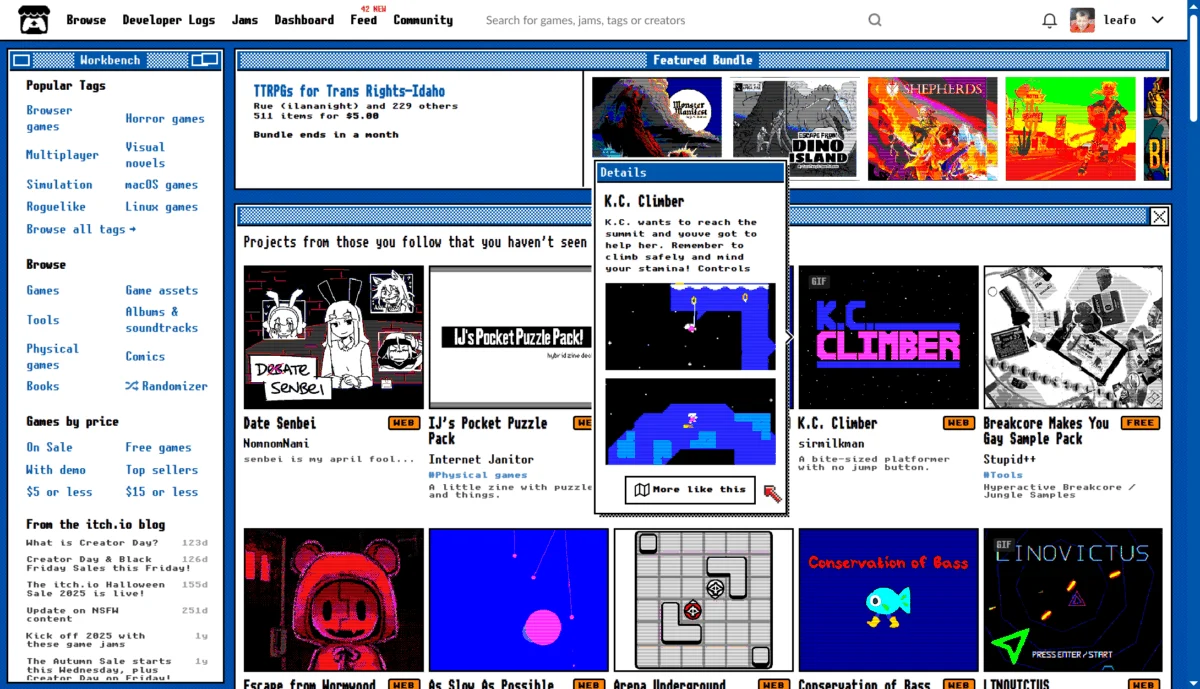
The independent game distribution platform itch.io has officially concluded its much-discussed "Ameyega mode," an April Fool’s Day initiative that transformed the site’s homepage into a retro-inspired, ASCII art interface. Launched on April 1st, the temporary visual overhaul was met with a diverse range of reactions from its user base, prompting conversations about nostalgia, accessibility, and the role of humor in online communities. While the event itself has wrapped up, itch.io has made the distinctive interface accessible for logged-in users via a direct URL, https://itch.io/?ameyega, promising its availability until the next significant update to the platform’s homepage. This extension beyond the typical April Fool’s window was attributed by the developers to a slightly delayed rollout, allowing more users to experience the unique aesthetic.
A Deep Dive into Ameyega Mode: Blending Humor with Homage
Ameyega mode, a portmanteau seemingly referencing the iconic Amiga line of personal computers, was more than just a simple visual filter. It reimagined the entire itch.io homepage through the lens of early computing graphics, utilizing blocky, pixelated fonts and a limited color palette reminiscent of 8-bit and 16-bit systems. The credit given to viznut.fi/unscii/ for the fonts underscores the specific retro aesthetic targeted, drawing from the world of demoscene and experimental computing art. Viznut, a Finnish artist known for minimalist aesthetics and bytebeat music, aligns perfectly with the raw, programmatic feel of the Ameyega interface. This choice was a deliberate nod to a bygone era of computing, one deeply cherished by a segment of the gaming and tech community for its pioneering spirit and unique visual identity.
The prank itself served multiple purposes. Firstly, it was a classic April Fool’s stunt, designed to surprise and entertain users with an unexpected alteration to a familiar online space. However, it also functioned as a cultural homage, tapping into a rich vein of nostalgia for early computer graphics and the aesthetic of platforms like the Amiga, which played a pivotal role in the development of video games and digital art. For many older users, Ameyega mode evoked memories of navigating command-line interfaces, deciphering blocky text, and experiencing the foundational visuals of early digital entertainment. For younger users, it offered a glimpse into the historical roots of digital aesthetics, providing a unique contrast to the sleek, high-definition interfaces prevalent today.
The Cultural Resonance of Retro Aesthetics: The Amiga Legacy and ASCII Art
The naming convention, "Ameyega," is a clear and affectionate tribute to the Commodore Amiga, a series of personal computers released in the 1980s and 1990s. The Amiga was renowned for its advanced graphics and sound capabilities for its time, making it a favorite among artists, musicians, and game developers. Its distinctive visual style, characterized by a vibrant color palette and pixel art, left an indelible mark on computing history. By invoking this legacy, itch.io tapped into a powerful emotional connection for many users who grew up with or admire this era of technology. The Amiga, often celebrated for fostering creativity and independent development, mirrors the ethos of itch.io itself, which serves as a crucial hub for indie game creators.
Beyond the Amiga connection, the use of ASCII art is a significant element of Ameyega mode. ASCII art, a graphic design technique that uses computers for presentation and consists of pictures built from the 95 printable characters defined by the ASCII standard, has a long and storied history in digital culture. From early bulletin board systems (BBSs) and email signatures to demoscene productions and terminal interfaces, ASCII art has been a foundational form of digital expression. Its inherent limitations—the reliance on text characters to form images—often forces creativity and abstraction, leading to a unique aesthetic that some find incredibly appealing. The fonts provided by viznut.fi/unscii/ likely contributed to this specific, stylized rendition of ASCII, emphasizing the coarse yet charming nature of early digital displays. This choice not only underscored the retro theme but also highlighted the artistic potential within technical constraints, a concept familiar to many indie game developers.
Chronology of a Digital Prank: A Brief but Memorable Run
The Ameyega mode experiment unfolded primarily around April Fool’s Day, a global tradition where individuals and organizations engage in practical jokes and hoaxes. Itch.io joined a long list of tech companies, including giants like Google and Blizzard, that annually partake in this tradition, often using it as an opportunity for lighthearted engagement with their communities.
- April 1st: Ameyega mode officially went live on the itch.io homepage. Due to what itch.io described as a "late" rollout, the initial experience for some users might have been delayed or truncated.
- Post-April 1st Extension: Recognizing the delayed launch and the immediate, albeit mixed, feedback, itch.io announced that Ameyega mode would remain active for an extended period. This decision allowed more users to discover and interact with the unique interface.
- Official Conclusion: The event formally concluded shortly after the initial April Fool’s period.
- Continued Accessibility: Acknowledging the interest and potentially to serve as a persistent Easter egg, itch.io provided a direct URL (
https://itch.io/?ameyega) for logged-in users to revisit the Ameyega mode homepage. This ensures that the experience is not entirely lost, preserving it as a testament to the event until major structural changes are made to the site’s primary layout.
This timeline demonstrates itch.io’s responsiveness and understanding of its community, extending the availability of the feature to maximize engagement even after the immediate "prank" window had passed.
Community Reception and Feedback: Polarized Reactions to the Retro Revival
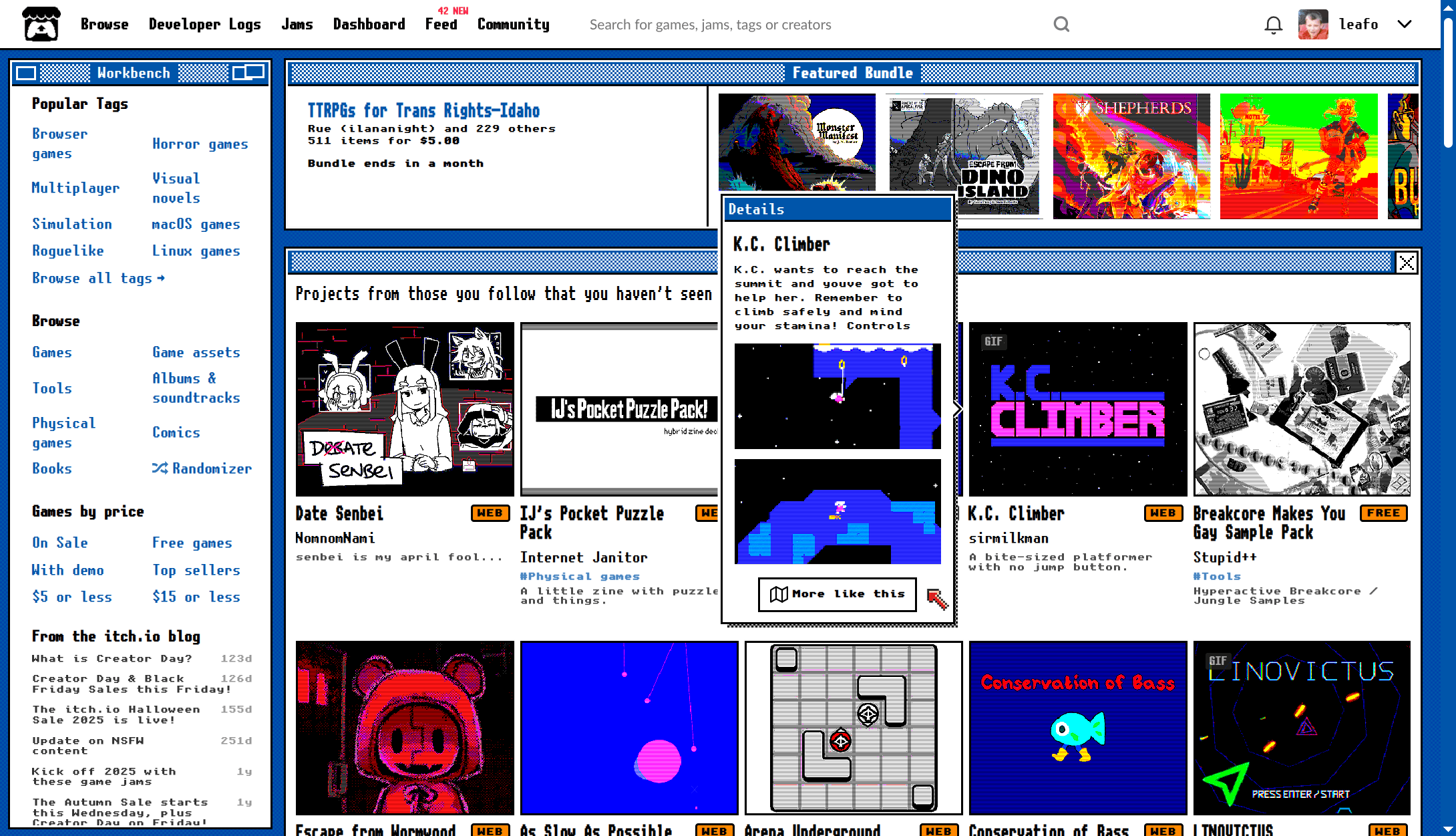
The introduction of Ameyega mode ignited a fervent discussion among itch.io users, neatly encapsulating the platform’s diverse demographic. The feedback, primarily channeled through the comment section of the announcement, revealed a stark division between those who embraced the retro aesthetic and those who found it disruptive or challenging to use.
- The Enthusiastic Embrace: Many users expressed profound delight, describing the Ameyega mode as a "delightful throwback" and praising its "nostalgic and charming" qualities. Comments highlighted how the ASCII art made browsing feel uniquely "nostalgic," with some users even expressing a desire for the mode to become a permanent or optional theme. Phrases like "I adore this" and "SO much easier to read for me wow I love love love it" underscored a strong positive sentiment, suggesting that for a segment of the user base, the simplified, high-contrast display might even offer unexpected readability benefits. This group often comprised individuals with an appreciation for computing history, demoscene culture, or those simply charmed by the playful nature of the prank.
- The Practical Discontent: Conversely, a significant portion of the community voiced strong objections. Complaints ranged from aesthetic distaste—referring to it as a "pixellated mess" or "crap"—to serious usability concerns. Many users found the interface "so hard to navigate," citing difficulties in reading text and locating essential features. The sentiment "I hate thisssss" was not uncommon, reflecting genuine frustration. For these users, the novelty quickly wore off, replaced by a desire for the standard, functional interface. This group often prioritized modern UI/UX standards and efficiency, finding the retro overlay to be a hindrance rather than an enjoyable feature.
- Technical Glitches and Accessibility Concerns: A notable issue raised by several users was the incompatibility of Ameyega mode with the site’s dark mode setting. Users reported that dark mode was "not working now" or was "messed up," leading to an inconsistent and potentially uncomfortable viewing experience. While itch.io reportedly addressed this specific issue later, its initial presence highlighted a common challenge with such large-scale visual changes. Furthermore, comments like "i’m disabled and I CAN’T WATCH THIS! How do you get this crap off?!" underscored critical accessibility concerns. While intended as a lighthearted prank, the drastic visual change inadvertently created barriers for users with specific visual impairments or preferences, turning a joke into a genuine usability problem for some. This aspect serves as a crucial reminder for platform developers about the importance of inclusive design, even when implementing temporary, experimental features.
The spectrum of reactions underscores the challenge and opportunity inherent in community-focused platforms. While a playful approach can foster engagement and reinforce brand identity, it must also navigate the practical needs and diverse preferences of a broad user base.
Developer’s Perspective and Intent: A Playful Engagement Strategy
Itch.io, known for its strong community focus and support for independent creators, often cultivates a distinct brand identity that is less corporate and more experimental than other major digital storefronts. April Fool’s Day pranks align well with this ethos, allowing the platform to showcase its personality and engage with its users in a lighthearted manner. The statement from itch.io, simply thanking users and acknowledging the late rollout, reflects a casual, approachable tone consistent with their brand.
The intention behind Ameyega mode was likely multifaceted: to entertain, to foster community discussion, and perhaps even to test the waters for alternative visual themes. By offering a stark contrast to its modern interface, itch.io provided a talking point and a temporary departure from the norm, sparking conversations that might otherwise not occur. Such initiatives, even if polarizing, contribute to a platform’s unique culture and can strengthen the bond with users who appreciate its distinct approach. The very act of extending the mode and providing a permanent link indicates that beyond the prank, there was genuine value seen in the concept, perhaps even as a collectible digital artifact.
Implications for User Experience and Platform Development: Beyond the Prank
The Ameyega mode experiment, despite its temporary nature, carries several implications for user experience and future platform development on itch.io and similar platforms.
- Potential for Future Customization: The vocal requests for Ameyega mode to become an optional, permanent theme suggest a strong user appetite for customization options. Offering user-selectable themes, including retro aesthetics, could enhance user satisfaction and provide a more personalized browsing experience. This feedback could prompt itch.io to explore developing more extensive theming capabilities, allowing users to tailor the interface to their preferences, whether for aesthetic reasons or accessibility needs.
- The Role of Humor in Community Building: While some users were frustrated, the overall event demonstrated the power of humor and unexpected features in generating community engagement. Pranks, when executed thoughtfully and with clear options for reversion, can foster a sense of shared experience and camaraderie among users. They can also serve as a reminder that the platform is run by people with personality, not just algorithms.
- Prioritizing Accessibility in Design: The issues raised regarding dark mode compatibility and general accessibility are critical takeaways. Any future experimental features or major UI changes would benefit from rigorous accessibility testing to ensure they do not inadvertently exclude or inconvenience segments of the user base. This includes providing clear, easily accessible options to disable or revert temporary visual changes.
- Reinforcing Brand Identity: Itch.io’s willingness to experiment and inject personality into its platform reinforces its identity as a quirky, indie-friendly space. This distinct brand positioning helps differentiate it from larger, more corporate competitors and resonates with its core audience of independent developers and players who value unique experiences.
The Broader Landscape of Gaming Platforms and Innovation
In an increasingly competitive landscape dominated by digital storefronts like Steam, Epic Games Store, and console marketplaces, itch.io has carved out a niche by prioritizing independent developers, offering flexible monetization options, and fostering a strong community. Initiatives like Ameyega mode, while seemingly trivial, contribute to this distinct identity. They showcase a platform that is not afraid to experiment, to have fun, and to engage with its users in unconventional ways. This innovative spirit is crucial for a platform that champions indie games, where creativity and breaking norms are often celebrated. The event underscores that user experience extends beyond mere functionality; it encompasses delight, surprise, and a sense of connection to the platform’s persona.
Conclusion: A Memorable Digital Artifact
The Ameyega mode on itch.io stands as a memorable, albeit temporary, digital artifact from this year’s April Fool’s Day. It successfully sparked widespread discussion, revealing both the nostalgic affections of a segment of the user base and the practical demands for modern usability and accessibility. While the direct implementation was fleeting, its legacy may well influence future design considerations, potentially paving the way for more customizable themes or carefully planned, community-engaging events. By making the mode perpetually accessible via a direct link, itch.io has ensured that this playful homage to retro computing remains a part of its digital history, a testament to a moment where the past and present of digital aesthetics converged in a pixelated, yet profound, conversation.
About the Author