The Financial Legacy of Rockstar Games on Mobile
According to the latest estimates from market intelligence firm AppMagic, Rockstar Games has generated a combined lifetime revenue of approximately $109.9 million from the iOS and Android editions of its Grand Theft Auto franchise. This figure represents the culmination of more than a decade of market presence, beginning with the 2010 release of Grand Theft Auto: Chinatown Wars. While $100 million is a formidable milestone for most mobile developers, it is important to contextualize this figure within the broader gaming economy. Unlike the industry-standard "Free-to-Play" (F2P) model, Rockstar’s mobile offerings have historically been premium, "pay-to-play" titles.
The revenue distribution across Rockstar’s mobile catalog highlights the enduring popularity of the "3D Era" titles. Grand Theft Auto: San Andreas remains the primary driver of mobile revenue, followed by Grand Theft Auto: Vice City and Grand Theft Auto III. These ports, while technically impressive for their time, were designed as direct translations of console experiences rather than mobile-native platforms. Consequently, their monetization is limited to the initial purchase price, lacking the recurring microtransactions and "live-service" elements that drive the multi-billion-dollar earnings of titles like PUBG Mobile or Genshin Impact.

The recent integration of the Grand Theft Auto: The Trilogy – The Definitive Edition into the Netflix Games subscription service has further complicated the revenue landscape. By shifting toward a platform-licensing model, Rockstar and its parent company, Take-Two Interactive, are prioritizing reach and ecosystem engagement over individual unit sales. This strategic pivot suggests that while the $109.9 million figure is significant, the true value of the GTA brand on mobile lies in its ability to act as a prestige "anchor" for subscription services.
The Rise of the "Anime GTA": Neverness to Everness
While Rockstar maintains the throne of the traditional crime simulator, new challengers are emerging with hybrid models that blend urban open-world mechanics with modern "gacha" monetization. Chief among these is Neverness to Everness (NTE), developed by Hotta Studio and published by Perfect World Games. Often referred to by the gaming community as "Anime GTA," the title represents a significant evolution in the genre.
Since its global launch on April 24, 2026, Neverness to Everness has generated an estimated $38.9 million in revenue, according to AppMagic data. Perhaps more impressive is its download velocity, having secured approximately 10 million downloads in a fraction of the time it took Rockstar’s legacy titles to reach similar numbers. Hotta Studio, the developer behind the successful open-world RPG Tower of Fantasy, has utilized the Unreal Engine 5 to create a highly detailed urban environment that allows for high-speed driving, property ownership, and character-driven combat.

The success of NTE underscores a shift in player expectations. Modern mobile gamers are increasingly drawn to high-fidelity, cross-platform experiences that offer the freedom of an open world combined with the social and progression systems of an MMO. By making the game available on PC, PS5, iOS, and Android simultaneously, Perfect World Games is directly challenging the console-centric release strategy of the Grand Theft Auto series.
Market Analysis of Established Competitors: OneState RP and Gangstar Vegas
Beyond the new wave of anime-inspired titles, the mobile market features established "GTA-likes" that have quietly built massive economies. OneState RP, developed by Chillbase, is a primary example of the "Roleplay" (RP) phenomenon successfully migrating to mobile. Released in April 2022, the game has earned an estimated $75.7 million.
The geographic breakdown of OneState RP’s earnings reveals a strategic focus on the Western market, with 43% of its revenue originating from the United States. In terms of user acquisition, the game has amassed 57.5 million downloads, with Brazil (19%) and the U.S. (16%) serving as its largest player bases. Industry analysts note that Chillbase has aggressively utilized Search Ads on the Apple App Store, specifically targeting the keyword "GTA" to capture users looking for a mobile-native alternative to Rockstar’s offerings.

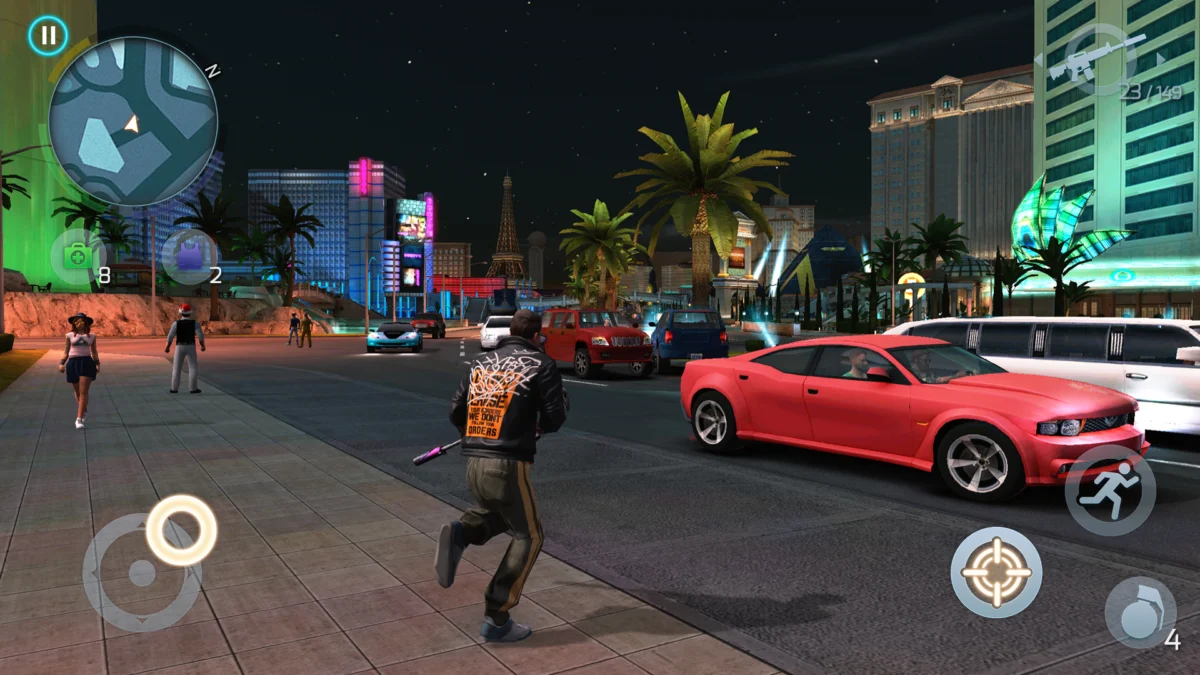
In contrast, Gameloft’s Gangstar Vegas represents the "old guard" of mobile crime simulators. Released in 2013, it has achieved a staggering 200 million lifetime downloads. However, its revenue model—rooted in an era before the perfection of modern live-ops—has seen a decline. Currently, the game generates approximately $50,000 per month from in-app purchases. Despite its age, Gangstar Vegas remains a vital case study in the longevity of the genre, proving that a well-executed open world can retain a player base for over a decade.
The Strategic Expansion of Tencent and Garena
The most significant threat to Rockstar’s mobile hegemony comes from the industry’s largest publishers: Tencent and Garena. Both companies are currently in the process of "soft-launching" titles designed to occupy the void left by the absence of a native GTA Online mobile app.
Tencent’s Gangstar Mirage City, published under its Level Infinite label, is a high-profile collaboration officially licensed from Gameloft. Currently undergoing testing in the Philippines, the game is described as a hybrid of the Gangstar legacy and Cyberpunk aesthetics. Tencent has confirmed a wider rollout scheduled for August 20, 2026, targeting regions including Eastern Europe, Latin America, Southeast Asia, and the Middle East. Given Tencent’s unmatched resources in user acquisition and live-service management, Mirage City is positioned to be a major disruptor.

Similarly, Garena—the powerhouse behind Free Fire—is testing Garena Free City. The title has been in soft launch for nearly 20 months, expanding from Argentina to the Philippines and North Africa. While it has garnered 1.4 million downloads, its monetization remains in the optimization phase. Garena’s history of turning localized successes into global phenomena suggests that Free City could become a dominant force if the developer can successfully translate its battle royale expertise into the open-world crime genre.
Chronology of the Mobile Open-World Evolution
To understand the current state of the market, one must look at the timeline of development within this specific sub-sector:
- 2010–2013: Rockstar Games begins porting legacy titles (Chinatown Wars, GTA III) to mobile, establishing the "Premium Port" era. Gameloft counters with Gangstar Vegas, proving that mobile-first open worlds are viable.
- 2022: OneState RP launches, successfully monetizing the "Roleplay" trend that had become popular on Twitch and PC platforms.
- 2023–2024: Tencent and Garena begin secret development and soft launches of high-budget urban simulators. The Netflix-Rockstar partnership is announced, bringing the GTA Trilogy to mobile subscribers.
- 2024 (April): Neverness to Everness launches, signaling the arrival of the "Gacha-Open World" hybrid on mobile.
- 2026 (August): The projected global expansion of Gangstar Mirage City, marking Tencent’s formal entry into the genre.
Broader Impact and Industry Implications
The influx of "GTA-likes" on mobile is not merely a coincidence; it is a calculated response to the anticipated "GTA 6" mania. By the time Rockstar releases its next flagship title, the mobile market will be saturated with free-to-play alternatives that offer similar gameplay loops—driving, shooting, and social interaction—without the premium price tag.

For Take-Two Interactive, the challenge is twofold. First, they must defend their intellectual property against clones that toe the line of copyright infringement. Second, they must decide whether to continue their "premium port" strategy or finally develop a mobile-native Grand Theft Auto experience that utilizes the live-service models perfected by Tencent and Garena.
The data suggests that the appetite for open-world crime games on mobile is nearly insatiable. With over $100 million in legacy revenue and much higher figures for modern competitors like OneState RP, the genre is no longer a niche for technical showcases. It is a core pillar of the mobile economy. As hardware capabilities on smartphones continue to bridge the gap with consoles, the distinction between a "mobile game" and a "AAA experience" continues to blur, setting the stage for a monumental shift in how the world’s most popular gaming franchise interacts with the world’s most popular gaming platform.
About the Author