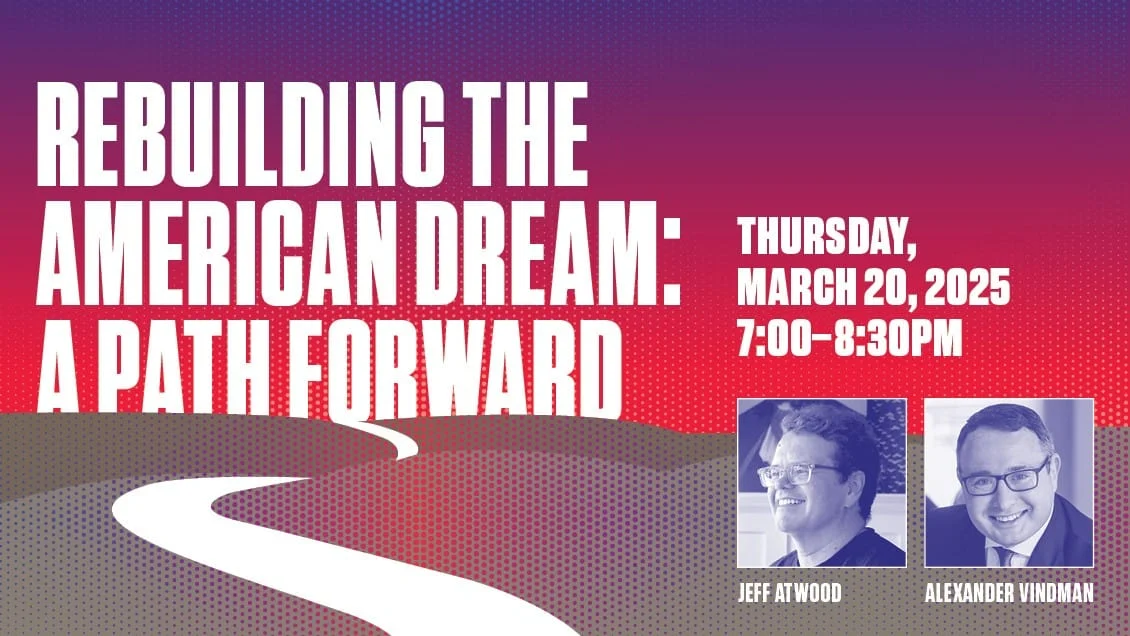
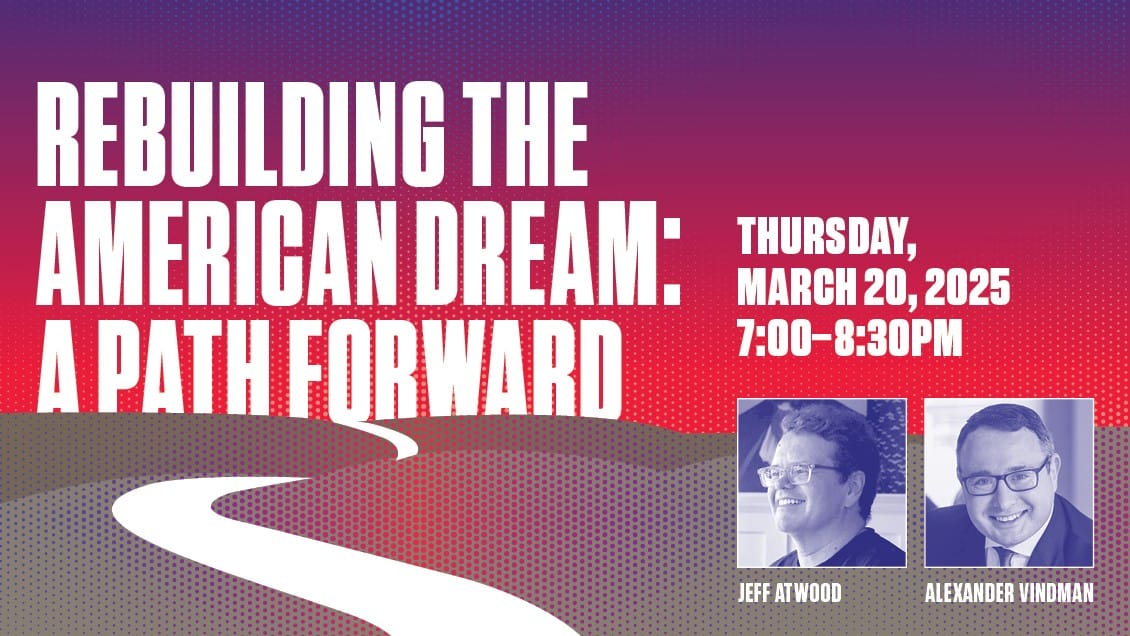
A significant public dialogue unfolded recently at the venerable Cooper Union Great Hall, featuring Colonel Alexander Vindman, a pivotal figure in American civic duty, and Jeff Atwood, a trailblazer in digital community building. The event, titled "Rebuilding The American Dream : A Path Forward," convened these two distinct voices to explore critical questions surrounding democracy, community, and economic mobility, challenging the prevailing notion that the American Dream is merely a passive ideal. Their collaborative discourse aimed to dissect the contemporary relevance of the "stay gold" philosophy—a call to preserve the best aspects of ourselves, our communities, and the foundational promise of American opportunity—and to articulate concrete steps toward systemic change that fosters security, dignity, and possibility for all.
Historic Venue for a Timely Discussion: The Cooper Union Great Hall
The choice of the Cooper Union Great Hall in New York City was deeply symbolic and underscored the gravity of the discussion. Renowned as a crucible of American thought and public discourse, the Great Hall has hosted transformative figures and pivotal moments throughout U.S. history. Its hallowed stage witnessed Abraham Lincoln’s seminal "Might Makes Right" speech in 1860, which significantly propelled his presidential campaign and articulated the moral argument against slavery. Decades later, it became a crucial platform for the women’s suffrage movement, labor rights activists, and leaders of the civil rights era, including figures like Frederick Douglass, Susan B. Anthony, and Emma Goldman. The hall’s enduring legacy is built on its commitment to free inquiry and public education, making it an ideal setting for a conversation that sought to confront national challenges and chart a path forward for the American ethos. By convening Atwood and Vindman in this space, the event positioned itself within a continuum of national dialogues aimed at defining and refining the American experiment. The event, which was also streamed live via the Cooper Union Great Hall YouTube channel, extended its reach far beyond the physical confines of the historic venue, embodying a modern approach to public engagement while honoring traditional platforms for civic debate.
The Architects of Dialogue: Colonel Alexander Vindman and Jeff Atwood
The collaboration between Alexander Vindman and Jeff Atwood represents a unique confluence of military integrity, diplomatic experience, and digital innovation, offering a multifaceted perspective on the challenges facing the American Dream.
Colonel Alexander Vindman: A Champion of Democratic Ideals
Colonel Alexander Vindman’s journey is a powerful testament to the ideals of civic duty and the defense of democratic principles. Born in the Soviet Union and immigrating to the United States as a child, Vindman’s upbringing in Brooklyn instilled in him a profound appreciation for American liberties. His distinguished 21-year career in the U.S. Army saw him rise through the ranks, earning a Purple Heart for injuries sustained during his service in Iraq. He eventually served as the Director for European Affairs for the National Security Council (NSC) under the Trump administration, a role that placed him at the heart of international policy and national security.
Vindman gained national prominence for his pivotal role in the 2019 impeachment inquiry against President Donald Trump. When faced with what he perceived as an abuse of power and a threat to national security during a call between President Trump and Ukrainian President Volodymyr Zelensky, Vindman made the difficult decision to report his concerns through official channels. His testimony, delivered under oath, exemplified a commitment to the rule of law and the constitutional framework, even at great personal and professional cost. This act of moral courage, which ultimately led to his removal from the NSC and early retirement from the military, solidified his public image as an unwavering defender of the values he swore to protect. His perspective brings to the dialogue an unparalleled understanding of the fragility and resilience of democratic institutions, the importance of integrity in public service, and the tangible sacrifices required to uphold foundational American principles. His life story embodies the core tenets of the American Dream – opportunity, service, and the courage to stand for what is right, regardless of personal consequence.
Jeff Atwood: Architect of Digital Communities and Collaborative Systems
Jeff Atwood approaches the discussion from a vastly different, yet equally relevant, vantage point: the frontier of digital community and online collaboration. As the co-founder of Stack Overflow, a globally recognized Q&A platform for programmers, and Discourse, an open-source forum software, Atwood has spent decades building and refining digital spaces where diverse individuals interact, learn, and contribute collectively. Stack Overflow, launched in 2008, revolutionized knowledge sharing in the technology sector, demonstrating how structured online environments can foster expert collaboration and create a public good that benefits millions. Discourse, his subsequent project, focuses on enabling healthy, productive conversations within online communities, tackling issues of moderation, user engagement, and the prevention of digital decay.
Atwood’s expertise lies in understanding the dynamics of human interaction within structured systems. His work has taught him that whether managing a country or an online forum, the fundamental principles remain consistent: clear expectations, fair systems, strong boundaries, and a shared sense of purpose are essential for sustained cooperation and growth. He champions the idea that digital platforms can be "artifacts for the common good," much like physical public parks, where everyone can participate and benefit. His contribution to the dialogue centers on how these principles of self-governing, scalable digital communities can be adapted and applied to real-world challenges in democracy, civic engagement, and societal organization. He argues that lessons learned from fostering constructive discourse and collective problem-solving online are profoundly relevant to the future of democracy itself, offering practical insights into building systems that encourage participation, fairness, and positive outcomes for all citizens.
The American Dream in 2025: A Critical Examination
The core of the discussion revolved around the premise that the American Dream, traditionally defined as the promise that hard work, fairness, and opportunity can lead to a better future, has evolved into a complex question in 2025: "How can we build on our dream so that it works for everyone?" This query acknowledges a prevailing sentiment among many Americans that the dream feels increasingly out of reach or unevenly distributed.
Challenges to the American Dream:
Recent data and public sentiment surveys consistently highlight significant concerns regarding the accessibility of the American Dream.
- Economic Mobility: Studies by institutions like the Pew Research Center and the Federal Reserve indicate that intergenerational economic mobility has stagnated for a substantial portion of the population. While upward mobility exists, the chances of moving from the bottom quintile to the top have remained largely unchanged for decades, and for some, have declined. Factors such as rising income inequality, the increasing cost of living (housing, healthcare, education), and the automation of jobs contribute to this perception of diminished opportunity. For instance, the median cost of a home has outpaced wage growth significantly in many regions, making homeownership—a traditional benchmark of the American Dream—unobtainable for many young families.
- Trust in Institutions: Public trust in governmental institutions, political processes, and even traditional media has seen a consistent decline over the past two decades. This erosion of trust, exacerbated by political polarization and disinformation, makes collective action and consensus-building more challenging. A 2023 Gallup poll revealed that public confidence in institutions like Congress, the presidency, and the Supreme Court remains near historic lows, underscoring a foundational crisis of faith in the systems designed to uphold the American Dream.
- Social Cohesion: The rise of online echo chambers and partisan media has contributed to a fragmentation of communities, both digital and physical. This makes "hard conversations" about shared challenges more difficult, as individuals increasingly retreat into ideologically aligned groups, hindering the development of shared purpose and collective solutions.
Beyond Individual Generosity: The Need for Systemic Solutions
A central thesis of Atwood and Vindman’s discussion was the imperative to move "beyond individual generosity and toward systems that create security, dignity, and possibility for all." This shift represents a profound re-evaluation of how societal progress is achieved. While individual acts of charity and kindness are valuable, they are often insufficient to address deeply entrenched structural inequalities. The speakers argued for a focus on redesigning the underlying systems that govern access to education, healthcare, economic opportunity, and civic participation. This involves examining and reforming policies, legal frameworks, and institutional practices to ensure they are equitable, transparent, and responsive to the needs of all citizens, rather than relying on piecemeal solutions or the benevolence of a few.
A Framework for Rebuilding: Democracy, Community, Economic Mobility
Atwood and Vindman outlined a multi-pronged approach, focusing on three interconnected pillars: democracy, community, and economic mobility.
1. Strengthening Democracy:
- Vindman’s Perspective: Drawing on his experience, Vindman emphasized the importance of safeguarding democratic institutions from internal and external threats. This includes promoting transparency in government, upholding the rule of law, protecting electoral integrity, and fostering an informed citizenry capable of discerning truth from falsehood. He highlighted the necessity of civic courage and accountability from leaders and citizens alike, advocating for systems that reward integrity and penalize corruption or abuse of power. His insights underscore the continuous effort required to maintain a healthy democracy, likening it to a fragile ecosystem that demands constant vigilance and cultivation.
- Atwood’s Perspective: Atwood translated his expertise in digital governance to the democratic sphere. He argued that just as successful online communities require clear rules, fair moderation, and mechanisms for constructive disagreement, so too do democratic societies. He proposed that principles of open-source collaboration, transparent decision-making, and robust feedback loops, common in digital platforms, could be adapted to enhance civic participation and government accountability. This includes exploring ways to leverage technology to make government more accessible, responsive, and trustworthy, fostering a sense of shared ownership in the democratic process.
2. Revitalizing Community:
- Shared Purpose and Belonging: Both speakers underscored the critical role of strong communities in providing a foundation for individual well-being and collective action. They lamented the fragmentation of social ties and the rise of isolation, particularly in the digital age. The discussion explored how to foster environments, both online and offline, where individuals feel a sense of belonging, can engage in meaningful dialogue, and work together towards common goals. This could involve supporting local initiatives, promoting cross-cultural understanding, and designing digital spaces that encourage empathy and collaboration rather than division.
- From Digital to Physical: Atwood’s analogy of "artifacts for the common good," like local parks, was extended to digital spaces. He argued that just as physical parks provide shared resources and foster social interaction, well-designed digital platforms can serve as vital community hubs, enabling citizens to connect, organize, and contribute to their local and national communities. The challenge, he noted, is to design these spaces with "fair systems" and "strong boundaries" to prevent the spread of misinformation and harmful discourse that can erode social cohesion.
3. Enhancing Economic Mobility:
- Systemic Barriers and Solutions: This pillar addressed the most tangible aspects of the American Dream. The speakers acknowledged that individual hard work alone is often insufficient in the face of systemic barriers. They advocated for structural reforms that create genuine opportunities for all, regardless of background. This could include policies aimed at improving access to quality education from early childhood through higher learning, ensuring affordable healthcare, promoting fair labor practices, and fostering an entrepreneurial ecosystem that supports diverse innovators. The goal is to dismantle barriers that limit upward mobility and build pathways that genuinely reward effort and talent.
- Security, Dignity, and Possibility: The ultimate aim, as articulated by Atwood, is to create systems that provide "security, dignity, and possibility for all." Security implies a safety net that protects individuals from catastrophic financial ruin due to illness, job loss, or old age. Dignity refers to work that provides fair compensation and respect, allowing individuals to live fulfilling lives. Possibility speaks to the freedom to pursue one’s potential, innovate, and contribute to society without undue obstacles. Achieving this, they argued, requires a concerted effort to rethink economic policies and social safety nets, moving away from a purely market-driven approach to one that balances individual ambition with collective well-being.
The "Stay Gold" Evolution: From Philosophy to Action
The talk served as a crucial evolution of Jeff Atwood’s earlier reflection on "staying gold." What began as a philosophical meditation on holding onto core values evolved into a pragmatic call for action and systemic change. The original essay highlighted the importance of idealism, but this joint presentation with Colonel Vindman underscored that idealism must be paired with concrete effort, difficult conversations, and a willingness to confront societal imperfections head-on. "Staying gold," they concluded, is not a passive state of being but an active, ongoing commitment to building and maintaining the structures that allow the best parts of America to flourish for everyone.
Implications and Future Outlook
The collaboration between Colonel Alexander Vindman and Jeff Atwood represents a powerful interdisciplinary approach to addressing some of the most pressing issues facing contemporary America. By bridging the worlds of national security, civic integrity, and digital innovation, their dialogue at the Cooper Union Great Hall offered a fresh perspective on the challenges to the American Dream and the pathways to its revitalization.
The event’s implications are multifaceted:
- Cross-Sector Collaboration: It highlights the potential for unexpected partnerships between individuals from diverse professional backgrounds to tackle complex societal problems. The unique synergy between military discipline and tech-driven community building demonstrates that solutions may emerge from unconventional combinations of expertise.
- Reframing the American Dream: The discussion moved beyond nostalgic interpretations of the American Dream, reframing it as a dynamic and evolving aspiration that requires continuous effort and adaptation. It challenged the audience to think critically about who benefits from the current systems and how to ensure greater equity.
- Empowering Civic Engagement: By making the discussion accessible online, the event aimed to inspire broader civic engagement. It suggested that understanding the systemic nature of challenges is the first step toward collective action, encouraging individuals to move beyond frustration towards constructive participation in local and national dialogues.
- Policy Dialogue: While not offering a prescriptive policy agenda, the themes explored—democratic integrity, community building, and economic equity—are foundational to public policy debates. The talk is anticipated to stimulate further discussion among policymakers, academics, and advocacy groups regarding how to translate these principles into tangible reforms.
In a period marked by significant societal introspection and division, the "Rebuilding The American Dream" talk provided an honest, unfiltered conversation, promising not easy answers but a commitment to exploring specific, actionable pathways forward. The convergence of Colonel Vindman’s embodiment of American ideals and Jeff Atwood’s experience in building self-governing digital communities offered a compelling narrative of hope and possibility, emphasizing that collective action and a renewed commitment to foundational principles are essential for forging a future where the American Dream can truly work for all. The call to "imagine what we could do if we all worked together" resonated as a powerful summons to unity and shared purpose in the ongoing journey of national self-improvement.
About the Author