The extended reality (XR) sector is currently navigating a complex period of transition, characterized by heightening public scrutiny over privacy, significant corporate realignments, and the steady progression of hardware innovation. As smartglasses gain mainstream traction, the industry is grappling with a renewed debate regarding the ethics of wearable cameras and the long-term viability of business-to-business (B2B) virtual reality (VR) strategies.
The Growing Privacy Crisis in Consumer Smartglasses
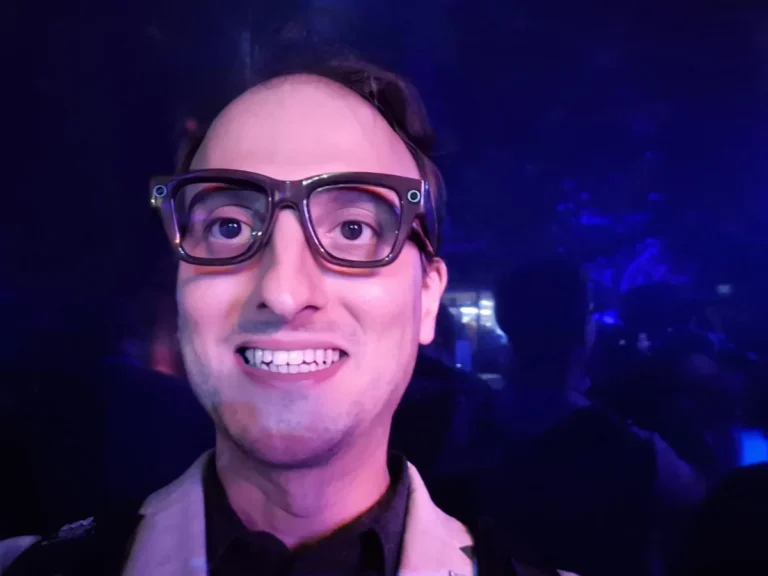
Recent reports from major media outlets, including Engadget and The Guardian, have highlighted a growing public backlash against camera-equipped smartglasses, specifically the Ray-Ban Meta series. While these devices have seen commercial success, they have also become associated with privacy violations. Observers have noted an emerging derogatory terminology for the devices, driven by incidents where users have surreptitiously recorded individuals without consent.
A primary technical concern involves the recording LED, a safety feature designed to alert bystanders when the camera is active. Reports indicate that some users have successfully tampered with or obscured these LEDs, effectively bypassing the primary privacy safeguard. Consequently, a segment of content creators and early adopters have reported a growing reluctance to wear the devices in public spaces due to the "creep" factor and the social stigma now associated with the hardware.
This social friction is compounded by recent privacy scandals involving Meta. The company’s reported consideration of facial recognition features and the disclosure that private images were sent to human reviewers in Nigeria for AI training have intensified regulatory and public skepticism. The current climate mirrors the "Glasshole" era of Google Glass in 2013, though the market now faces a binary outcome: either a massive public rejection leading to the removal of cameras or a gradual normalization similar to the evolution of smartphone photography.
Lenovo Restructures XR Division Toward Consumer AI
Lenovo, a long-time player in the professional VR space, has confirmed a significant layoff within its XR business division in the United States. This move marks a definitive pivot away from the company’s "ThinkReality" B2B strategy. In an official statement, Lenovo indicated that it is transitioning its focus toward AI-enabled wearables under the Motorola brand.

The company stated: "As the XR market evolves, we see stronger momentum and broader consumer adoption around AI-enabled wearables. Lenovo is transitioning from a business-first XR strategy to a more consumer-focused approach within Motorola."
This restructuring follows a series of setbacks for Lenovo’s VR ambitions. Market analysts point to the "Winter of VR"—a period of cooled venture capital interest and slower-than-expected enterprise adoption—as a primary driver. Furthermore, the cancellation of a high-profile headset project intended for Meta’s Horizon OS platform likely expedited Lenovo’s decision to pull the plug on its dedicated XR division. The company now aims to integrate its wearable technology into a broader ecosystem of "Personal AI" that spans PCs, tablets, and smartphones.
Luxottica Solidifies Control Over Lynx Technology
The European XR landscape has seen further consolidation with the confirmed acquisition of Lynx’s assets by EssilorLuxottica. Lynx, a French startup that gained acclaim for its open-ecosystem mixed reality (MR) headsets, entered judicial liquidation earlier this year. Stan Larroque, the founder and CEO of Lynx, recently confirmed that the eyewear giant Luxottica has acquired the company’s intellectual property and rehired a majority of its engineering staff.
This acquisition is strategically significant. Luxottica currently maintains a powerful partnership with Meta for the Ray-Ban Meta glasses. However, by acquiring Lynx’s proprietary optics and MR technology, Luxottica is positioning itself to potentially develop independent hardware. This move suggests a long-term strategy to reduce reliance on Meta’s software stack. While the future of the anticipated Lynx R2 headset remains uncertain, the preservation of the engineering team ensures that the startup’s innovations in pancake optics and video pass-through will continue under the Luxottica umbrella.
Valve and the Imminent Arrival of the Steam Frame
Valve has recently deployed a substantial update to SteamVR, featuring a redesigned dashboard and improved interface elements. Industry analysts interpret this update as the final software preparation for the "Steam Frame," a rumored standalone or tethered VR hardware solution.
While anticipation for new Valve hardware is high, a company spokesperson recently cautioned the market regarding hardware costs. During a recent interview, Valve noted that the global memory and semiconductor crisis is not abating, suggesting that hardware prices are likely to increase in the coming months. Consequently, the Steam Frame is expected to be positioned as a premium enthusiast device rather than a budget-friendly consumer entry.

Developers have begun showcasing early footage of applications running on the Steam Frame. Notably, the creator of the popular VR game Cubism shared a demonstration of the device’s mixed reality capabilities. While functional, early impressions of the pass-through quality have been compared to that of the Meta Quest 2, suggesting that Valve may be prioritizing tracking stability and PC integration over high-resolution color pass-through.
Military-Grade Miniaturization: Palmer Luckey’s AR Tease
Palmer Luckey, the founder of Oculus and current CEO of defense tech firm Anduril, has unveiled a prototype of remarkably thin augmented reality (AR) glasses. Luckey claims the devices feature full-color displays and a wide field of view (FOV) while maintaining a form factor nearly identical to standard eyewear.
Given Luckey’s current focus on defense contracting, these glasses are widely expected to be intended for military applications, where high-performance AR is used for situational awareness and tactical data overlays. The cost of such sophisticated optics remains prohibitively high for the consumer market, yet the prototype serves as a technical "north star," proving that the "holy grail" of AR—high performance in a slim frame—is physically achievable.
Enterprise Innovations: Gaussian Splatting for Technical Training
In the realm of software and content, the use of Gaussian Splatting—a technique for generating highly detailed 3D scenes from 2D images—is moving beyond entertainment. Gracia, a leader in volumetric video, has announced a partnership with Imperial College London to utilize this technology for medical and technical training.
The project involves recording high-fidelity volumetric videos of intricate processes, such as PCB soldering. This allows students to observe technical maneuvers from any angle with photographic realism, providing a level of detail that traditional 2D video cannot match. This application signals a shift in the enterprise sector, where volumetric data is becoming a vital tool for high-precision skill acquisition.
Regulatory and Market Developments
The European Union has recently introduced strict new repairability and battery replacement rules for consumer electronics. However, in a significant win for the wearable industry, smartglasses have been granted an exemption from these specific mandates. Regulators cited the unique form factor and the technical difficulty of making such miniaturized devices user-serviceable without compromising their structural integrity or weight.

On the software front, Sony has launched its Summer Games Sale, offering deep discounts on over 200 titles for the PlayStation VR and VR2. This move is seen as an effort to stimulate the PS VR2 user base, which has faced criticism regarding its content library since launch.
Industry Ethical Standards and Accountability
The XR community has recently been forced to address internal ethical standards following the arrest of the lead developer of Tactical Assault VR on charges related to crimes against children. In a swift response, the game’s partners and community managers have severed all ties with the developer. The owner has since stepped down, and the project is undergoing a total transition of leadership. This incident has sparked a broader conversation within the indie VR development community regarding background checks and the responsibilities of platform holders in vetting content creators.
As the year progresses, the XR industry remains in a state of high flux. The divergence between the struggling B2B VR market and the burgeoning AI-smartglasses sector suggests that the next generation of "reality" hardware may be less about total immersion and more about the seamless integration of artificial intelligence into daily life.
About the Author