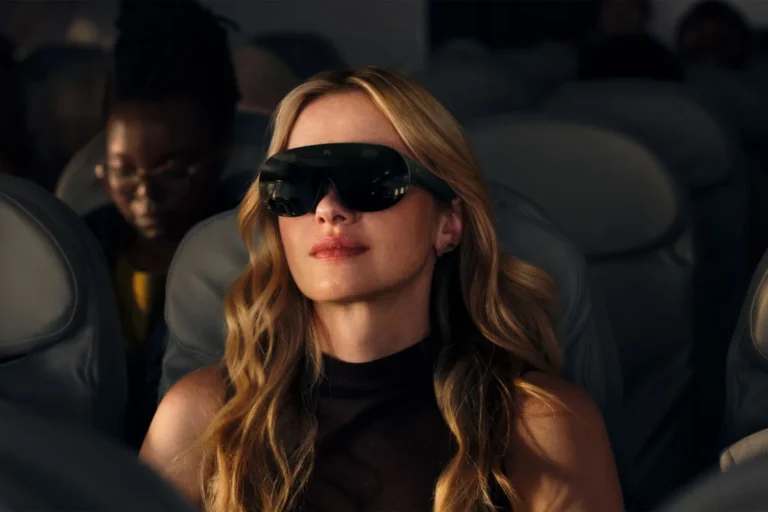
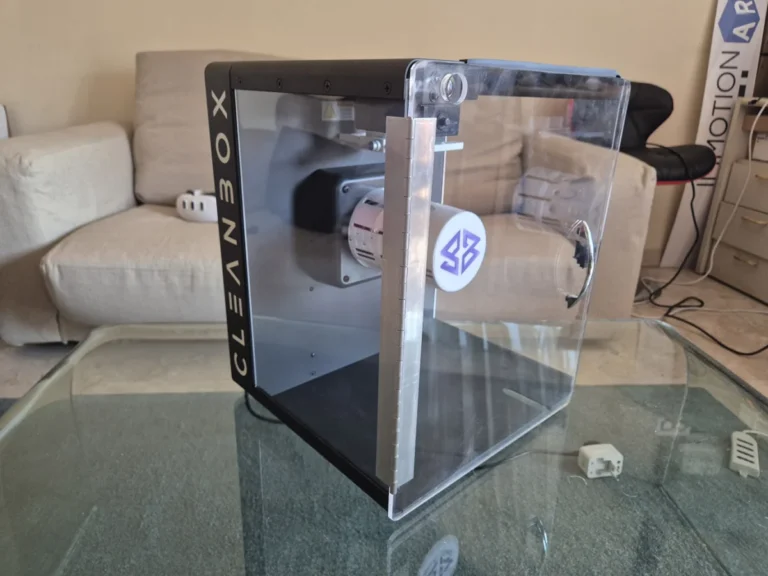
The Augmented World Expo (AWE) 2026 served as a significant platform for Canon to demonstrate its evolving strategy within the mixed reality (MR) landscape. Long recognized for its dominance in the imaging and optical sectors, the Japanese multinational showcased two distinct hardware solutions that highlight a specialized focus on enterprise-grade applications and high-turnover public installations. These demonstrations included a ultra-compact, handheld MR prototype and the MREAL X1, a high-cost enterprise headset designed for industrial visualization. The presence of these devices at AWE underscores a broader industry trend where legacy optical manufacturers are attempting to leverage their heritage glass and sensor technology to carve out niches in a market increasingly dominated by consumer-focused tech giants.

The Handheld Mixed Reality Prototype: A Specialized Solution for Public Engagement
One of the more unconventional reveals at the Canon booth was a ultra-compact MR module that deviates from the traditional head-mounted display (HMD) format. This device is essentially a stripped-down optical module attached to a ergonomic handle, lacking integrated computation units or internal battery systems. By offloading processing to an external PC or high-performance smartphone, Canon has reduced the hardware to its most fundamental elements: high-quality lenses and passthrough sensors.
The design philosophy behind this handheld prototype addresses a specific friction point in the public exhibition sector. In environments such as museums, trade shows, and historical sites, the time required to fit, strap, and calibrate a traditional HMD for each visitor represents a significant bottleneck. Canon’s handheld approach allows for "on-the-go" viewing; users simply raise the device to their eyes, much like a pair of digital binoculars, to overlay digital artifacts onto their physical environment. This eliminates hygiene concerns related to facial interfaces and simplifies the user experience for those unfamiliar with augmented reality (AR) hardware.

Technical specifications for the prototype, however, suggest a prioritization of form factor over immersion. The device features a Full HD resolution and a field of view (FOV) estimated at approximately 50 degrees. While these specs are comparable to current-generation AR glasses, they sit well below the immersion levels provided by modern MR headsets. Furthermore, the prototype currently relies on marker-based tracking rather than sophisticated Simultaneous Localization and Mapping (SLAM). During demonstrations, users interacted with objects covered in physical markers to anchor 3D models, a method that offers high precision in controlled environments but limits the device’s versatility in dynamic or unmapped spaces.
The MREAL X1: High-Fidelity Enterprise Visualization and the $20,000 Ecosystem
In addition to the experimental prototype, Canon showcased the MREAL X1, the current flagship in its enterprise MR lineup. Positioned as a more affordable successor to the MREAL S1—which debuted at nearly $38,500—the MREAL X1 ecosystem is priced at approximately $20,000. This package includes the headset, a dedicated high-performance laptop, and a proprietary interface box required to manage the data throughput between the PC and the display.

The MREAL X1 employs a "flat" design reminiscent of the Lynx-R1, featuring an open periphery that allows users to maintain natural situational awareness. This is particularly critical in industrial settings where engineers or technicians must see their physical surroundings—including tools and safety hazards—while viewing digital overlays. The headset includes adjustable lateral blinders for users who require a more occluded, VR-like experience for focused tasks.
From a technical perspective, the MREAL X1 offers a resolution of 1920×2160 per eye. While the raw pixel count is surpassed by contemporary consumer devices like the Meta Quest 3 or the Apple Vision Pro, the MREAL X1 focuses on pixel density. By constraining the field of view to 58 degrees horizontally and 60 degrees vertically, Canon achieves a higher Pixels Per Degree (PPD) count, which is essential for reading fine text or inspecting detailed CAD models in engineering workflows.

Technical Performance and Hardware Challenges
Despite the premium pricing, the hands-on demonstrations at AWE 2026 revealed several technical hurdles that Canon continues to address. Observers noted that the MREAL X1’s tracking stability remains a point of contention. While the device can operate without markers once an environment is initialized, the demonstration models showed visible jitter and latency when users moved their heads rapidly. This instability, coupled with noticeable motion blur, suggests that Canon’s tracking algorithms may still be catching up to the low-latency standards set by companies specializing in SLAM and computer vision.
The hardware’s physical construction also drew mixed reactions. While the front-facing optical module is a testament to Canon’s engineering prowess, the peripheral components—such as the plastic blinders and the halo strap—were perceived as less "premium" than the $20,000 price tag might suggest. Additionally, the requirement for a bulky external connection box highlights a legacy architecture that contrasts with the industry’s move toward streamlined, single-cable or wireless tethering solutions.

Market Context and Competitive Analysis
Canon’s positioning in the MR market is distinctly separate from the consumer "metaverse" ambitions of Meta or ByteDance. Instead, Canon is competing in the high-end industrial sector against the likes of Varjo and specialized AR firms. To put the MREAL X1’s $20,000 price point into perspective, it is necessary to compare it with the Varjo XR-4 series. The Varjo XR-4 Focal Edition, priced in a similar bracket, offers significantly higher specifications, including 4K-per-eye resolution, a 120-degree FOV, and advanced LIDAR-driven passthrough.
Canon’s advantage, however, lies in its long-standing relationships with industrial clients in the manufacturing and automotive sectors, particularly in Japan. For these clients, the MREAL ecosystem is often integrated into specific proprietary workflows where optical accuracy and local support outweigh raw hardware specifications. Canon’s MREAL series has a lineage dating back to the early 2010s, and its longevity in the market provides a level of enterprise reliability that newer startups may struggle to match.

Future Outlook and Industry Implications
The hardware showcased at AWE 2026 indicates that Canon is at a crossroads. The company is successfully identifying unique use cases—such as the handheld module for museums—that larger competitors are ignoring. However, the core MREAL technology is facing increasing pressure from the "prosumer" market. As consumer-grade headsets improve their passthrough quality and tracking stability, the justification for a $20,000 enterprise system becomes harder to maintain unless it offers a transformative leap in optical clarity or specialized sensor integration.
Industry analysts suggest that Canon’s next move may involve integrating its world-class camera sensor technology more deeply into the MR space. By utilizing the same sensors found in its professional cinema cameras, Canon could theoretically provide a passthrough experience with dynamic range and color accuracy that exceeds anything currently available.

For now, the AWE 2026 demonstrations serve as a reminder that the mixed reality industry is not a monolith. While the consumer world focuses on gaming and social interaction, legacy giants like Canon are carving out specialized territories where form factor, turnover efficiency, and industrial precision are the primary metrics of success. Whether these niche strengths can sustain a $20,000 hardware ecosystem in the face of rapidly advancing consumer technology remains the central question for Canon’s XR division moving toward 2027.
About the Author