The rapid advancement of Artificial Intelligence (AI) continues to reshape industries and redefine the boundaries of human capability. In 2023, a select group of AI tools are at the forefront of this transformation, offering unprecedented efficiency, creativity, and problem-solving power. These sophisticated platforms are not merely automating repetitive tasks; they are actively enhancing workflows, unlocking new avenues for innovation, and significantly boosting productivity across diverse sectors. From crafting compelling narratives to generating hyper-realistic visuals and optimizing complex code, these ten AI tools represent the vanguard of technological progress, empowering individuals and businesses alike to navigate the increasingly complex digital landscape.
Driving Efficiency Through Intelligent Automation
The core promise of many of these AI tools lies in their ability to streamline operations and reduce the human effort required for mundane or time-consuming activities. This not only frees up valuable human capital for more strategic and creative endeavors but also contributes to cost savings and improved output quality. The integration of AI into daily workflows is no longer a futuristic concept but a present-day reality, with these tools serving as crucial enablers of this paradigm shift.
A Deep Dive into the Leading AI Tools
This comprehensive overview explores ten of the most impactful AI tools currently available, detailing their functionalities, strengths, weaknesses, and the specific areas where they are making the most significant contributions.
1. ChatGPT: The Conversational Powerhouse
At the apex of natural language processing stands ChatGPT, an advanced large language model developed by OpenAI. Its ability to generate human-like text in response to a vast array of prompts has made it an indispensable tool for content creation, customer service, research assistance, and even educational support. ChatGPT excels at understanding context, maintaining conversational flow, and adapting its tone and style to suit diverse needs.
- Capabilities: Language translation, question answering, text summarization, creative writing, code generation assistance, brainstorming, and more.
- Strengths: Remarkable fluency and coherence in generated text, broad knowledge base, adaptability to various writing styles and topics. Its accessibility and user-friendly interface have democratized advanced language model technology.
- Limitations: While powerful, ChatGPT can sometimes produce factually incorrect, biased, or nonsensical information, a common challenge with current large language models. It lacks true understanding and consciousness, operating based on patterns learned from its training data. Users must exercise critical judgment and verify information. The potential for misuse, such as generating misinformation or plagiarized content, remains a significant concern requiring ethical guidelines and responsible deployment.
- Impact: ChatGPT has significantly lowered the barrier to entry for content creation and information retrieval, enabling individuals and small businesses to produce professional-grade written materials. Its application in educational settings is also being explored, with potential to revolutionize personalized learning experiences.
2. DALL-E: Visualizing the Improbable
Another groundbreaking innovation from OpenAI, DALL-E is a generative AI model that translates textual descriptions into unique and often striking visual art. This tool opens up unprecedented creative possibilities for designers, marketers, and artists, allowing them to conjure images that were previously only imaginable.
- Capabilities: Generating original images from detailed text prompts, creating variations of existing images, and conceptualizing visual content for a wide range of applications.
- Strengths: Ability to produce high-resolution, often photorealistic or artistically stylized images. Its capacity to interpret complex and abstract prompts is a testament to its advanced AI architecture. This capability is invaluable for rapid prototyping of visual concepts and generating unique assets for marketing campaigns.
- Limitations: The generated images, while impressive, can sometimes exhibit minor artifacts or inconsistencies. There’s also a dependency on the quality and specificity of the prompt; vague descriptions can lead to less desirable outcomes. Concerns regarding copyright and originality of AI-generated art are ongoing discussions within the creative industries.
- Impact: DALL-E is democratizing visual content creation, enabling individuals without traditional artistic skills to bring their ideas to life. It is revolutionizing fields like graphic design, advertising, and even game development by providing a fast and cost-effective way to generate diverse visual assets.
3. Lumen5: Streamlining Video Content Creation
In an era where video content reigns supreme on social media and digital platforms, Lumen5 emerges as a pivotal tool for efficient video production. This AI-powered platform transforms existing text content, such as blog posts or articles, into engaging video narratives with remarkable speed.
- Capabilities: Automatically generating video from text, suggesting relevant visuals and music, customizing video templates, and optimizing videos for various social media platforms.
- Strengths: Exceptional speed and ease of use, making video creation accessible to users with no prior editing experience. Its ability to intelligently extract key messages from text and pair them with appropriate media significantly reduces the time investment typically associated with video production.
- Limitations: While effective for creating basic video content, the generated videos may lack the nuanced storytelling or unique stylistic flair of professionally produced films. Customization options, while present, are not as extensive as in professional video editing software. The AI’s choice of visuals and music might not always align perfectly with the intended emotional tone.
- Impact: Lumen5 empowers businesses and content creators to maintain a consistent and engaging video presence without the prohibitive costs and time commitments of traditional video production. This is particularly beneficial for small businesses and startups aiming to leverage video marketing effectively.
4. Grammarly: The Intelligent Writing Assistant
Grammarly has become an indispensable companion for anyone who writes. Utilizing advanced AI, it goes far beyond basic spell-checking, offering comprehensive suggestions for grammar, punctuation, style, tone, and clarity.
- Capabilities: Real-time grammar and spelling checks, advanced punctuation correction, style and tone suggestions, plagiarism detection, and vocabulary enhancement.
- Strengths: Highly accurate and context-aware suggestions that significantly improve the quality and professionalism of written communication. Its integration across various platforms, including web browsers, word processors, and mobile devices, ensures seamless application. The AI’s ability to understand nuances of language and suggest appropriate alternatives is its key differentiator.
- Limitations: While generally excellent, Grammarly’s suggestions are not always perfect and can occasionally misinterpret context or offer stylistic changes that don’t align with the user’s intent. Over-reliance can also lead to a loss of individual writing voice.
- Impact: Grammarly has elevated the standard of written communication across personal and professional spheres. It aids students in producing better essays, professionals in crafting clearer emails and reports, and non-native English speakers in achieving greater fluency and accuracy.
5. OpenAI Codex: Bridging Language and Code
OpenAI Codex represents a significant leap in making programming more accessible. This AI system is capable of translating natural language instructions into functional code across numerous programming languages.
- Capabilities: Generating code snippets from natural language descriptions, assisting in debugging, explaining code, and translating code between languages.
- Strengths: Accelerates the coding process, making it more intuitive for both experienced developers and those new to programming. Its ability to understand intent from human language is remarkable, significantly reducing the syntax-heavy learning curve. It can also help in refactoring and optimizing existing code.
- Limitations: The generated code requires careful review and testing, as it may contain errors or not fully capture complex logic. It’s crucial to remember that Codex is an assistant, not a replacement for a developer’s critical thinking and problem-solving skills. Security vulnerabilities in AI-generated code are also a potential concern that needs diligent oversight.
- Impact: Codex is poised to democratize software development, empowering a wider range of individuals to build applications and automate tasks. It’s also a powerful tool for existing developers, boosting their productivity and allowing them to focus on higher-level architectural design.
6. Tabnine: Enhancing Developer Productivity
Tabnine is an AI-powered code completion tool designed to boost developer efficiency. By predicting and suggesting code snippets as developers type, it significantly speeds up the coding process and reduces the likelihood of syntax errors.
- Capabilities: Real-time code completion, context-aware suggestions, support for numerous programming languages, and integration with popular IDEs.
- Strengths: Highly accurate code suggestions that learn from the developer’s coding patterns and the broader project context. This leads to faster development cycles and fewer keystrokes. Its ability to adapt to specific project styles and libraries makes it a valuable asset.
- Limitations: Like other AI code assistants, Tabnine’s suggestions should be reviewed. While generally reliable, it can sometimes suggest suboptimal or even incorrect code, necessitating developer vigilance. It is also a tool that enhances, not replaces, fundamental programming knowledge.
- Impact: Tabnine directly contributes to increased developer velocity, enabling teams to deliver software more rapidly. This is particularly impactful in fast-paced tech environments where time-to-market is a critical factor.
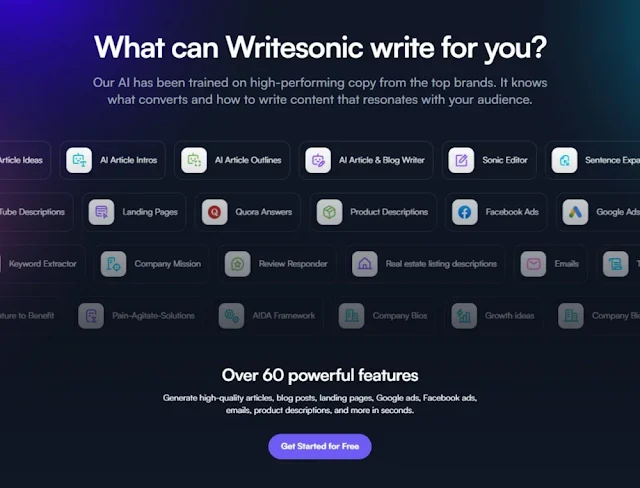
7. Jasper AI: The Content Creation Engine
Jasper AI is a sophisticated AI writing assistant that helps users generate compelling and optimized content for a variety of marketing and communication needs. It leverages AI to understand user intent and craft text that is not only well-written but also aligned with specific marketing goals.
- Capabilities: Generating blog posts, social media copy, website content, ad headlines, email subject lines, and product descriptions. It also offers features for rephrasing and expanding existing content.
- Strengths: Its ability to produce creative and engaging copy that resonates with target audiences is a significant advantage. Jasper is trained on vast amounts of marketing content, allowing it to understand effective persuasive techniques. The platform’s templates and frameworks provide structured guidance for various content types.
- Limitations: While excellent for generating initial drafts and ideas, Jasper’s output may require human editing to ensure perfect brand voice consistency and factual accuracy. The AI can sometimes produce generic content if prompts are not sufficiently detailed.
- Impact: Jasper AI empowers marketers and content creators to scale their output without compromising quality. It helps overcome writer’s block and ensures a consistent flow of engaging content, crucial for digital marketing success.
8. Surfer SEO: Optimizing for Search Engine Visibility
Surfer SEO is a powerful tool for digital marketers and website owners focused on improving their search engine optimization (SEO) efforts. It provides data-driven insights and actionable recommendations to enhance on-page content and rank higher in search engine results.
- Capabilities: Comprehensive on-page SEO analysis, content optimization recommendations based on top-ranking competitors, keyword research assistance, and content outline generation.
- Strengths: Its data-driven approach, analyzing hundreds of ranking factors, provides a significant edge in understanding what search engines favor. The tool’s ability to provide specific, actionable advice on keyword usage, content structure, and readability makes it highly effective.
- Limitations: Surfer SEO is a tool, not a magic bullet. While it provides excellent guidance, successful SEO also relies on off-page factors, user experience, and technical SEO, which are not fully addressed by this platform alone. The tool’s recommendations should be integrated into a broader SEO strategy.
- Impact: Surfer SEO helps businesses increase their organic visibility, drive more qualified traffic to their websites, and ultimately achieve better conversion rates. It democratizes advanced SEO knowledge, making it accessible to a wider range of users.
9. Zapier: Automating Workflows Across Applications
Zapier is a leading web automation tool that connects disparate web applications, allowing users to automate repetitive tasks and streamline their workflows without requiring extensive technical expertise.
- Capabilities: Creating automated workflows ("Zaps") that trigger actions in one app based on events in another. This includes tasks like saving email attachments to cloud storage, adding new leads from a form to a CRM, or posting social media updates.
- Strengths: Its vast library of app integrations and intuitive interface make it incredibly versatile for automating a wide range of business processes. Zapier significantly reduces manual data entry and task management, freeing up valuable time and reducing errors.
- Limitations: While powerful, complex automation may require a good understanding of the connected applications and their APIs. Some advanced features or higher usage limits necessitate a paid subscription. Over-automation without proper oversight can sometimes lead to unintended consequences.
- Impact: Zapier is a cornerstone of modern productivity, enabling individuals and teams to achieve greater efficiency and focus on strategic work. It’s instrumental for businesses looking to integrate their digital tools seamlessly and eliminate time-consuming manual processes.
10. Compose AI: Intelligent Content Generation from Data
Compose AI specializes in Natural Language Generation (NLG) software, transforming structured data into coherent written or spoken text. This capability is invaluable for generating reports, summaries, and descriptive content from datasets.
- Capabilities: Automatically generating written or spoken text from structured data sources such as spreadsheets, databases, and APIs. This can include generating financial reports, market analyses, product descriptions, or personalized communications.
- Strengths: Its ability to convert complex data into easily understandable narratives is a significant advantage for businesses needing to communicate insights efficiently. Compose AI can scale content generation from data at a speed and volume unattainable by human writers alone.
- Limitations: The quality of the generated content is directly dependent on the quality and structure of the input data. Biased or inaccurate data will lead to biased or inaccurate output. Human review remains essential to ensure accuracy, context, and appropriate tone.
- Impact: Compose AI is revolutionizing data reporting and communication, enabling organizations to extract more value from their data and present it in accessible formats. This is particularly impactful in sectors like finance, marketing analytics, and customer service.
The Broader Implications of AI in 2023
The proliferation of these advanced AI tools signals a fundamental shift in how work is performed and how businesses operate. The ability to automate, create, and optimize at an unprecedented scale presents both immense opportunities and significant challenges.
Increased Productivity and Innovation: These tools are not just about doing things faster; they are about enabling entirely new possibilities. Developers can build more complex applications, marketers can create more engaging campaigns, and researchers can analyze data more effectively, all contributing to accelerated innovation.
Democratization of Technology: Many of these tools are designed with user-friendliness in mind, making powerful AI capabilities accessible to individuals and small businesses that may not have the resources for extensive in-house development teams.
Ethical Considerations and Future Development: As AI becomes more integrated into our lives, crucial discussions around data privacy, bias in algorithms, job displacement, and the responsible use of AI technologies will continue to be paramount. The development of robust ethical frameworks and regulations will be essential to harness the benefits of AI while mitigating potential risks.
The landscape of AI is dynamic, with new tools and advancements emerging constantly. The ten tools highlighted here represent a snapshot of the current state of innovation, demonstrating the transformative power of artificial intelligence to enhance human capabilities and drive progress across virtually every sector of society. As these technologies continue to mature, their impact will only deepen, shaping the future of work, creativity, and human interaction.
About the Author